
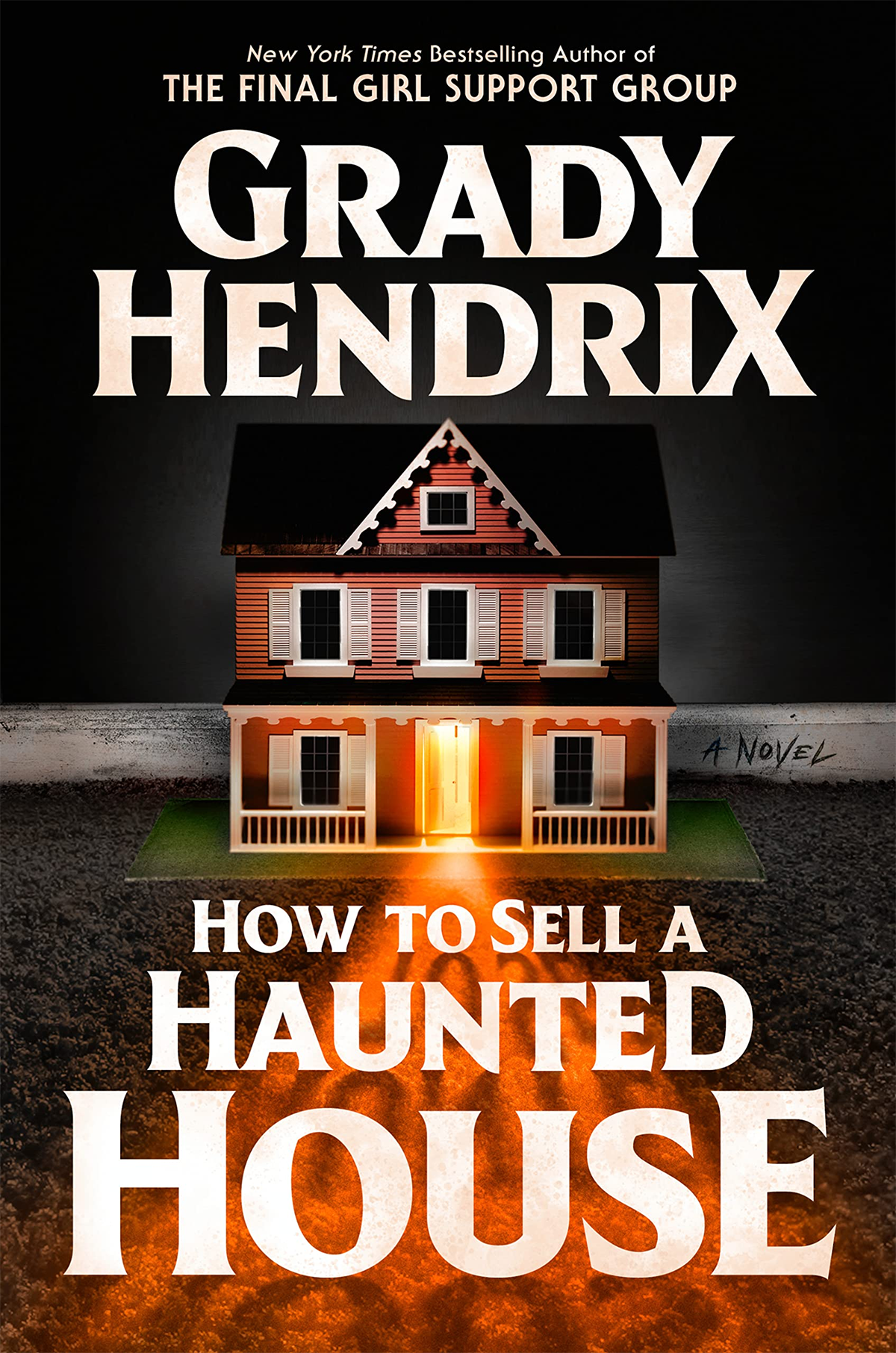
Reading How to Sell a Haunted House was an exercise of patience and trust. It’s a hard read, not just because of the subject matter, but also because the characters we follow are nigh unbearable for most of the first half of this book. But Grady Hendrix is an author who has guided me through unknown and often uncomfortable territory a number of times before, and I’ve always come out the other side, maybe not unscathed, but definitely more enlightened. His stories may be full-blown horror — with all the ghastly, gruesome, goofy connotations that entails — but they are always, always full of heart. And that inclination allowed me to power through all the nastiness present at the outset, certain that I would find a beating bloody heart at the center of it all.
All the unpleasantness makes sense thematically, though. Hendrix named each part of the book after the various stages of grief, a process that is often as ugly as it is purgative. Through that lens it’s easier to lend the sibling protagonists of this story, who are going to a sudden and shocking loss, some grace. A little bit, in any case — pettiness and resentment are also often part of mourning, and they are markedly, painfully present here.
I also admittedly felt a bit let down to find that this was less of a straightforward haunted house tale, than it was a story of sibling relationships, family secrets, generational trauma, ᵃⁿᵈ ᵉᵛⁱˡ ᶠᵘᶜᵏⁱⁿᵍ ᵖᵘᵖᵖᵉᵗˢ. But I quickly got over that when I realized that underneath this chaotic clutter was the compassionate center I was certain I would find.
Haunted House is probably not my favorite of his books (that honor still belongs to My Best Friend’s Exorcism), but reading it was still the challenging and cathartic experience I have come to expect — and indeed hope for — from a Hendrix undertaking.
 ricardo reading