
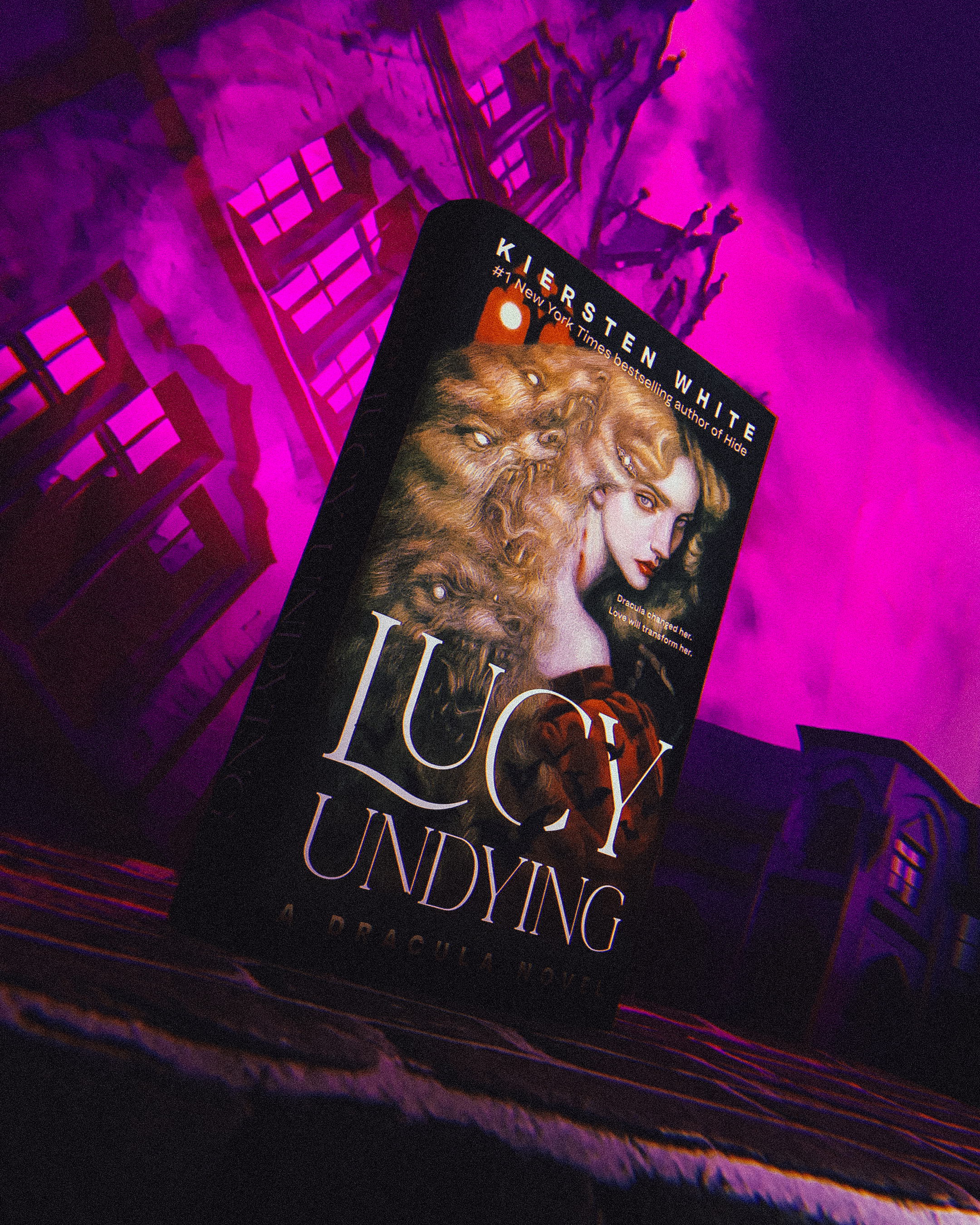
 Publisher’s summary: Her name was written in the pages of someone else’s story: Lucy Westenra was one of Dracula’s first victims.
But her death was only the beginning. Lucy rose from the grave a vampire and has spent her immortal life trying to escape from Dracula’s clutches—and trying to discover who she really is and what she truly wants.
Her undead life takes an unexpected turn in twenty-first-century London, when she meets another woman, Iris, who is also yearning to break free from her past. Iris’s family has built a health empire based on a sinister secret, and they’ll do anything to stay in power.
Lucy has long believed she would never love again. Yet she finds herself compelled by the charming Iris while Iris is equally mesmerized by the confident and glamorous Lucy. But their intense connection and blossoming love is threatened by outside forces. Iris’s mother won’t let go of her without a fight, and Lucy’s past still has fangs: Dracula is on the prowl once more.
Lucy Westenra has been a tragically murdered teen, a lonesome adventurer, and a fearsome hunter, but happiness has always eluded her. Can she find the strength to destroy Dracula once and for all, or will her heart once again be her undoing?
A handful of years ago, just as I started to become slightly obsessive with my Hallowe’en reading, I picked up Kiersten White’s The Dark Descent of Elizabeth Frankenstein. I wanted something lofty to read—something Gothic and Romantic—and this retelling of Mary Shelley’s seminal tale seemed to serve the need. I was already planning to read about vampires anyway, so adding another classic monster into the mix felt like the appropriate thing to do. Elizabeth Frankenstein turned out to be a highlight read, not only of that spooky season but of the year as a whole.
So when White announced she was planning to give the same sort of revisionist treatment to another horror classic, well, I couldn’t help but be excited, even if it was a few years down the line (writing: it takes time). It was well worth the wait, though, because I ended up loving the hell out of Lucy Undying, an elegantly Gothic, gloriously gay, and unapologetically feminist tome.
Like its predecessor, this is also very meandering—a veritable labyrinth of twists and turns that chances upon every conceivable emotion along the way. The winding, saturnine nature of the narrative will no doubt be a point of contention among some readers, as it does border on being exhausting and repetitive at times, but as someone who appreciates atmosphere above most things, I certainly don’t mind when a story takes the long, lugubrious way round in order to allow us to properly take in the sights and sentiments.
And what sights! The timeline and geography of this novel are truly epic in scale, taking us from London at the tail end of the Victorian age to Europe and Asia during the wars that shaped the twentieth century, and right up to North America and our current capitalist hellscape. White manages to cover all this ground and distinct eras while still maintaining an air of Gothic atmosphere, thanks largely to a protagonist who feels perpetually out of place.
Because that’s Lucy Westenra’s story in this rendition: a progressive young woman who holds unrequited feelings for a fellow female friend while living in a conservative, restrictive society during the turn of the century, who is then murdered and becomes, eventually, a revenant. Fate, it seems, has deemed Lucy an outsider in both life and in death. Until Iris comes along, another outcast who helps Lucy reclaim her narrative.
We see much of this story through Lucy’s vivid eyes, but Iris is just as much a protagonist here, and an equally strong and fascinating presence. In fact, it’s through her that we get this novel’s most interesting conceit: by reading Lucy’s old diaries, she gleans insight that Lucy herself was never privy to. Having the perspective of a fellow misfit help the undead one see is as close to a central premise as this charmingly convoluted novel has.
While Elizabeth was largely a reimagining of Frankenstein, Lucy acts more like a proper sequel to Dracula, shedding new light on established characters and accounts. I’m not at all versed on scholarly studies of Stoker’s work, but I can’t imagine White’s interpretation of what Mina, Arthur and Dr. Seward were doing to the Westenra family is all that popular. It’s undoubtedly intriguing, however, and White tries her damnedest to prove her thesis here. It makes, if anything, for one hell of a yarn. One of my favorite reads this season.
 ricardo reading