“THE RAVENOUS GLOOM” by Ricardo Reading

Hello. I have written another thing

My grand, lofty Halloween plans may not have come to fruition due to lack of spirit and stamina, but I still very much wanted to do something to mark the season. So here’s a piece of flash fiction, as a ghoulish little treat.

As a perpetually frustrated and easily distracted creative person, I’m forever trying out new and fresher ways to come up with ideas. For about a month last year, during a phase when I wanted to get back to drawing regularly again, I tried to do a little sketch of the most interesting image my brain had managed to conjure up during the day. One particularly gloomy evening, I drew a goblin kind of thing, and, on the opposite page, wrote about wishing there were creatures that would come and take all the negative thoughts out of my head at night while I slept. And that’s where this story came from.

May the goblins eat away the gloom in your life, too—though hopefully in a much gentler way.

Happy Halloween. 🎃

SEPTEMBER 2025

This was September.

Mystery James Digs Her Own Grave by Ally Russell. Get yourself pals who write excellent spooky stories—your reading life will be infinitely more interesting. This was great! I enjoyed it a lot, although not quite as much as I did Russell’s first endeavor (It Came From the Trees positively crackled with urgent, exhilarating energy, whereas this one feels mildly meandering). Still, there’s plenty to love here. “Plenty” being the operative word, because there are so many things going on in this story: sleep paralysis and ghosts and phantosmia and mortuary lessons and grave robbing and vampires and—! It should be entirely too much for any one author to handle, but Russell does an admirable job pulling all these seemingly disparate threads together by the end. (Knowing this is the first part of a duology certainly helps, since it means more room for these distinct themes to further coalesce.)

I continue to love seeing Russell’s deep-rooted found-footage horror influences play out: glitching ghosts make for a wonderfully terrifying visual, and the notebook interludes between chapters do a lot in terms of world-building, as well as being, you know, just plain fun. 

While I may not have found the plot of Mystery James as strong as that of her debut, Russell has clearly leveled up her character work—which is saying something, since it was already the strongest aspect of Trees. The supporting cast (from best friend Garrett to Tía Lucy to newfound acquaintance Eliza) all feel like real, rounded, grounded people, and Mystery herself is simply an immediate icon—which, of course, was the goal. In the acknowledgements, Russell writes about wanting to create a character who would not only fit seamlessly into the pantheon of iconic ghoulish girls—alongside Wednesday Addams, Fiona Phillips, and Lydia Deetz—but also give young Black and Brown girls a chance to “see themselves through her supernatural lens.” In that sense, Mystery James—the graveyard girl who smells ghosts and lives in a funeral home and keeps spiders in her hair—is a resounding success.

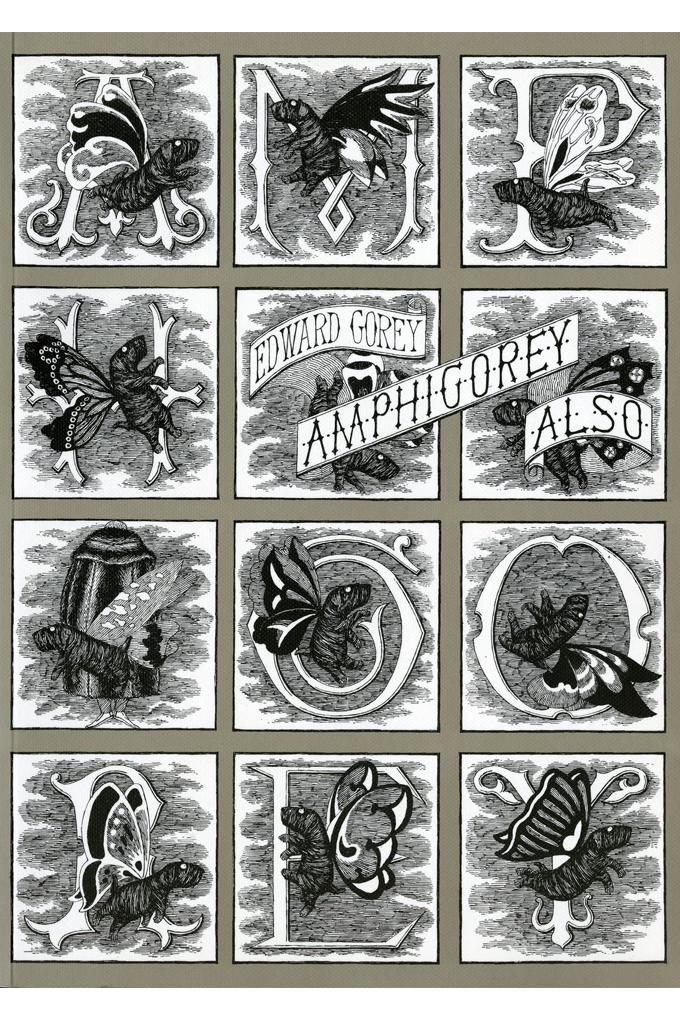
Amphigorey Also by Edward Gorey. Another perfectly inscrutable collection from a perfectly inscrutable individual. I didn’t find it as strong as the first Amphigorey volume, but it’s definitely wilder and weirder (which is saying something). There’s a lot here, I think, that made sense to only Gorey himself, if at all (which is, of course, how he would have liked it). The more “traditional” (for lack of a better word) little books are, naturally, perfectly intricate and fastidious affairs. Among my favorites: The Epiplectic Bicycle (a splendidly stark selection of increasingly surreal non-sequiturs); Les Passementeries Horribles (oddly ominous and exceptionally eldritch); L’heure Bleue (a strikingly stylistic, delightful doggerel); The Awdry-Gore Legacy (a marvelously meta, murderous manuscript); The Glorious Nosebleed (another absurdly amusing abecedarium); The Loathsome Couple (a lugubrious and lurid little lay); The Stupid Joke (a terrifically terrible tale); The Prune People (mesmerically Magrittean); The Tuning Fork (an uncanny, nautical narrative). 

We love Edward Gorey in this house.

Written Lives by Javier Marías, Margaret Jull Costa (translator). An okay but deeply amusing read for me. In the prologue, Marías writes about his intention to treat these large literary legends as mostly fictional figures, given that most were long dead and their biographies burdened with embellishments. In this way, I suppose I’m the ideal reader for this book, as I had only a passing knowledge, if any, of many of the distinguished dignitaries discussed in this slim volume, and so their eventful, fanciful, often extravagant lives would have read like fantastic fiction to me regardless.

In a lot of ways, Written Lives reads like a modern, more literary version of Plutarch’s Lives, sharing that classical volume’s penchant for brief biographies that are as full of sensational gossip and racy rumors as they are of irrefutable facts. This, as you might imagine, makes for a fun and fairly flippant read—but also an unexpectedly poignant one at times—since by going with this fictionalized approach, Marías actually ends up humanizing his beloved scribes with all their elaborate, likely imagined foibles and follies. It’s funny how that works.

Anyway, the entries I enjoyed most were curiously about the figures I knew next to nothing about (Giuseppe Tomasi di Lampedusa, Madame du Deffand, Vernon Lee). But it’s the final section—a sort of impromptu epilogue where Marías “reviews” the portraits of celebrated writers he’s collected over the years, drawing increasingly ludicrous and improbable conclusions from the tiniest, most arbitrary details—that I found most fascinating. More than in the preceding biographies, it’s in this segment that Marías’s genuine, almost idealistic impressions of these literary luminaries shine through, and it’s a delight to read.

Bad Dreams in the Night by Adam Ellis. I’m a huge fan of Ellis’s horror work. It often feels timeless, like early internet creepypastas or classic urban legends, but then Ellis will add these touches of modernity—present-day tech, matter-of-fact representation, contemporary colloquialisms—that make his stories feel much more immediate and engaging. Ellis’s art continues to amaze. When I first started following his work many moons ago, it leaned toward the “typical” webcomic style of the time, but has since evolved into something far more intricate and nuanced. His ability to emulate a myriad of aesthetics and moods—from Ito-esque manga to found-footage films to even Victorian-era penny dreadfuls—will never not be impressive. Great stuff. Favorites: “Me and Evangeline at the Farm,” “Bus Stop,” and the brilliantly creepy closer, “Viola Bloom.” 

And that was September. I had grand plans for October, let me tell you, but to be perfectly honest, now that it’s finally here, I find myself not feeling things at all this year. So this Halloween month may be more muted than you might have come to expect from this humble horror reader. Still, I hope to get through at least a few ghastly books this haunting season. We’ll see.


BOOKS BOUGHT—A GALLIMAUFRY:

  • No Country for Old Men by Cormac McCarthy
  • So Many Books: Reading and Publishing in an Age of Abundance by Gabriel Zaid
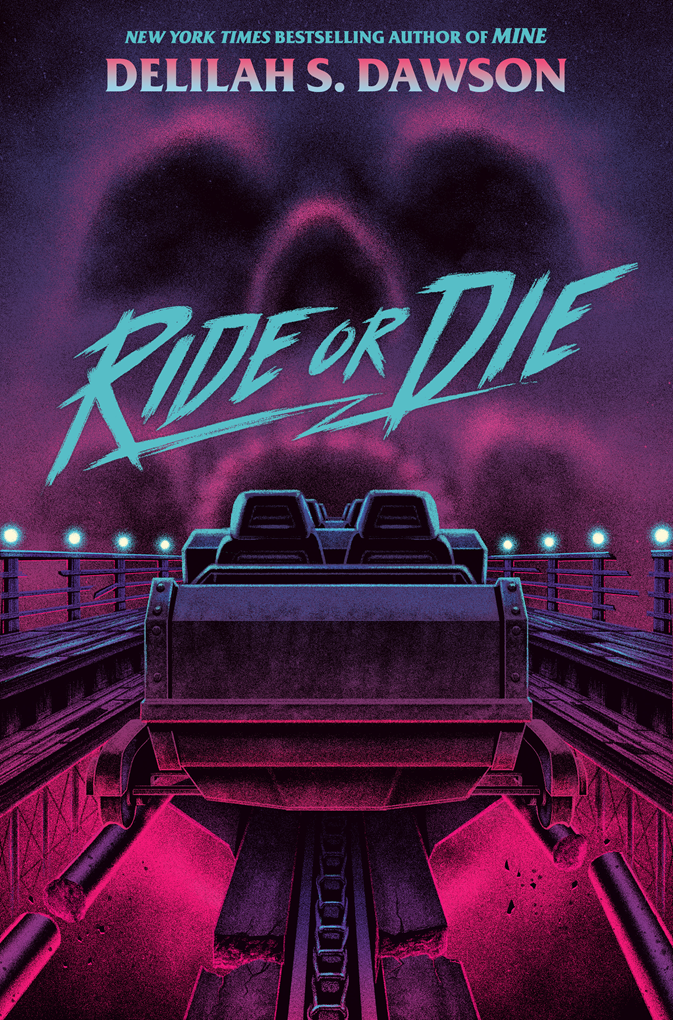
  • Mystery James Digs Her Own Grave by Ally Russell
  • Amphigorey Too by Edward Gorey

BEAUTIFUL BRUTAL BODIES by Linda Cheng

This review first appeared in Booklist on October 1, 2025.

After several of her fans mysteriously die during one of her livestreams, guilt weighs heavily on young singer-songwriter Tian. It doesn’t help that, due to an unusual affliction, she’s rarely allowed to leave her guardian’s estate. So when her usually austere auntie recommends a restorative retreat on an island near Hong Kong, she jumps at the opportunity. Accompanied by Liya, her devoted but distant best friend and bodyguard, and Shenyu, her enthusiastic songwriting partner, Tian looks forward to a restful reprieve from her restrictive life. Once there, however, they begin to suspect that the surreally serene resort and its congregation of attendants might be more cult than commune—and they may harbor sinister intentions toward the group of friends. The resolute trio must uncover their connection to the ethereal island before their bodies are brutally sacrificed to its legend. Cheng explores themes of love, legacy, and the redemptive act of letting go in this sapphic follow-up to Gorgeous Gruesome Faces (2023). Perfect for fans of Trang Thanh Tran’s She Is a Haunting (2023) and E. Latimer’s The Afterdark (2025).

PENNIES by Lora Senf

This review first appeared in Booklist on October 1, 2025.

The people of Blight Harbor are no strangers to strange happenings. As residents of the seventh-most haunted town in America, they’re used to the sight of ghosts and having vampires for neighbors. They’re even fine with the occasional appearance of portals to a perilous underworld—where a dark sun hangs in a bruise-colored sky—so long as those doors are quickly sealed shut by the ever-vigilant townspeople. But a recent string of disappearances has everyone on edge, and when friends Mae, Lark, Brigid, and Claret stumble upon a door that none of the adults seem to see, they can’t shake the feeling it’s somehow connected. Then Brigid’s cousin, Emilia, goes missing, and the group suspects that Johnny Pope, the local miscreant, may have used the door to hide her away in the Dark Sun Side. The girls venture through the door, hoping to find their friend before something terrible happens, and they quickly discover that the worst kind of monsters often wear a human face. Senf returns to the world of The Clackity (2022) in this imaginative prequel set 100 years prior, telling a story that beautifully balances fantastical and frightening elements with a wonderfully nuanced and heartfelt portrayal of friendship. Alive with atmosphere and character, this creepy, captivating read will appeal to both longtime fans of the established series and newcomers alike.

AUGUST 2025

This was August.

Monk and Robot by Becky Chambers. The two novellas that make up this volume—A Psalm for the Wild-Built and A Prayer for the Crown-Shy—are pretty much the only books from the past decade that I keep returning to time and time again. They’re stories that speak to me on a molecular level, that put many of the fears and doubts and anxieties that haunt me into solid, sober, mercifully soothing words. They’re a comforting presence in my life, and in these recent times of doubt, fear, and anxiety, that comfort is something I find myself constantly seeking. I’m not at all religious, but I’m grateful that there are still psalms and prayers I can turn to in times of need.

And oh, do I wish Chambers would continue Monk and Robot’s journey. Lovely and beautiful and true though it may be, I can’t help but feel that it remains incomplete. The part of my brain obsessed with narrative can’t help but anticipate an undoubtedly forthcoming third entry in the series (the Promise cycle, I always thought—Psalm, Prayer, Promise). But then again, that’s one of the central themes in these novellas: the inscrutable, serendipitous nature of life. Mosscap and Dex, like you and me, have no actual idea what comes next, but they’re perfectly willing—like you and I should—to be okay with not knowing. It’s enough to just exist in the moment, prepared to embrace whatever, if anything, the next chapter might bring.

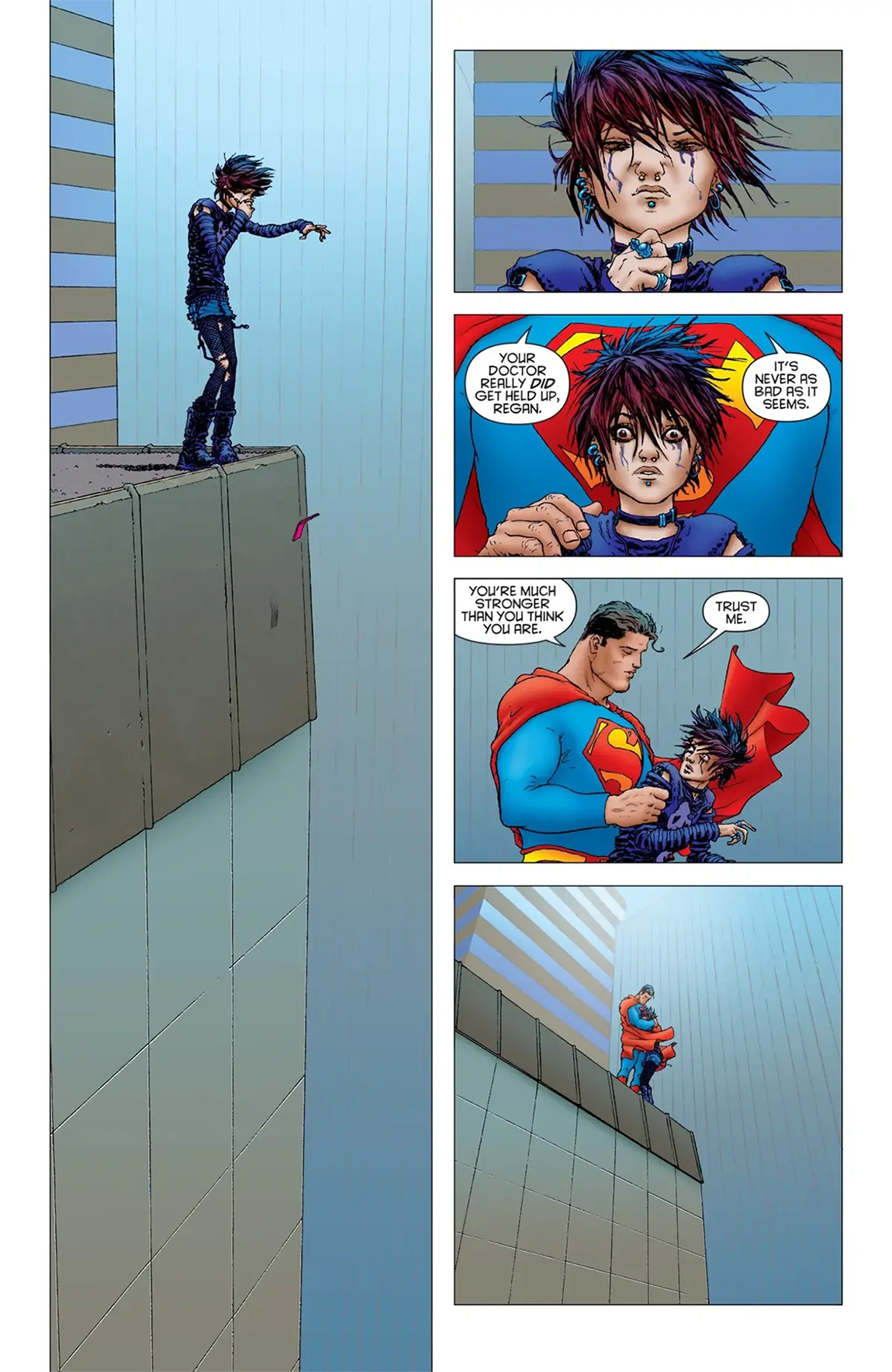
All-Star Superman by Grant Morrison, Frank Quitely. August was bleak and draining. At the beginning of the month, my tío—a man who helped shape nearly every aspect of my being, down to the name we shared—passed away suddenly and senselessly. It was a blow I’m still struggling to recover from, and it meant I spent much of the month in a fog of melancholy and a state of profound anhedonia. It’s why I did so little reading during that time. I found it difficult to enjoy much of anything.

Then I watched the new Superman film, and it was the first time in weeks that I felt any real, unadulterated sense of joy. I watched it a total of three times. When I couldn’t stop thinking about it, I figured I might as well revisit the original masterpiece that influenced it in the first place.

In my grief, I clung to this silly superhero stuff like a lifeline.

There’s not a lot I can say about this staggering achievement of sequential art, other than I’ve read it countless times over the years and it still manages to surprise and astonish me. Quitely’s art remains revelatory, and his rendition of Clark is still my favorite. I’ve marveled at—and delighted in—the sheer inventiveness and anarchic glee of Morrison’s writing for ages now. This book has the single best page in all of comics history. I don’t know. It’s just a beautiful, wonderful work of art, man.

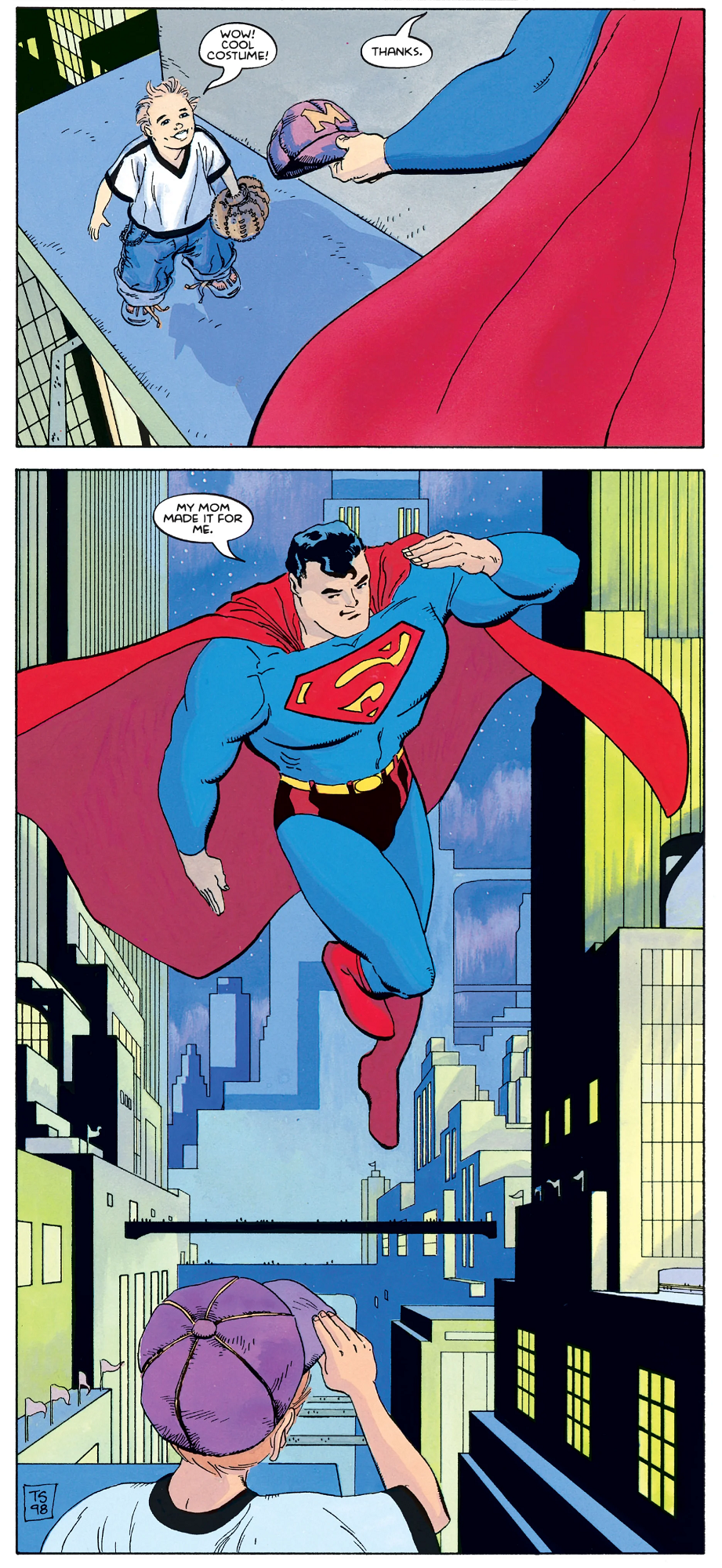
Superman for All Seasons by Jeph Loeb, Tim Sale, Bjarne Hansen. It’s been ages since I last read this so I had forgotten a great deal of it. But, man, is it still one of my absolute favorite Superman stories. Sale’s art along with Bjarne Hansen’s stunning color work already make this a gorgeous comic, but it’s Loeb’s sincere, folksy, down-to-earth writing that makes this book special for me—it captures the essence of the character more deeply and more profoundly than many other narratives featuring the Big Blue Boy Scout. Just an exceptionally endearing book.

This silly superhero stuff. 

I’ve been thinking a lot about heroes lately.

The day my uncle died, my siblings and I rushed to the hospital to be by our mother’s side. “I know your uncle was your hero,” was the first thing she told us. “He loved you so very much.”

My tío was not Superman. He was a flawed, fallible man who would sometimes make promises he couldn’t keep, a man prone to distraction, at times carelessly so. And yet. He was always there, regardless, at every single stage of my life. And still. He always—without exception, without fail—believed in his namesake, even when his namesake didn’t believe in himself. He was my hero and I love him and I miss him.


BROKEN DOLLS by Ally Malinenko

This review first appeared in Booklist on September 1, 2025.

Kaye is struggling with the death of her beloved grandfather, her grief manifesting in unexpected ways: compulsive counting and selective mutism. These habits help soothe her anxious mind but make it difficult to express her growing melancholy to a family that already seems to have moved on. It’s a lot for any young person to handle, and it threatens to make this summer—spent helping renovate Grampa’s old house—emotionally overwhelming. And then the dolls arrive. The first one is creepy enough—a porcelain poppet that looks eerily like her younger sister, Holly—but before long, the house is overrun with grotesque, frightening figures. Most disturbingly, the dolls seem alive; Kaye sees them moving around at night and hears them whispering in the dark. Soon, it becomes clear that these twisted toys have sinister schemes in mind for Holly—and that Kaye must reckon with her sorrow in order to save her sister’s life. This thoughtful, profoundly compassionate exploration of anxiety and grief also serves up some serious scares. Malinenko (This Appearing House, 2022) portrays Kaye’s emotional journey in a way that feels real, relatable, and resonant, without ever sacrificing the story’s suspense. A perfect pick for fans of Katherine Arden’s Small Spaces (2018) and Lindsay Currie’s What Lives in the Woods (2021).

LET’S SPLIT UP by Bill Wood

This review first appeared in Booklist on September 1, 2025.

When the mutilated bodies of two popular students turn up inside an ancient, decrepit mansion on the outskirts of Sanera, California, rumors spread like wildfire—chief among them that the gruesome deed was the work of the malevolent spirit said to haunt the historic house. Friends Amber, Cam, and Jonesy are particularly shaken by the news of their murdered classmates. With encouragement from Buffy—the new girl in town, eager to make a good impression—they set out to unravel the mystery. Whether the culprit is a supernatural slayer or a living, breathing killer, the bodies begin to pile up. And when the intrepid friends become targets themselves, they must come together as a group . . . or die. Debut author Wood wears his influences on his bloody sleeves, delivering a fast-paced homage to the slasher genre, brimming with knowing winks and genuine thrills. While it treads familiar ground, Wood’s enthusiasm for the material is evident and infectious, making for a lively read. Readers who enjoy horror with a healthy dose of playful self-awareness will have a great time solving mysteries with these meddling kids.

THE SILENCED by Diana Rodriguez Wallach

This review first appeared in Booklist on September 1, 2025.

Hazel Perez thinks the worst part of her latest school project is being grouped with her ex–best friend, Becca. But then a research trip to their chosen subject—the long-abandoned Oakwell Farms School for Girls—ends with Hazel falling through a roof. She wakes up in the hospital with a broken arm, a concussion, and a ghostly hitchhiker. An angry, vengeful spirit has latched onto her, and it’s threatening to take over. Desperate to break free, Hazel starts digging into the Farm’s past, soon uncovering decades of unspeakable abuse by the men who ran the place unchecked. With help from family, renewed friendships, and budding romance, Hazel works to expose the Farm’s cruel history, hoping to restore the voices of silenced women and bring peace to the restless spirits that were left behind. Blending supernatural suspense with harrowing historical fact, Wallach shines a scathing spotlight on the deeply disturbing troubled-teen industry through a haunting tale of justice and grief, where the true terror lies not in the ghosts but in the atrocities that created them. 

JULY 2025

Hello. This was July—a month in which I did little personal reading because life lately has been nothing but relentless. Let’s not dwell on that, though. 

“The Destroyer” by Tara Isabella Burton. This short story about mothers, daughters, the future and fascism was, like life, utterly relentless. But my god was it beautifully, devastatingly written. I loved everything about this, and I wouldn’t be at all surprised if it ends up being my favorite short story read this year. 

I also listened to the LeVar Burton Reads episode on it, and it was, of course, excellent. Recommended.

The Talented Mr. Ripley by Patricia Highsmith. Oh, that Tom Ripley—what an anxious little weirdo. The only novel I managed to read recreationally this past month, but it was my main summer book, so I’m glad I got to it. I actually just recently watched the 1999 film adaptation for the first time last year, and my notes for it mostly consist of me regretting that it took me so damn long, since its mid-century murder vibes are so up my alley. I ended up feeling the same way about the book—even enjoying it slightly more than the movie, mostly because we got to bask in its opulent Mediterranean atmosphere for much longer. Highsmith was a great character writer, and Tom Ripley is one of the most fascinating fictional figures I’ve ever come across. I finished this wanting not only to check out the Ripley sequels, but Highsmith’s other works as well (Strangers on a Train, in particular). Excellent stuff. 

And that was July. We’re barely a week into August, but it’s already dealt some devastating blows that have left me not only drained but well and truly broken, so apologies if this write-up is a little lacking. We carry on, though. Until next time.


BOOKS BOUGHT—HALLOWEEN LOOMS:

  • The Work of Art: How Something Comes from Nothing by Adam Moss
  • Double or Nothing by Kim Sherwood
  • Poe’s Children edited by Peter Straub
  • Terror in Tiny Town by A.G. Cascone
  • The Girl Who Cried Monster by R.L. Stine
  • The Curse of the Mummy’s Tomb by R.L. Stine
  • Cycle of the Werewolf by Stephen King
  • Classic Monsters Unleashed edited by James Aquilone
  • Bride of the Castle by John DeChancie
  • Anno Dracula by Kim Newman

SONGS FOR GHOSTS by Clara Kumagai

This review first appeared in Booklist on August 1, 2025.

For Adam, life feels like a series of struggles. At home, tensions with his distant father and wary stepmother are coming to a head. At school, with college looming, there’s pressure to decide his future—particularly whether he wants to pursue music professionally, which he enjoys but doesn’t feel especially passionate about. Emotionally, he feels heartbroken and adrift, unsure if he truly belongs anywhere. Then he finds a kindred spirit in a diary written a century ago by a passionate, independent young woman whose experiences seem to mirror his own. But she also writes about ghosts that come to her in the night, seeking solace. Adam assumes this is mere metaphor—until he’s suddenly haunted by the woman’s own restless, sullen spirit. Hoping to give her peace, Adam embarks on a journey to unravel not only the mysteries of a tangled past but also those of his own tumultuous present. Lyrical and haunting, Kumagai’s ghostly tale of love and identity is a testament to the healing power of story and its capacity to bridge divides between cultures and generations. Based on Giacomo Puccini’s Madama Butterfly, this is an act of reclamation, telling the story from the perspective of the opera’s most marginalized character and illuminating often overlooked aspects of Japanese life in the early twentieth century. A beautiful and necessary work.