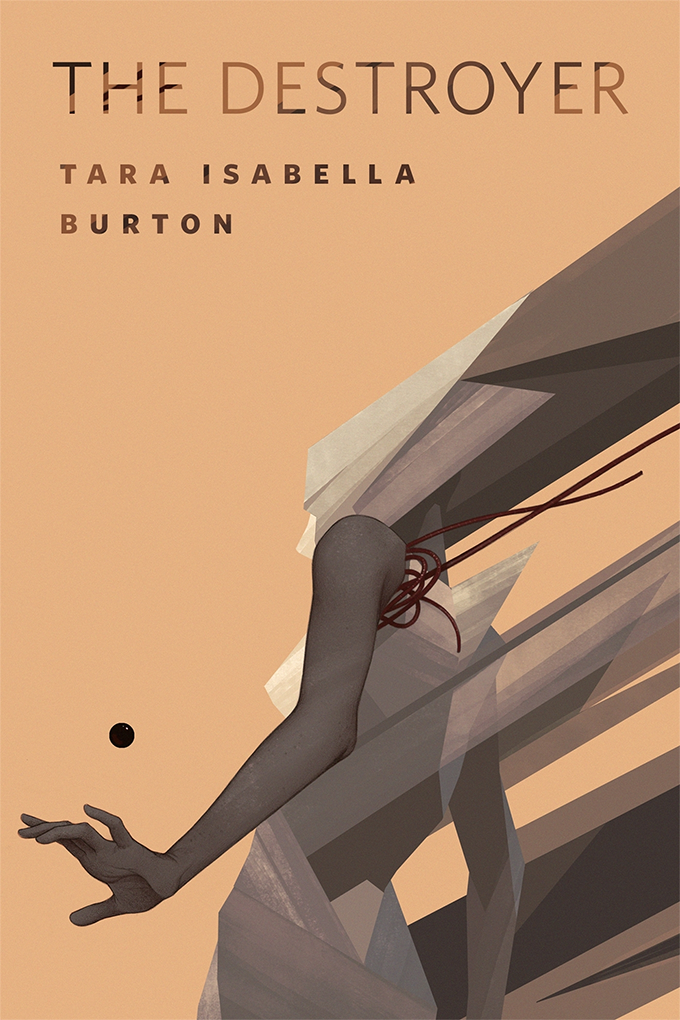
THE PUMPKIN PRINCESS AND THE BURIED CASTLE by Steven Banbury

This review first appeared in Booklist on August 1, 2025.

Peculiar things have been happening to Eve ever since the events of the Forever Night transpired nearly a year ago—when, thanks to the undead denizens of Hallowell Valley, her life changed forever. Or was it her death? The Pumpkin Princess isn’t quite sure anymore. Now she’s dealing with some weird and magical changes: breathing fire like her adoptive father, the Pumpkin King; drifting through walls like her ghostly neighbors; and, apparently, being the only one who can see the mysterious shadow with glowing green eyes lurking around town. Then, on All Hallows’ Eve, the shady specter approaches her, presenting her with a tempting but impossible choice—one that comes with catastrophic consequences no matter what she decides. In the disastrous aftermath, Eve must steadfastly step into her role as princess and steward to save not only the land of the undead but also the world of the living. In this sequel to The Pumpkin Princess and the Forever Night (2024), Banbury significantly expands his enchanting world with fresh faces, new dangers, and remarkable revelations. While the numerous additions make the plot feel a little convoluted at times, they also offer ample opportunities for meaningful character growth, particularly among the supporting cast, which truly gets to shine in this bewitching tale of friendship, family, and fairness. Another fantastic fall fable.

JUNE 2025

Hello. This was June. A month that somehow felt both interminable and entirely too short. But that’s par for the course these days, isn’t it? Everything is weird—why shouldn’t time also feel odd? Anyway. I managed to read a few things:

Carte Blanche by Jeffery Deaver. I planned on spending my summer reading a bunch of thrillers, and this was a good one with which to start. It’s a James Bond affair, so of course I would have fun with it. Definitely overlong, though, and the plot was far too convoluted for what the villainous scheme ultimately turned out to be. But again: it’s Bond. 

Carte Blanche was one of Ian Fleming Publications’ many attempts to reboot and modernize their literary character, which is always a bit of a mixed-bag endeavor. I liked Deaver’s present-day interpretation of 007 for the most part, but the image of Bond constantly checking his cell phone can’t help but feel a bit silly—even the current films avoid doing that too much. At times, the writing did genuinely feel like an update of Fleming’s, though, and that’s not the easiest thing in the world to pull off, so it’s a shame Deaver didn’t go on to write more Bond novels. I would have liked to see him play around in this world some more.

The Woman in Cabin 10 by Ruth Ware. This locked-room mystery set on a luxury cruise was… very lackluster. I just found the protagonist exasperating, and the overall plot—particularly the way it unraveled—even more so. There’s never any real sense of menace besides the main character’s pronounced paranoia. Still, it kept me turning the pages and made for a quick read, which is sometimes the most you can ask of these mass-market mysteries.

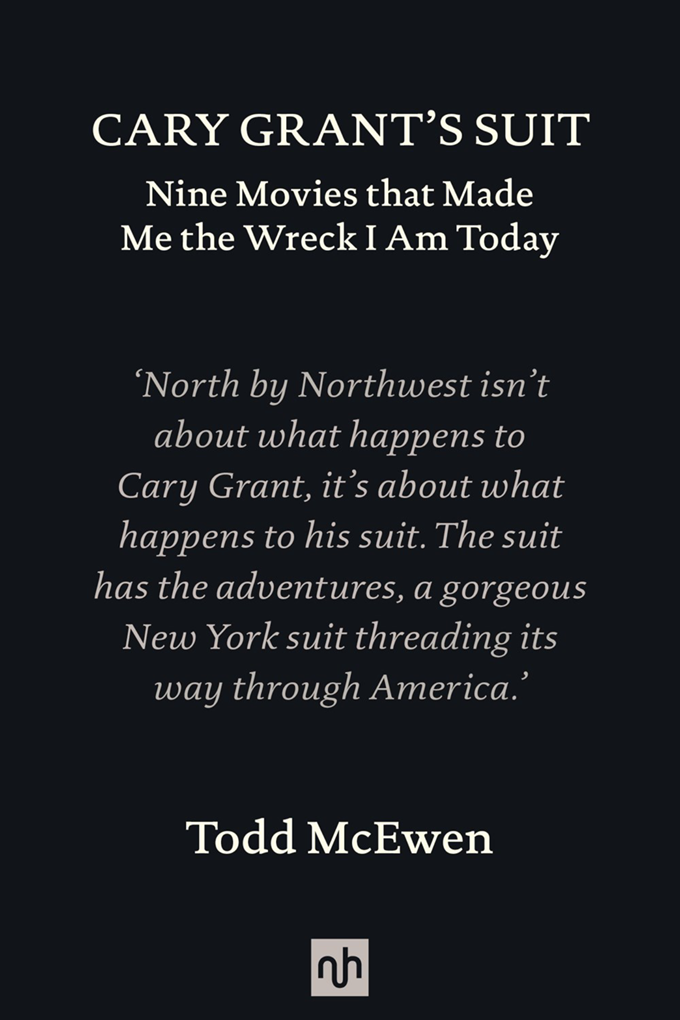
Cary Grant’s Suit by Todd McEwen. Bought this collection of essays mostly because of the title, to be perfectly honest. But also, unconventional nonfiction books focusing on Very Specific Things are some of my favorite reads. This one turned out to be more memoir than movie musings, though, which diminished my enjoyment a bit. McEwen is a very stylistic writer (O, but the Tom Wolfe influence is palpable!!!). He’s also very funny—which is good because I found myself disagreeing with him a lot. At this point in my reading life, though, I find that increasingly delightful. Have you ever ranted at a book? Highly recommend. Very cathartic.

Some solid pieces here, but the titular essay is, naturally, the best. Also, I picked this up right after rewatching To Catch a Thief, so I figure it must follow that I rewatch North by Northwest now. That suit! Cary Grant—genuinely one of the best to ever wear clothes.

“Bullet in the Brain” by Tobias Wolff. Robin Sloan shouted out this story in his newsletter a few months back, saying that all good short stories are essentially about death—making this incredibly brief piece from Tobias Wolff, by definition, a perfect short story. I don’t disagree. A man is shot and his life flashes before his eyes is definitely a cliché, but stories like this are a testament to how powerfully tired tropes can still resonate in the hands of skillful writers. Straight and to the point, with not a single line or word wasted.

And that was June. See you next month.


BOOKS BOUGHT—SUMMERY VIBES CLEARLY SOUGHT:

  • The Woman in Cabin 10 by Ruth Ware
  • The Beach by Alex Garland
  • Trick Mirror by Jia Tolentino
  • The Moving Target by Ross Macdonald
  • Weekend by Christopher Pike

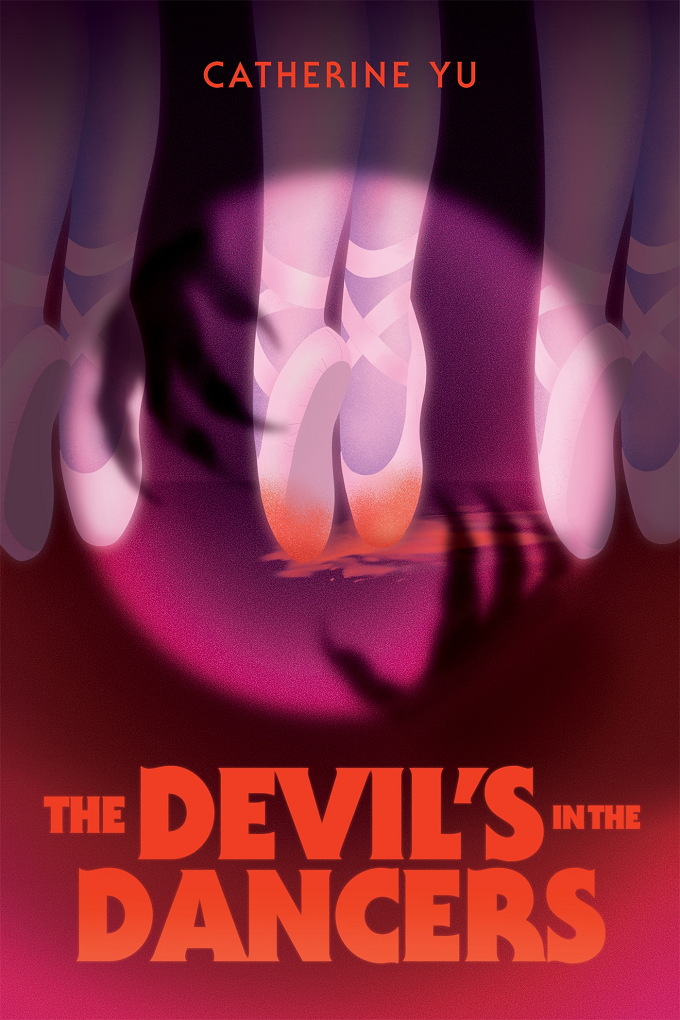
THE DEVIL’S IN THE DANCERS by Catherine Yu

This review first appeared in Booklist on July 1, 2025.

Mars Chang has just landed a summer scholarship at the Allegra Academy, a prestigious ballet institution that could open many distinguished doors for the young, ambitious dancer. Once there, however, she’s met with disdain due to her modest background, quickly learning that at this esteemed institution, class and legacy matter more than talent and skill. But she presses on, dancing through the derision gracefully enough to catch the attention of the school’s venal, venerated founder. Mars is soon thrust into a corrupt choreography, perilously pirouetting around the academy’s darker deeds. When these nefarious affairs put the life of her budding crush in danger, Mars must decide whether her passions and aspirations are worth sacrificing her conscience and sense of self. Yu’s intense ballet drama is as much a critique of class divisions as it is an adolescent melodrama of ambition and moral conflict, and the feints and flourishes will keep readers riveted. Present alongside other visceral stagings of elitism and entitlement, such as A. K. Small’s Bright Burning Stars (2019) and Erica Ridley’s The Protégée (2025).

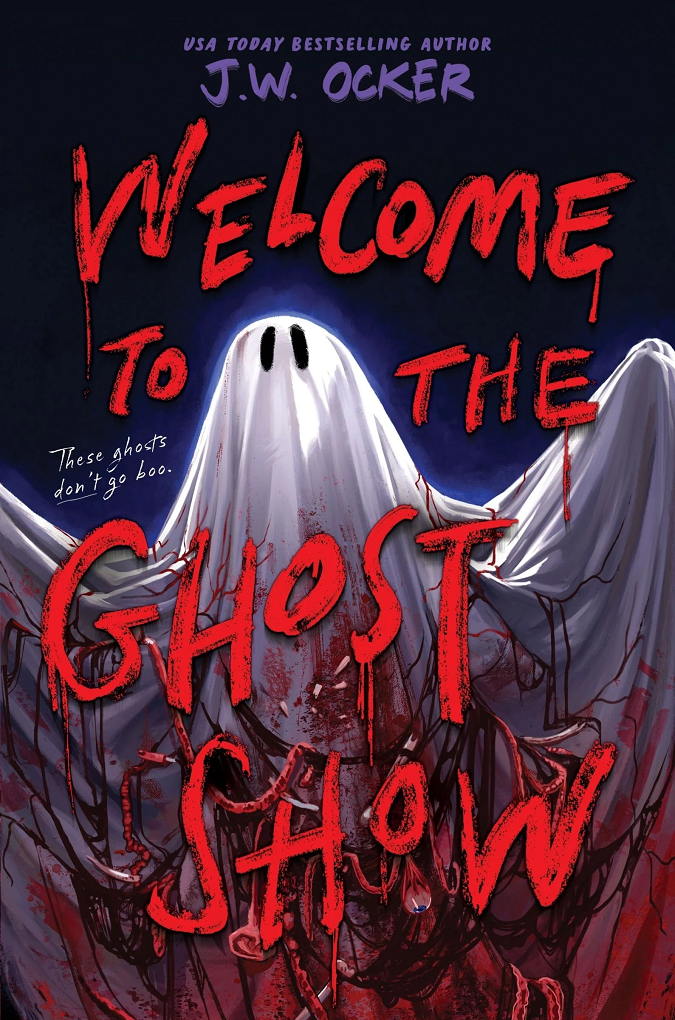
WELCOME TO THE GHOST SHOW by J.W. Ocker

This review first appeared in Booklist on July 1, 2025.

Hazel “Zel” Gold longs to see ghosts. Along with her friends and fellow aficionados of the weird, Theo and Lucien, she forms the Creepy Club, a group dedicated to exploring the lurid and eerie corners of their small Maryland town in search of anything remotely paranormal. One day, ominous posters appear around town, heralding the arrival of the Ghost Show, a mysterious traveling attraction that claims to feature real ghosts. The Creepy Club jumps at the chance to finally witness some supernatural spectacle, only to find the show spearheaded by the imposing and enigmatic Everest Nocturama Mancer, a self-professed ghost catcher who plans to exploit the town’s tragic, haunted history for his own ghastly purposes. It’s up to Zel and her friends to save not only their bereaved community but also the suffering spirits ensnared in Mancer’s grasp. Ocker conjures a magnificently macabre and gleefully grotesque tale that’s as much a celebration of the odd and the peculiar as it is a thoughtful and affecting meditation on mortality, grief, and the painful process of letting go.

MAY 2025

Hello. This was May. A criminal month.

The Human Bullet by Benjamin Percy. Genuinely, my only gripe is that I wish it had been a longer story. The premise is phenomenal (man wakes up from a coma after being shot in the head, dreaming all the while of a vastly different life—his reality, consequently, blurs), but Percy’s pitch-perfect pulp prose is pretty much the star of the show. This was just fantastic. I enjoyed it so much that I immediately went searching for anything else Percy has written. (Turns out I had already read something of his before, and I just didn’t remember: the Black Box arc of Dynamite’s James Bond comic, which I also quite enjoyed.)

American Criminal by Benjamin Percy. Percy is two for two. This was brilliant. A story about a heist artist who rips off other heist artists that reads like a modernized, infinitely more personable version of Richard Stark’s Parker character. I dug every single page of it. Percy is two for two, and he might just be a new favorite author.

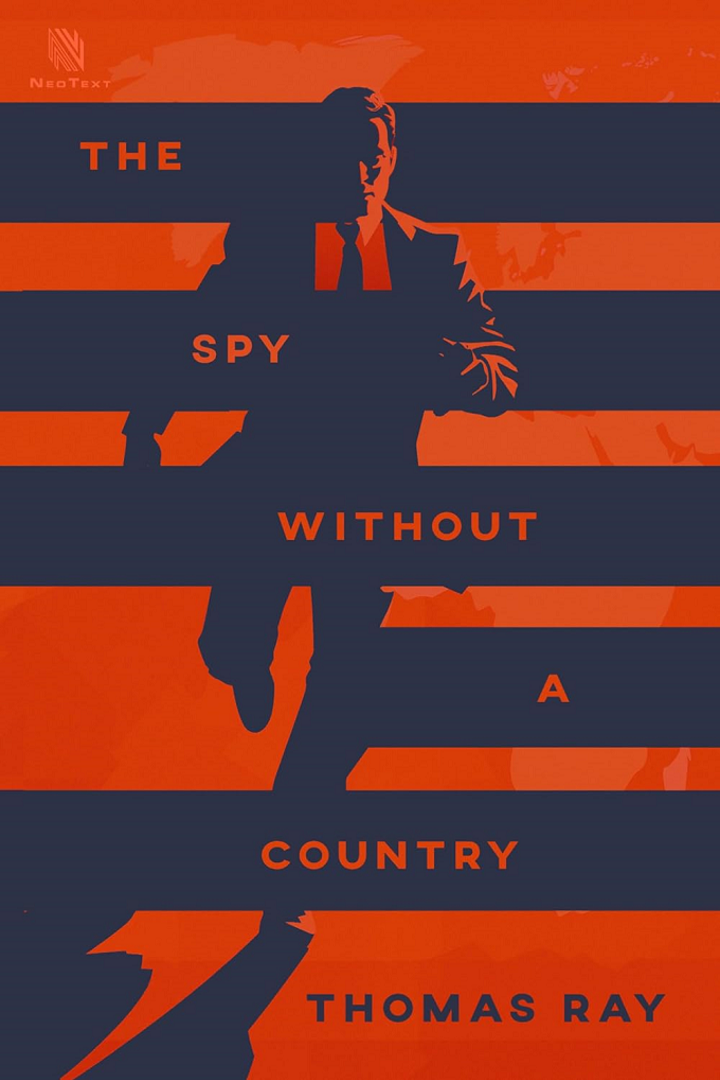
The Spy Without a Country by Thomas Ray. A US intelligence officer wakes up in the middle of a car wreck full of dead bodies with no memory of how he got there. Reasoning that his cover has been blown, he opts to come in from the cold—only to find that his handlers and fellow agents have no idea who he is. This is Black Mirror meets The Bourne Identity, and I was absolutely into it. Outlandish, to be sure, but made palatable thanks to Ray’s stark, straightforward style. It does get a little repetitive, though—particularly at the halfway mark, which is inherently circuitous—but overall, a very solid, sly spy story.

Heat 2 by Michael Mann, Meg Gardiner. Promptly going to shove this book into the hands of anyone and everyone who says novels can’t be as visceral, heart-pounding, and immediate as the best of thrillers. There are sequences here (multiple!) that rival scenes from the original classic film. I literally had to put it down a couple of times (multiple!) just to catch my bearings. What a ride. And what an inadvertent homage to Val Kilmer. His portrayal of Shiherlis was instantly iconic, and the character is considerably fleshed out and humanized in this epic novel.

Also, Michael Mann’s directorial style is so distinctive and visual that you wouldn’t expect it to translate well into prose—but I’ll be damned if he and Gardiner didn’t pull it off. Heat 2 is stylish as hell. It just exudes cool.

I know a film adaptation is inevitable—and I am certainly interested in seeing how that pans out—but what a brilliant move to do this story as a novel first. There’s so much going on here—enough to fuel multiple movies, let alone one. A wonderful, relentless beast of a novel. I loved the hell out of this.

Y2K: How the 2000s Became Everything (Essays on the Future That Never Was) by Colette Shade. I watched the original Bourne trilogy for the first time recently and found it to be such a perfect portrayal of a particular point in time that it sent me down a serious rabbit hole of early-aughts nostalgia—in particular, the aesthetics of the era. This, in turn, led me to learn about this recently released collection of essays. So, I had to get it. Obviously.

Of course, this turned out to be less about the visuals and vibes of a bygone era and more about the cultural anxieties and preoccupations of the time—and it is so much better for it. While I initially went into it for the nostalgia (and, to be perfectly fair, there is plenty of it here), I came to appreciate Shade’s surprisingly nuanced observations on many of the political choices and social mores of the era that would, eventually and inevitably, come to shape our modern Western malaise. (Spoiler alert: it was mostly capitalism’s fault.)

Obviously, though, this couldn’t truly be a work about the Millennial condition without some cringe involved. Shade comes from a relatively privileged background (her upbringing was solidly middle class, and she was gifted Nokia stock to help pay for college), and some of her takes can read, at best, a little naive, and at worst, entitled. 

Shade demonstrates enough self-awareness to acknowledge her oversights, and they’re never severe enough to undermine her core argument, which is, essentially: our generation was promised a vibrant, flourishing future—and it was denied to us. Shade distills the shared anger and resentment stemming from that betrayal into a potent, poignant, and exceptionally readable volume.

I can’t really listen to music while I’m working my way through a book, but whenever I wasn’t reading, I was playing TLC’s “No Scrubs” and Moby’s “Porcelain” on a loop, pretty much. Seemed like the appropriate thing to do.

“The Havana Run” by Ace Atkins. I wanted a short story with summery, Caribbean vibes to close out the month, and this seemed to fit the bill. It had a solid premise—two down-on-their-luck former journalists take on a job retrieving some valuables from Cuba, only to find themselves caught in a criminal web of conspiracy and deceit—but I found the execution a bit lacking. It’s a light crime caper, but it never quite struck the right balance between humor and intensity. Still, Atkins’s writing is lively and sleek, and it kept the story moving along at a modest clip.

And those were the month’s misdeeds.


BOOKS BOUGHT—A THEME EMERGES SOMEWHAT:

  • American Criminal by Benjamin Percy
  • North Border by Benjamin Percy
  • Bystanders by Benjamin Percy
  • High by Adam Roberts
  • Stealing for the Sky by Adam Roberts
  • The Spy Without a Country by Thomas Ray
  • Monk and Robot by Becky Chambers
  • Slayground by Richard Stark
  • The Talented Mr. Ripley by Patricia Highsmith
  • The Bourne Identity by Robert Ludlum
  • Y2K: How the 2000s Became Everything (Essays on the Future That Never Was) by Colette Shade

PREDATORY NATURES by Amy Goldsmith

This review first appeared in Booklist on June 1, 2025.

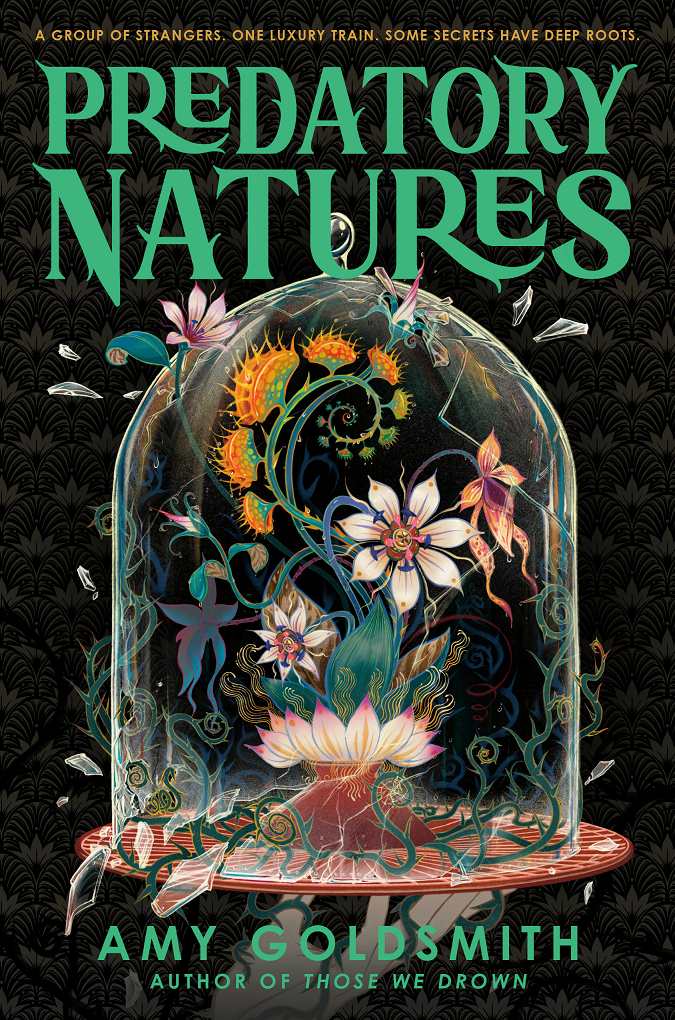
After a series of personal tragedies leaves her friendless and aimless, Lara Williams finds herself uprooted, wanting nothing more than to escape the mess that’s become her life. So when she gets the chance to work aboard the Banebury, a luxury train traveling through the lush European countryside, she jumps at the opportunity, determined to at least run away in style. Not even the unexpected presence of an old, maybe-sort-of flame among her fellow crew members can dampen her spirits. But shortly into the voyage, a mysterious set of siblings board the Banebury, bringing two carriages overflowing with strange, beautiful flora—and an ancient, ominous force waiting to take root. Inspired by Welsh mythology and combining elements of folk horror and dark academia, Goldsmith cultivates a fierce, frightening fantasy that draws powerful parallels between folkloric tragedy and the grim mundanity of modern misogyny. Predatory Natures grafts itself into the flourishing genre of botanical horror, joining the ranks of Krystal Sutherland’s House of Hollow (2021) and Andrea Hannah’s Where Darkness Blooms (2023).

GLOAM by Jack Mackay

This review first appeared in Booklist on June 1, 2025.

After her mother’s untimely passing, Gwen and her siblings, along with Henry, their stepfather, move into their late grandmother’s house—known simply as “The House”—on the small, gray, aptly named island of Gloam. There they meet the ethereal Esme, a local babysitter whose demeanor and general attitude toward the bereaved family seems just a tad too perfect to be genuine, earning Gwen’s immediate mistrust. Sure enough, Esme’s mere presence heralds the arrival of a sinister, creeping darkness—one that threatens to consume not only the old, mysterious house itself but Gwen and her family as well. Now it’s up to Gwen to unlock the house’s secrets and banish the stirring nightmares within. Featuring a bold and tenacious protagonist, a supporting cast of instantly endearing characters, and a veritable phantasmagoria of ghastly ghouls, debut author Mackay delivers a classic tale of children’s horror that’s as chilling as it is heartfelt. Exploring themes of grief, resilience, and kinship, Gloam earns its spot on the shelf alongside the likes of Jonathan Auxier’s The Night Gardener (2014) and Kenneth Oppel’s The Nest (2015).

STITCH by Pádraig Kenny

This review first appeared in Booklist on June 1, 2025.

Stitch leads a simple life in the castle at the edge of the forest. Every morning, he wakes up and makes a mark on the wall, one for every day since he first awoke: 585 days ago as of the story’s start. He feeds his pet mouse. He visits his friend Henry, locked inside a cage, and they chat. He goes out to the garden and dreams of exploring the world. And he checks on the Professor to see if he’s still asleep. This routine is interrupted by the arrival of the Professor’s nephew, who is accompanied by an assistant, Alice, as well as a barrage of bad news—and life in the castle will never again be the same. Kenny (The Monsters of Rookhaven, 2021) takes apart the original Frankenstein tale and sews the pieces back into an uplifting fable that’s bursting at the seams with heart and optimism. Stitch explores themes of friendship, prejudice, and morality through the eyes of a large-hearted protagonist who never fails to approach it all with empathy and kindness.

APRIL 2025

Hello. This was April: a month of artists, assassins, and authoritarians.

“Five Views of the Planet Tartarus” by Rachael K. Jones. Simple. Effective. Brutal. Can see why this has been getting so much award buzz. 

From Ted to Tom: The Illustrated Envelopes of Edward Gorey edited by Tom Fitzharris. Had this also included Mr. Fitzharris’s side of the conversation, this little volume would be as invaluable as Floating Worlds, that other gorgeous and considerably more intimate collection of letters between Gorey and fellow author Peter F. Neumeyer. Lacking the epistolary context, though, Gorey’s missives—full of cleverness and charisma though they may be—feel a bit cold and detached. (Although, to be fair, that is probably how Gorey would have liked it—the last thing the man wanted was to be scruted.) 

But this is mainly meant as a showcase for Gorey’s endlessly evocative envelope art, and in that regard, it is a resounding success. A stunning collection. 

Love and Let Die: James Bond, The Beatles, and the British Psyche by John Higgs. The central conceit of this book—Bond embodies Death; the Beatles embody Love—is absolutely delicious, and I all but devoured it in just a couple of days. Bond is what drew me to it initially, of course. While I’ve always enjoyed and appreciated the Beatles, I’ve never exactly been what you might call an active aficionado of the group. It’s definitely fair to say that I’m much more a proper Bond enthusiast overall, and Higgs’s commentary on the character—and his insights into the 007 stories—are among the finest, most perceptive I’ve come across. You can tell it comes from a place of deep fondness and appreciation, too, even when Higgs isn’t holding back on his criticism of the more objectionable elements of Fleming’s famous fictional fabrication.

Despite finding the “Bond is Death” premise evocative from the outset, I wasn’t entirely sold on it until literally the final chapter, with its discussion of the transformative nature of myths through the unlikely lens of the shamanic ritual tradition of the death and resurrection show—which is the kind of analysis you get from a book that insists on juxtaposing such incongruous legendary figures as Double-O Seven and the Fab Four. (It also, surprisingly, made me excited and hopeful for the future of the character—we tend to keep our myths around, after all.)

I wish I had more to say about the Beatles. Despite running a negligible MP3 blog in my early twenties, music commentary has never really been my forte. But the love Higgs has for the group and its individual members is palpable, and it made me revisit much of their music throughout my reading of this. It’s also simply astonishing how, for a group that’s been a fundamental component of pop culture for sixty years now, there is still so much left to discuss. Even this volume, which does not purport to be an exhaustive history of the band, offered some surprising insights and intriguing details I had never come across before. It was one of those sobering realizations: we’ll never truly comprehend just how much—and how utterly—these four lads changed the course of history.

But obviously, my favorite part of the whole thing was discovering the countless surprising ways these two icons of modern mythology intersected—and how their respective legacies continue to shape not just the culture of Britain, but that of the world. A perfect piece of pop punditry.

With a Mind to Kill by Anthony Horowitz. Horowitz may just be my favorite Bond writer—though that could simply be because he emulates Fleming’s distinct style so effortlessly and flawlessly. His 007 novels are excellent, and this is probably the most mature and well-written of the lot. I flew through this. I loved that the story was a direct continuation of The Man with the Golden Gun, which I still maintain would have been an excellent send-off for Bond had Fleming lived to do a final pass. That Horowitz expands and fleshes out that narrative here is a fine tribute—and indeed one that makes that particular novel retroactively better. 

Horowitz has a flair for character work, and, appropriately, Bond’s portrayal here is superb—positively brimming with the acedia its original author bestowed upon the character. I appreciated that his battles were as much mental as they were physical, a device that has always suited the literary Bond so much better. Katya is a fascinating love interest, and her story—true to this series—is suitably shocking and tragic. Colonel Boris could have been a real contender for most vile villain if only he had been fleshed out more. In a way, it was fitting that the horrendous things he did to Bond and others were merely hinted at, letting our morbid minds fill in the rest—but it would have benefited the story more to see some evidence of the character’s depravity, the better to truly loathe him. 

Still, a magnificent end to a magnificent trilogy.

Slouching Towards Bethlehem by Joan Didion. My first Didion! Finally! It was fine!

Didion was undoubtedly a Writer, and she had a way of crafting sentences that were both beautiful and breathtaking, making her prose read almost like poetry, at times. Technical admiration aside, though, I feel like a lot of these essays didn’t do much for me, unfortunately. This collection is divided into three parts: the first is devoted to pieces about California, the Culture, and The Times; the second to personal musings—more journal entries than straight-up reportage; and the third to an assortment of abstract and introspective pieces exploring more psychological and emotional terrains, along with some additional diary-type entries.

For me, each section came with diminishing returns, with the first, “Life Styles in the Golden Land,” being the strongest. Didion’s wanderings through the rapidly changing cultural landscape of the sixties—and her insights into the whys and wherefores of the psychedelic age—were nothing short of fascinating. My favorite piece was “Some Dreamers of the Golden Dream,” mostly because it read like a particularly noir episode of Mad Men and reminded me that I should really give Double Indemnity a watch. A close second was the titular essay, of course—that powerhouse of zeitgeist writing. Brilliant, bold stuff. 

Despite some truly wonderful writing, I’m sad to say that I found most of the other essays largely forgettable—mainly because many of their subjects were figures who may have, I’m sure, loomed large at the time but have since become minor historical footnotes, their triumphs and follies virtually faded and forgotten, and not even Didion’s sparkling, novelistic prose could make them resonate for this twenty-first century reader. 

Required reading, regardless. Didion was an absolute force.

And that was April. See you next month.


BOOKS BOUGHT LOOK I WAS DOING WELL UNTIL ABOUT HALFWAY THROUGH THE MONTH BUT HONESTLY I’M CONSIDERING THAT PROGRESS:

  • Death of the Author by Nnedi Okorafor
  • Cary Grant’s Suit by Todd McEwen
  • My Life with Bob by Pamela Paul
  • The Spy Who Loved Me by Ian Fleming
  • Heat 2 by Michael Mann, Meg Gardiner
  • The Chinatown Death Cloud Peril by Paul Malmont
  • Whalefall by Daniel Kraus

THE PROTÉGÉE by Erica Ridley

This review first appeared in Booklist on May 1, 2025.

In nineteenth-century France, industrialists have replaced the aristocrats as de facto rulers of the land. Amassing unprecedented wealth by severely exploiting the working class, they simultaneously create a strict social hierarchy where the proletariat is all but forced to cater to the callous whims of the elite. Eighteen-year-old Angélique dreams of rising above this classist culture by becoming the protégée of a top modiste in Paris. Then, a barbaric, avoidable accident leaves her an orphan and the sole caretaker of her youngest sister. Vowing revenge against the cruel capitalists who tore her family apart, Angélique is determined to use her talents as a seamstress to win their favor, embedding herself in high society and positioning herself perfectly to dismantle their elitist empire—by any means necessary. Written in a lavish style befitting the haute couture–laced setting, Ridley’s fashionable tale of rhapsodic retribution is a blistering critique of capitalism and its ruthless pursuit of wealth at the expense of human dignity. Macabre and delightfully twisty, Ridley’s YA debut is perfect for fans of V. E. Schwab and Kate Alice Marshall.