DECEMBER 2024

Hello. This was December—a month full of Christmas cheer and sheer chaos, in that particular order. Most of these were read early in the month, mostly because I spent the latter half of it slowly losing my mind. 

Anyway!

Skipping Christmas by John Grisham. Well, this was absolutely joyless. It was published in the early aughts, although you wouldn’t know it by the attitudes and social mores portrayed here, which seem to belong more to the Mad Men era than the 21st century. I tend to enjoy stories of contemporary Christmas chaos, but this was just relentless in its mirthless mundanity. I felt the same way about the film adaptation, which I watched for the first time last Christmas season, so I’m not entirely surprised by my reaction, but I was hoping the book, as is often the case, would at least be better. Unfortunately, this is one of those rare instances where the book is just as bland.

I listened to this on audiobook, and the narrator—actor Dennis Boutsikaris—does a marvelous job of making a mostly intolerable book somewhat tolerable (though I suppose it helps that the book is blessedly short). His lively, playful narration the only saving grace of this tedious reading experience.

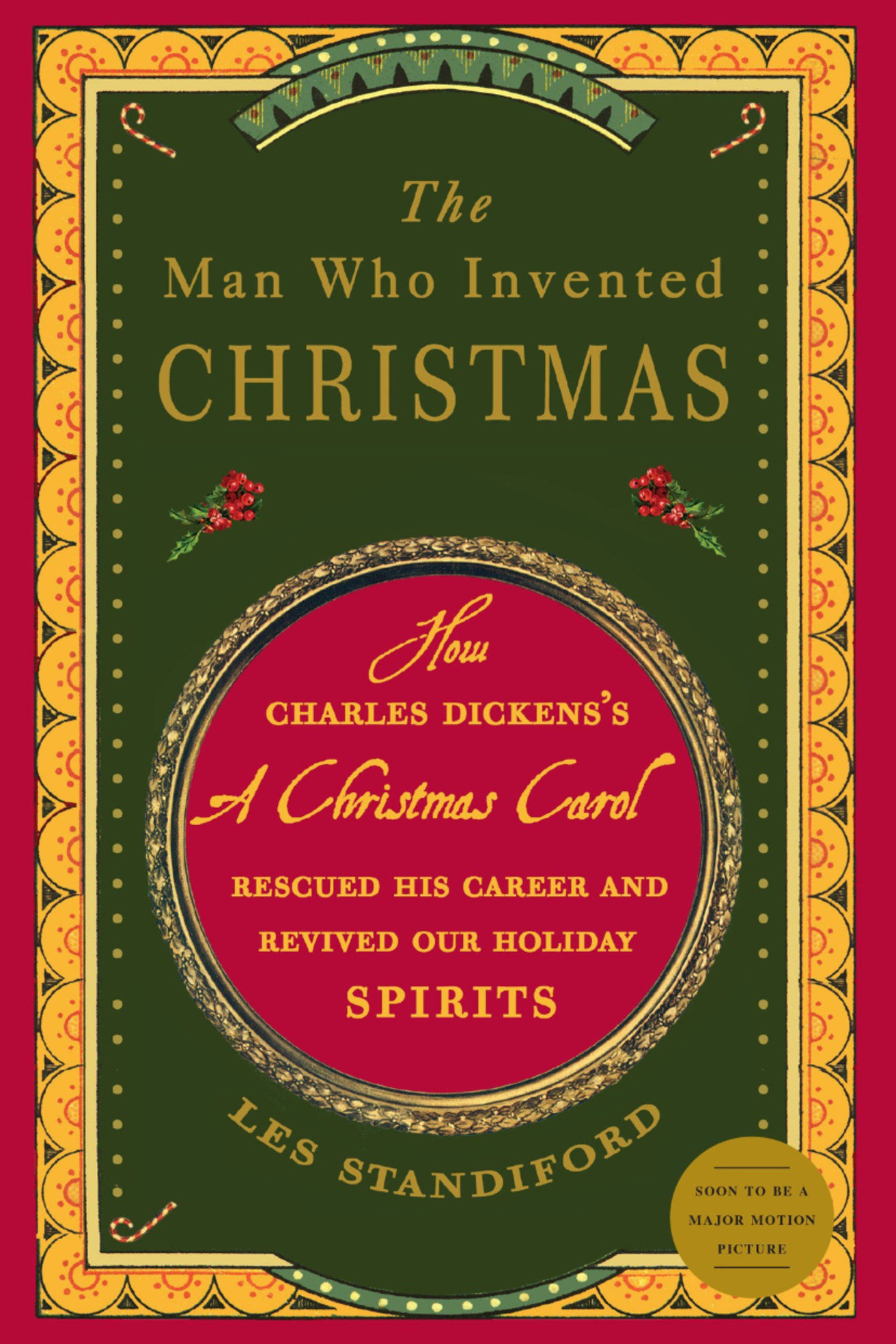
The Man Who Invented Christmas by Les Standiford. A nice and eminently readable little volume. I don’t think I gleaned any new knowledge or insights into A Christmas Carol from it, but Sandiford’s love for the story and its author is clear and captivating.

“Only Santas in the Building” by Alexis Daria. Good at what it set out to do, I suppose, but this is the sort of spicy romance I’m not really into. The instalove trope just comes across as overly goofy to me. Undoubtedly sexy and festive, though, which is, of course, the entire point.

“Krampuslauf” by Holly Black. Read this on Krampusnacht, natch. Liked the concept of this story quite a bit, but Black’s style just doesn’t do it for me. Her writing is full of fae, witchy vibes, which would normally be right up my alley, but there’s a certain superficiality to it that I find bothersome. I don’t know!

One Big Happy Family by Susan Mallery. The sort of Christmas book that I, for some godforsaken reason that a therapist can uncover for me somewhere down the line, enjoy reading the most: full of familial fracas, domestic drama, petty grievances, and needless secrets set against a festive, cozy background. Were some of the character choices maddening? Absolutely. Everyone and their literal mothers talked like therapists here, but then they would go on and take the most asinine action possible, thus undermining an already silly trait and making the characters more frustrating than they needed to be. 

But, by god, did I still relish in the messiness of it all. Due to some deep-rooted trauma, I’m sure.

I did find the ending entirely too abrupt, though, but I do wonder if that is just the author setting up a possible sequel. I would be down to read it if that turns out to be the case.

Friday, Book One: The First Day of Christmas by Ed Brubaker, Marcos Martín, Muntsa Vicente. Oh, this was rad. Following a former teen detective into darker, grittier adult territory is not a novel concept by any means, but in the hands of crime fiction masterminds like Brubaker and his crew of usual artists, it makes for a striking, arresting book. I particularly loved its New England port town setting, brought to glorious Gothic life by illustrator Marcos Martín and colorist Muntsa Vicente. Brubaker’s notes at the end of this volume mention he wanted a place that was equal parts Lovecraftian and Goreyesque, and the art absolutely nails it. It’s an excruciatingly short book, as graphic novels tend to be, but I’m definitely picking up the following installments. 

“Holiday Hideaway” by Mary Kay Andrews. I’m becoming increasingly aware that these sorts of holiday romcom short stories are not for me. Again, I can’t deal with the instalove trope in the best of cases, and much less when the two love interests have the personalities of a brick and a potato, respectively.

“Resting Scrooge Face” by Meghan Quinn. Of course I would enjoy another holiday-themed romance right after writing smack about them earlier. Barring some nonsense prose, this was great. I think I would have enjoyed it a lot more if it was written entirely in epistolary form, since that was the best, most engaging part of the story. As it is, though, it’s a perfectly fine, fun story full of slapstick and heart.

Landline by Rainbow Rowell. Enjoyed reading this because it’s Rainbow Rowell, and Rowell writes great situations and even greater characters. Half of that is true here (this has a great premise), but I had a much harder time finding this cast compelling. Believable? Certainly. Likeable? Not so much. Not that characters have to be endearing for a story to work, but, given that the cover proclaims this “a Christmas love story,” having something to cheer for might have been nice to include. Instead, we get a seemingly thankless relationship, which, despite how much time is spent looking at it through the rose-tinted lens of nostalgia, still seems very much sad and tragic. Because while Georgie definitely has her faults, we can all be in agreement that Neal absolutely sucks, right? Like just pick up the phone dude it’s your wife and it’s the holidays holy shit— 

Sorry, but that aspect of the novel was particularly infuriating. Especially since we’re meant to feel like Georgie is the most at fault for their relationship troubles by putting her career ahead of her family so much, but we’re supposed to swoon for a milquetoast manboy who willingly gave up on his dreams and then has the gall to resent his successful wife? I’m sorry, but no. With most of Rowell’s books, even those that don’t particularly resonate with me, I can understand their popularity and appeal—but I genuinely can’t fathom how so many people could find this story the least bit romantic. 

Hotel Splendide by Ludwig Bemelmans. I had to take a break from Christmas. A short, breezy read. Full of the urbane, cosmopolitan wit and verve I’ve come to admire from writers of the Jazz Age and its sister eras. Very fun, and it made me want to read more of Bemelmans’s work. 

The Uncommon Reader by Alan Bennett. This was The Crown’s fault—I may have started rewatching it on a stress-induced whim. An interesting if slightly thankless thought experiment. The romanticized depiction of Queen Elizabeth brought to mind The West Wing, another narrative that dealt with real world issues through the eyes of idealized leaders. Less a “what if” and more of a “if only” kind of fable. (It also reminded me, curiously, of Robin Sloan’s fantastic “Proposal for a book to be adapted into a movie starring Dwayne The Rock Johnson,” his short story about The Rock becoming president. Uncommon Reader reads very much like an inversion of that story.)

Sherlock Holmes & the Christmas Demon by James Lovegrove. A fun Yuletide yarn, though a bit overlong. Personally, I would have liked it to be more Krampus-centric than it was, since really the Christmas Demon of the title barely figures into the plot, with Holmes more or less dismissing it out of hand in the first few chapters. While I understand that one of most appealing aspects of the Holmes stories is how grounded in reality they often are, there is a precedent of pastiches with a more fantastical, supernatural bent. and I was fairly sure that’s the direction Lovegrove was heading towards, particularly when he mentions the village of Wold Newton and its famous meteorite more than once. But it was not to be. Alas. The story is undoubtedly Christmassy, though, and for that I have to give it credit. 

“The Wood at Midwinter” by Susanna Clarke. Clarke is one of my absolute favorite authors, so I was all too ready to love this. Unfortunately, the story left me feeling somewhat underwhelmed. But even a slightly disappointing Susanna Clarke story is infinitely better than the output of most other writers, and this was still full of the lovely, lyrical language one has come to expect of her writing. The afterword, where Clarke writes about the inspiration behind the story, helped me understand and appreciate it more, in either case. Author notes are often my favorite part of short story collections, and I wish more writers would do them. 

A CHRISTMAS CAROL by Charles Dickens

A Christmas Carol is, I think, one of our most human stories. You could take away all its festive fittings and pious peculiarities and it will still remain just as impactful, this story about redemption and restitution. This story that, from the very start, implores us to have empathy for others. This story that practically begs us to not shun away from humanity, lest we lose our own.

People are a cyclical lot. We have a frustrating tendency to forget our lessons and repeat our mistakes. It’s part of why we write stories. To remind ourselves that we can and must be better; that what is lost can be found again; that there is always hope, should we have the courage to change.

Charles Dickens’ ghost story of Christmas is 180 years old, and remains one of our very best, most unequivocal reminders.

Happy holidays, everyone.

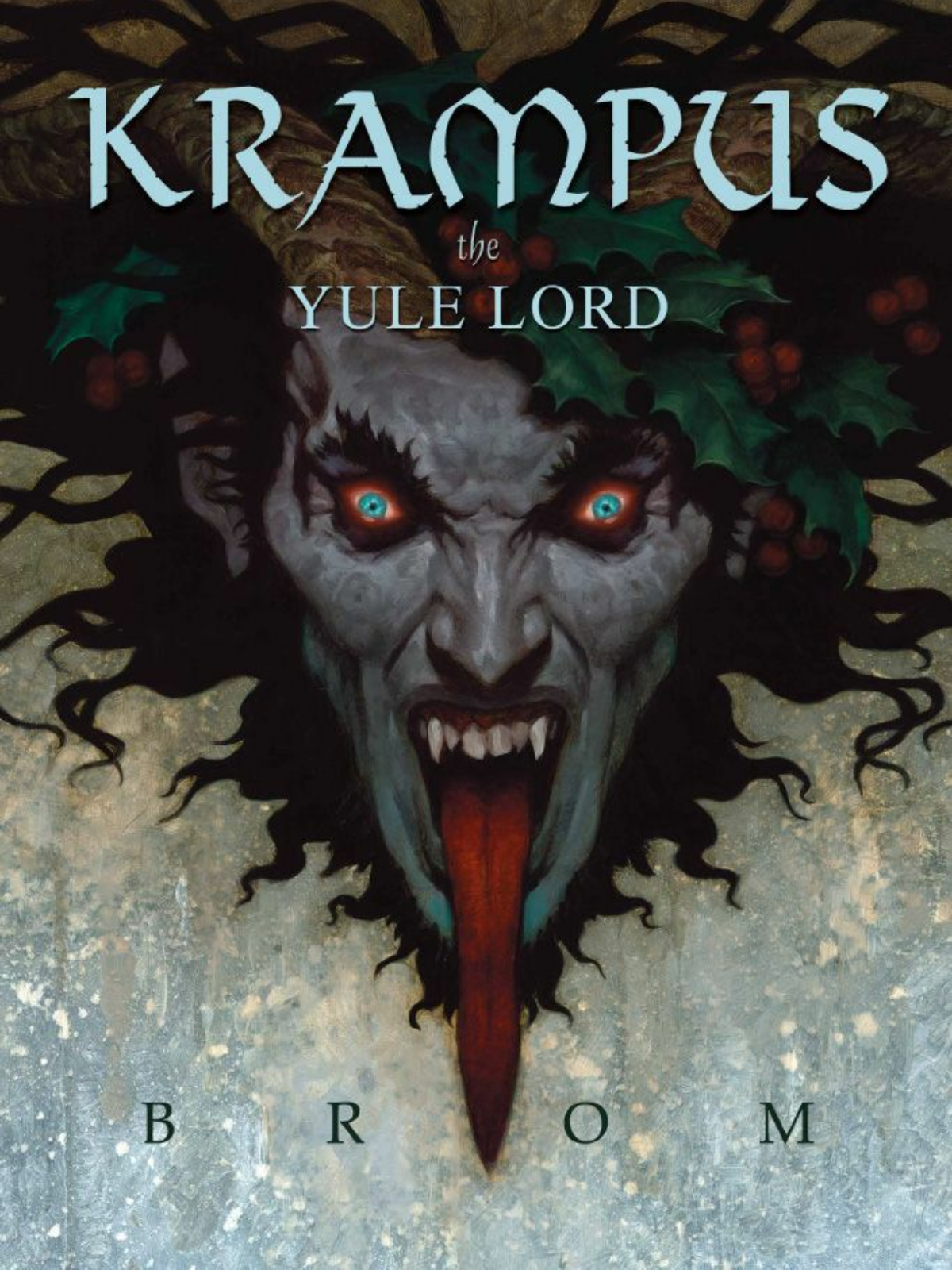
KRAMPUS: THE YULE LORD by Brom

krampus-by-bromJesse feels like a loser. His soon-to-be ex-wife, Linda, told him as much before she left, taking their daughter Abigail with her. He needed to get his act together, she begged him. To take his music seriously. To build a better life with his family. But Jesse’s insecurities always manage to get the best of him, and so he fails to progress. Now Linda and Abigail are living with a corrupt cop who has always had it in for Jesse due to some of his somewhat illicit side-hustles. And he’s alone, living in a bleak trailer with a mood to match. To make matters worse, it’s Christmas Eve, and Jesse has nothing to show for it — no gifts to present to his adoring daughter. Jesse feels like a loser, all right. On top of it all, he must also be losing his mind, because he swears he has just seen Santa Claus drop out of the sky and run into his trailer park, and a pack of monsters following behind him.

Krampus feels like a loser. He has been imprisoned under the earth for the better part of a millennia by now, placed there by a traitorous Santa Claus, betrayer and usurper. His false holiday has overtaken the tried-and-true traditions of Yuletide, making the world forget about its old gods and spirits and, indeed, the Yule Lord himself. Full of vengeful rage, he sends his faithful Belsnickels after the jolly old fraud, intent on unleashing the spirit of Yule back into the world, where it rightfully belongs.

Fate will make Jesse and Krampus cross paths, forming the unlikeliest of duos, finding that they need one another to fulfill each of their ambitions.

○○○

I didn’t think much of Brom’s Krampus: The Yule Lord, unfortunately. It’s a shame, since Slewfoot was one of my favorite reads this past Hallowe’en season, and in many ways this is very much the proto-version of that book, with all its focus on Pagan traditions and customs, and its fervent criticism of Christianity. In Slewfoot, this angle was compelling because its main character was a woman fighting against Puritan superstition and oppression with the help of the title character, an old forest god that, to the colonists, represents the evils of the natural world. Here, Krampus — basically a more fanatical, whimsical version of Slewfoot — uses his disdain for monotheistic narrow-mindedness to… mostly help a small-time crook get back with his wife and daughter?

Which is basically my main gripe with this book. Jesse’s story, while interesting in a crime drama sort of way, bears no real relevance to Krampus’s plot against Christmas, other than in the most peripheral of ways. And the problem is that, despite this novel’s title, Jesse is very much the main character: he’s the one who gets a proper arc; the one whose journey forms the emotional center of the book. The way the story is constructed, though, ends up as acting like a detriment to both plots: whenever a particular thread is picked up it feels like an interruption of the other, rather than a complementary narrative. It makes the novel seem as if two vastly different books have been forcefully fused together, forming a very oddly-shaped beast. It doesn’t help that the characters themselves comment on this same thing, either, with Jesse forever complaining about Krampus’s obsession being an obstacle for his own objective. Again, it’s a very peculiar choice.

I didn’t hate the book, though. Even if it’s not what you expect going in, you still end up invested in Jesse’s story. And on the more fantastical side of the tale, I found Brom’s Norse take on the whole Christmas mythos fascinating. It’s a little overwrought, but it also makes complete sense to make trickster figures like Santa Claus and Krampus related to the god of mischief himself. Krampus was an interesting character — a monster with a romantic bent. I enjoyed reading his melodramatic rants and outbursts. Really, it’s just a shame that he ends up becoming a supporting character in his own book.

Once again, Brom’s art is stellar, and once again I wish there was much more of it here.

CHRISTMAS READS 🎄 2021

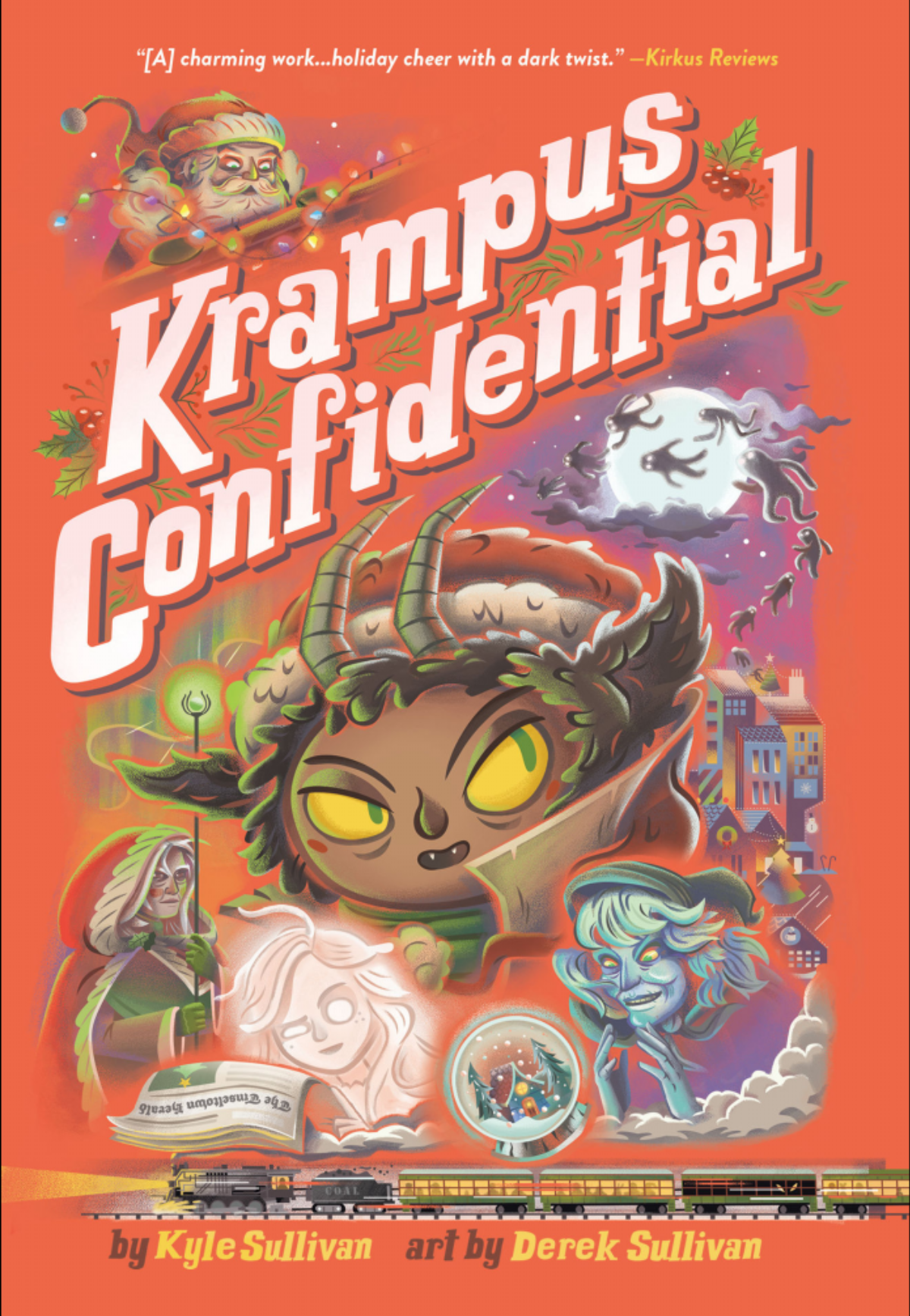
krampus confidential by kyle sullivanThank goodness for fantastic middle grade novels. December has been a little rough to say the least, so the escapism these books provide has been a welcome relief. ⠀

Krampus Confidential by Kyle Sullivan follows amateur sleuths Ruprecht (a Krampus) and Marley (a ghost, natch) as they take on a case brought to them by a particularly terrified elf. Hijinks ensue, and Ruprecht soon finds himself on the sights of both the Tinseltown police and the festive city’s surprisingly seedy underbelly. ⠀

This is a charming, clever story full to the brim with imaginative concepts and waggish, witty wordplay (the Christmas puns — they are copious). Artist Derek Sullivan supplies a lot of the atmosphere through his illustrations, which are liberally dispersed throughout the book. I really like his style. It brought to mind the work of Mary GrandPré. Thoroughly enjoyed this hazy fable. Had a tremendous amount of fun with it.⠀

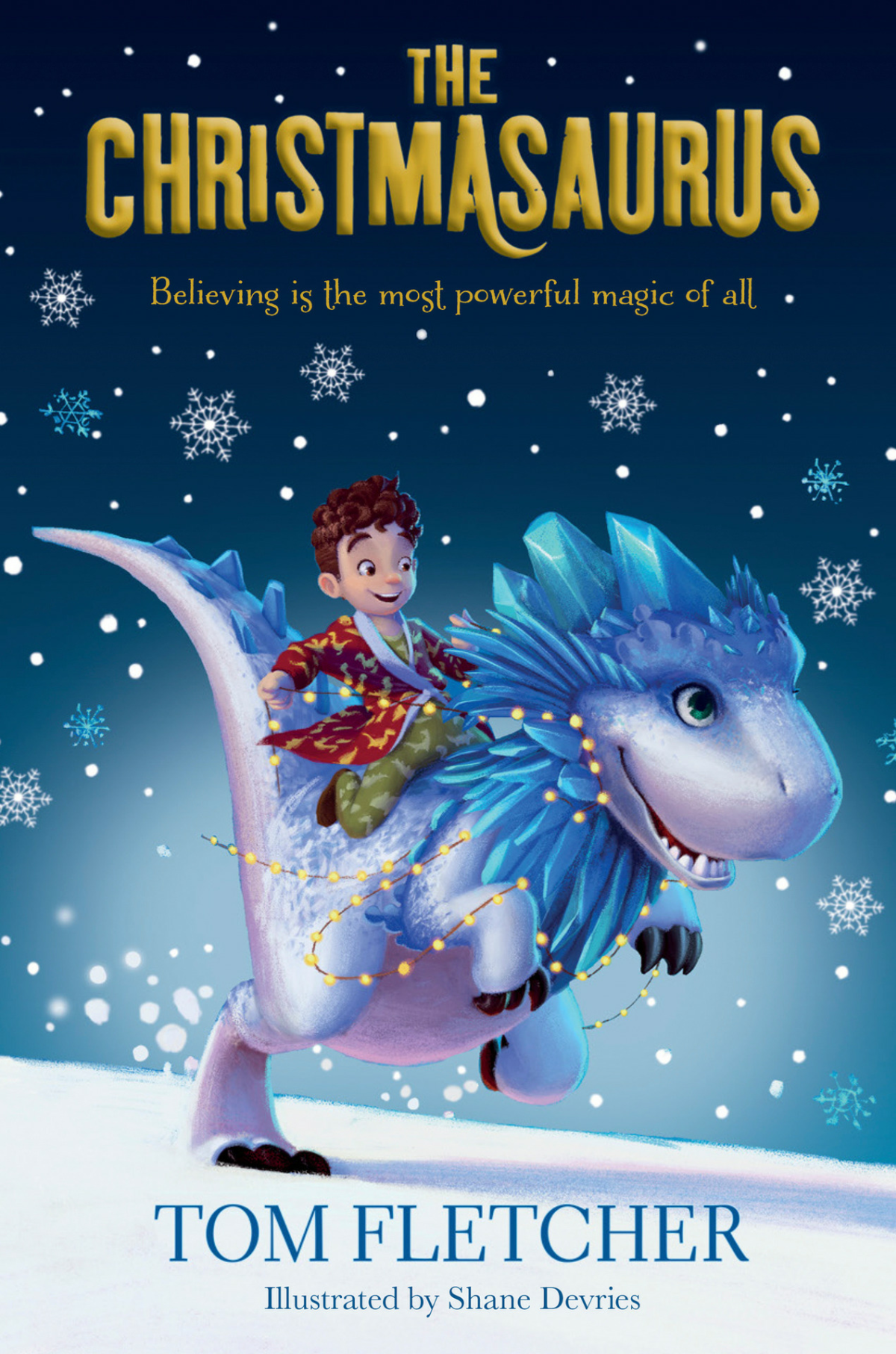
the christmasaurus by tom fletcherTom Fletcher’s The Christmasaurus is another highly imaginative beast, following the magical misadventures of a dinosaur born in the North Pole and his budding friendship with a lonely boy. Like Confidential, it is full of fanciful notions and whimsical wordplay. It turned out to be a bit much for me, though. One of my notes fusses over the sheer amount of alliteration scattered throughout, which given my usual enthusiasm for assonance, says rather a lot. But the book does skew terribly young, so it’s also simply a matter of not connecting with the story enough. I bet this would make a fantastic read-aloud, though.⠀

I did really enjoy some of the characterization. William is a lovely protagonist, wistful and kind without coming off as mawkish. He is a wheelchair user, and Fletcher did an admirable job depicting that aspect in a mindful, unassuming sort of way. I also liked artist Shane Devries’ depiction of Santa here, jubilant and gloriously fat, sporting stylish shaved sides as well as a man bun adorned with pins made out of frost. It’s a totally extravagant look and I was very into it.⠀

Always got to appreciate the books that shine so bright they help guide you out of the doldrums.

PIRANESI by Susanna Clarke

piranesi-by-susanna-clarkePiranesi was the very last book I read in 2020. I finished it thinking that it was probably the best thing I read in the entire year, but that I needed time to dwell on it before I could say for certain.⠀

I think two weeks is more than ample time. It’s not only the best book I read last year, but it’s also simply one of the best I’ve read in, I don’t know, the last decade? Susanna Clarke just writes the kind of stories I love reading the most: full of wizardry and wordplay and whimsy and wistfulness. Fairy tales, in other words, in their purest, most primal form. ⠀

Alan Moore, the comic book writer and actual honest-to-goodness magician, often writes about art as being true, literal magic, a notion that has always stuck with me:⠀

Art is, like magic, the science of manipulating symbols, words, or images, to achieve changes in consciousness. The very language about magic seems to be talking as much about writing or art as it is about supernatural events. A “grimoire,” for example, “the book of spells,” is simply a fancy way of saying “grammar.” Indeed, to “cast a spell,” is simply, “to spell.” To manipulate words. To change people’s consciousness.

It’s an interpretation I love, because while I don’t really believe in actual, wave-thy-wand magic, I sure as hell believe in the power of art.⠀

Which is all really to say, for what seems the hundredth time, that I think Susanna Clarke is a true mage, and I will read any spell she chuses to cast on the world.

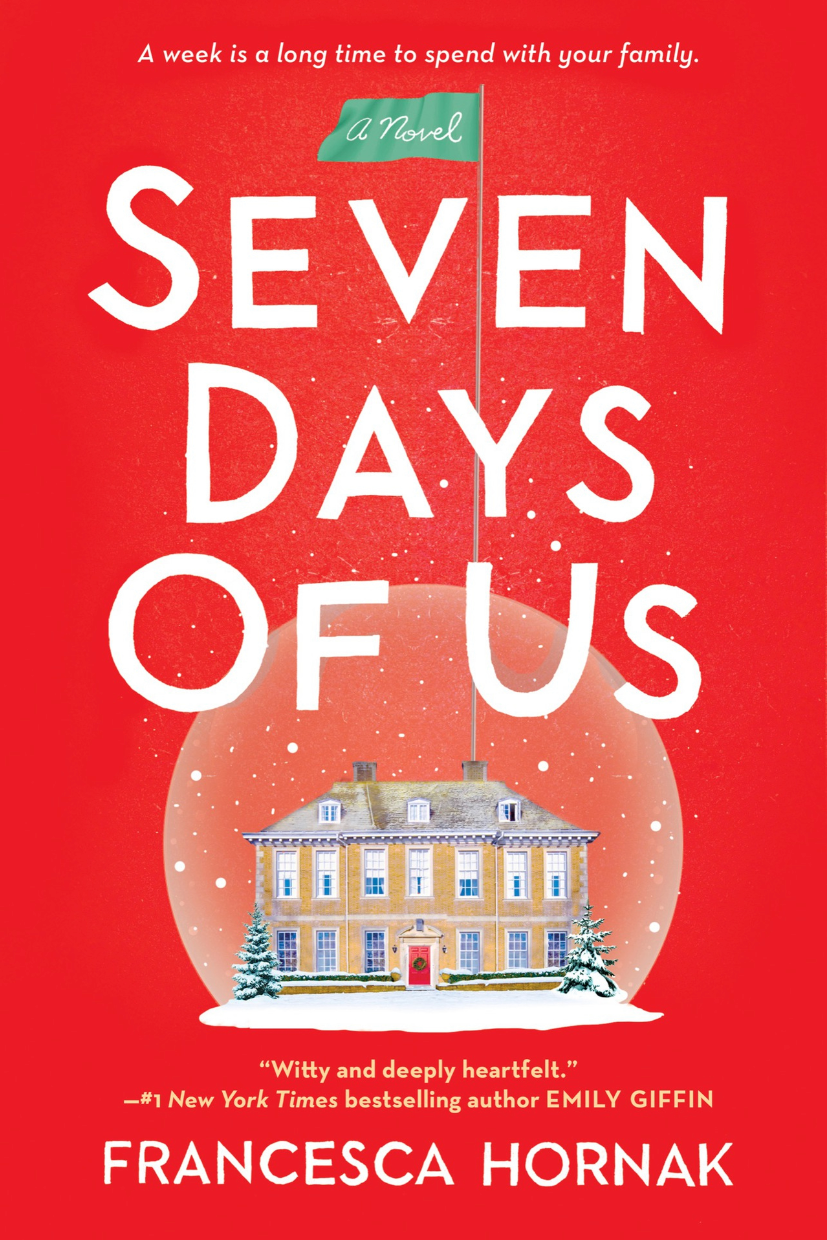
SEVEN DAYS OF US by Francesca Hornak

seven-days-of-us-by-francesca-hornak

I was going to attempt to do one of my overly verbose, wordplay-filled summaries for this novel, as they are turning out to be one of my very favorite things to write, but I found that the publisher’s copy is actually pretty perfect as on its own, particularly in capturing the frantic, frenetic tone of the story. It goes:

It’s Christmas, and for the first time in years the entire Birch family will be under one roof. Even Emma and Andrew’s elder daughter—who is usually off saving the world—will be joining them at Weyfield Hall. But Olivia, a doctor, is only coming home because she has to. She’s just returned from treating an epidemic abroad and has been told she must stay in quarantine for a week…and so too should her family.

For the next seven days, the Birches are locked down, cut off from the rest of humanity, and forced into each other’s orbits. Younger, unabashedly frivolous daughter Phoebe is fixated on her upcoming wedding, while Olivia deals with the culture shock of first-world problems.

As Andrew sequesters himself in his study writing scathing restaurant reviews and remembering his glory days as a war correspondent, Emma hides a secret that will turn the whole family upside down.

In close proximity, not much can stay hidden for long, and as revelations and long-held tensions come to light, nothing is more shocking than the unexpected guest who’s about to arrive….

I mean, come on.  I suppose it does also make it sound like a Lifetime and/or Hallmark movie, but, unremarkable and problematic as they may be (must they all center around white, upper-middle class people and their problems, in this the year of our Lord 2020), you kind of have to admit that they seemed to have cracked a hell of an alluring formula. Why else would my mother audiences keep coming back for more? 

But that’s the vibe I got from Francesca Hornak’s Seven Days of Us. And while I may not generally be a fan of  the tried and true trope of melodrama stemming from people not communicating clearly with one another, I’ll be damned if I didn’t enjoy the hell out of it in this telenovela of a novel. Admittedly, my interest in it only began about the midway point, finding the first half’s set-up and exposition excessive to the point of being tedious. The nearer the story got to Christmas however, the more all the secrets and pent up tension from the preceding pages threatened to explode. The outcome of which was the bookish equivalent of not being able to look away from a trainwreck. I was surprised to find myself gasping and harshly whispering out things like “ⁿᵒ” and “ᵖˡᵉᵃˢᵉ ᵈᵒⁿ’ᵗ” and “ᵒʰ ᵍᵒᵒᵈ ᵍᵒᵈ ʷʰʸ” so often. It was pretty great.

Much of that enjoyment was a direct result of Hornak’s remarkable job at writing this bevy of fastidious, slightly unlikeable characters. You may not wish to spend some time with them in real life, but you can certainly, assuredly, relate and empathize with every single one of them. We might not be going through many of their specific set of issues (Olivia labeling them first world problems is spot on for the most part), but we know how family can be a battleground almost as often as it is a haven. It’s another time-tested trope — one that rings particularly true in this time of quarantine and lockdowns. 

It’s a little wild to think that this stay-at-home angle was probably the one aspect of the novel the author must have thought not many readers would find relatable. Why would she? This book was first published in 2017, after all. Back when we were all still taking the act of being able to go outside your house and mingling with other people who are not immediately related to you totally and utterly for granted. Ha ha ha who would have ever thought.

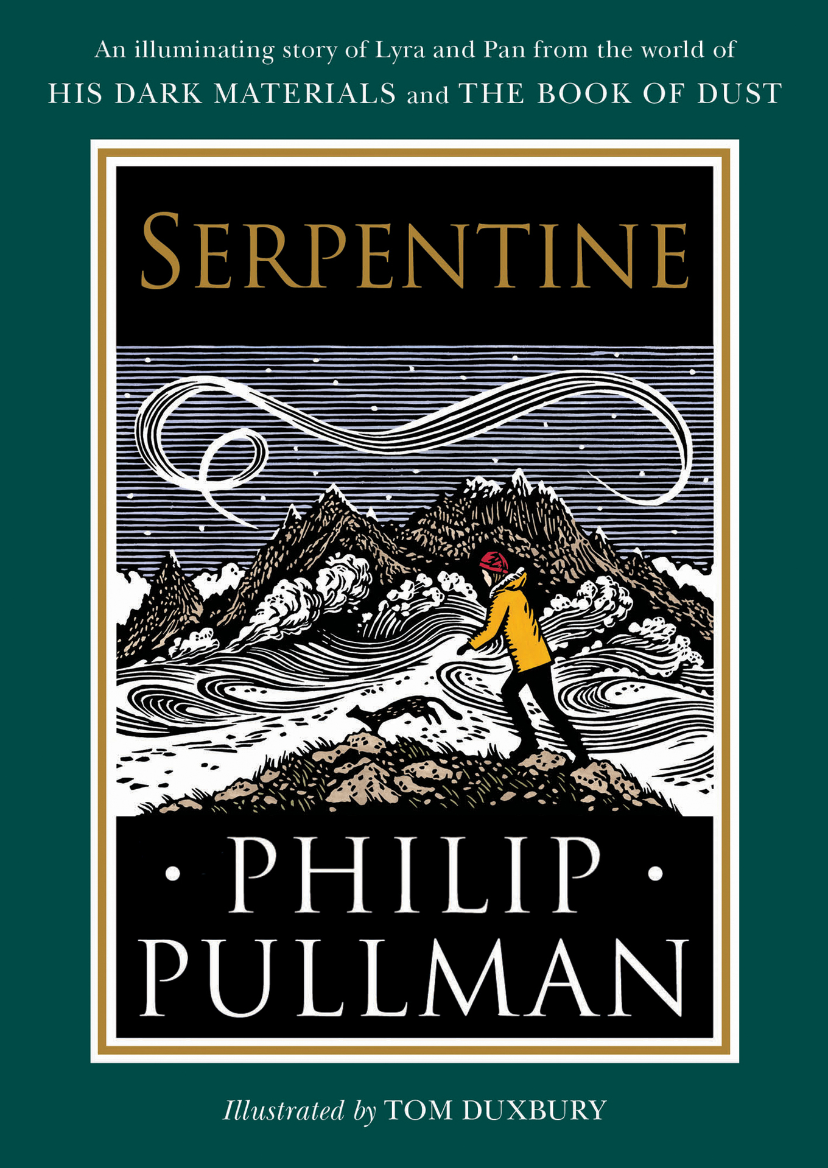
SERPENTINE by Philip Pullman

serpentine-by-philip-pullmanI began this year by reading Philip Pullman’s The Secret Commonwealth, so I only thought it fitting that I would end it by reading yet another of his fantastic expeditions into human nature. Serpentine is a brief excursion into Lyra’s world, and actually acts as a sort of thematic prequel to Commonwealth, the second entry in The Book of Dust series. ⠀

Serpentine tells a small, intimate story in which Lyra Belacqua joins some colleagues at an archaeological site that happens to be near the home of a past acquaintance — someone who just might be able to answer some of the many burning questions Lyra has been carrying ever since the events related in His Dark Materials. She and her dæmon, Pan, have been growing apart in the aftermath of these earlier exploits, a predicament they can’t seem to be able to solve, causing them both great emotional turmoil. Lyra, true to her curious nature, is determined to decipher this dilemma. She gets some clarification by the end of this novella, but the relationship between humans and their inner-selves is something that will preoccupy Lyra well into her adulthood. Indeed this concern forms the central theme in The Secret Commonwealth (and, I suspect, The Book of Dust as a whole).⠀

I was well into my twenties when I first read His Dark Materials, but the series still ended up being acutely formative. It’s a story that spoke to me on a host of different levels (not least of which a spiritual one) and even though I’ve never sat down and revisited the novels, they still, to this day, live rent-free in my head and heart.⠀

This makes every subsequent glimpse into this world feel like a privilege and a homecoming. There’s something intensely warm and comforting about these novels — probably due to the fact that despite them being mostly dark, serious tomes of the fantastic, they are also some of the most human books out there.⠀

Which is a roundabout way of saying that each return visit to Pullman’s world has felt like coming home. Like visiting old friends. Like gaining some fresh, new insight— however small — into what it means to be human and alive. And the experience of reading Serpentine was no different.

When it comes to human affairs, a billion invisible filaments connect us to our own pasts, as well as to the most remote things we can imagine; and I hope that, above all, these books are about being alive and being human.⠀

KINDRED SPIRITS + THE PRINCE AND THE TROLL by Rainbow Rowell

46 rainbow rowellHey so speaking of — did you know Rainbow Rowell once wrote a Star Wars story? Well, Star Wars-adjacent, at any rate. For World Book Day a couple of years ago she came out with a short little story about a group of fans waiting in line for the premiere of The Force Awakens. I read it a short while after the story came out and, like a lot of Rowell’s work, I pretty much loved it. Here’s a short review from an old blog:⠀

I love Rainbow Rowell. I love her quirky and clever and passionate writing (if there was a book equivalent to Gilmore Girls, it would be a Rowell book). I love her amazing and uncanny ability to make you fall for a character in almost no time at all.

This same talent is brilliantly showcased in Kindred Spirits, a slim novella that, over the course of sixty-two pages, manages to have more character development than most sprawling, brick-sized novels.

It’s an unfair gift, really.

This is a story about three Star Wars geeks camping out in desolate line in front of an Omaha theater for the premiere of The Force Awakens. It is lovely, and it is charming, and it is so wonderful. I finished the story in one sitting, desperately wishing there was a full-length novel featuring these characters that I could immediately pick up. Heartwarming and beautiful.

Like every December since the first film in the sequel trilogy came out, Star Wars has been on my mind a lot, which is why I decided to revisit the slim volume. I enjoyed it just as much this time around, appreciating especially how it captures the eager, edgy excitement a lot of fans of the saga felt in the run-up of the release of TFA. You know — before the dark times. Before the Discourse. This does tragically make the story act somewhat like a time capsule, however, portraying as it does a facet of fandom that seems quaint and innocent considering the meaningless gatekeeping and toxic rhetoric that is so maddeningly prevalent these days. Alas. ⠀

You and I can still enjoy things, though. It’ll be our secret. ⠀

○○○⠀

Shortly after finishing the novella, I was made aware of a series of fairy tale retellings a bunch of prominent authors were doing for the Amazon Original Stories initiative. Rowell was one of these writers, contributing The Prince and the Troll, an odd little tale that doesn’t seem to be an interpretation of any one fable in particular but instead plays with the troll-under-the-bridge narrative. The story seems to be a blend of Rowell’s realistic contemporary style and the dark whimsy found in her fantasy fiction. This makes it a bit disjointed but it works for the most part. The aforementioned gift is once more in full display here as I also finished this peculiar yarn wanting to know more about the two protagonists, and about the world in specific, which appears to be a sort of post-climate apocalypse mythical land (that, you know, still has Starbucks). Also because once I read that title I just knew Rowell would make them fall in love with each other and that I would buy it hook, line, sinker — and, reader, I did.

THE VISITOR by Sergio Gomez

the-visitor-by-sergio-gomezIn the proverbial middle of nowhere a group of travelers wait out a severe snowstorm inside of a diner. Inside they find warmth and food and drink and casual conversation. Most of them quickly develop the quick camaraderie commonly found between people sharing in a particular, peculiar experience. They are hopeful the rough weather will disperse before long, allowing them to continue their particular journeys. ⠀

A fellow traveler will soon be trying to join them, however, one with less than benevolent intentions in mind — and the group will quickly realize that there are far more dangerous things outside than the miserable elements.⠀

○○○⠀

You know, I’ve never really associated the holiday season with horror. Dwell on it enough and it does begin to make a perverse sort of sense, though. Fiction centered around the holidays (and around Christmas especially) is brimming with stories about disparate groups of people finding themselves stuck in an isolated, often claustrophobic setting, after all, and that is as traditional a horror set-up as you can get. Why not just throw a monster into the mix?⠀

The monster in The Visitor, a novella by Sergio Gomez, arrives in the shape of an alien, coming to terrorize our protagonists. Despite the otherworldly antagonist and the wintry setting however, this story is less The Thing than it is Predator, as we quickly find out this creature wants to join in on the Yautja fun by trying to hunt down our core characters one by one.⠀

This being a brief sojourn of a story, my only expectation was to have a good time — a prospect that was indeed met. Gomez has written a tight tale that boasts a breakneck pace, while also somehow finding the space to develop the characters enough that we can recognize and sympathize with their plight. Not an easy thing to do in less than a hundred pages, but Gomez did a creditable job with the material.⠀

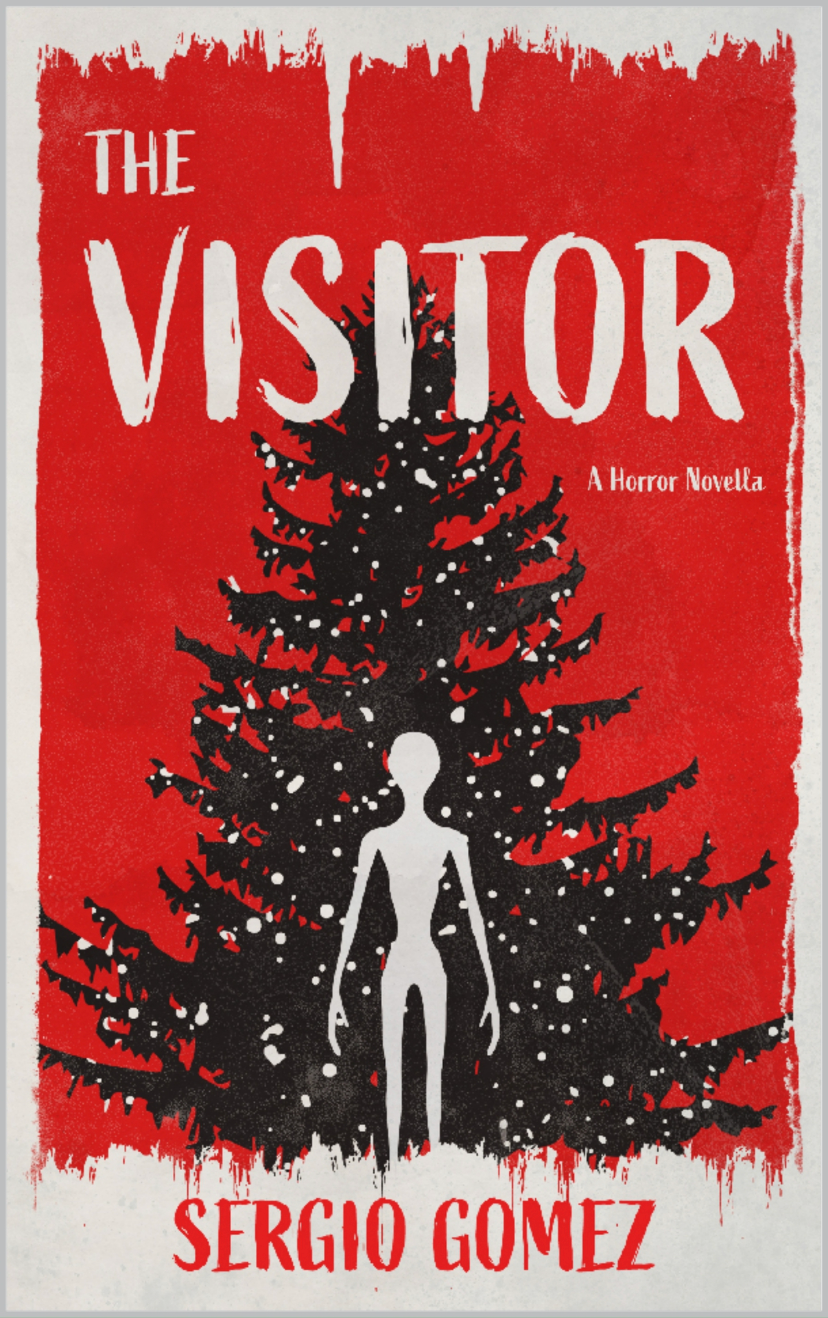
If there is one thing I found lacking was the monster itself, especially in terms of its appearance. Gomez keeps it understandably vague, but the impression that we can glean from the details he does drop ends up being… a tiny bit goofy. This is disappointing seeing as how the cover depicts what looks like a traditional Grey alien, which is an image that has always haunted and disturbed me (hullo, my name is Rick, and Whitley Strieber’s Communion is one of the most terrifying books I have ever read). I would have found the story much more effective and unsettling if we got the same spindly extraterrestrial inside the story itself. But I confess that this is more of a personal preference than it is actual criticism.⠀

The Visitor is a fun and bloody ride that makes for some excellent holiday reading.

FROM A CERTAIN POINT OF VIEW: THE EMPIRE STRIKES BACK by Various

from-a-certain-point-of-view---the-empire-strikes-back-by-variousThe first volume of From a Certain Point of View was a surprise to be sure, but a welcome one. The Force Awakens had, well, awakened a long-dormant excitement for Star Wars within, pushing me down a nostalgic-tinged rabbit hole that led me to things like Star Wars Rebels (which still stands as my favorite piece of new SW media) and, eventually, inevitably, to the books. Up to that point in the aftermath of the Disney acquisition most of the stories had to do, naturally, with the new sequel trilogy of films, broadening the narrative and developing certain key characters. Occasionally some of the books dropped dealt with characters and events from bygone eras, but for the most part the expanded universe focused on the current. And then From a Certain Point of View suddenly arrived, an anthology featuring a wide array of writers telling the stories of dozens of peripheral characters from the film that started it all. It’s an idea that perfectly embodies this franchise’s most charming, playful notion: that everyone has a tale that needs to be told; that everyone has an important role to play in this far-away galaxy.

I ate it all up. The collection somehow managed to satisfy my nostalgic yen while also injecting some much needed, much welcomed fresh ideas to this familiar universe: from boasting a more diverse cast of characters (people of color! a touch of queer representation!) to playing with styles and genres. There was a lot of emphasis on lighthearted humor, of course, but a lot of the stories also packed quite the emotional punch. It was a wild ride, and definitely one of my favorite reads the year it came out. It made me hope they would continue with the concept, giving the rest of the films the same treatment. And so when this volume telling the story of The Empire Strikes Back was announced I was nothing if not thrilled.

Which just makes it all the more the shame that From a Certain Point of View: The Empire Strikes Back mostly disappointed me. It still boasts a broad battalion of authors — many of whom have written works I’ve enjoyed in the past — who do an admirable job with the material given while also continuing to ramp up the diversity aspect established in the first volume. Really, the ingredients that made me love the previous collection are all here, it’s just that, somehow, the recipe doesn’t particularly work with the story Empire ultimately told.

It makes sense. The first film introduced us to a vast cast of characters, giving the stories a wider area in which to play and let loose. In contrast, Empire’s story is smaller in scale and much more personal, concentrating less on the galaxy at large and more on the trials and tribulations of our protagonists. This leaves the authors of this collection to either focus on a scattering of minor characters or create new ones whole cloth. In any other context this would be a freeing conceit; here, though, it just ends up making the collection feel helter-skelter. Add to that the fact that quite a few of the stories are irreverent in nature, focusing on the humorous, slightly ridiculous side of the saga, eschewing the poignancy found in much of the first volume in favor of knowing winks at the audience. And while you will never find me stating that camp has no place in the Star Wars universe (it’s been there from the start, etched into its genetic makeup), I do think that, much like with the Force, there needs to be a balance.

In the spirit of said balance, I want to make note of the stories that did end up leaving a big impression on me, of which there were a handful:

Django Wexler’s “Amara Kel’s Rules for TIE Pilot Survival (Probably)” and Mackenzi Lee’s “There Is Always Another” feature the sort of clever cheek that does work for me, where humor is used to ground all these fanciful figures. The opening line in Lee’s story in particular will stand as one of the funniest in all of Star Wars.

I had hoped that dying would be enough to untangle me from the Skywalker’s family issues.

— Obi-Wan Kenobi’s Force ghost in “There Is Always Another” by Mackenzi Lee

Jim Zub’s “The First Lesson” and Lydia Kang’s “Right-Hand Man” in contrast, delve deep into the pathos of some of these mythical characters, and they were the stories I feel actually added some more substance to the story being told in the film. ⠀

And finally, Austin Walker’s “No Time for Poetry” and Alexander Freed’s “The Man Who Built Cloud City” both tell the type of story I currently enjoy the most in this universe, narratives which — much like my other two favorites, The Mandalorian and Rebels — manage to perfectly blend that mix of earnestness and enthusiasm that made Star Wars so damn precious and exceptional in the first place.

Perhaps it’s not the end at all. Perhaps it’s merely the darkest moment of a triumphant tale — when all is presumed lost, so that victory can be sweeter.

— Yathros Condorius in “The Man Who Built Cloud City” by Alexander Freed

I’ve mentioned it before but it bears repeating: disappointment is as much an integral part of being a Star Wars fan as the feeling of delight. And if there is anything to living in this post-Disney supersaturated world is that, for the foreseeable future at least, we can be certain there will soon be something else to anticipate, anyway.