OCTOBER 2025

Hello. This was October.

“Universal Horror” by Stephen Graham Jones. A fun, quick read with a lot of eerie, urban legend vibes. I was into it. Again, I really need to read more SGJ. Perhaps a novel, even! One of these days perhaps!

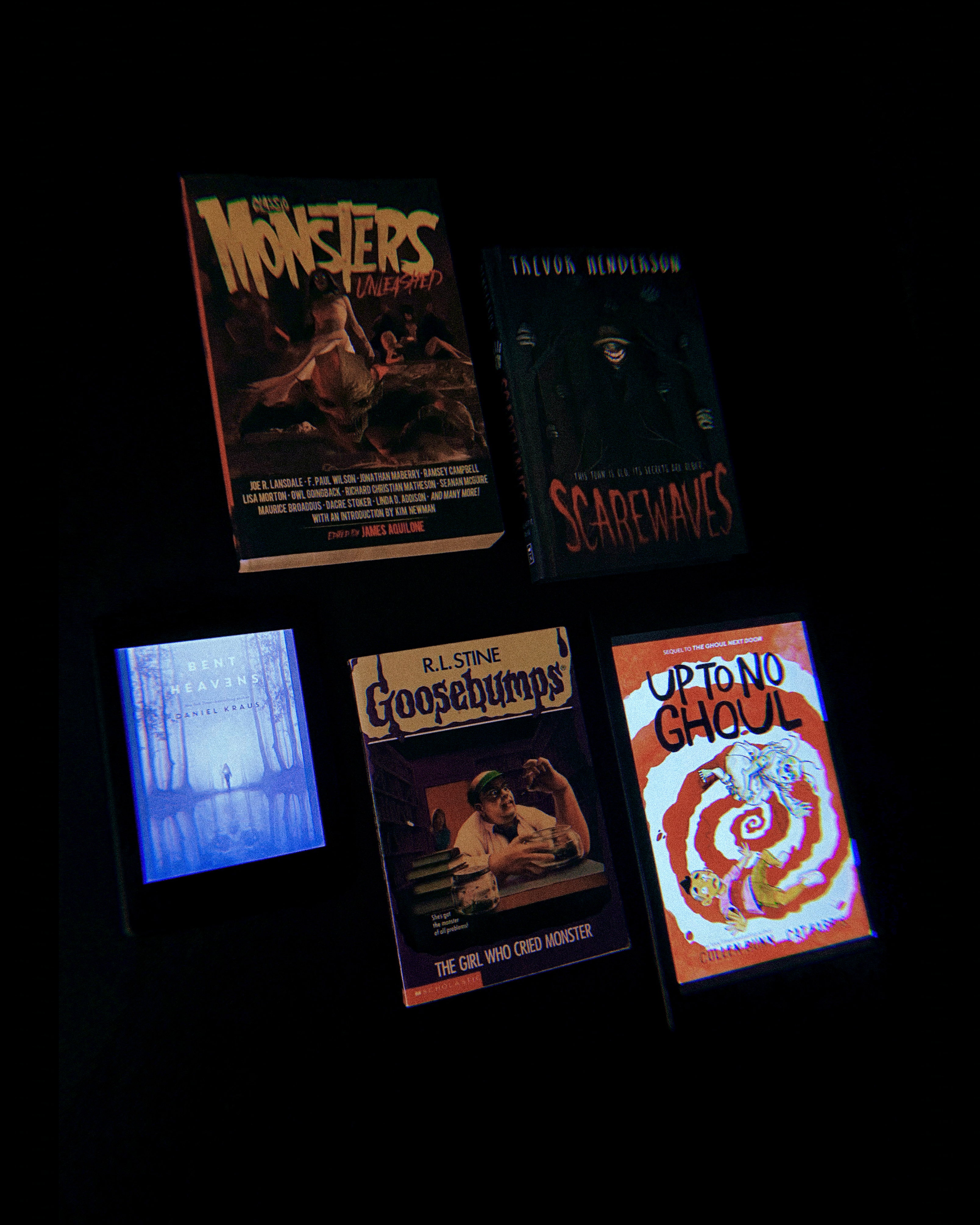
Up to No Ghoul by Cullen Bunn, Cat Farris. It’s been a few years since I read the first book in this series and, to be perfectly honest, I had forgotten most of the particulars. I do remember really enjoying it, though—especially the art. I had much the same experience with this sanguinary sequel. Bunn’s writing is always effortlessly creepy and cozy, and Farris continues to impress with her dynamic imagery—her splash pages, in particular, are always spectacular. Charming, whimsical, and wonderfully illustrated. Delightful stuff.

“Ghostmakers” by Warren Ellis. More of a flash-fiction piece, really, Ellis excels at those. This was rad and fascinating and I wish it were a more proper, fleshed-out short story.

Classic Monsters Unleashed edited by James Aquilone. The only book I read from my admittedly overly ambitious TBR for this Halloween season. I may not have felt up to tackling big books this year, but I still very much wanted to read some short stories throughout the month. This turned out to be a really fun collection, and I was thrilled to see that many of the featured authors absolutely understood the assignment. There were some duds, of course, but that’s just the nature of anthologies. Mostly, though, it’s chock-full of very clever, captivating, and surprisingly subversive takes on the famous and familiar fictional fiends. Favorites: “They Call Me Mother” by Geneve Flynn, “Dreams” by F. Paul Wilson, “Blood Hunt” by Owl Goingback, “The Viscount and the Phantom” by Lucy A. Snyder, “Modern Monsters” by Monique Snyman, “Beautiful Monster” by JG Faherty, “The Nightbird” by Michael Knost, “Moonlight Serenade” by Gaby Triana, “Dead Lions” by Richard Christian Matheson, “Hacking the Horseman’s Code” by Lisa Morton, and “You Can Have the Ground, My Love” by Carlie St. George, “God of the Razor” by Joe R. Lansdale.

The Girl Who Cried Monster by R.L. Stine. My Goosebumps book for this season! It was okay! It’s a Goosebumps book! It does have one of my all-time favorite twists in the series, I think. Just delightfully schlocky. I usually watch the corresponding episode of the TV show, but I simply forgot this time around. I’ve seen it before, of course, and I remember thinking it was one of the better episodes—mostly due to some excellent make-up effects.

Bent Heavens by Daniel Kraus. A brutal and truly terrifying story about how far people will go to demonize what they don’t understand. This may ostensibly be a young adult novel, but some scenes are so relentless in their intensity that they disturbed me far more than much of the mature horror I’ve read over the years. This went nowhere I expected it and it’s all the better for it.

Birthday Party Demon by Wendy Dalrymple. Read this while at my nephew’s second birthday party, natch. I needed a palate cleanser after the intensity of Bent Heavens. A fun and harmless riff on the style of young adult horror that dominated the nineties. I enjoyed all the aesthetics and some of the genuinely unsettling scenarios. I also liked the inclusion—modest as it may be—of queer elements, something that certainly wouldn’t have been an explicit thing back in the nineties. And although Dalrymple wears her influences on the sleeves of her dELiA*s henley top, I was still surprised by the twist ending.

Scarewaves by Trevor Henderson. This was a blast. The Scary Stories to Tell in the Dark influence is palpable, and this reads like a slightly more focused take on that kind of collection of creepy tales. I do wish the connective throughline had been introduced earlier in the book, though—it would have gone a long way toward making it feel like a far more concrete and cohesive story, and less like an arbitrary assortment of spooky scenarios (fun as they are). That said, the true star here is Henderson’s artwork, which, as anyone who has followed his invariably viral online creations would expect, is delightfully unhinged.

“The McAlister Family Halloween Special” by Cameron Chaney. Super fun, super short story. Chaney is great at cozy-yet-consummately creepy horror. Great stuff.

“The Emissary” by Ray Bradbury. I’ve never really gelled with Bradbury’s style. It’s full of a certain grandiloquence and sentimentality that I mostly find superficial rather than sincere—which is tragic, because I know Bradbury is one of the most earnest writers of the twentieth century, but what can I tell you. So I was very much ready to shrug this story off—at least, until that rug-pull of an ending kind of blew me away. Deliciously creepy, but also very sweet in a macabre sort of way? I loved it, and sadly, I can’t say that about most of the Bradbury stories I’ve read.

Pumpkinheads by Rainbow Rowell, Faith Erin Hicks. Tradition dictates.

🎃

And that was Halloween. A lot more subdued than previous years, to be sure, but I’m still glad I managed to read a decent amount of scary stories, despite the darkness.

BOOKS BOUGHT—A MYSTIFYING MELANGE:

  • Gates of Fire by Steven Pressfield
  • American Psycho by Bret Easton Ellis
  • A Grief Observed by C.S. Lewis
  • Letters from a Stoic by Seneca
  • Lincoln in the Bardo by George Saunders
  • Scarewaves by Trevor Henderson
  • The Rose Field by Philip Pullman
  • The Haunted Looking Glass edited by Edward Gorey
  • Helloween by Duncan Ralston

“THE RAVENOUS GLOOM” by Ricardo Reading

Hello. I have written another thing

My grand, lofty Halloween plans may not have come to fruition due to lack of spirit and stamina, but I still very much wanted to do something to mark the season. So here’s a piece of flash fiction, as a ghoulish little treat.

As a perpetually frustrated and easily distracted creative person, I’m forever trying out new and fresher ways to come up with ideas. For about a month last year, during a phase when I wanted to get back to drawing regularly again, I tried to do a little sketch of the most interesting image my brain had managed to conjure up during the day. One particularly gloomy evening, I drew a goblin kind of thing, and, on the opposite page, wrote about wishing there were creatures that would come and take all the negative thoughts out of my head at night while I slept. And that’s where this story came from.

May the goblins eat away the gloom in your life, too—though hopefully in a much gentler way.

Happy Halloween. 🎃

OCTOBER 2024

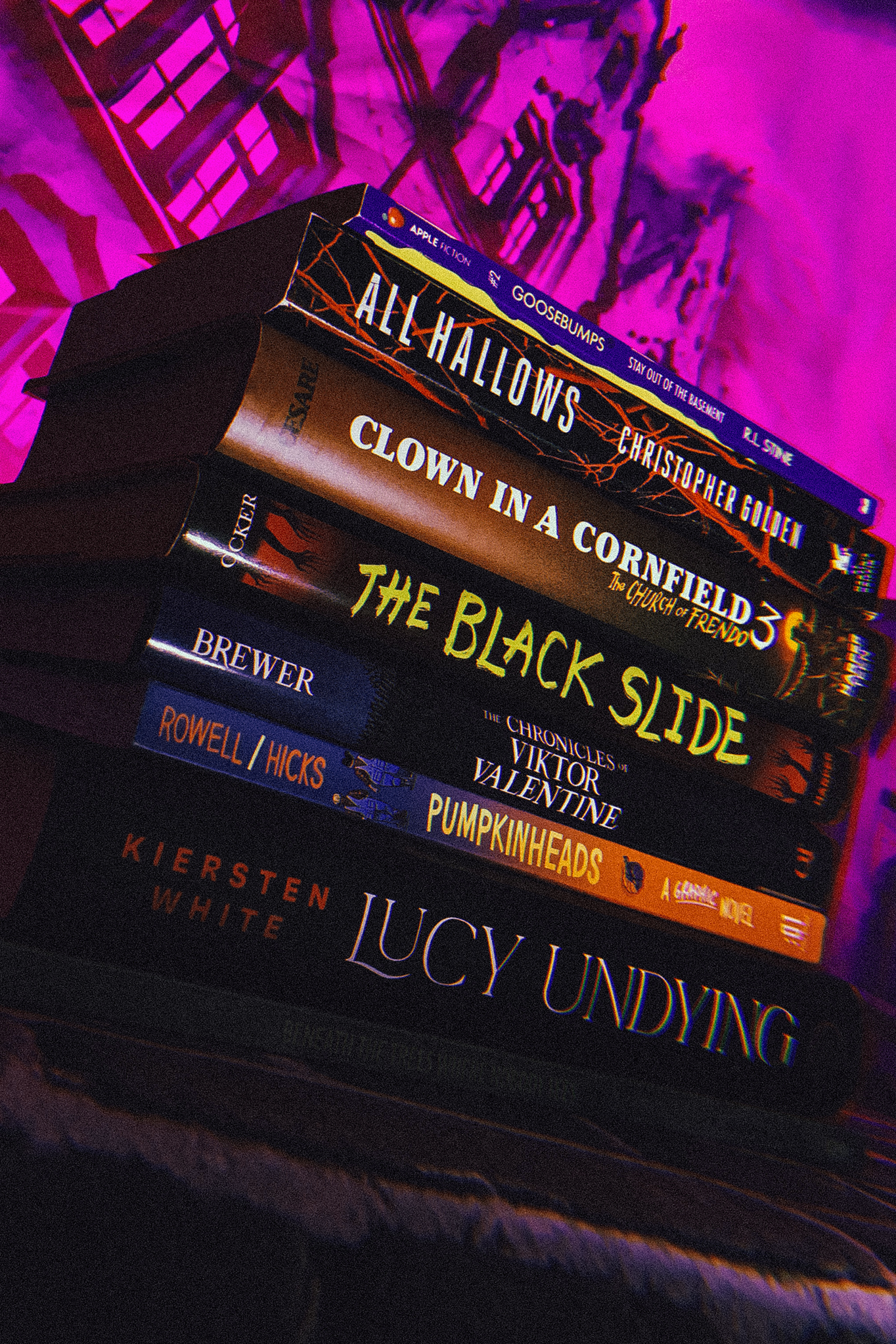
Hello. You know the books I read during the month of October because I did an individual review for every single one of them. Like a madman. But I also managed to read a bunch of short stories throughout the month, and I want to talk about them, too. So here we are. (Also it gives me an excuse to post a picture of a very satisfying pile of books. My gloriously garish Hallowe’en display.)

The books, in case you missed them: 

Beneath the Trees Where Nobody Lives by Patrick Horvath. Wonderful!

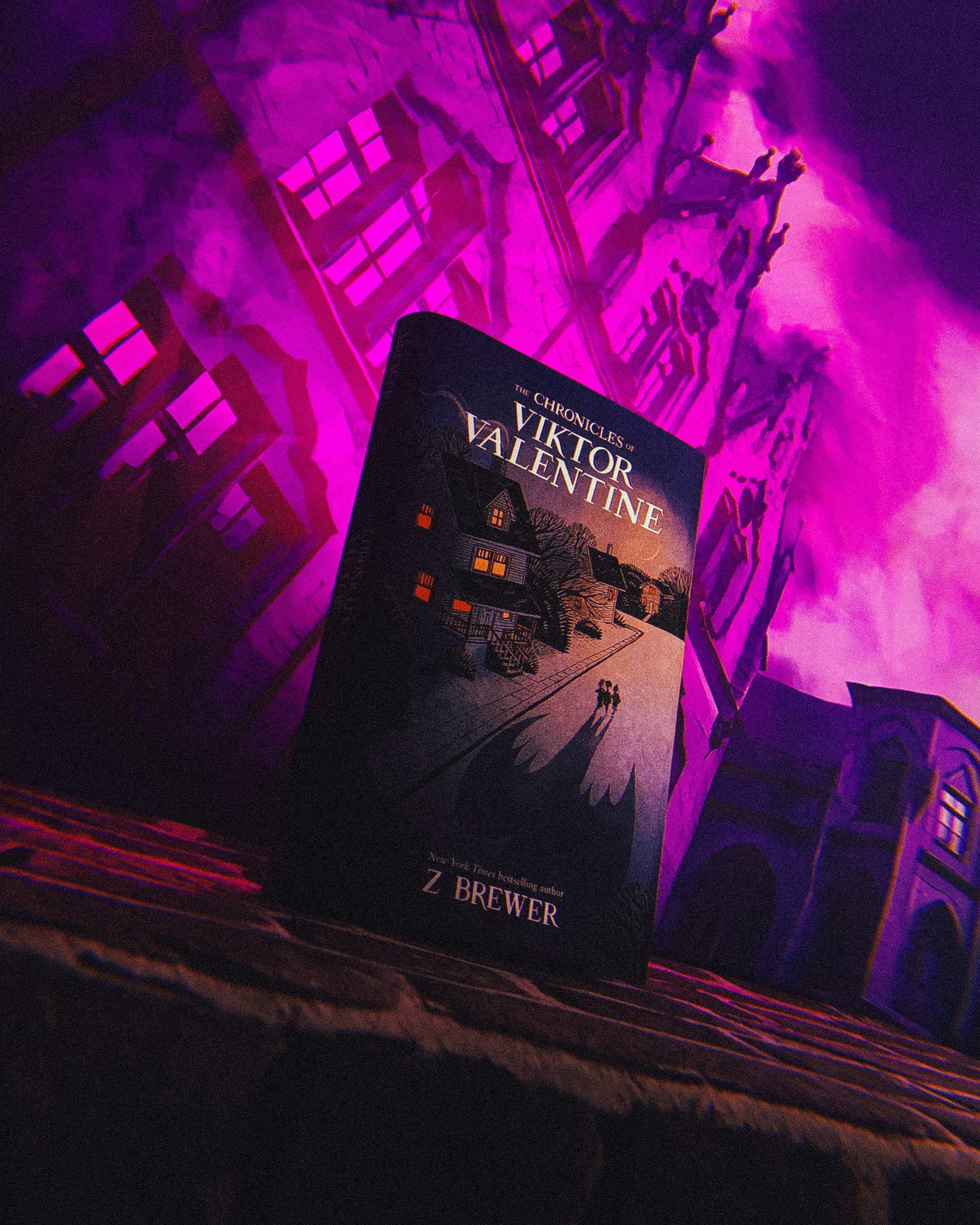
The Chronicles of Viktor Valentine by Z Brewer. Fine!

Clown in a Cornfield 3: The Church of Frendo by Adam Cesare. Disappointing!

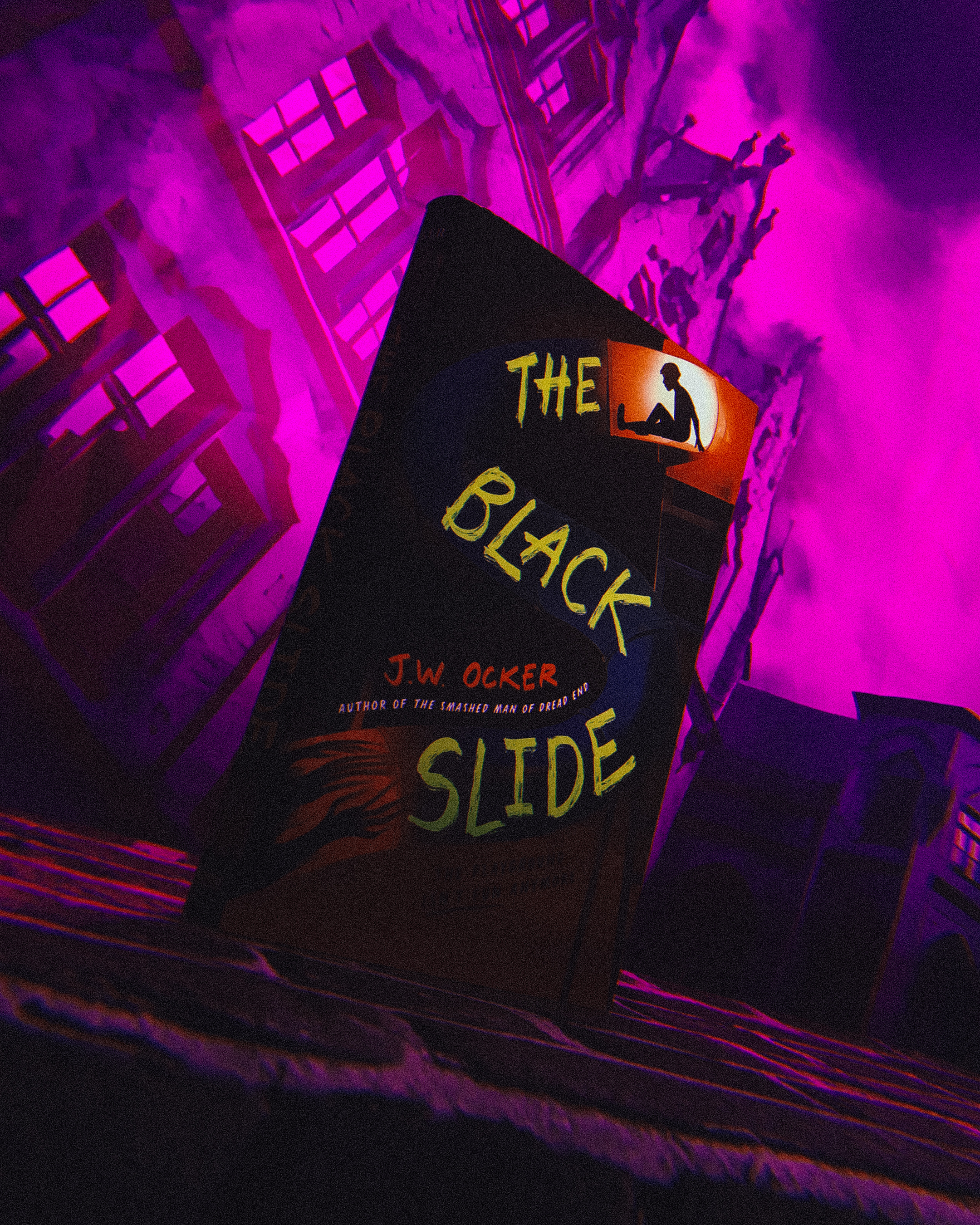
The Black Slide by J.W. Ocker. Amazing!

Lucy Undying by Kiersten White. Glorious!

Stay Out of the Basement by R.L. Stine. Fun!

All Hallows by Christopher Golden. Great!

The short stories:

“Parthenogenesis” / “Wait for Night” by Stephen Graham Jones. Would you believe that these are the only things I’ve read by Jones? Neither can I. Really need to get on that. Anyway, “Parthenogenesis” was a fun story with a super creepy atmosphere, but I felt like the ending was a bit of a cop-out. “Wait for Night” was just a simple and super rad vampire tale. 

“A Stranger Knocks” by Tananarive Due. Didn’t realize this was a vampire story when I first picked it up, but I do love a serendipitous theme. Similar to the Jones situation, this is the first story I’ve read by Tananarive Due. Definitely need to pick up more of her stuff because this was excellent.

“The Tell-Tale Heart” by Edgar Allan Poe. My shameful secret that would surely get my goth card revoked if it ever got out is that I’ve barely read any of Poe’s actual work. “The Raven,” sure, the odd story here and there—but, like with most artists I admire, I’m far more interested in their cult of personality first and their work second. It’s something I’ve been gradually realizing is a serious disservice to said artists, so I’m working on fixing that. Anyway—this was brilliant, obviously. I read it in a collection called Darkness There, a Kindle in Motion affair that I’ve had on my tablet for years. It’s a neat concept, and features some wonderful art by M.S. Gorley, whose work—and name—evokes Edward Gorey’s (another cult of personality from my personal canon).

“Lantern Jack” by Christopher Fowler. More of a monologue than a proper short story—but it’s a damn good monologue, which made it a delight to read. Very cool, very clever, very macabre. Very into it. Read from The Mammoth Book of Halloween Stories.

“Everybody Is in the Place” by Emma J. Gibson. Some great atmosphere here, but I found the writing style seriously grating. There’s this constant repetition of words that I guess is supposed to evoke some sort of whimsicality (“We’re running, running, running!”) but it only comes across as awkward and annoying, particularly when it’s done so often in such a limited amount of space.

“A Forest, or A Tree” by Tegan Moore. Impeccable and creepy atmosphere throughout, along with some good character work. It’s too bad that it’s all undermined by an abrupt, hasty ending. As is the case with a lot of Tor.com Originals, this felt too much like the opening of a novel, rather than the closing chapter of one.

“The V*mpire” by P H Lee. This is a short story about Tumblr, of all things. It’s also a story about identity and community. And it’s a story about vampires. It should be a mess, by all accounts, but this was a surprisingly intense and impactful piece. Of course, it probably affected me more because Tumblr was such an integral, formative part of my 20s. I was too old to be part of the social circles depicted here, but I was certainly aware of them and can say that, for better or worse, their representation here is entirely accurate—from the compassion right down to the toxicity. This is also a story about how easily predators can exploit the openness of these often vulnerable communities by appropriating their particular language for their own malicious means. The vampires in this story may be fictional bloodsuckers, but that doesn’t make them any less real.

“Bone Fire” by Storm Constantine. Another one from The Mammoth Book of Halloween Stories. My notes for this story read, “A fae and dusky little story. This very much felt like what I imagine a huge bonfire on Samhain must have felt like.” I have absolutely no idea what that means, but let’s go with it. 

(I should note that I often write my notes immediately after I finish reading a story, so they are very much a first impression kind of thing. It also means that they are almost always nonsense. Alas.)

“The Folding Man” by Joe R. Lansdale. A truly outlandish mix between an odd urban legend and, like, The Terminator. Simple, straightforward, and at times seriously savage story. I was super into it. Read from The Mammoth Book of Halloween Stories.

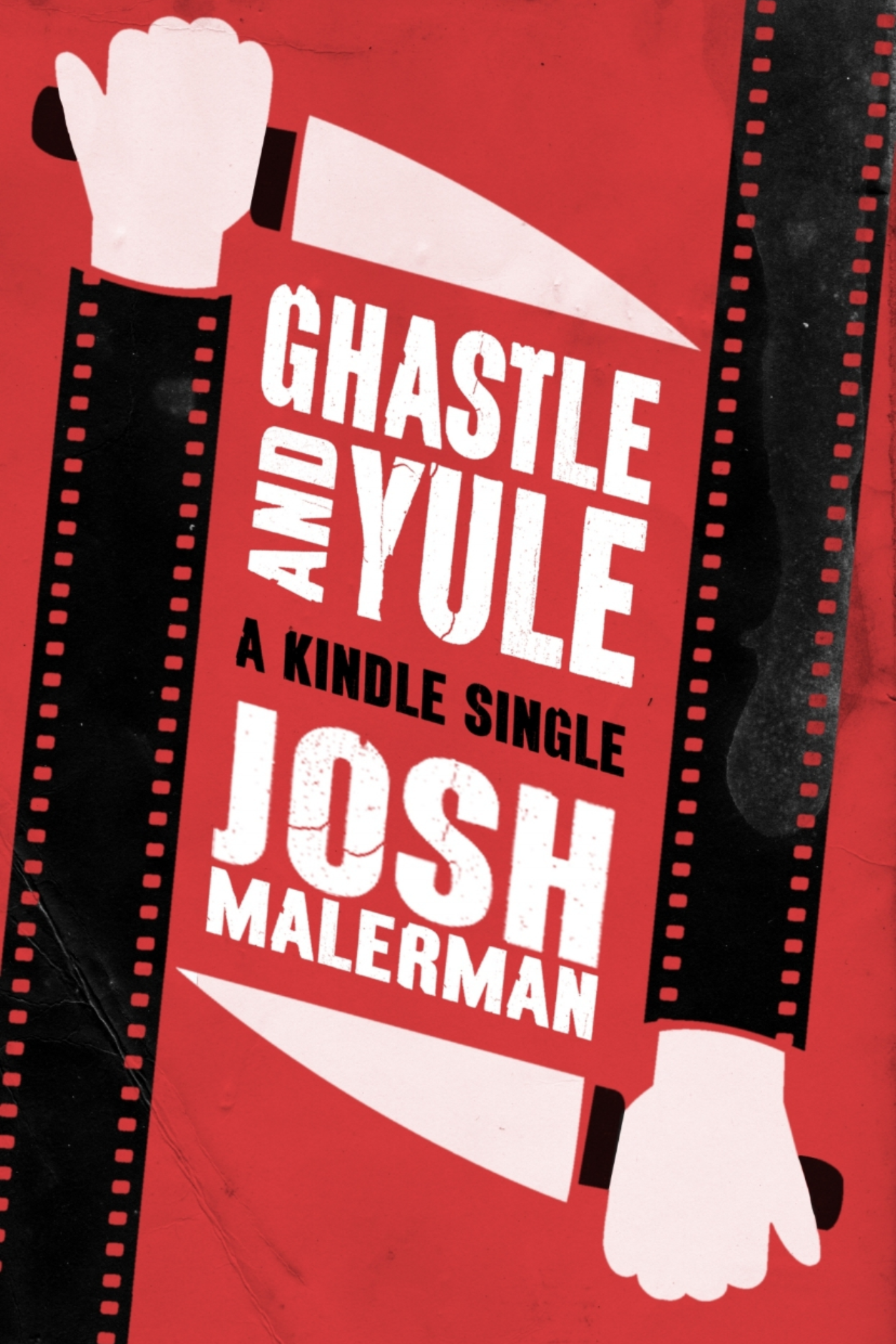
“Ghastle and Yule” by Josh Malerman. Despite its name, this was not a creepy Christmas story as I originally expected. Instead, it’s a tale about two rival horror filmmakers and their obsessions with both their craft and with one another. I enjoyed it a lot. The writing does leave a lot to be desired, at times—there’s more than a fair share of clunky, awkwardly phrased sentences—but the story itself is fascinating enough that I can easily forgive those shortcomings. I’ve always loved stories about film productions, particularly of the Old Hollywood and Mid-Century eras. This skews heavily towards the latter half of the fifties and early sixties, but it hit all the right notes for me. I was particularly impressed with Malerman’s world-building, which is so thorough and convincing that I found myself Googling the names of the characters and some of the film titles to see if they were real. Intriguing, morbid, and a lot of fun.

“The Ultimate Halloween Party App” by Lisa Morton. This one has a great and pretty terrifying premise, but it ultimately didn’t do much for me. The world-building felt cobbled together from interesting but half-formed ideas that never really meshed well. The ending, in particular, felt like a huge non-sequitur—as if the author got bored with her own story. Very baffling. Read from The Mammoth Book of Halloween Stories.

And finally, one book I did not do an individual review for, because I’ve written about it more than enough times

Pumpkinheads by Rainbow Rowell, Faith Erin Hicks. A seasonal staple, obviously. I used to pick this one up at the very beginning of October but have since realized that it’s actually the perfect transitional read, being set on the last day of the month and all about endings and new beginnings. It literally concludes with the characters talking about taking up seasonal jobs during the holidays. Which brings me, once again, to ask Rowell and Hicks for a Christmas sequel to this beautiful book. Please. I beg. I implore.

And that’s another Hallowe’en season come and gone. I hope you all had a good one. I did, despite feeling at times as if I was forcing it a bit too much. (Really, is there anything more horrific than Life getting in the way of your enjoyment of frivolous things? I submit that there is not.) But in the end, I watched some fun movies, read some damn fine stories—even wrote one of my own—and I can’t ask for anything more than that.

“THE APARTMENT NEXT DOOR” by Ricardo Reading

Hullo. I have written a thing.⠀

A couple of years ago, I wrote a story for Hallowe’en. It was a decision made, as these things are wont to be, on a complete whim—literally as I was about to upload my first post on the first day of October. I figured it’d be fun to do a serialized thing, to write a small chapter to go along with every post throughout the month. And it was fun. And exhausting. Mostly I was proud that I followed through with it. Me! The most fickle of writers! I resolved to make it a tradition—to share a short story every Hallowe’en. I was looking forward to the next year.  ⠀

I didn’t do anything the following year. Mostly because Life, frankly, kicked my ass. I told myself the next year would be different.⠀

Life is still very much a lot lately, to be perfectly candid, but I managed to get this one written and done well before the season. It’s a lot less whimsical than my previous offering—more straightforward horror than quirky fantasy, but I’m just as proud of it.

It was inspired by real life, more or less. That same October from a couple of years ago, during the last week of the month, I noticed that the apartment next to mine was open. It had been empty ever since I had moved into the building earlier that year, so I figured someone was finally settling in or cleaning the place up.⠀

Nobody settled in. Nobody, as far as I could tell, cleaned anything up. The place just stayed open like that for about a month. Then, one day, it was just closed up again.⠀

I told some friends about it, and we amused ourselves by coming up with the wildest, creepiest stories about the empty apartment (it was the week of Hallowe’en, after all). It was all good fun until I started having nightmares about the place—the most vivid of which served as the basis for the climax of this story. ⠀

I hope you enjoy it, if you do read it.⠀

Nobody has moved into the apartment next door, by the way. And it’s remained closed for most of the last two years.⠀

I say “most” because, just last week, I found it open again.⠀

Just a weird coincidence, I’m sure.⠀

Happy Hallowe’en, everyone. 🎃

ALL HALLOWS by Christopher Golden

Publisher’s summary: It’s Halloween night, 1984, in Coventry, Massachusetts, and two families are unraveling. Up and down the street, secrets are being revealed, and all the while, mixed in with the trick-or-treaters of all ages, four children who do not belong are walking door to door, merging with the kids of Parmenter Road. Children in vintage costumes with faded, eerie makeup. They seem terrified and beg the neighborhood kids to hide them away, to keep them safe from The Cunning Man.

There’s a small clearing in the woods now that was never there before, and a blackthorn tree that doesn’t belong at all. These odd children claim that The Cunning Man is coming for them… and they want the local kids to protect them. But with families falling apart and the neighborhood splintered by bitterness, who will save the children of Parmenter Road?

🎃

All Hallows is a definite slow burn. Author Christopher Golden takes the Stephen King approach here, allowing us to get up close and personal with his sizable suburban cast—introducing first their personal demons before letting loose all the literal hellions.

The focus on interpersonal relationships might not resonate with some readers, though, as it does mean that for a large portion of the book, the horror is much more of the domestic kind, with the supernatural elements only really kicking in well into the second half. While the social drama is very much the heart of the story—it’s compelling and, at times, considerably more harrowing than any of the horrific happenings that follow—the novel could have certainly benefited from a better balance overall. The otherworldly aspects are alluring and fascinating, but they also feel somewhat tacked on, with Golden throwing in a lot of lore significantly late in the game. Horror often thrives on mystery and ambiguity, yes, but if the goal is to establish a larger mythology, you’re probably going to need more than a handful of cursory paragraphs.

Still, the sudden supernatural shift sets us up for some seriously shocking scenes, made all the more impactful by the considerable amount of time we’ve already spent with these characters and their struggles. We empathize, and thus we are horrified. I found the Cunning Man and, in particular, the old-fashioned trick-or-treaters exceedingly creepy. The preternatural principles of the story may be a bit vague, but they do bring a lot of dark folkloric flair. They work for me.

That shadowy atmosphere is the best thing this book has going for it—something I fully expected after reading Baltimore, Christopher Golden’s magnificently Gothic collaboration with Mike Mignola, last year. Golden completely captures both the informal, ephemeral nature of the holiday and its more arcane, ethereal facet. The end result is a lot of ghoulish fun—a novel that evokes the playful spirit of Spirit Halloween just as much as it does the mythical essence of Samhain—making All Hallows, for this reader at least, the perfect read to close out the All Hallows season.

STAY OUT OF THE BASEMENT by R.L. Stine

Publisher’s summary: Dr. Brewer is doing a little plant-testing in his basement. Nothing to worry about. Harmless, really. But Margaret and Casey Brewer are worried about their father. Especially when they… meet… some of the plants he is growing down there. Then they notice that their father is developing plantlike tendencies. In fact, he is becoming distinctly weedy—and seedy. Is it just part of their father’s “harmless” experiment? Or has the basement turned into another little shop of horrors?

🎃

Stay Out of the Basement is just a lot of classic Goosebumps fun. I love how you can so clearly tell this was written very early in the series. It’s in third person, for one, which R.L. Stine more or less abandoned in the later books. A shame, really, since I think it suits his writing style better, making for much more effective storytelling. But I suppose first-person narration is better for young readers, in terms of immersion and all that.

Another way you can tell this was an early effort is by how delightfully deranged Stine still was. It’s a straightforward “Scooby-Doo” premise, really, about a father secretly fashioning some freaky flora, and his kids trying to figure out why he’s being so weird and mysterious about it. Hijinks, of course, ensue. But then things would get intense out of nowhere: kids slashing at parents with knives! (Plant) people getting sliced in half with axes! Green blood! Someone held captive for multiple days and everyone being all “it’s cool no worries” about it‽ You know. Fun stuff.⠀

The television adaptation of this on the original show was also pretty memorable. It’s one of the few I actively recall watching as a child—mostly because of the climax, which I think was more impactful than the book’s. 

Also! I picked this up before the trailer for the second season of the new television show dropped, but I thought it was a nice bit of cosmic coincidence, seeing as how it seems to be at least partly based on this story. I really enjoyed the first season’s darker, more mature take on these endearingly goofy stories, surprisingly enough, so I can’t wait to see what they do with this bonkers premise. (Ross is going to get wrecked.)

Goosebumps, kids. It’s always been rad.

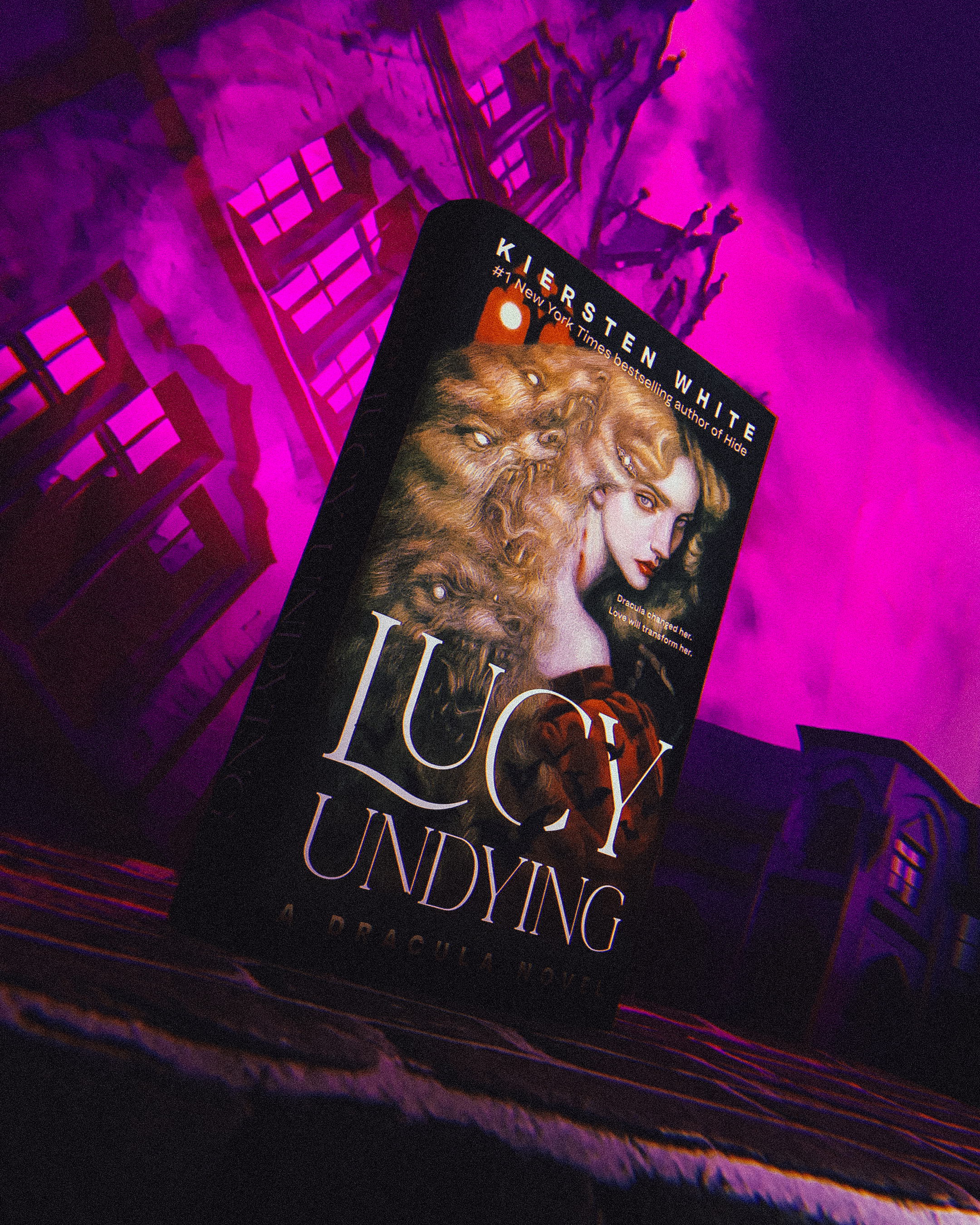
LUCY UNDYING by Kiersten White

Publisher’s summary: Her name was written in the pages of someone else’s story: Lucy Westenra was one of Dracula’s first victims.

But her death was only the beginning. Lucy rose from the grave a vampire and has spent her immortal life trying to escape from Dracula’s clutches—and trying to discover who she really is and what she truly wants.

Her undead life takes an unexpected turn in twenty-first-century London, when she meets another woman, Iris, who is also yearning to break free from her past. Iris’s family has built a health empire based on a sinister secret, and they’ll do anything to stay in power.

Lucy has long believed she would never love again. Yet she finds herself compelled by the charming Iris while Iris is equally mesmerized by the confident and glamorous Lucy. But their intense connection and blossoming love is threatened by outside forces. Iris’s mother won’t let go of her without a fight, and Lucy’s past still has fangs: Dracula is on the prowl once more.

Lucy Westenra has been a tragically murdered teen, a lonesome adventurer, and a fearsome hunter, but happiness has always eluded her. Can she find the strength to destroy Dracula once and for all, or will her heart once again be her undoing?

🎃

A handful of years ago, just as I started to become slightly obsessive with my Hallowe’en reading, I picked up Kiersten White’s The Dark Descent of Elizabeth Frankenstein. I wanted something lofty to read—something Gothic and Romantic—and this retelling of Mary Shelley’s seminal tale seemed to serve the need. I was already planning to read about vampires anyway, so adding another classic monster into the mix felt like the appropriate thing to do. Elizabeth Frankenstein turned out to be a highlight read, not only of that spooky season but of the year as a whole. 

So when White announced she was planning to give the same sort of revisionist treatment to another horror classic, well, I couldn’t help but be excited, even if it was a few years down the line (writing: it takes time). It was well worth the wait, though, because I ended up loving the hell out of Lucy Undying, an elegantly Gothic, gloriously gay, and unapologetically feminist tome.

Like its predecessor, this is also very meandering—a veritable labyrinth of twists and turns that chances upon every conceivable emotion along the way. The winding, saturnine nature of the narrative will no doubt be a point of contention among some readers, as it does border on being exhausting and repetitive at times, but as someone who appreciates atmosphere above most things, I certainly don’t mind when a story takes the long, lugubrious way round in order to allow us to properly take in the sights and sentiments.

And what sights! The timeline and geography of this novel are truly epic in scale, taking us from London at the tail end of the Victorian age to Europe and Asia during the wars that shaped the twentieth century, and right up to North America and our current capitalist hellscape. White manages to cover all this ground and distinct eras while still maintaining an air of Gothic atmosphere, thanks largely to a protagonist who feels perpetually out of place.

Because that’s Lucy Westenra’s story in this rendition: a progressive young woman who holds unrequited feelings for a fellow female friend while living in a conservative, restrictive society during the turn of the century, who is then murdered and becomes, eventually, a revenant. Fate, it seems, has deemed Lucy an outsider in both life and in death. Until Iris comes along, another outcast who helps Lucy reclaim her narrative. 

We see much of this story through Lucy’s vivid eyes, but Iris is just as much a protagonist here, and an equally strong and fascinating presence. In fact, it’s through her that we get this novel’s most interesting conceit: by reading Lucy’s old diaries, she gleans insight that Lucy herself was never privy to. Having the perspective of a fellow misfit help the undead one see is as close to a central premise as this charmingly convoluted novel has.

While Elizabeth was largely a reimagining of Frankenstein, Lucy acts more like a proper sequel to Dracula, shedding new light on established characters and accounts. I’m not at all versed on scholarly studies of Stoker’s work, but I can’t imagine White’s interpretation of what Mina, Arthur and Dr. Seward were doing to the Westenra family is all that popular. It’s undoubtedly intriguing, however, and White tries her damnedest to prove her thesis here. It makes, if anything, for one hell of a yarn. One of my favorite reads this season.

THE BLACK SLIDE by J.W. Ocker

No one in Griffin Birch’s class could say when the Black Slide showed up on their playground. One day, it was just there, replacing the old one.

Griffin couldn’t tell you why the Black Slide makes him feel so uneasy, either. Maybe it’s the way it always seems to be the same size, no matter how close or how far you are from it. Perhaps it’s  the way it looms over everything else in the playground, like a predator, patiently awaiting its prey. In either case, he doesn’t want to get near the thing.

But the promise of reprieve from constant bullying compels him to go down it one day. The slide seems interminable, with Griffin seeing things inside the darkness of the duct that shouldn’t be possible. After what feels like an eternity, Griffin comes out of the slide with a broken arm and fear deep inside his bones.

Shortly after, students start to disappear. Griffin sees them from his classroom window, walking up to the Black Slide as if in a daze. They climb up its chrome stairs, enter its obsidian cylinder, and they don’t come out. Weirder still, none of the adults around him seem to notice the missing children. 

And it’s only when his best friend Laila is one of those who disappears down the Black Slide that Griffin gathers up the courage to follow. 

What they find on the other end of the slide is a world of pain, inhabited by creatures that revel in it and are all too eager to share their suffering.

🎃

As I was updating my Goodreads profile soon after finishing J.W. Ocker’s The Black Slide, I stumbled upon a comment from the author himself, mentioning how he wanted to push the boundaries of middle grade horror with this novel. Mission certainly accomplished, because this goes places that even I, a huge advocate for children’s horror being no less horrifying than adult horror, was taken aback at times. “Hellraiser for kids” is an apt description indeed, but while that series is more interested in the physical, visceral aspects of horror, Ocker wisely focuses more on the psychological side of things. His characters still go through physiological trauma, to be sure, but the descriptions deal with how their ordeals feel instead of anything that’s overly explicit, which is much more affecting in the long run. Our morbid, reptilian brain can—and will—fill out the rest. 

But it’s a testament to Ocker’s writing that, in a story full of endless torment, the real horror does not come from the creatures whose existence revolves around the torture of children, but from the wanton, casual cruelty that people can—and so often do— inflict on one another. There’s a particular scene here involving Griffin’s estranged, abusive father that’s more shocking and terrifying than anything Ocker’s scaled-down Cenobites could ever conjure up.

Despite a second act that feels somewhat slow and repetitive, I loved pretty much everything about The Black Slide: from its captivating characters to its brilliant and nightmarish world-building (which at times reminded me so much of my own nightmares that I would actually physically recoil), to its themes. This is a story about friendship and resilience. It’s also a story about pain. And while there are countless children’s stories that deal with hardship, I’m hard-pressed to think of many that contend with just how often pain can—for better or worse—play a significant part in personal growth. This is a middle grade novel that faces that notion head-on, and as such isn’t afraid to explore some dark, disturbing places. Ocker navigates these gloomy spaces with tremendous nuance and compassion, all the while respecting his intended audience enough to never be coddling or condescending. Important and necessary.

CLOWN IN A CORNFIELD 3: THE CHURCH OF FRENDO by Adam Cesare

Quinn Maybrook has been through a lot. She’s lost too much. Seen far too much death. She’s tired and drained and exhausted. But she cannot rest—not when so many of the maniac clowns who slashed her youth away are still out there, evading justice. So, leaving what little remains of her life behind, Quinn Maybrook decides to take matters into her own hands. 

And elsewhere, in a town calling itself Kettle Springs, Frendo’s curse patiently awaits Quinn Maybrook’s arrival.

🎃

I have a deep and abiding appreciation for this series. The first novel was one of my favorite Hallowe’en reads back when it first came out, thoroughly impressing me with its balance between pointed social critique and sheer slasher spectacle. I enjoyed the second book a little less, finding it lacking much of the frivolous, dynamic action that kept the first novel being dragged down by its heavier themes, but I still thought it was a thought-provoking and realistic escalation of those same threads. 

Which makes it all the more unfortunate that Adam Cesare’s Clown in Cornfield 3: The Church of Frendo, the apparent climax to this corrupted clown chronicle, just didn’t do it for me.

Talking about it with a friend who was similarly let down, I likened this series of books to the original Halloween films—although, upon further reflection, the modern trilogy seems a far more apt comparison. In that cycle, we have a relatively simple—if effective—slasher story with its first movie; a sequel that is essentially more of the same, turned up a few considerable notches; and then a largely disappointing denouement that is only connected to the previous narrative by the barest of threads. 

Going with that analogy, The Church of Frendo is definitely the Halloween Ends of this otherwise coherent sequence. Gone is much of the clever cultural commentary present in the earlier entries, abandoned in favor of a drawn-out and ultimately anticlimactic revenge tale that feels more like the secondary plot of a larger story than it does a proper, satisfying finale. Add to that some truly bizarre and questionable choices (a Juggalo love interest? For a teen protagonist? In the year of our Lord 2024?) and you have all the makings of an awkward and underwhelming conclusion. Tragically disappointing.

Even then, I can’t say I totally disliked this book. Cesare can still write a mean set piece, teeming with tension and terror—and while these became increasingly infrequent as the series went on, they are definitely always memorable. And though not enough to be a saving grace, I did enjoy some of the character work—particularly with Tabitha, a truly compelling character in a grueling and heart-wrenching situation. I liked her so much that, in retrospect, I couldn’t help but feel that if this novel was always meant to be such a departure from formula, it would have benefited more from having her as the sole protagonist, with her story—so similar to Quinn’s in the first novel—tying into the broader storyline at the end, thus closing that circle in a much more narratively satisfying manner. 

I think, anyway.

THE CHRONICLES OF VIKTOR VALENTINE by Z Brewer

Viktor Valentine wishes he were as excited for the start of seventh grade as everyone around him seems to be. Even his one and only friend, Damon, can’t help but seem eager to start the new school year, despite always being the first to complain about their small, boring town of Nowhere. All Viktor wants is for summer to never end—to hang out with his best friend eating ridiculous amounts of junk food and playing endless rounds of their favorite vampire-hunting video game. That’s not too much to ask, is it?

But things insist on changing around him. The school year does inevitably start, bringing with it a myriad of new worries and anxieties. Damon, already a popular kid, seems to want to spend his time hanging out with other people, and Viktor is afraid of being left behind. There are also the mysterious new neighbors, the youngest of whom takes a liking to Viktor—a feeling he would very much reciprocate if only he could find a way to overcome his infinite awkwardness. Most worrying of all, something is apparently going on with his parents, who are acting weirder than usual, keeping odd hours and returning home with deep, dark stains on their clothes and lips….

🎃

The Chronicles of Viktor Valentine was, despite the promise of its excellent cover, just an okay read for me. I was very into the novel for the bat’s share of it, when it was a mostly traditional but charming coming-of-age story about a seemingly regular kid dealing with growth and change and coming to terms with the fact that vampires may or may not exist in his world. Many of the characters were endearing and felt—despite some curiously stylized dialogue—entirely real. In particular, I enjoyed the depiction of Viktor and Damon’s relationship. It felt genuine, with author Z Brewer striking that delicate, bittersweet balance between faithful and fickle that feels so fundamental in youthful friendships. The setting—a small, sleepy suburban town with the appropriate name of Nowhere—felt suitably realized as well, full of familiar and quaint elements. It all came together to form an atmosphere that was cozy and nostalgic, if a little confining. 

Unfortunately, though, most of these charms were thrown away during the novel’s third act, where the story felt as if it was being forcefully shoved into an entirely different narrative. Which seemed, in fact, to be the case, as I found out soon after finishing that Viktor Valentine is supposed to take place in the author’s shared sanguine universe. I had no knowledge of Brewer’s vampiric saga beforehand, so this is not a judgment against it, but I do still expect complete and satisfying narratives from individual installments, particularly when they’re meant to be the launch of a spinoff series. That’s something I felt was taken away here in favor of crossovers, complications, and cliffhangers. Gone was the folksy familiarity of the characters—replaced by stilted, tired archetypes. The most egregious example of this can be found in Viktor himself, whose story of awkward adolescence and self-discovery is suddenly overshadowed by a hero’s quest that was nowhere evident at the beginning of the book. It was a climax filled with baffling choices, and I couldn’t help but feel disappointed. 

Then again, maybe this is all more of a me thing. Fans familiar with the established series will likely find a lot more to enjoy here, particularly in discovering all the interconnected bits and scattered cameos that I surely missed out on. Alas.