PUMPKINHEADS by Rainbow Rowell, Faith Erin Hicks

pumpkinheads

Rainbow Rowell has made me cry. Yet again. I’ve read enough of her work for this to be expected, but everything about Pumpkinheads — her first graphic novel with the inimitable Faith Erin Hicks — sounded to me like it was just going to be a cute, fun romp.

And it was, you know? Pumpkinheads is the story of Josiah and Deja, two high school seniors who’ve spent the last couple of years working at their local pumpkin patch every Fall. Theirs is a seasonal friendship, but the bond they develop is strong and they consider themselves best friends. This is their last season working together, and once it wraps up they will both, for the last time, go their separate ways, towards college and new lives. So Deja is determined to have their last day (their last Hallowe’en together) be an adventure. “Friends,” she says at one point, “don’t let friends live small lives.”

🎃

Pumpkinheads is charming and adorable and the most fun, gentle read. As are most of Rowell’s stories. And like most of Rowell’s stories, it isn’t just any of those things. There’s always more. And there’s a lot of heart and soul in this graphic novel. A lot of true things about friendship and relationships and what it means to leave people and places behind. And quite a lot of Autumn. This is probably the most Fall book I’ve ever read. I could feel it wrapped around me like a light sweater, could practically smell the crisp October air. Quite the feat considering I live in Puerto Rico, and have never actually come across a proper, Midwestern Fall.

All of this is beautifully conveyed by Faith Erin Hicks’s beautiful, beautiful artwork. She’s drawn up a gorgeous and warm, welcoming world into which I desperately want to jump.

Hicks deserves a lot of recognition in terms of the story, too. The book’s back matter includes a conversation between the authors which makes note of the fact that the script Hicks received from Rowell was more screenplay-like in nature, lacking a lot of the beat-by-beat description that is usually found in most comic book scripts, and it was up to her to break down the panels and figure out the pacing of the story. A job she did marvelously — this is a fulfilling but very brisk read. (“There is a lot of skill,” Hicks says, “behind a ‘quick read.'”)

Hicks ends the same conversation with the following: “In the beginning, you’re trying to get to know them, who they are and how best to draw them so their personalities come through, visually. And by the time you’ve drawn the last page in their graphic novel, these characters are your best friends.” This is, of course, in reference to the drawing process, but it also perfectly encapsulates the experience of reading the story of these characters. You pretty much like Josie and Deja from the get-go, but you love them by the end. And then you understand, quite perfectly, just why they are so loathe to say good bye to their pumpkin patch.

I loved this book.
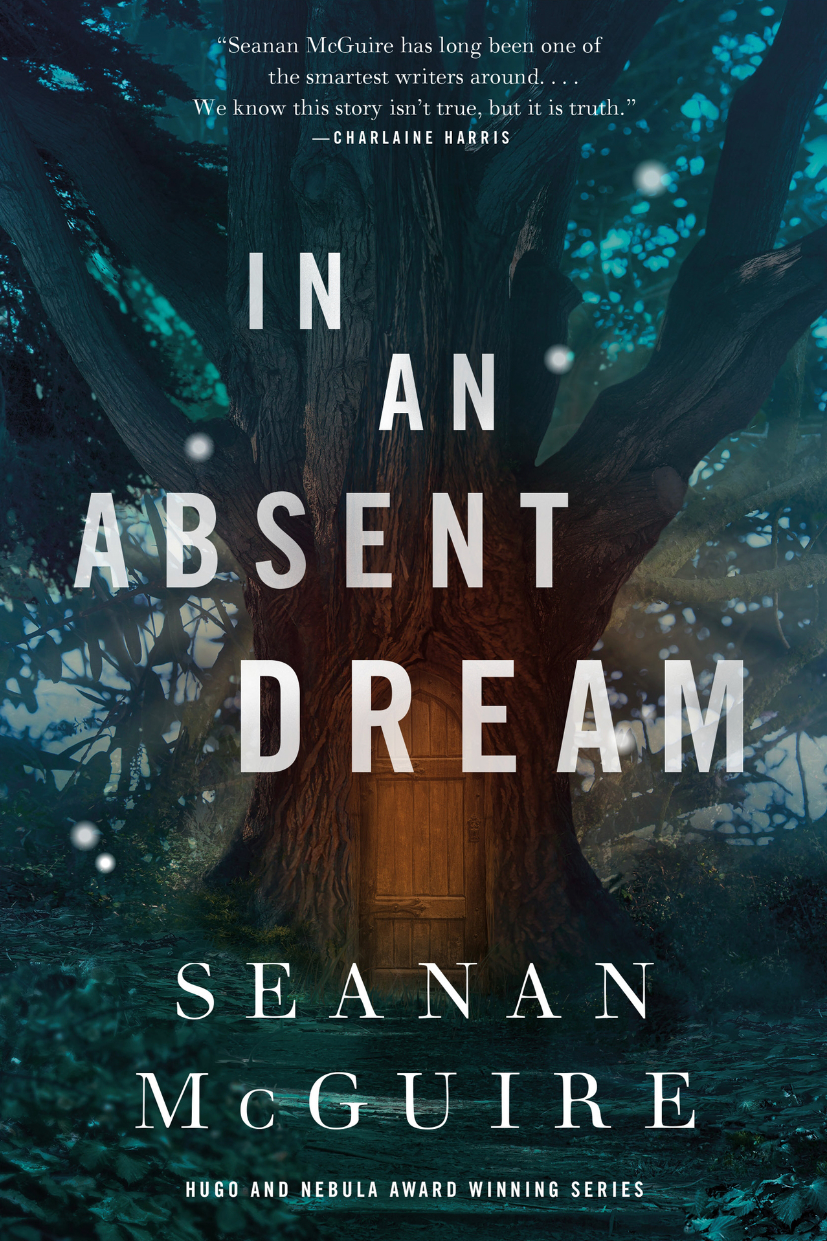
IN AN ABSENT DREAM by Seanan McGuire

in-an-absent-dream-by-seanan-mcguireSeanan McGuire’s In an Absent Dream is the story about Katherine Lundy, a quiet, bookish girl who doesn’t feel at ease with her surroundings. She loves stories, so she finds comfort in books, and she loves rules not simply because she’s supposed to, as the story tells us later on, but because following them “could make you an invisible person, and invisible people got to do as they liked.” (Katherine is also fond of loopholes.) (Katherine would have been a Slytherin.) At school, she’s guarded and reserved, and, as the principal’s daughter, the subject to some bullying, not at all quick to make friends. At home, she’s distant and struggles to connect with her family, mostly because they constantly fail to properly see her for the person she is.

Let us speak, for a moment, on the matter of sisters. They can be enemies to fight or companions to lean upon: they can, at times, be strangers. They are not required to be friends, or to have involvement in one another’s lives, or to be anything more than strangers united by the circumstances of their birth. Still, there is a magic in the word “sister,” a magic which speaks of shared roots and hence shared branches, of a certain ease that is always to be pursued, if not always to be found.

One day while walking home from school Katherine stumbles upon a gnarled and twisting tree that seems to be plucked straight out from a fairy tale. Carved inside the tree is a door, with the words “Be Sure” engraved upon it. Are we at all surprised when Katherine walks up to it, turns the knob to open it, and walks through? We’ve known her only a short time at this point, but we know — we’re sure — this action was as inevitable as death.

This is a story about identity, and belonging. About searching for a place to call home, and what home means, and the price you have to pay to find it.

What is home, after all, apart from the place one returns to when the adventure is over? Home is an end to glory, a stopping point when the tale is done.

Three pages were all it took for me to remember just why I love this series so much. Seanan McGuire’s language in these books is lyrical and lush and drop-dead gorgeous, perfectly capturing the rhythm and beats of traditional fairy tales while still retaining enough of McGuire’s darker, modern edge. And it’s a sharp edge at that. One of the most striking things about the writing in the Wayward Children books is how brutally honest it can be. The language is luscious, but it is used to reveal some harsh truths.

It is so often easy, when one has the luxury of being sure a thing will never happen, to be equally sure of one’s answers. Reality, it must sadly be said, has a way of complicating things, even things we might believe could never be that complicated.

And this is a harsh story. Beautiful, to be sure, but Lundy’s tale is, ultimately, a tragic one, and the writing delivers on that, one bittersweet line at a time.