YEAR IN REVIEW ○ 2023

I don’t think I have much to say about my reading life this year that’s different from years past. I come to the same conclusions every turn around the sun: to have more fun with my reading; to not worry so much about always having something to say about what I read; to trust and welcome my whims and flights of fancy. And at the start of every year, I forget these lessons, and have to spend the following twelve months trying to learn them again. 

So I guess my only hope and resolution for my reading life the coming year would be this: to relearn my lessons early, so that I can better appreciate the stories to come.

Here are some of the stories I appreciated the most in 2023:

THESE FLEETING SHADOWS by Kate Alice Marshall

Read this with my friend Ally near the beginning of the year. It was an amusing experience in that we both went into it expecting wildly different things: a new adult mystery in my case, a middle grade affair in Ally’s. Neither of us expected a Young Adult horror story of madness, psychedelia, and eldritch oddities. But that was part of the fun. This is one of the few books I’ve ever read where the tone shifts suddenly and unexpectedly and instead of hurting the story it complements it. Great, delightfully chaotic read.

A FIRST TIME FOR EVERYTHING by Dan Santat

This was a painful read but only because author/artist Dan Santat portrays the middle school experience in such a brutally honest way that it managed to dredge up some painful memories from my own school days. (As one character points out: the best thing about being a teenager is that you only get to do it once.)

I have a tendency to romanticize the past, to wax nostalgic about the simplicity and innocence of childhood. This served as a good reminder that it’s necessary to confront and accept all the unsavory moments, too, because, for better or worse, they helped shape who I grew up to be.

Santat’s art is brilliant and bold and beautiful. His portrayals of awkward teenage interactions are as nuanced and detailed as his depictions of the intricate and lush landscapes of Europe. A wonderful, important work.

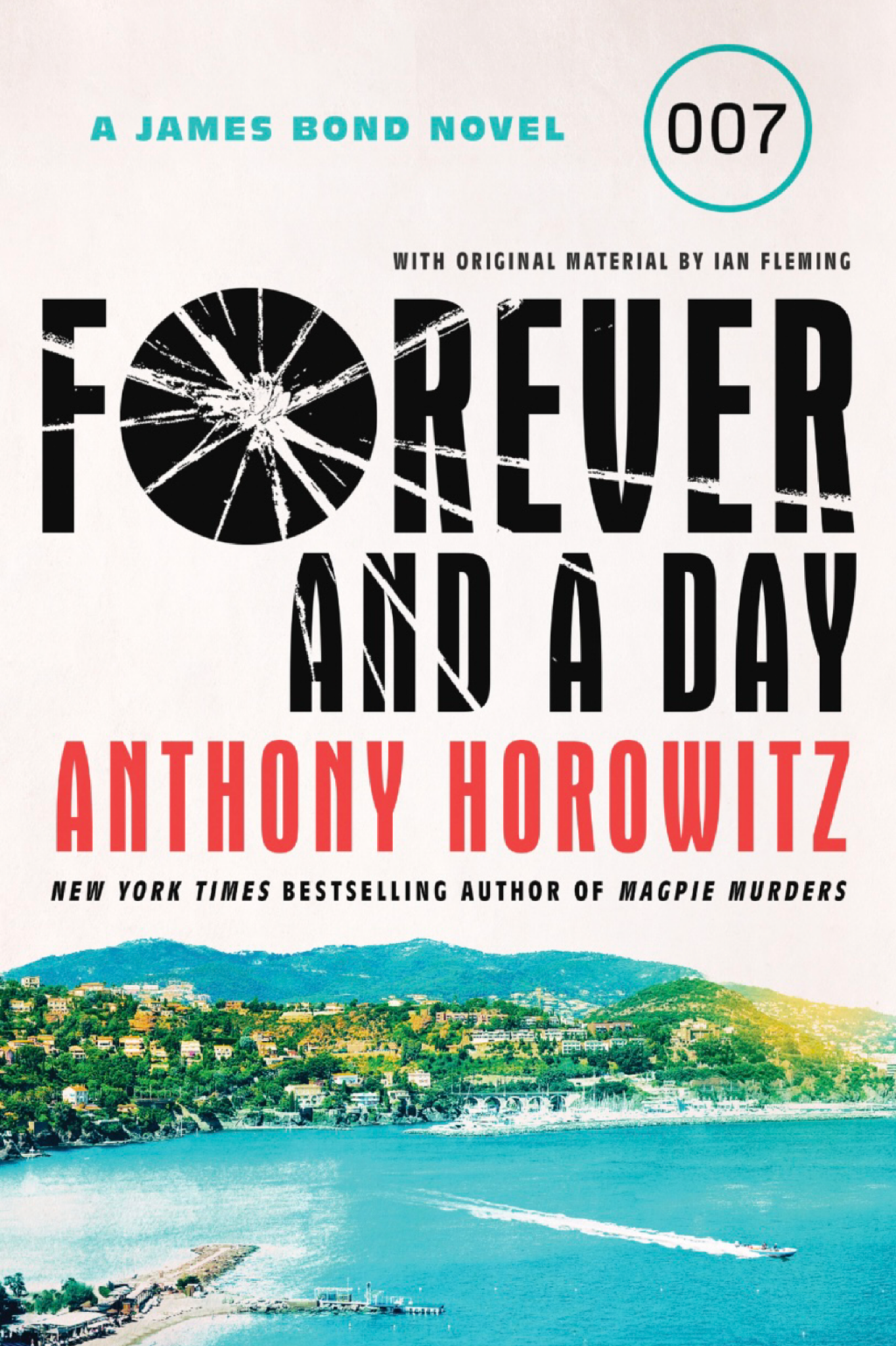
FOREVER AND A DAY by Anthony Horowitz
FROM RUSSIA, WITH LOVE / DR. NO by Ian Fleming

Every year, some time after the holiday season, I seem to hit a particularly bad reading slump that I only manage to break by picking up old school thrillers featuring outdated views and equally outdated, stereotypically masculine protagonists. Last year, it was the Parker books by Richard Stark a.k.a. Donald Westlake. This year, it was Bond. James Bond.  

I have no idea what this says about me, other than I enjoy reading about people doing their work in a ruthlessly efficient fashion. (I’m sure it was Westlake who said that all his novels were really about people going about their jobs, and it was only that their jobs involved committing crimes and pulling off capers.)

Probably the most fun I had reading all year. From Russia, with Love and Dr. No were my favorites from Fleming’s one golden typewriter (I was surprised by how much I enjoyed Fleming’s writing — the man could write a mean, muscular sentence), but Anthony Horowitz’s Forever and a Day (a prequel to Casino Royale) was a great standout.

I complemented my reading by watching a bunch of the films, too. I had never seen one all the way through before (indeed, before all this my only real experience with the character was through the GoldenEye 007 game which I spent many happy hours playing as a child). But I also had a tremendous amount of fun watching these preposterous movies and anyway I want to be Pierce Brosnan when I grow up and also marry Daniel Craig that is all thank you.

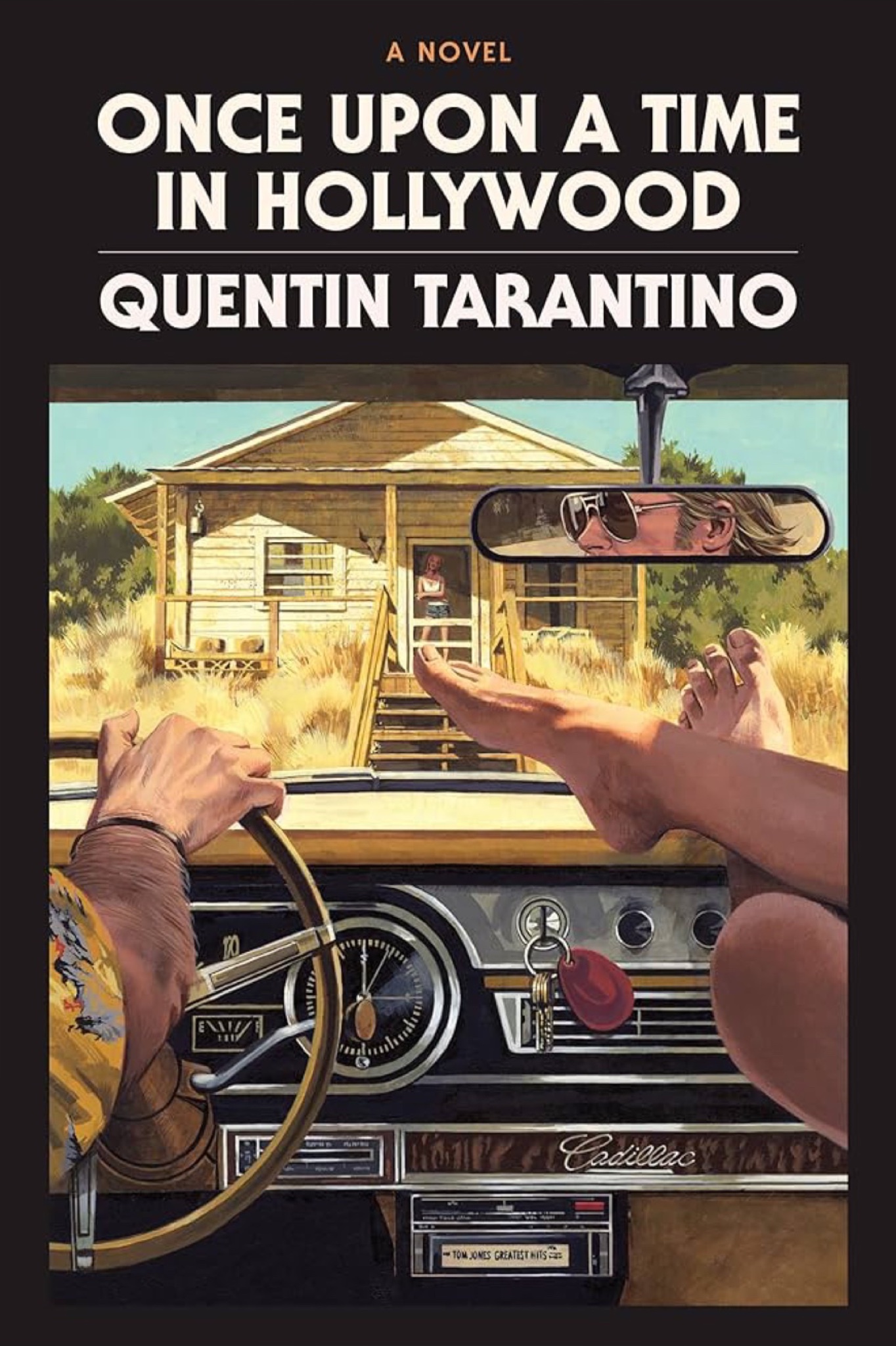
ONCE UPON A TIME IN HOLLYWOOD by Quentin Tarantino

Essentially Quentin Tarantino’s overindulgent expansion of the already overindulgent world of his film and I ate absolutely every word of it. Tarantino’s dialogue is the main reason I’m a fan of his movies and I was pleasantly surprised to find that it is just as sparkling in prose form.

Can’t really think of another way to describe this book/story other than as absolute vibe.

IN THE DREAM HOUSE by Carmen Maria Machado

I don’t think a book has ever left me as stunned and speechless as this one did. Which is actually appropriate considering its central conceit of trying to provide a language and a vocabulary with which to talk about harrowing, devastating experiences. Just an absolutely remarkable work that is just as much an academic dissertation of abuse in queer relationships as it is an intensely intimate and brutal piece of personal history and memoir. One of the most powerful things I’ve ever read and it will stay with me for a long time.

CACKLE by Rachel Harrison

Hallowe’en is, as it must be evident by now, my best reading season. I’m happy to say that this past one was among the best, with nearly every story picked up being an absolute banger, as the kids say. And it was kicked off by this absolutely delicious, cozy, spooky, heartwarming treasure of a book. A thoroughly modern fable of identity and independence, featuring two of the strangest protagonists I’ve come across recently. Loved every moment I spent in this world.

A GUEST IN THE HOUSE by Emily Carroll

Simply: I adore Emily Carroll and will pick up anything and everything she puts out. Her work is obscenely good and this most atmospheric and visceral of graphic novels is no different. Glorious, stunning stuff.

THE SKULL by Jon Klassen

A work of pure story. Klassen doesn’t waste a single word or drawn line in this spooky, morbidly funny (it made me laugh several times out of sheer, shocked delight) little tale about loyalty, friendship, and affection. Lovely, lovely stuff.

(Also I love the titular Skull so much I kind of want to get a tattoo of him.)

THE HACIENDA by Isabel Cañas

Full of ominous atmosphere and surprisingly intense set pieces. This delivered the claustrophobic and menacing vibes I always look for in a haunted house tale. Another favorite read from the Hallowe’en season.

EIGHT PERFECT MURDERS by Peter Swanson

I read this one in a single day. It then made me read two other Swanson books that I finished just as fast and with equal gusto. Guess you could say it turned me into a fan. It’s exactly the sort of murder mystery I enjoy the most: self aware and slightly meta (again, Knives Out is my lode star), bookish, cozy but with more than a healthy dash of thriller elements. Absolutely great, gripping stuff.


You know, if you were to ask me just a couple of weeks ago how my reading went this year I probably would have only said, “Fine.” It always takes doing this retrospective for me to realize and appreciate just how good it’s actually been. And it has.

Here’s to hopefully another year of excellent stories.

See you in the next one.

📖

A CHRISTMAS CAROL by Charles Dickens

A Christmas Carol is, I think, one of our most human stories. You could take away all its festive fittings and pious peculiarities and it will still remain just as impactful, this story about redemption and restitution. This story that, from the very start, implores us to have empathy for others. This story that practically begs us to not shun away from humanity, lest we lose our own.

People are a cyclical lot. We have a frustrating tendency to forget our lessons and repeat our mistakes. It’s part of why we write stories. To remind ourselves that we can and must be better; that what is lost can be found again; that there is always hope, should we have the courage to change.

Charles Dickens’ ghost story of Christmas is 180 years old, and remains one of our very best, most unequivocal reminders.

Happy holidays, everyone.

THE HALLOWEEN MOON by Joseph Fink

13-year-old Esther Gold loves Halloween. She plans her entire year around it. She has the best routes for trick-or-treating mapped out well in advance. She keeps a selection of seasonally-appropriate horror movies always at hand. At her school’s annual costume contest, her varied, elaborate ensembles always get her the top prize. She lives and breathes the haunted holiday. She’s fine with others not enjoying it as much. She appreciates Halloween enough for everybody else.

Which is why it comes as a shock when her parents forbid her from trick-or-treating on the sacred night. She is too old, they insist. Practically an adult, even, having had her bat mitzvah. They don’t want her daughter to stop enjoying Halloween — they just want her to find different ways of doing so. Esther is baffled and offended. For one thing, she still considers herself a long way off from being an actual adult. For another, it’s not that she even likes all the candy she collects. She doesn’t even really eat any. It’s an essential, unchangeable part of the ritual and it must be performed. It’s what Esther loves most about Halloween. Life may be an ever-changing, chaotic current that insists on carrying her along — but Halloween, with all its vested, hallowed customs, is eternal.

So of course Esther makes a plan to sneak out and do her routine anyway, dragging her best friend along for the ride. Agustín is more alibi than accomplice, since he doesn’t even really like the holiday, preferring to spend the night watching movies with a hard-working mom he rarely gets to see.

But an increasingly weird mood conspires to sabotage both Esther’s enthusiasm and her carefully laid plans. Doors remain unanswered. The streets and sidewalks seem strangely vacant. Other than the odd, unescorted group of trick-or-treaters shambling along in tattered costumes, and the curiously creepy vans driving about, they don’t see many people out in the streets. And, of course, there’s the giant, ominous moon glowing orange in the night sky, a Halloween harbinger of the very thing Esther seems to fear the most: change.

🎃

I really enjoyed Joseph Fink’s The Halloween Moon. It couldn’t be helped. Like our main character Esther, I’m a devotee of the deeply-ingrained and often odd-but-charming customs that tend to attach themselves, like barnacles on a ship’s hull, to holidays. Like the opening chapters suggest, I may not go as hardcore on the holiday as its protagonist, but I’m still a huge proponent of peculiar practices, particularly of the personal sort. To the point where — again, much like Esther — I often get irked and discouraged whenever things don’t go as originally planned. A lesson I ought to have learned by now: a cursory glance through my seasonal summaries over the years will show just how often I wish for things to have run a bit more smoothly; for the things I read and watched and did to have been slightly better.

This year has been no different. But why should it be? Life is nothing but a constant, churning current of chaos. Things rarely go as planned. It’s annoying as anything, to be sure, but at the end of the day, like the Serenity Prayer reminds us, it’s better to accept it all as an inherent part of the seasons. Hallowe’en in particular, which has always felt like the most ephemeral, harum-scarum of holidays, anyway.

This fixation on circumstances beyond one’s control informs the central conceit in Halloween Moon, with Esther’s fears and frustrations acting as the driving forces of the story. It’s the major theme of the book, but Fink show’s admirable restraint and respect towards his middle grade audience by not belaboring, hammering the point home only at the end, making for a satisfying and emotionally cathartic conclusion.

It’s that last act that won me over. Halloween Moon has a promising beginning and a great ending, but the middle is a bit muddled, suffering from a sudden surge of needlessly complicated lore and some seriously overwrought exposition. The story sputters and stumbles here enough to lose me for a while. But then the concluding chapters made me cry, a redeeming quality for any book, in my eyes. It helps that the characters are so well realized, too. People being more than what they seem is another theme in this book, and it’s perfectly embodied by this most charming of casts.

Also, it’s just fun. True to the promise of its title, this book is bursting at the seams with Halloween. From centuries-old customs to the more modern trappings of the holiday like horror movie marathons and extravagantly decorated houses, Fink writes about it all with the same kind of enthusiasm and fervor shared by his protagonist —  and it’s nothing short of infectious.

Halloween Moon is a lovely, surprisingly mature meditation on change and growing up. And also just a joyous, thoughtful tribute to Halloween, that odd and curious celebration we all cherish and love.

BALTIMORE by Mike Mignola, Christopher Golden

The Great War on a cold autumn night.  Captain Henry Baltimore is charged with a suicidal mission: to somehow lead his battalion across the notoriously impassable No man’s land. Indeed, they barely make any headway before being ambushed by the hidden Hessians. Later, Baltimore awakes atop a mountain of his massacred companions, with carrion-scavengers already circling overhead. Baltimore quickly realizes these are no ordinary birds of prey, but monstrous bat-like beings. He manages to wound one of them while trying to escape, but not before the creature mangles one of his legs, breathing into it a pestilent substance that soon renders it useless.

The brief encounter between man and monster ends up changing the course of not only Baltimore’s life, but the world’s. As the war comes to a close, a mysterious plague begins to spread all across Europe, leaving ghost towns in its wake.

It is to one of these ghost towns that Lord Henry Baltimore summons three of his acquaintances. They meet inside a ramshackle inn. The men do not know one another, the absent Baltimore seemingly being the only thread connecting them. While waiting for their associate, and lacking anything better to do in the drab, run-down place, they begin to tell stories, specifically about how they each came to be acquainted with the now nomadic nobleman. Stories that tell of Baltimore’s many losses. Of the man’s belief that he had awakened something sinister and supernatural during the war. Of his slow, painstaking transformation into a cold, ruthless warrior, fighting shadows in plague-ridden places.

And they tell their own stories in turn. Of the odd, ghastly events witnessed over the course of their lives. Of the experiences that led each of them to believe, unequivocally, in Lord Baltimore.

🎃

Well, I enjoyed the hell out of this.

Baltimore, or, The Steadfast Tin Soldier and the Vampire by Mike Mignola and Christopher Golden is one of those stories I tend to think of as “damn good yarns” upon finishing. Written in the same style and spirit of the Victorian era literature that has shaped and influenced much of Mignola’s work, Baltimore is a baroque, thoroughly Gothic tale that revels in its ornate, ostentatious nature. Like many of its purple predecessors, it exudes atmosphere in abundance, and, as a reader for whom this quality often reigns supreme, this book managed to hit all the right spots for me.

As the lengthy alternate title suggests, Baltimore is a re-imagining of “The Steadfast Tin Soldier” fairy tale by Hans Christian Andersen. Mignola and co-author Christopher Golden wisely preserve that story’s melancholic poignancy, making it the beating heart of their own tin soldier, while at the same time decking the rest of the story out in somber, funereal vestments. Instead of paper ballerinas, there is a dead spouse. And instead of a goblin jack-in-the-box, there are vampires.

Ironically, it’s those two elements that end up slightly hindering the book. Baltimore is very much a boy’s tale, with women featured in only the most peripheral of ways. It would have benefitted the story to give at least Elowen, Baltimore’s wife, an expanded role, considering she is his primary motivation. Instead, much like the ballerina in the original tale, her characterization is mostly paper-thin.

As for the vampires, I just found the lore around them muddled and lacking. You get the sense that Golden and Mignola wanted to go the Our Vampires are Different route, which is commendable, but given that most of this book — from the themes to the style in which it is written — adheres fairly strictly to traditional approach, makes this a somewhat odd choice.

But the appeal for me ultimately lies in the storytelling, at which this book spectacularly succeeds. Most of Baltimore is told as a nested narrative, courtesy of our three protagonists, who pass the time by telling stories, with each tale showcasing just how memorable and varied weird fiction can be. The story within a story is a device I particularly love, so of course this was the aspect of the book I enjoyed the most.

Nearly all of the pages boast woodcut-like illustrations, drawn by Mignola in his distinctive, striking style. They’re a little plain, but Mignola’s art has had a huge influence on me over the years, so it’s always a joy to see.

A damn good yarn, indeed.

THE SKULL by Jon Klassen

Otilla ran away from home. She runs deep into the snow-blanketed forest. Eventually, she finds a very large house. Inside the house is a skull. He lets Otilla in.

Otilla and the skull become fast friends. She helps the skull with things that have become difficult for him, like eating fruit or having tea by the fireside. Otilla doesn’t want to return to wherever she came from; she wants to stay. The skull lets her, but he warns her of the headless skeleton that comes every night looking for him. If the skeleton manages to catch the skull, it will probably go very badly for him.

And so Otilla decides to help her new friend.

🎃

The Skull by Jon Klassen is just a deliciously dark delight of a book. The illustrations are, of course, centerpiece, stunning in their stark simplicity, and the muted palette paints a gloriously gloomy but still inviting, comfortable atmosphere. It’s bewitching, in the very best sense of the word. Klassen’s trademark deadpan humor is also very much present, making for some great page turns that genuinely made me laugh out loud. 

Really enjoyed the writing, as well. Lyrical, eerie, economical. Like all the best fairy tales, what we are given is only pure story, with not a single word wasted. It makes for a perfect companion to the wistful, dusky artwork.

The Skull, as the subtitle declares, is a retelling of an old Tyrolean folktale. In a particularly fascinating author’s note, Klassen recalls randomly coming across it in a library in Alaska some time ago. The story with him, but when, some years later, with the help of some librarians, he managed to get his hands on it again, he found that the original story wasn’t the one he had been thinking about for so long. Or rather, it was, but it had changed over time, his mind subconsciously transforming it into the version we find in this book. Which, he goes on to write, is how fairy tales evolved in the first palace. Originating as oral tradition meant that these stories were reimagined, in some way, every time they were retold, shaped and altered by the storyteller’s emotions and experiences. Klassen concludes by wishing the same thing happens to his interpretation down the line, which is really what every writer hopes for, deep down.

A lovely, slightly macabre tale of friendship and affection. I loved everything about this weird little story.

A GUEST IN THE HOUSE by Emily Carroll

Annie lives a simple, average life. She is married to Dennis, a successful dentist. They have a large house by the lake. She works at the local superstore, although she doesn’t really need to. She likes that it keeps her busy. At home, she likes keeping things neat and tidy. Everything in its proper place.

At night, she dreams of dragons. Of disemboweling beasts and bathing in their blood.

She tries to be a good parent. Her stepdaughter, Crystal, is a bit reserved. But that’s to be expected — her mother died only recently, after all. They’ll grow close, eventually.

Dennis is quiet and somewhat distant. He’s a little boring, and he snores, and he can be gruff, but it’s not like Annie is without her quirks and flaws. Besides, he’s a decent husband and provider. They love each other.

At night, she dreams of dragons. And of the woman in the lake.

🎃

I always know my Hallowe’en reading season is going to be a memorable one whenever Emily Carroll has a new book out. Her work has, for me, become intrinsic to the holiday, with much of it delivering the exact kind of eerie, gothic atmosphere I tend to covet and crave. Plus, her stories are always wild, psychedelic rides. A Guest in the House, her latest graphic novel, is no different, and is perhaps my new favorite of her works.

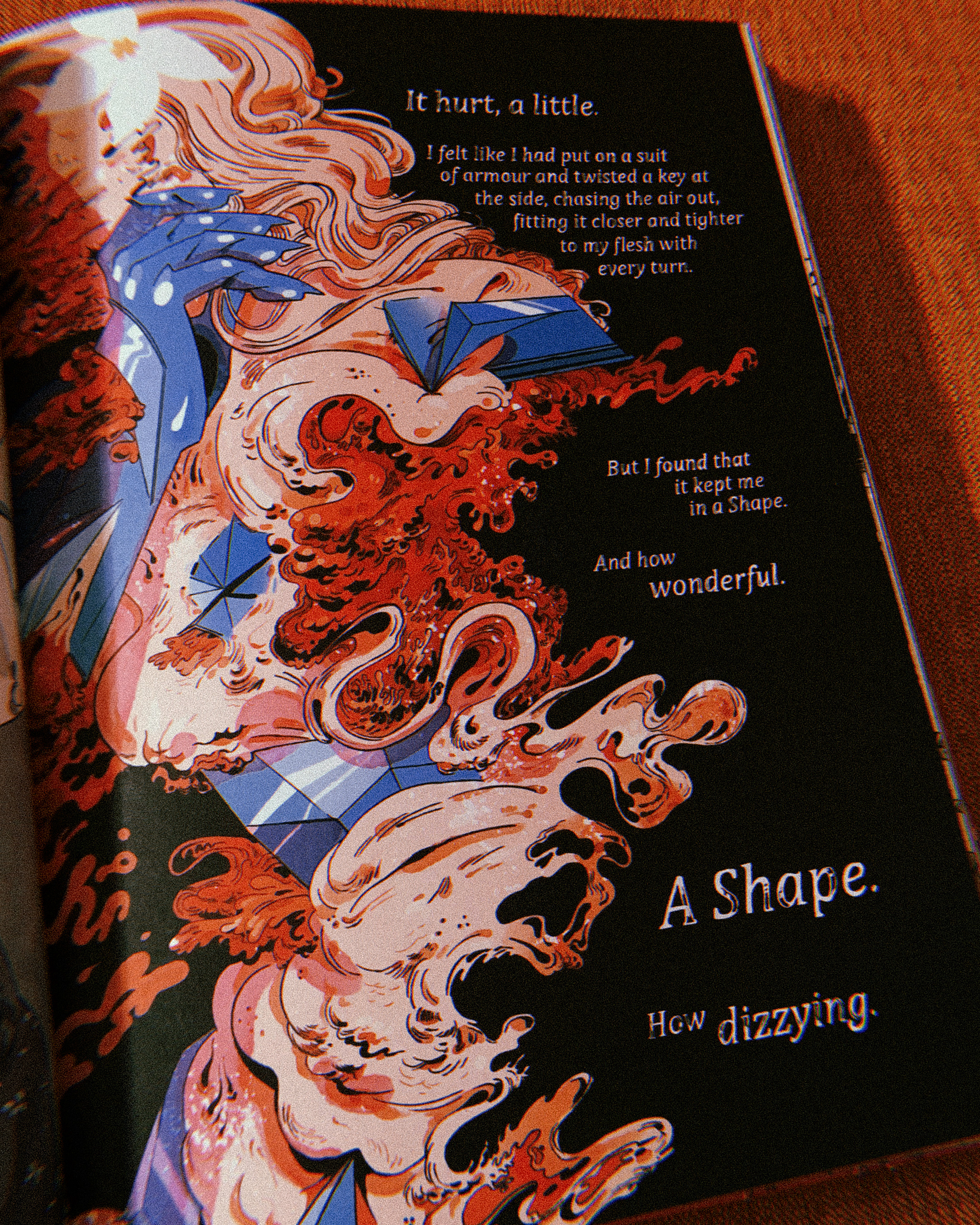
The art is, of course, stunning. Annie’s reality is portrayed, at first, in drab and dreary shades of gray, while the world of the uncanny blazes through with bold, vivid colors (reds and blues, in particular — the color of blood, the color of veins). Carroll isn’t breaking new ground here, but with her obscenely talented hands she makes the trope her own, and as a result we are given hallucinatory, phantasmagoric visions that disturb and delight in equal measure.

The impeccable illustrations are to be expected, but the writing is almost just as impressive. Despite the dreamlike plot, the narrative is actually told in a relatively straightforward manner, with a reserved, rhythmic prose that not only matches the protagonist’s demure demeanor, but also gives the story a claustrophobic sense of dread. As if something sinister is stirring under the surface, threatening to burst out. Which, of course, it inevitably does.

The book does unfortunately stumble a bit towards the end, with a climax that feels somewhat anticlimactic and far too ambiguous. Not that this is the sort of story that at any point commits to clarification or concrete answers, but it would have been nice to get more in the way of a proper conclusion.

Still, I adore this book. One of my absolute favorite reads this Hallowe’en season.

MONSTER BLOOD by R.L. Stine

Publisher’s summary: While staying with his weird great-aunt Kathryn, Evan visits a funky old toy store and buys a dusty can of monster blood. It’s fun to play with at first. And Evan’s dog, Trigger, likes it so much, he eats some! But then Evan notices something weird about the green, slimy stuff—it seems to be growing…and growing…and growing. And all that growing has given the monster blood a monstrous appetite.…

🎃

I’ve been reading a Goosebumps book for the Hallowe’en season for nearly a decade now. It’s one of the small traditions I look forward to the most. But it’s always a struggle to write about them. Mostly because I always feel the same about all of them. I started reading these books as a boring adult person, and so I’m forever cursed to view them from a slightly disenchanted direction. They’re goofy and cheesy. They’re fine and inoffensive. But I still manage to have a tremendous amount of fun with them. While growing up, I always saw Hallowe’en as this frivolous, throwaway sort of holiday. That aspect still holds a lot of appeal for me, and I think few things embody it more perfectly than this charmingly schlocky series by R.L. Stine.

All this to say: I read Monster Blood. It was fine! Solid three-star read, as usual. To be perfectly transparent, I went with this one mostly because it went well with the slime green theme I’ve gone with this season, but I’m glad to say it delivered on the gak department with gross, gleeful gusto. Traditionally I like to follow up one of these books by watching the respective episode from the original show, but I saw the adaptation for this one a couple of years ago when I was working my way through the series and it was positively awful so we don’t really have to do that again.

Want to take the opportunity to write about the new series here. The initial trailer didn’t do much for me, but five episodes in and I am utterly sold. I’m really digging its approach to the source material, which manages to remain faithful while also modernizing it considerably. It’s darker and mature without veering into irreverent and edgy territory. My friend Ally wrote about how well it falls into that overlooked gap between middle grade and young adult fiction, and it’s true. It’s a gorgeous show — the production and set design are amazing. And the performances are just as stellar: Justin Long is the obvious stand-out*, but the younger cast don’t lag behind at all. They’re all great. The kids are alright, etcetera.

Just thoroughly impressed by this show all around. Looking forward to the rest of the season.

* Also the perfect stand-in for all of us elder millennials watching the show. Masterful bit of casting.

HIDE AND DON’T SEEK by Anica Mrose Rissi

Publisher’s summary: A game of hide-and-seek goes on far too long…

A look-alike doll makes itself right at home…

A school talent-show act leaves the audience aghast…

And a summer at camp takes a turn for the braaaains…

This collection of all-new spooky stories is sure to keep readers up past their bedtimes, looking over their shoulders to see what goes bump in the night.

So if you’re feeling brave, turn the page.

🎃

Children’s horror stories have long been some of my favorite things to read. I have the utmost respect for the genre, knowing full well the extraordinary exploits and fearless feats particularly adroit authors can pull off within it. Trusting their tenacious, indefatigable audience, these are books that often go places those written for older audiences seldom dream of going. 

And yet, knowing all this, I still somehow end up underestimating them. A force of habit stemming, I’m sure, from the fact that for so much of my childhood my only contact with the genre was with the sundry of spooky kid shows that were so prevalent in the nineties. As excellent and formative as some of these programs were, they tended, as a necessity, to leave a lot to the imagination — to suggest rather than show. I suppose that’s what I’ve subconsciously come to expect from any middle grade horror affair now: sinister shadows and understated, unsettling scenarios. And then I read about a girl getting her eyes pecked out by a sadistic crow.

Which is exactly the sort of wake-up call you find in Anica Mrose Rissi’s Hide and Don’t Seek, a collection in the same vein as Scary Stories to Tell in the Dark, where, in lieu of character growth and empathetic engagement, we get a series of shuddersome setpieces sure to mess with even the most morbid of middle school minds. It’s a very, very effective selection and I enjoyed it a great deal. Rissi’s writing is sharp, shrewd, and succinct — perfectly suited for flash fiction of the creepy persuasion. I also appreciated how often Rissi played with form, with a handful of stories written in various styles and structures, from a series of letters to text messages to an entire story written like a playscript. It’s all very fun and whimsical.

Highlights: 

  • “Beatrice,” a truly unsettling creepy doll story.
  • “Truly Delicious,” a camp story written as a series of letters home from a young boy — which turns out to be an affecting way to tell a zombie story.
  • “The Girl and the Crow,” where the aforementioned eye scream event takes place.
  •  “Two Wishes,” a delightfully morbid Twilight Zone-like tale, complete with cruel twist ending.

The stories are accompanied by eerie and atmospheric illustrations by artist Carolina T. Modina, and they help a lot in terms of mood-setting. In some instances the drawing is considerably creepier than the story itself, even.

All in all, a great collection to pick up on this Hallowe’en season.

FRESH HELL by Cameron Chaney

Bailey Hagen has trouble sleeping. Because of the nightmares. Nightmares about the boy with the cold eyes. Nightmares about her cursed town. Nightmares about death.

The lines between Bailey’s dreams and reality blur when she starts school that fall to find that one of the new arrivals looks exactly like the boy from her nightmares. And if he’s real, she realizes with horror, then the rest of her ominous night visions could also come to pass….

🎃

I’ll admit to being a little worried going into Cameron Chaney’s Fresh Hell. I’ve enjoyed a lot of his writing, but all he had done so far had been short stories. A novel is an entirely different beast, one with which short-form writers tend to struggle. But this turned out to be needless apprehension, I’m glad to say, because Chaney absolutely rocked his long-form debut.⠀

Chaney is a writer who very much wears his influences on blood-soaked sleeves, but with the first entry of the proposed Autumncrow High series he manages to deliver something that reads like a modern, refined version of the tawdry teen horror books of the eighties and early nineties to which he pays tribute. ⠀⠀

A tribute he pays in rusted, blood-stained spades. The convoluted plots and overwrought melodrama that defined those trashy paperbacks are still prevalent here, but again, presented in a more focused way. There are some hiccups along the way, of course. The final part in particular gets a lot of new elements thrown at it. No doubt seeds for further plot points as the series goes on, but their introduction is so sudden and slightly out of left field that they threaten to push the main narrative into egregious territory. It never goes beyond captivating chaos, though, again, thanks to the story’s carefully calculated construction.⠀

Curiously, that polished writing comes directly from the author’s unwavering dedication to authenticity: Fresh Hell was written for these types of  book’s original adolescent audience, who are now all obviously adults, and as such Chaney can afford to deliver a more mature story, both in terms of its bloodshed (this is decidedly more explicit than any Fear Street offering), ingenuity (something occurred halfway through the book that legitimately blew me away), and, particularly, in its emotional honesty. Because despite all the terror and trashiness within, this is a story with a lot of heart.⠀

And ultimately that’s what draws me to Chaney’s writing. The stories that flow out of him may be full of horrors, but they come from a melancholy vein. There’s sadness and sorrow behind it, but also a bottomless, beating empathy. And that’s why I’ll keep coming back to Autumncrow High.

CACKLE by Rachel Harrison

The gnarled, emaciated fingers that end in sharp, cracked yellow nails. Skin the color and texture of lichen. The crooked nose and outstretched chin, covered with bursting warts. The shriveled lips and pointed teeth. The broomstick and wand stick. The cauldron and the cackle.

It’s the image the mind commonly conjures up at the mere mention of the word “witch”. A well-worn, well-trodden trope — it’s a concept and a character that has been around essentially as long as humans have been sharing tales around the fire.

The figure makes no proper appearance in Cackle by Rachel Harrison, other than as a shadow and metaphor. Instead of the classical crone, we get Sophie — ethereal, entrancing, effortlessly charming.

And we get our protagonist, Annie (lonely, listless, lugubrious), who appropriately starts the story by moving to a new town after having been unceremoniously dumped by her longtime boyfriend. She finds her new home charming and quaint, and the people equally so, but she has trouble making friends. That is until she meets Sophie, who immediately takes Annie under her majestic wing.

With Sophie’s encouragement and guidance, Annie begins to crawl out of the draining, messy slump that comes after the end of a long relationship. She finds some semblance of happiness and independence. She starts to come into her own. She begins to thrive. Which makes Annie feel only love and gratitude towards her new friend. And which makes it all the more perplexing that the other residents of the small, picturesque town seem to fear and resent the seductive Sophie. As Annie’s doubts grow, so do her insecurities return, threatening to not only undo all her progress, but her friendship with the enigmatic woman from the woods as well.  

🎃

I adored this book. I found it charming and creepy and cozy in all the right ways. Mostly, though, I loved it for its characters. Sophie’s self-assuredness is nothing short of aspirational and Annie’s journey to amour propre is remarkably relatable and encouraging.

I also found it highly amusing how much of this witchy book read like a self-care primer — right down to the way it portrays how its language and practices can be so easily co-opted by the egoists of the world as just another way to excuse their selfish, toxic behavior. Harrison is certainly not the first writer to use the witch as a metaphor for personal autonomy, but her take feels distinctly modern. Cackle may explore a centuries-old archetype, but it is very much a millennial fairy tale. 

But in the end, no matter what the witch looks like (crone, maiden, mother), or the time period she inhabits, the message of her story has remained largely the same: be true to yourself and take no shit. Cackle concurs, and it makes for a delightful, delicious read.