THE WEE FREE MEN by Terry Pratchett

the wee free men by terry pratchettI had to check. The Wee Free Men is the first Terry Pratchett book I’ve picked up in nearly eight years. I honestly couldn’t tell you why it’s been so long, because I adore Pratchett’s writing. Maybe somewhere deep down I feel I should deprive myself of wonderful things. I don’t know. In any case, Rob Wilkins’s wonderful biography shook me out of this foolish reverie, and I can only be grateful, because of course I ended up loving Tiffany Aching’s first outing, in the fiercest of ways.

“Fierce” is the appropriate word. Because while ostensibly a children’s book, Wee Free Men is also a sterling showcase of how Pratchett channeled his famous anger. An anger that stemmed not from malice or pettiness, but from a place of deep empathy. He took note of the myriad of ridiculous ways people could be awful to one another, how easily we can slip into selfish, sinister roles. He witnessed, in short, the injustice of the world, and he raged righteously and furiously against it. Thus: Tiffany Aching, an angry character if there ever was one — and one of the finest protagonists I’ve ever come across.

Like Terry, Tiffany chooses to be pragmatic with her rage. She may come from a small, sometimes infuriatingly closed-minded community, but it is her home. Her parents may not exactly pay much attention to her, but she knows she is cherished and cared for all the same. She has a little brother, who is often as sticky as he is annoying. She’s not entirely sure she loves him, not really, but she figures that doesn’t matter — he is her duty and her responsibility. So when outside forces threaten the safety of these things Tiffany considers her own, well, she just won’t stand for it. She will, indeed, fight back (with the help of some particularly aggressive and devoted blue-skinned pictsies). And it is a glorious and beautiful thing to behold.

The Wee Free Men is a story about family and duty; freedom and rebellion; the magic of the mundane. About how vital and important it is to take care of one another, not just because of sentimental reasons, but simply because that is how the flock carries on, forever and ever, wold without end. It is one of the finest things Pratchett ever wrote.
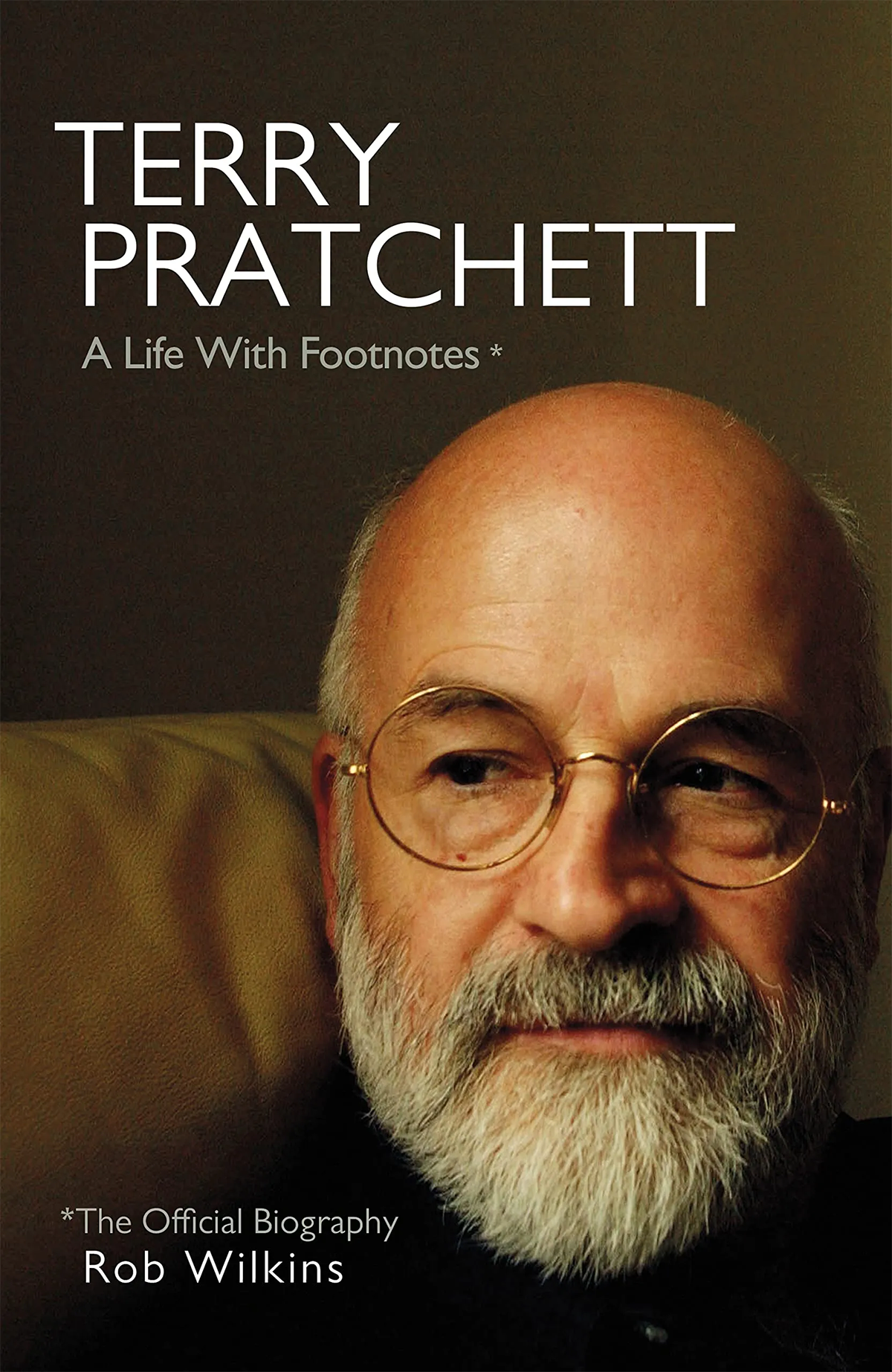
TERRY PRATCHETT: A LIFE WITH FOOTNOTES by Rob Wilkins

terry pratchett by rob wilkinsI laughed. I cried. I cried while laughing and I laughed while crying. Reading Terry Pratchett: A Life With Footnotes, Rob Wilkins’s biography of his deceased employer slash mentor slash partner was a beautiful emotional journey.

Usually I prefer my biographies to be a bit more impartial towards their subjects. A healthy distance, I find, makes for a clearer, more cohesive profile. Wilkins was literally unable to do that, so instead he delivered a profoundly intimate portrayal of a beloved friend – and the book is all the better for it, which goes to show how much I know.

It is also an exceptionally candid account, which surprised me to no end. These sorts of biographies tend to be written with rose-colored glasses on the author’s face, with the most unpleasant aspects of a person’s life either glossed over or simply not dwelled upon. Wilkins doesn’t shy away from the uncouth, churlish aspects of his relationship with the writer, who could be flighty and temperamental in the best of times, and a cantankerous, capricious bastard at the worst. It’s a refreshingly raw and honest approach, and it makes the more heartfelt, touching moments which abound in this book all the more pointed and impactful.

And it’s a remarkably funny book – as it damn well should be. Terry would be ineffably proud of his personal assistant.

But in the end the best possible thing I could say about this biographical tome is that it made me pick up a Pratchett book immediately after finishing it. Terry’s novels are, after all, small miracles, as Neil Gaiman sagely observed. Rob Wilkins tells us exactly why.

AMPHIGOREY by Edward Gorey

I got the first Amphigorey volume last year after finishing Mark Dery’s biography of Edward Gorey, Born to Be Posthumous. I finally picked it back up almost a full year later, and have been cheerfully reading a book from it every other day.

Until this lovely, lugubrious collection, The Gashlycrumb Tinies was the only proper Gorey book I had ever read. Which is wild even to me, considering how much love I have for the man’s art and style. This veritable beast of a volume boasts books like The Unstrung Harp, The Doubtful Guest, The Object-Lesson, The Willowdale Handcar, and The Westing Wing, however — stories that are regarded among Gorey’s best, so I very much feel as if I dove right into the deep end of bibliography.

The aforementioned books are all brilliant, but it’s The Unstrung Harp that in particular called out to, with its magnificently farcical and melodramatic portrayal of an author’s life. One surprising thing I learned from Dery’s book is that Gorey actually thought of himself foremost as a writer, and then as an artist — a notion that is clearly evident in this story.

It still stands that the man’s art often spoke louder than words, though, so I figured it pertinent to include some of my preferred pieces in this post.

BOOKSHOPS & BONEDUST by Travis Baldree

I enjoy books far more than I do coffee, so it’s a bit funny that I liked Bookshops & Bonedust a little less than I did Legends & Lattes. But that’s only because Lattes felt like such a breath of fresh air, whereas Bonedust feels much more familiar. Still welcoming, to be sure, but somewhat less spellbinding.

Even so, I found that this worked well as a companion piece to the first novel, further elaborating on its themes of found families and fresh starts while navigating its own motif established by the book’s epigraph: “Because the right things happen at the wrong time.” In Bonedust we find a Viv that is not only comfortable in her current circumstances, but thriving. Then when something happens which puts that life on hold, she’s understandably despondent. But the incident places her in the appropriate position to reconsider her prospects, and with the help of new companions — new perspectives — Viv begins to realize that her life will probably not always look the same, but that that may not be such a bad thing after all. Could, in fact, one day be desirable. And thus a foundation is laid.

I love the world Travis Baldree has conjured up for this series, but even more so, I love the characters he’s populated it with — these larger than life personalities full of wisdom and warmth. I will gladly revisit any time we are invited back.