BALTIMORE by Mike Mignola, Christopher Golden

The Great War on a cold autumn night.  Captain Henry Baltimore is charged with a suicidal mission: to somehow lead his battalion across the notoriously impassable No man’s land. Indeed, they barely make any headway before being ambushed by the hidden Hessians. Later, Baltimore awakes atop a mountain of his massacred companions, with carrion-scavengers already circling overhead. Baltimore quickly realizes these are no ordinary birds of prey, but monstrous bat-like beings. He manages to wound one of them while trying to escape, but not before the creature mangles one of his legs, breathing into it a pestilent substance that soon renders it useless.

The brief encounter between man and monster ends up changing the course of not only Baltimore’s life, but the world’s. As the war comes to a close, a mysterious plague begins to spread all across Europe, leaving ghost towns in its wake.

It is to one of these ghost towns that Lord Henry Baltimore summons three of his acquaintances. They meet inside a ramshackle inn. The men do not know one another, the absent Baltimore seemingly being the only thread connecting them. While waiting for their associate, and lacking anything better to do in the drab, run-down place, they begin to tell stories, specifically about how they each came to be acquainted with the now nomadic nobleman. Stories that tell of Baltimore’s many losses. Of the man’s belief that he had awakened something sinister and supernatural during the war. Of his slow, painstaking transformation into a cold, ruthless warrior, fighting shadows in plague-ridden places.

And they tell their own stories in turn. Of the odd, ghastly events witnessed over the course of their lives. Of the experiences that led each of them to believe, unequivocally, in Lord Baltimore.

🎃

Well, I enjoyed the hell out of this.

Baltimore, or, The Steadfast Tin Soldier and the Vampire by Mike Mignola and Christopher Golden is one of those stories I tend to think of as “damn good yarns” upon finishing. Written in the same style and spirit of the Victorian era literature that has shaped and influenced much of Mignola’s work, Baltimore is a baroque, thoroughly Gothic tale that revels in its ornate, ostentatious nature. Like many of its purple predecessors, it exudes atmosphere in abundance, and, as a reader for whom this quality often reigns supreme, this book managed to hit all the right spots for me.

As the lengthy alternate title suggests, Baltimore is a re-imagining of “The Steadfast Tin Soldier” fairy tale by Hans Christian Andersen. Mignola and co-author Christopher Golden wisely preserve that story’s melancholic poignancy, making it the beating heart of their own tin soldier, while at the same time decking the rest of the story out in somber, funereal vestments. Instead of paper ballerinas, there is a dead spouse. And instead of a goblin jack-in-the-box, there are vampires.

Ironically, it’s those two elements that end up slightly hindering the book. Baltimore is very much a boy’s tale, with women featured in only the most peripheral of ways. It would have benefitted the story to give at least Elowen, Baltimore’s wife, an expanded role, considering she is his primary motivation. Instead, much like the ballerina in the original tale, her characterization is mostly paper-thin.

As for the vampires, I just found the lore around them muddled and lacking. You get the sense that Golden and Mignola wanted to go the Our Vampires are Different route, which is commendable, but given that most of this book — from the themes to the style in which it is written — adheres fairly strictly to traditional approach, makes this a somewhat odd choice.

But the appeal for me ultimately lies in the storytelling, at which this book spectacularly succeeds. Most of Baltimore is told as a nested narrative, courtesy of our three protagonists, who pass the time by telling stories, with each tale showcasing just how memorable and varied weird fiction can be. The story within a story is a device I particularly love, so of course this was the aspect of the book I enjoyed the most.

Nearly all of the pages boast woodcut-like illustrations, drawn by Mignola in his distinctive, striking style. They’re a little plain, but Mignola’s art has had a huge influence on me over the years, so it’s always a joy to see.

A damn good yarn, indeed.

THE SKULL by Jon Klassen

Otilla ran away from home. She runs deep into the snow-blanketed forest. Eventually, she finds a very large house. Inside the house is a skull. He lets Otilla in.

Otilla and the skull become fast friends. She helps the skull with things that have become difficult for him, like eating fruit or having tea by the fireside. Otilla doesn’t want to return to wherever she came from; she wants to stay. The skull lets her, but he warns her of the headless skeleton that comes every night looking for him. If the skeleton manages to catch the skull, it will probably go very badly for him.

And so Otilla decides to help her new friend.

🎃

The Skull by Jon Klassen is just a deliciously dark delight of a book. The illustrations are, of course, centerpiece, stunning in their stark simplicity, and the muted palette paints a gloriously gloomy but still inviting, comfortable atmosphere. It’s bewitching, in the very best sense of the word. Klassen’s trademark deadpan humor is also very much present, making for some great page turns that genuinely made me laugh out loud. 

Really enjoyed the writing, as well. Lyrical, eerie, economical. Like all the best fairy tales, what we are given is only pure story, with not a single word wasted. It makes for a perfect companion to the wistful, dusky artwork.

The Skull, as the subtitle declares, is a retelling of an old Tyrolean folktale. In a particularly fascinating author’s note, Klassen recalls randomly coming across it in a library in Alaska some time ago. The story with him, but when, some years later, with the help of some librarians, he managed to get his hands on it again, he found that the original story wasn’t the one he had been thinking about for so long. Or rather, it was, but it had changed over time, his mind subconsciously transforming it into the version we find in this book. Which, he goes on to write, is how fairy tales evolved in the first palace. Originating as oral tradition meant that these stories were reimagined, in some way, every time they were retold, shaped and altered by the storyteller’s emotions and experiences. Klassen concludes by wishing the same thing happens to his interpretation down the line, which is really what every writer hopes for, deep down.

A lovely, slightly macabre tale of friendship and affection. I loved everything about this weird little story.

A GUEST IN THE HOUSE by Emily Carroll

Annie lives a simple, average life. She is married to Dennis, a successful dentist. They have a large house by the lake. She works at the local superstore, although she doesn’t really need to. She likes that it keeps her busy. At home, she likes keeping things neat and tidy. Everything in its proper place.

At night, she dreams of dragons. Of disemboweling beasts and bathing in their blood.

She tries to be a good parent. Her stepdaughter, Crystal, is a bit reserved. But that’s to be expected — her mother died only recently, after all. They’ll grow close, eventually.

Dennis is quiet and somewhat distant. He’s a little boring, and he snores, and he can be gruff, but it’s not like Annie is without her quirks and flaws. Besides, he’s a decent husband and provider. They love each other.

At night, she dreams of dragons. And of the woman in the lake.

🎃

I always know my Hallowe’en reading season is going to be a memorable one whenever Emily Carroll has a new book out. Her work has, for me, become intrinsic to the holiday, with much of it delivering the exact kind of eerie, gothic atmosphere I tend to covet and crave. Plus, her stories are always wild, psychedelic rides. A Guest in the House, her latest graphic novel, is no different, and is perhaps my new favorite of her works.

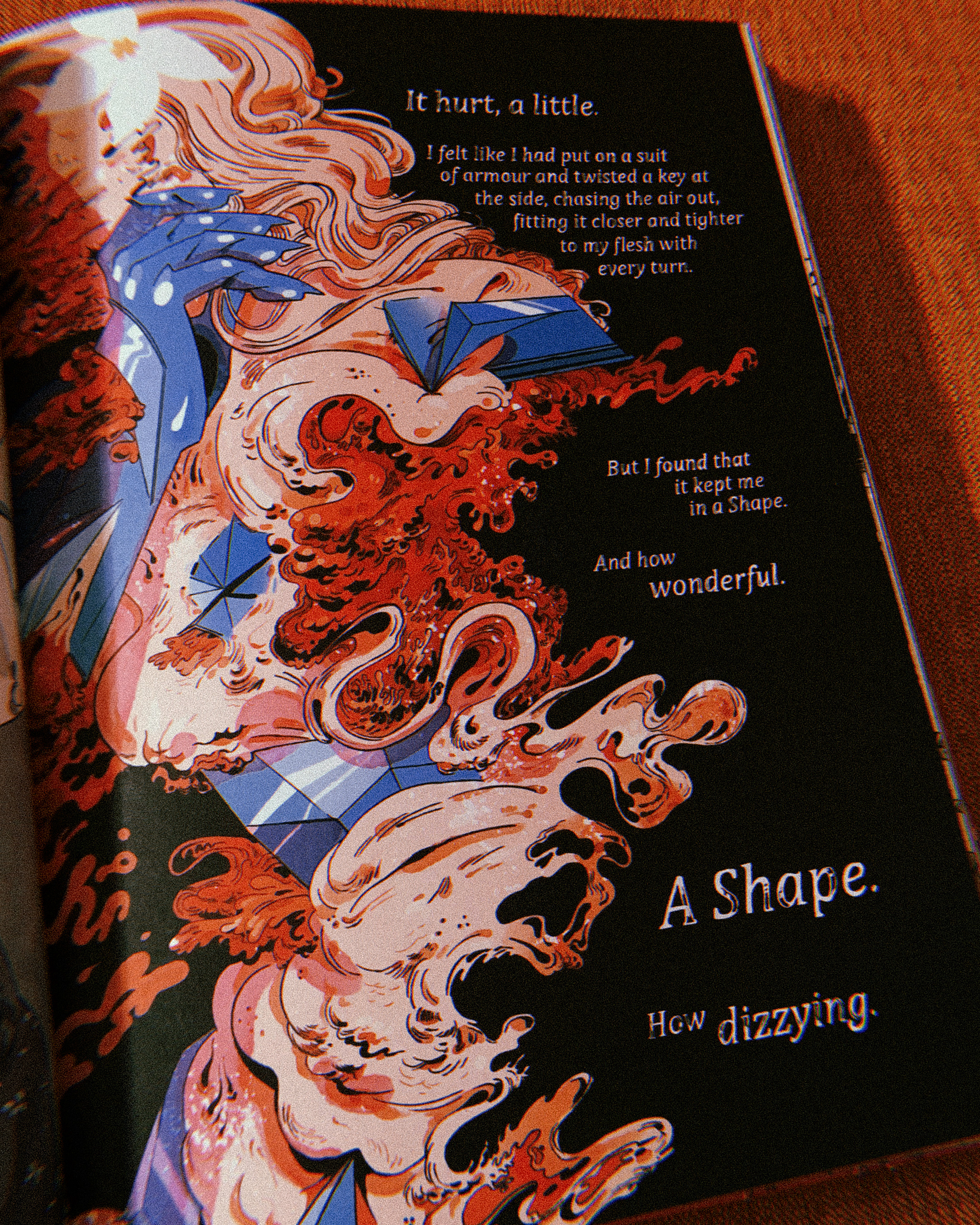
The art is, of course, stunning. Annie’s reality is portrayed, at first, in drab and dreary shades of gray, while the world of the uncanny blazes through with bold, vivid colors (reds and blues, in particular — the color of blood, the color of veins). Carroll isn’t breaking new ground here, but with her obscenely talented hands she makes the trope her own, and as a result we are given hallucinatory, phantasmagoric visions that disturb and delight in equal measure.

The impeccable illustrations are to be expected, but the writing is almost just as impressive. Despite the dreamlike plot, the narrative is actually told in a relatively straightforward manner, with a reserved, rhythmic prose that not only matches the protagonist’s demure demeanor, but also gives the story a claustrophobic sense of dread. As if something sinister is stirring under the surface, threatening to burst out. Which, of course, it inevitably does.

The book does unfortunately stumble a bit towards the end, with a climax that feels somewhat anticlimactic and far too ambiguous. Not that this is the sort of story that at any point commits to clarification or concrete answers, but it would have been nice to get more in the way of a proper conclusion.

Still, I adore this book. One of my absolute favorite reads this Hallowe’en season.

MONSTER BLOOD by R.L. Stine

Publisher’s summary: While staying with his weird great-aunt Kathryn, Evan visits a funky old toy store and buys a dusty can of monster blood. It’s fun to play with at first. And Evan’s dog, Trigger, likes it so much, he eats some! But then Evan notices something weird about the green, slimy stuff—it seems to be growing…and growing…and growing. And all that growing has given the monster blood a monstrous appetite.…

🎃

I’ve been reading a Goosebumps book for the Hallowe’en season for nearly a decade now. It’s one of the small traditions I look forward to the most. But it’s always a struggle to write about them. Mostly because I always feel the same about all of them. I started reading these books as a boring adult person, and so I’m forever cursed to view them from a slightly disenchanted direction. They’re goofy and cheesy. They’re fine and inoffensive. But I still manage to have a tremendous amount of fun with them. While growing up, I always saw Hallowe’en as this frivolous, throwaway sort of holiday. That aspect still holds a lot of appeal for me, and I think few things embody it more perfectly than this charmingly schlocky series by R.L. Stine.

All this to say: I read Monster Blood. It was fine! Solid three-star read, as usual. To be perfectly transparent, I went with this one mostly because it went well with the slime green theme I’ve gone with this season, but I’m glad to say it delivered on the gak department with gross, gleeful gusto. Traditionally I like to follow up one of these books by watching the respective episode from the original show, but I saw the adaptation for this one a couple of years ago when I was working my way through the series and it was positively awful so we don’t really have to do that again.

Want to take the opportunity to write about the new series here. The initial trailer didn’t do much for me, but five episodes in and I am utterly sold. I’m really digging its approach to the source material, which manages to remain faithful while also modernizing it considerably. It’s darker and mature without veering into irreverent and edgy territory. My friend Ally wrote about how well it falls into that overlooked gap between middle grade and young adult fiction, and it’s true. It’s a gorgeous show — the production and set design are amazing. And the performances are just as stellar: Justin Long is the obvious stand-out*, but the younger cast don’t lag behind at all. They’re all great. The kids are alright, etcetera.

Just thoroughly impressed by this show all around. Looking forward to the rest of the season.

* Also the perfect stand-in for all of us elder millennials watching the show. Masterful bit of casting.

HIDE AND DON’T SEEK by Anica Mrose Rissi

Publisher’s summary: A game of hide-and-seek goes on far too long…

A look-alike doll makes itself right at home…

A school talent-show act leaves the audience aghast…

And a summer at camp takes a turn for the braaaains…

This collection of all-new spooky stories is sure to keep readers up past their bedtimes, looking over their shoulders to see what goes bump in the night.

So if you’re feeling brave, turn the page.

🎃

Children’s horror stories have long been some of my favorite things to read. I have the utmost respect for the genre, knowing full well the extraordinary exploits and fearless feats particularly adroit authors can pull off within it. Trusting their tenacious, indefatigable audience, these are books that often go places those written for older audiences seldom dream of going. 

And yet, knowing all this, I still somehow end up underestimating them. A force of habit stemming, I’m sure, from the fact that for so much of my childhood my only contact with the genre was with the sundry of spooky kid shows that were so prevalent in the nineties. As excellent and formative as some of these programs were, they tended, as a necessity, to leave a lot to the imagination — to suggest rather than show. I suppose that’s what I’ve subconsciously come to expect from any middle grade horror affair now: sinister shadows and understated, unsettling scenarios. And then I read about a girl getting her eyes pecked out by a sadistic crow.

Which is exactly the sort of wake-up call you find in Anica Mrose Rissi’s Hide and Don’t Seek, a collection in the same vein as Scary Stories to Tell in the Dark, where, in lieu of character growth and empathetic engagement, we get a series of shuddersome setpieces sure to mess with even the most morbid of middle school minds. It’s a very, very effective selection and I enjoyed it a great deal. Rissi’s writing is sharp, shrewd, and succinct — perfectly suited for flash fiction of the creepy persuasion. I also appreciated how often Rissi played with form, with a handful of stories written in various styles and structures, from a series of letters to text messages to an entire story written like a playscript. It’s all very fun and whimsical.

Highlights: 

  • “Beatrice,” a truly unsettling creepy doll story.
  • “Truly Delicious,” a camp story written as a series of letters home from a young boy — which turns out to be an affecting way to tell a zombie story.
  • “The Girl and the Crow,” where the aforementioned eye scream event takes place.
  •  “Two Wishes,” a delightfully morbid Twilight Zone-like tale, complete with cruel twist ending.

The stories are accompanied by eerie and atmospheric illustrations by artist Carolina T. Modina, and they help a lot in terms of mood-setting. In some instances the drawing is considerably creepier than the story itself, even.

All in all, a great collection to pick up on this Hallowe’en season.

FRESH HELL by Cameron Chaney

Bailey Hagen has trouble sleeping. Because of the nightmares. Nightmares about the boy with the cold eyes. Nightmares about her cursed town. Nightmares about death.

The lines between Bailey’s dreams and reality blur when she starts school that fall to find that one of the new arrivals looks exactly like the boy from her nightmares. And if he’s real, she realizes with horror, then the rest of her ominous night visions could also come to pass….

🎃

I’ll admit to being a little worried going into Cameron Chaney’s Fresh Hell. I’ve enjoyed a lot of his writing, but all he had done so far had been short stories. A novel is an entirely different beast, one with which short-form writers tend to struggle. But this turned out to be needless apprehension, I’m glad to say, because Chaney absolutely rocked his long-form debut.⠀

Chaney is a writer who very much wears his influences on blood-soaked sleeves, but with the first entry of the proposed Autumncrow High series he manages to deliver something that reads like a modern, refined version of the tawdry teen horror books of the eighties and early nineties to which he pays tribute. ⠀⠀

A tribute he pays in rusted, blood-stained spades. The convoluted plots and overwrought melodrama that defined those trashy paperbacks are still prevalent here, but again, presented in a more focused way. There are some hiccups along the way, of course. The final part in particular gets a lot of new elements thrown at it. No doubt seeds for further plot points as the series goes on, but their introduction is so sudden and slightly out of left field that they threaten to push the main narrative into egregious territory. It never goes beyond captivating chaos, though, again, thanks to the story’s carefully calculated construction.⠀

Curiously, that polished writing comes directly from the author’s unwavering dedication to authenticity: Fresh Hell was written for these types of  book’s original adolescent audience, who are now all obviously adults, and as such Chaney can afford to deliver a more mature story, both in terms of its bloodshed (this is decidedly more explicit than any Fear Street offering), ingenuity (something occurred halfway through the book that legitimately blew me away), and, particularly, in its emotional honesty. Because despite all the terror and trashiness within, this is a story with a lot of heart.⠀

And ultimately that’s what draws me to Chaney’s writing. The stories that flow out of him may be full of horrors, but they come from a melancholy vein. There’s sadness and sorrow behind it, but also a bottomless, beating empathy. And that’s why I’ll keep coming back to Autumncrow High.

CACKLE by Rachel Harrison

The gnarled, emaciated fingers that end in sharp, cracked yellow nails. Skin the color and texture of lichen. The crooked nose and outstretched chin, covered with bursting warts. The shriveled lips and pointed teeth. The broomstick and wand stick. The cauldron and the cackle.

It’s the image the mind commonly conjures up at the mere mention of the word “witch”. A well-worn, well-trodden trope — it’s a concept and a character that has been around essentially as long as humans have been sharing tales around the fire.

The figure makes no proper appearance in Cackle by Rachel Harrison, other than as a shadow and metaphor. Instead of the classical crone, we get Sophie — ethereal, entrancing, effortlessly charming.

And we get our protagonist, Annie (lonely, listless, lugubrious), who appropriately starts the story by moving to a new town after having been unceremoniously dumped by her longtime boyfriend. She finds her new home charming and quaint, and the people equally so, but she has trouble making friends. That is until she meets Sophie, who immediately takes Annie under her majestic wing.

With Sophie’s encouragement and guidance, Annie begins to crawl out of the draining, messy slump that comes after the end of a long relationship. She finds some semblance of happiness and independence. She starts to come into her own. She begins to thrive. Which makes Annie feel only love and gratitude towards her new friend. And which makes it all the more perplexing that the other residents of the small, picturesque town seem to fear and resent the seductive Sophie. As Annie’s doubts grow, so do her insecurities return, threatening to not only undo all her progress, but her friendship with the enigmatic woman from the woods as well.  

🎃

I adored this book. I found it charming and creepy and cozy in all the right ways. Mostly, though, I loved it for its characters. Sophie’s self-assuredness is nothing short of aspirational and Annie’s journey to amour propre is remarkably relatable and encouraging.

I also found it highly amusing how much of this witchy book read like a self-care primer — right down to the way it portrays how its language and practices can be so easily co-opted by the egoists of the world as just another way to excuse their selfish, toxic behavior. Harrison is certainly not the first writer to use the witch as a metaphor for personal autonomy, but her take feels distinctly modern. Cackle may explore a centuries-old archetype, but it is very much a millennial fairy tale. 

But in the end, no matter what the witch looks like (crone, maiden, mother), or the time period she inhabits, the message of her story has remained largely the same: be true to yourself and take no shit. Cackle concurs, and it makes for a delightful, delicious read.

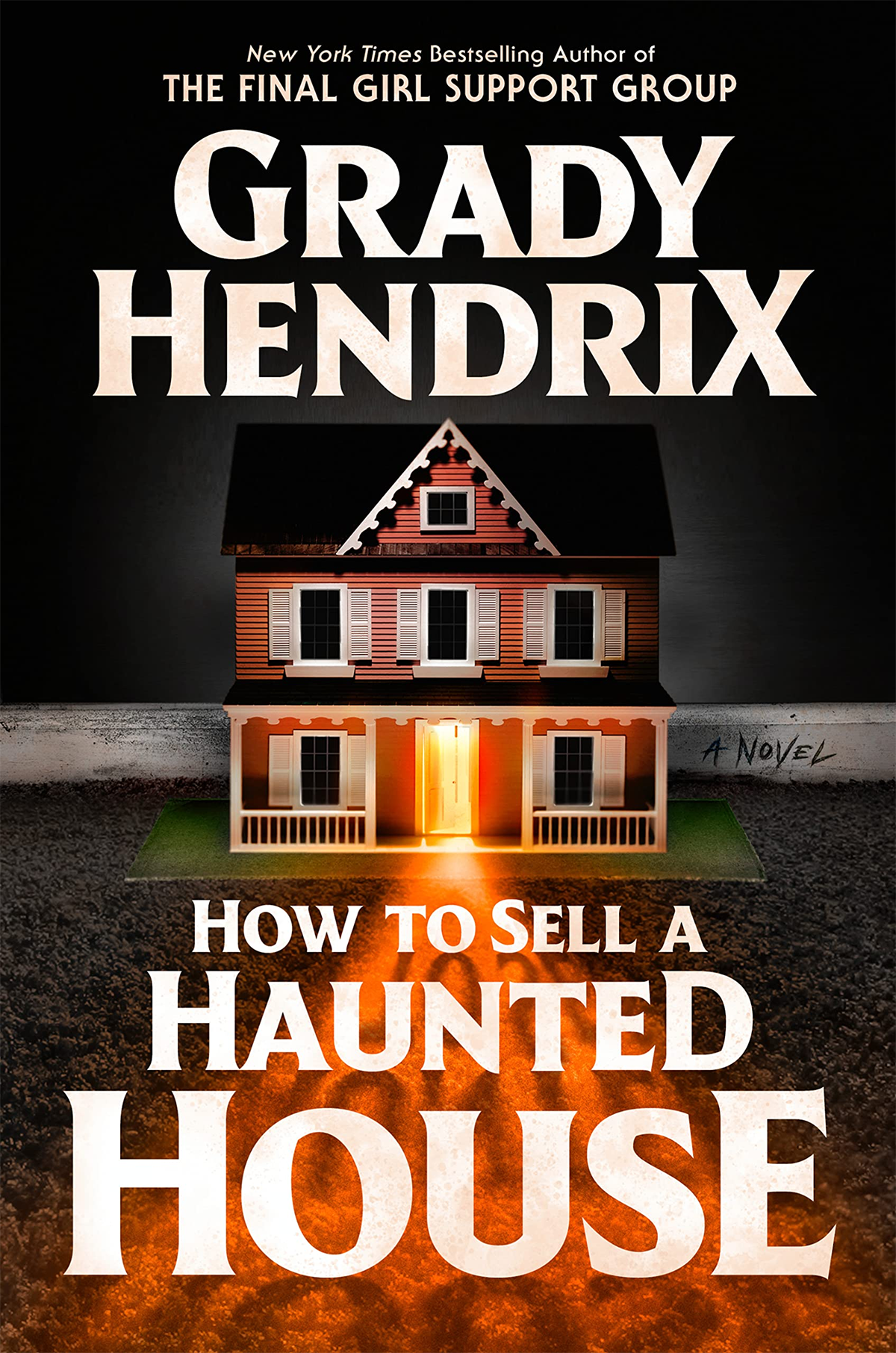
HOW TO SELL A HAUNTED HOUSE by Grady Hendrix

how to sell a haunted house

Reading How to Sell a Haunted House was an exercise of patience and trust. It’s a hard read, not just because of the subject matter, but also because the characters we follow are nigh unbearable for most of the first half of this book. But Grady Hendrix is an author who has guided me through unknown and often uncomfortable territory a number of times before, and I’ve always come out the other side, maybe not unscathed, but definitely more enlightened. His stories may be full-blown horror — with all the ghastly, gruesome, goofy connotations that entails — but they are always, always full of heart. And that inclination allowed me to power through all the nastiness present at the outset, certain that I would find a beating bloody heart at the center of it all.

All the unpleasantness makes sense thematically, though. Hendrix named each part of the book after the various stages of grief, a process that is often as ugly as it is purgative. Through that lens it’s easier to lend the sibling protagonists of this story, who are going to a sudden and shocking loss, some grace. A little bit, in any case — pettiness and resentment are also often part of mourning, and they are markedly, painfully present here.

I also admittedly felt a bit let down to find that this was less of a straightforward haunted house tale, than it was a story of sibling relationships, family secrets, generational trauma, ᵃⁿᵈ ᵉᵛⁱˡ ᶠᵘᶜᵏⁱⁿᵍ ᵖᵘᵖᵖᵉᵗˢ. But I quickly got over that when I realized that underneath this chaotic clutter was the compassionate center I was certain I would find.

Haunted House is probably not my favorite of his books (that honor still belongs to My Best Friend’s Exorcism), but reading it was still the challenging and cathartic experience I have come to expect — and indeed hope for — from a Hendrix undertaking.

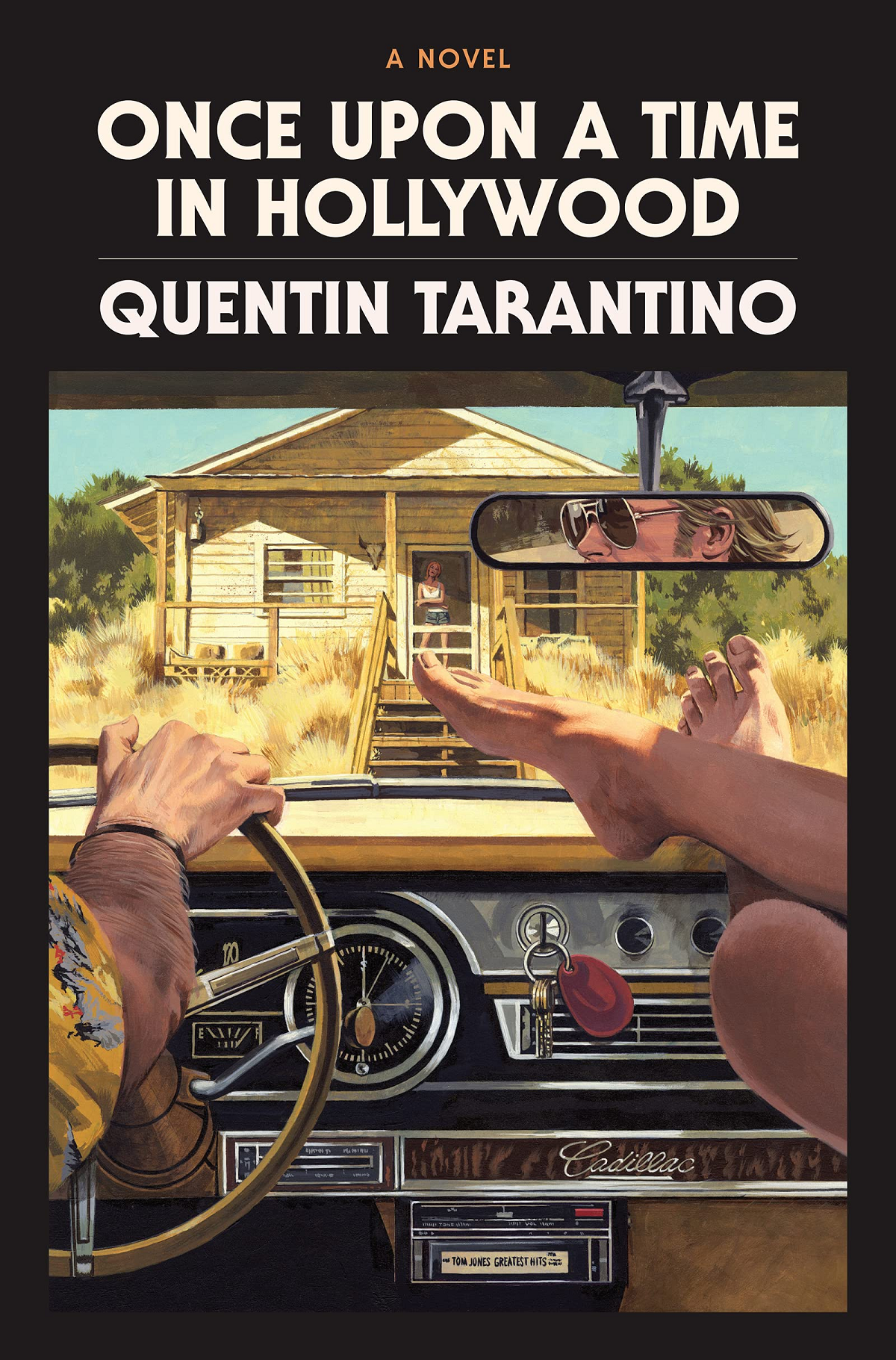
ONCE UPON A TIME IN HOLLYWOOD by Quentin Tarantino

once upon a time in hollywood by quentin tarantinoI’m a pretty big Tarantino fan. Because of his dialogue, sure, but mostly because of his world building. His movies are full of artifice and painted with thick layers of Hollywood gloss, but they also, somehow, feel real. At least in the sense that you feel as if the story keeps going, long after the film reel runs out. Like the world of the story is so much bigger than the cinematic frame.⠀

It’s a conceit that is on full display in the Once Upon a Time in Hollywood novel, which turns out to be less of a novelization of the film than it is a considerable expansion of its world and story. ⠀

Hollywood is, fiery finale notwithstanding, probably Tarantino’s most laid-back film — essentially a day in the life of a handful of larger than life personas. The novel dials up this aspect considerably, omitting the more lurid aspects of the film in favor of a more down-to-earth, behind-the-scenes look at a version of Hollywood that the author/director grew up adoring and idealizing. ⠀

Which also means that this is a self-indulgent kind of book. It is full of tangents and asides, mostly focusing on the film industry, that vary between the insightful and the tedious. It is oddly repetitive, with previous passages being reiterated, almost word-for-word, several chapters later. There are also scenes that serve no real purpose other than to be provocative, and that’s a Tarantino schtick that was already old about four or five films ago.⠀

But Tarantino’s dialogue is still just as sparkling in prose form. And the aforementioned world-building is as staggering in scope as it is clever and creative. I dug this a hell of a lot.

WHEN BOOKS WENT TO WAR by Molly Guptill Manning

when books went to war by molly guptill manning“What they couldn’t foresee was a mass audience swollen by the millions of veterans who’d acquired the reading habit overseas, thanks to the Armed Services Editions of popular paperbacks distributed free to the troops. After the war, many of them would go to college on the GI Bill, as Gorey and O’Hara had. Vets made up a sizable part of the new book-hungry audience that gobbled up 2,862,792 copies of Pocket’s Five Great Tragedies by Shakespeare the year it was published.”

The above was essentially a throwaway detail in Born to Be Posthumous, Mark Dery’s biography of Edward Gorey, which I read at the beginning of the year, included to add context and texture to Gorey’s post-military service life. It stuck with me, though, mostly because it felt like something I should have come across before, given my interests. I highlighted the passage, with the intention of looking more into it later.

As it happened, a couple of weeks later Literary Hub published an article about the Armed Services Editions. I read it with interest, thinking what a great coincidence it was that an article about something I just recently learned would show up so soon after my learning about it.  My life is riddled with these serendipitous happenstances, though, (enough that I have my own name for them: coincidencias cósmicas — my cosmic coincidences), and whenever I stumble upon one, I’ve learned to give it more of my attention. The piece goes on to cite When Books Went to War by Molly Guptill Manning, and I figured this was the universe’s way of telling me to read it. The fact that I also picked this up at a time where book bannings are rampant all across the United States was yet another cosmic layer on top of it all. (I don’t believe in destiny, but I believe in confluence.)

War is not a subject I tend to want to read much about, not unless it’s something the caliber of Band of Brothers or Maus. But When Books Went to War proved to be a powerful and poignant story, with far more disquieting relevance than one would initially expect. In the Western world especially, we tend to view moments like the Second World War as these distant events, when in reality that are often so terrifyingly recent — a paragraph or two above us in the grand narrative of history. We also have the tendency to view the past as Things That Happened to Other People. It’s not our problem anymore. We don’t have to worry about these things any longer. This lack of concern and awareness is the privilege of the complacent and ignorant, and why we constantly repeat the mistakes of the long ago. We did not learn, and so we continue to err. 

When Books Went to War is the account of a very specific, seemingly trivial endeavor of U.S. military history. About a group of people who, sensing the despair and general lack of morale in those sent to fight a relentless ideologue of an enemy, understood the need and the importance for emotional escape and release. They developed organizations with the purpose of sending books — of sending stories — to the troops, fighting in lands where so many of those books were now forbidden. 

A small matter in the grand scheme of things, but one that was endlessly, massively appreciated by its recipients. Guptill Manning fills her book to the brim with letters and accounts of appreciation from countless soldiers. About how this book or this story or this writer saved them from anguish amidst a bleak situation. “I don’t think I would have been able to sleep this night,” wrote a Marine to author Betty Smith, “unless I bared my heart to the person who caused it to live again.” Hospitalized with malaria, in a deep depression caused by the trauma of war, he picked up a copy of A Tree Grows in Brooklyn on a whim, and it made him feel human again. An invaluable feeling to those in service who often felt like they were treated as no more than cannon fodder.

Much of the book focuses on the many innovations the publishing industry developed as they produced these books during wartime, having to meet special, intensely specific and rigorous requirements. It’s fascinating to read about, to be sure, but the emotional crux of Guptill Manning’s books lies with the moving reactions of the readers of these cleverly constructed books, as well as the passionate efforts of the people who made them possible. Myriads of bureaucratic hurdles had to be jumped through; endless delicate political issues had to be finessed. People who ought to have known better sought to restrict and censor the types of books being sent out, worrying that some of their content would encourage dissent and discord — a motion that was fervently fought against. Pushing through all the nonsense and obstacles was the sheer conviction that getting books into the hands of these soldiers was not only important for their morale, but vital in the war effort as a whole. In a conflict where the idea of free speech was at its very center, against an enemy that concerned itself with the burning and banishment of books, meant that books and the written word were now, quite literally, weapons of war.

when books went to war by molly guptill manning 2

It was a bittersweet thing to read about a United States of America who fought and felt so passionately for books and the rights they represented, especially considering the current climate, where so many Americans who believe themselves to be patriots ban books with abandon, who are, indeed, eager and ecstatic to do so. They would do well to read the words of the soldiers so revered in American culture, of people who not only fought against the suppression and eradication of ideas, but actively rejoiced in the right to read whatever they damned well pleased.

Books were intertwined with the values at stake in the war, and Americans would not tolerate any restriction on their reading materials.

Ultimately, I choose to take solace, encouragement, and inspiration in reading about those who have actually fought for democracy and freedom and the written word. When Books Went to War is a celebration of these ideals, and it makes for an uplifting read.

When there were more men than ASEs, it was “not unusual for a man to tear off the portion of a book he had finished to give to the next man who doesn’t have a book to read saying — ‘I’ll save my pages for you.’”