THERE ARE MONSTERS HERE by Cameron Chaney

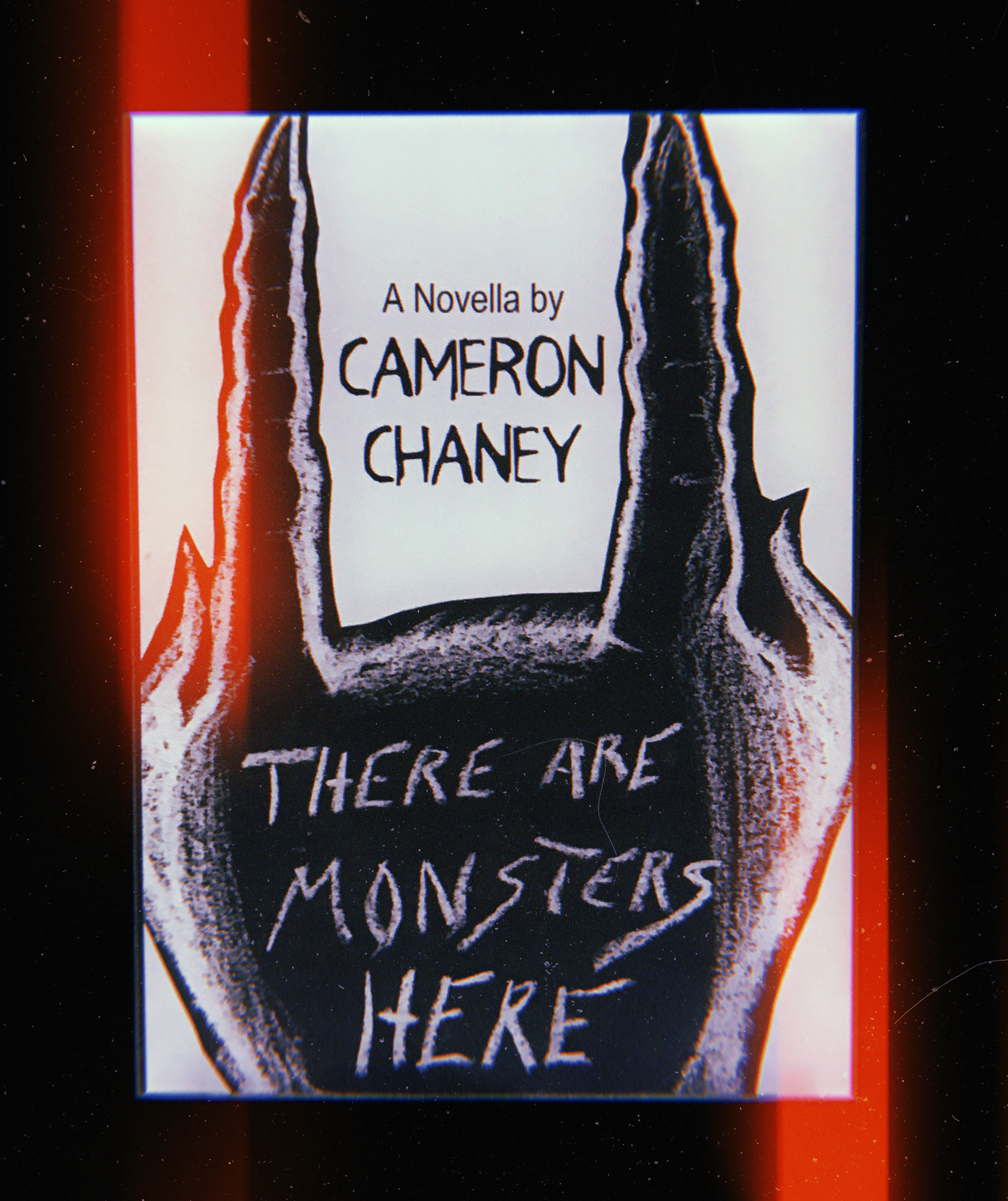
monsters hereI’ve been following Cameron Chaney on social media for a while now. At first it was mostly because of his enviable library, but I’ve come to really enjoy the content he puts out. His books reviews are honest, informative, and concise. I like his earnest and infectious excitement for “all things spooky,” as he says in his videos. And I’ve read enough of the work that he reviews to realize that he knows a good story when he comes across one. What I didn’t know was that he could write one as well.

🎃

I’m always a bit reluctant to read something written by people who are mostly known for their work in another medium. There’s an ingrained bias that you have to push against — and I was glad that I did so here. With There Are Monsters Here, Chaney has written an effective gut-punch of a story, full of both heart and horror. It’s a story about a family that is haunted, in every sense of the word, by monsters, and how each member responds to that fact. The story is a compelling one, with characters that feel real and very quickly grow on you, and the threats they face feel menacing and immediate, which is always what you’re looking for in short fiction.

The only real issue that I had was that I felt the writing relied too heavily on metaphor at times. That being said, this is still a compact and concise story, with prose that is clear and sincere, and I wouldn’t hesitate to read this author’s work again.

GHOSTS by Raina Telgemeier

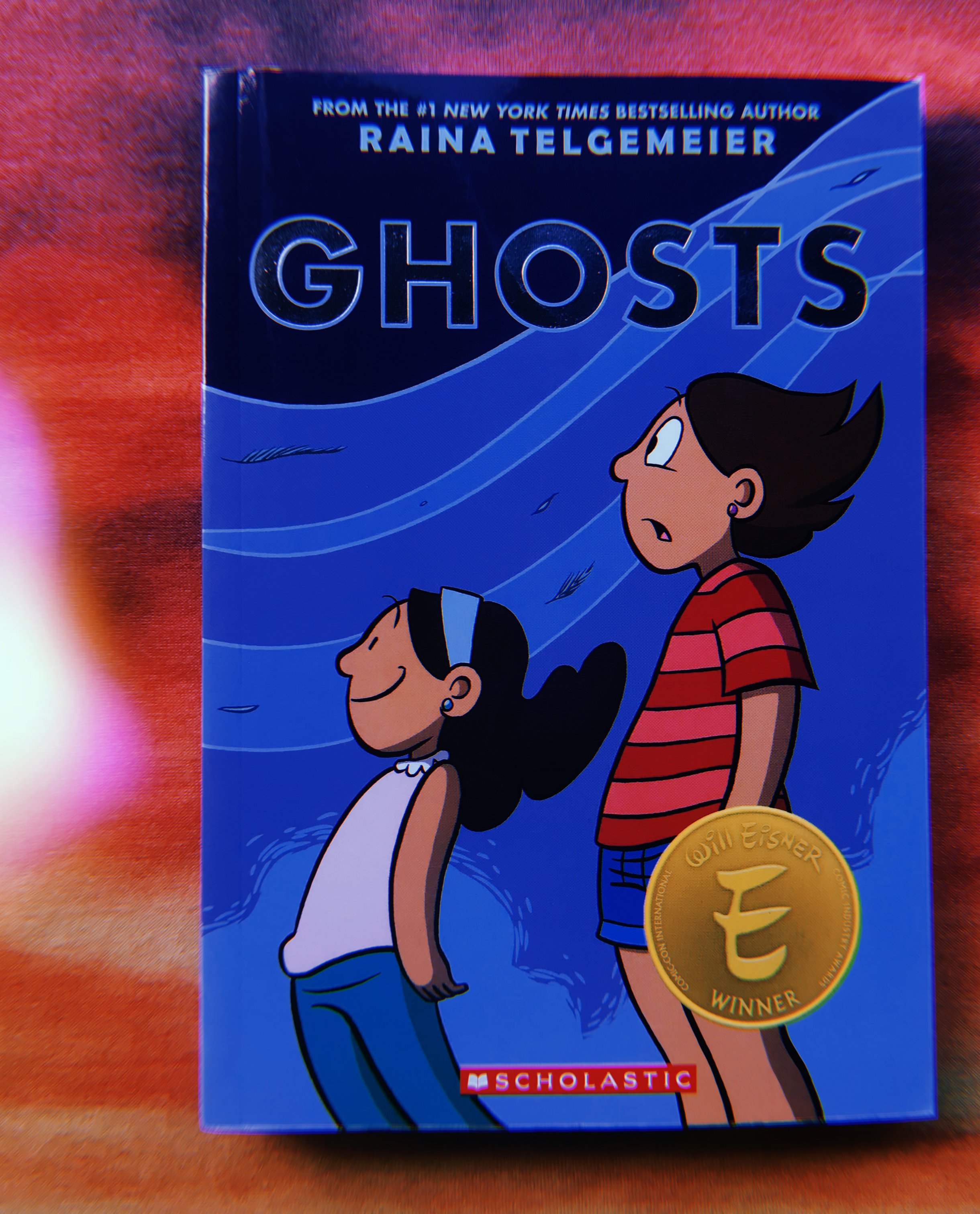
ghostsGhosts is the story of sisters Maya and Catrina (Cat) as their family moves to the fictional Northern California town of BahĂ­a de la Luna. The move is spurred not only by their father’s new job, but also because of Maya’s health. She has cystic fibrosis, and the salty air that blows in from the sea, it is thought, might benefit her. The sisters soon discover that the coastal city is host to a large population of ghosts, however, and the story is informed by their individual reactions to this revelation.

🎃

This was a bit of a bittersweet read for me as this was the first of Raina Telgemeier’s books that I didn’t just completely and utterly loved. Don’t get me wrong, I still liked it well enough. Like the rest of Telgemeier’s work, it’s a charmer of a read, full of lovely and relatable characters, and bursting at the seams with gorgeous artwork.

And it’s the art that I found most engaging. This is, I believe, Telgemeier’s strongest book in terms of artwork. Given that this story deals with the Day of the Dead this shouldn’t come as much of a surprise, seeing as how Mexican culture is such a veritable wellspring of visual inspiration.

Setting is something in which Telgemeier particularly excels at, and BahĂ­a de la Luna (based on the actual Northern California town of Half Moon Bay) is her most realized and beautiful one yet, full of detail and character and atmosphere. She is helped here with colors by Braden Lamb, who delivers with a palette that is somehow both morose and upbeat, which is, again, appropriate for a story dealing with the Day of the Dead.

I don’t celebrate DĂ­a de Muertos, so I can’t judge as to whether or not Telgemeier did an admirable job representing the holiday, although the back matter of the book mentions all the research material that Telgemeier went through while producing the book, and it seems fairly cohesive. It also talks about the research done into properly representing cystic fibrosis, something which I believe she did accurately and respectfully. This aspect of the story, however, informs the main issue I had with it, which is Maya’s characterization. Maya begins the story as a great character, quirky and optimistic and full of life. But she very quickly pushed to the sidelines of the story, straight into tropey territory, and spends the latter half of the book mostly as a source of motivation and inspiration for her sister. It’s a decision that rubbed me the wrong way, and left me thinking that maybe the story should have been hers to tell all along, with Cat as the supporting character. Middle grade and young adult novels are still full of differently abled characters whose stories are told by their able-bodied peers, and this is something that we should work harder to change.

That issue aside, I did love how all the elements of the story tied into the theme of breath: ghosts cannot talk unless they are given breath by a living person (usually in the form of a kiss, which is just charming); Maya’s cystic fibrosis makes it difficult for her to breathe, and she needs the aid of medical equipment; Cat herself is dealing with anxiety, which often manifests itself into her being often short of breath; and of course, the wind is forever gusting in from the sea, breathing life into the story.

I’ve completely fallen in love with Raina Telgemeier’s books, regardless of small gripes. She’s doing important work, and I will happily read anything and everything that she puts out.

DEAD VOICES by Katherine Arden

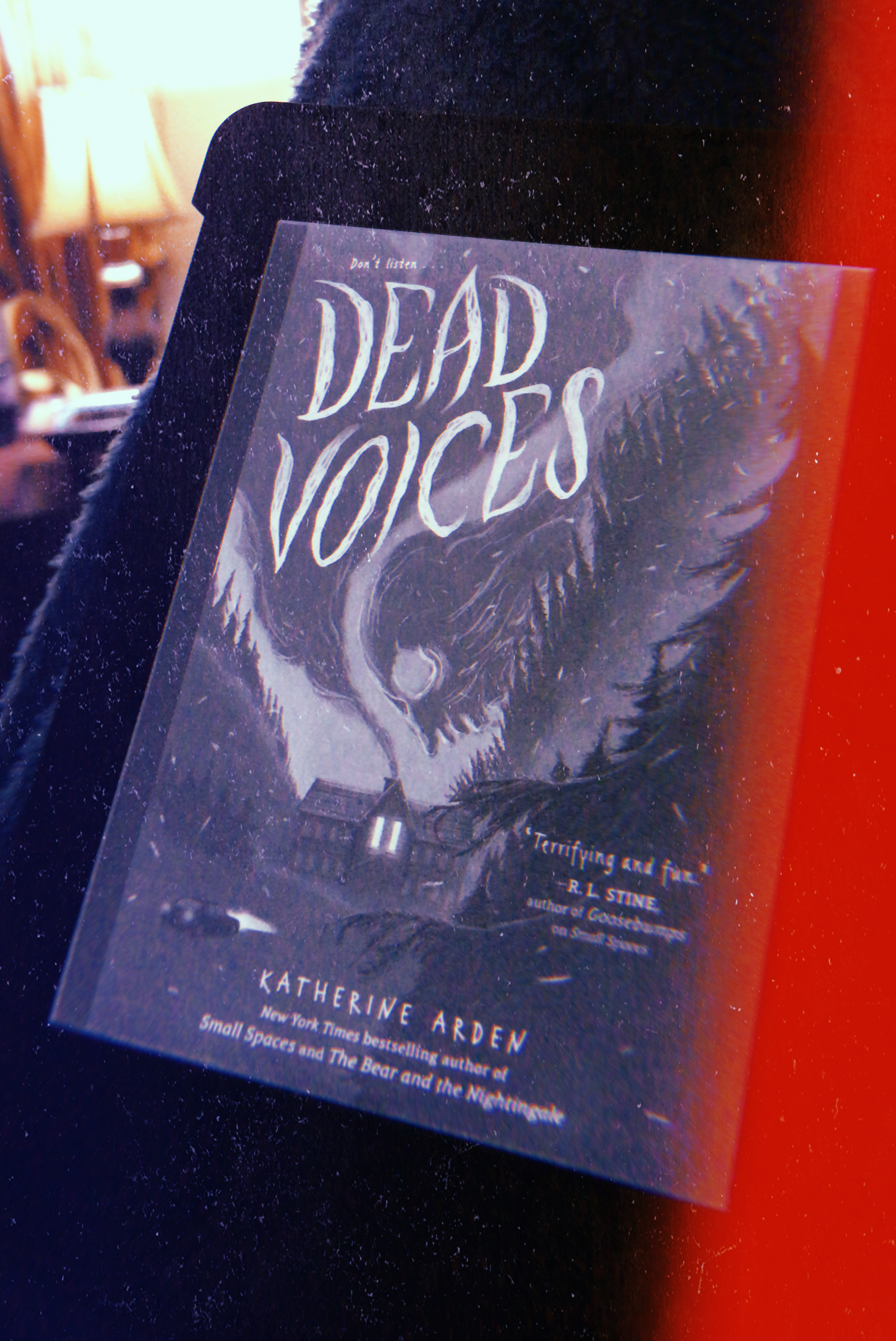
dead voicesI’ve read enough middle grade horror to know that a lot of the books within the genre are mostly harmless, spooky fun. There are a lot of conspicuous exceptions, of course, but for every Coraline there are at least a hundred Goosebumps (and, look, I love Goosebumps as much as the next reader, but let’s be real — it’s mostly goofy and schlocky fun).

Katherine Arden’s books fall more towards the Gaiman-end of the spectrum. There’s still no “real” horror here, but what Arden does deliver — and in abundance — is atmosphere. Which is fine by me: the spooky stories I find most effective are those defined by ambiance rather than terror — and Dead Voices, the second book in the Small Spaces series, has ambiance to spare. Arden’s language is beautiful, her descriptions chilling and commanding. There are passages here so vivid that I could almost feel the New England cold down in my bones (which is — as I mentioned in my previous review for Pumpkinheads — quite the feat when you consider I live on a Caribbean island in the midst of one of its hottest years on record).

A follow-up to last year’s excellent Small Spaces, Dead Voices sees our trio — principal protagonist Olivia, stoic and reliable Brian, and bubbly-but-insecure Coco — and their respective parents on their way to a skiing trip to a local Vermont mountain. They are soon overwhelmed by a particularly strong snowstorm however, and find themselves stuck inside the vast and newly renovated lodge in which the are making their stay.

🎃

Arden has mentioned in interviews that one of the main inspirations for this story is The Shining, which should give you some idea of what is to come.

As I mentioned above, mood and setting are what sets this story apart, but it also features charming, believable, and resourceful characters, and it’s very easy to root and feel for them. Particularly great is Ollie’s father, Roger, who had a small part in Small Spaces but a much expanded role in this book. A widower trying his best to raise a daughter as a single parent. A cook and lover of puns. Someone trying to kindle a relationship with someone new while still grieving an old flame. His is a realistic, rounded, and sympathetic portrayal, and a welcome breath of fresh air in a genre where parents are mostly absent or absent-minded.

Lyrical and atmospheric, Dead Voices is a worthy sequel, and a great Hallowe’en read.

PUMPKINHEADS by Rainbow Rowell, Faith Erin Hicks

pumpkinheads

Rainbow Rowell has made me cry. Yet again. I’ve read enough of her work for this to be expected, but everything about Pumpkinheads — her first graphic novel with the inimitable Faith Erin Hicks — sounded to me like it was just going to be a cute, fun romp.

And it was, you know? Pumpkinheads is the story of Josiah and Deja, two high school seniors who’ve spent the last couple of years working at their local pumpkin patch every Fall. Theirs is a seasonal friendship, but the bond they develop is strong and they consider themselves best friends. This is their last season working together, and once it wraps up they will both, for the last time, go their separate ways, towards college and new lives. So Deja is determined to have their last day (their last Hallowe’en together) be an adventure. “Friends,” she says at one point, “don’t let friends live small lives.”

🎃

Pumpkinheads is charming and adorable and the most fun, gentle read. As are most of Rowell’s stories. And like most of Rowell’s stories, it isn’t just any of those things. There’s always more. And there’s a lot of heart and soul in this graphic novel. A lot of true things about friendship and relationships and what it means to leave people and places behind. And quite a lot of Autumn. This is probably the most Fall book I’ve ever read. I could feel it wrapped around me like a light sweater, could practically smell the crisp October air. Quite the feat considering I live in Puerto Rico, and have never actually come across a proper, Midwestern Fall.

All of this is beautifully conveyed by Faith Erin Hicks’s beautiful, beautiful artwork. She’s drawn up a gorgeous and warm, welcoming world into which I desperately want to jump.

Hicks deserves a lot of recognition in terms of the story, too. The book’s back matter includes a conversation between the authors which makes note of the fact that the script Hicks received from Rowell was more screenplay-like in nature, lacking a lot of the beat-by-beat description that is usually found in most comic book scripts, and it was up to her to break down the panels and figure out the pacing of the story. A job she did marvelously — this is a fulfilling but very brisk read. (“There is a lot of skill,” Hicks says, “behind a ‘quick read.'”)

Hicks ends the same conversation with the following: “In the beginning, you’re trying to get to know them, who they are and how best to draw them so their personalities come through, visually. And by the time you’ve drawn the last page in their graphic novel, these characters are your best friends.” This is, of course, in reference to the drawing process, but it also perfectly encapsulates the experience of reading the story of these characters. You pretty much like Josie and Deja from the get-go, but you love them by the end. And then you understand, quite perfectly, just why they are so loathe to say good bye to their pumpkin patch.

I loved this book.

IN AN ABSENT DREAM by Seanan McGuire

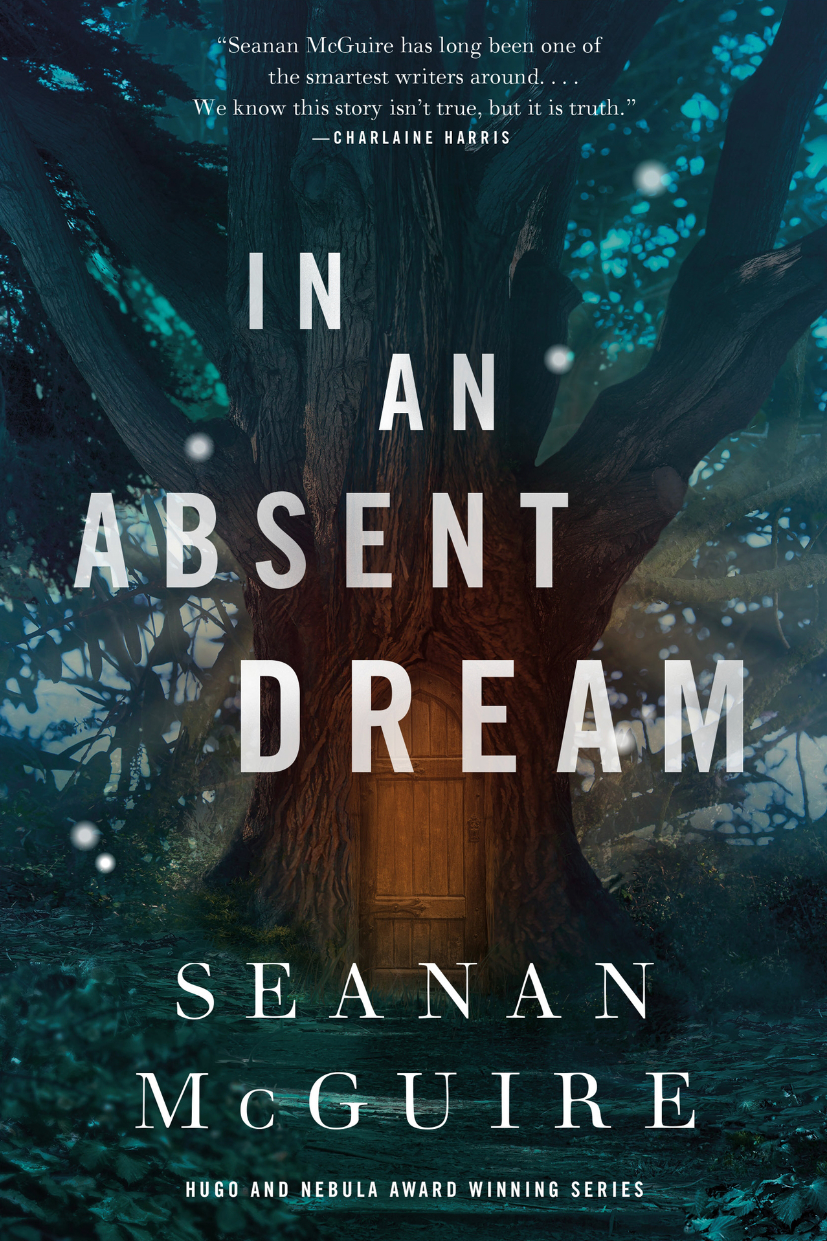
in-an-absent-dream-by-seanan-mcguireSeanan McGuire’s In an Absent Dream is the story about Katherine Lundy, a quiet, bookish girl who doesn’t feel at ease with her surroundings. She loves stories, so she finds comfort in books, and she loves rules not simply because she’s supposed to, as the story tells us later on, but because following them “could make you an invisible person, and invisible people got to do as they liked.” (Katherine is also fond of loopholes.) (Katherine would have been a Slytherin.) At school, she’s guarded and reserved, and, as the principal’s daughter, the subject to some bullying, not at all quick to make friends. At home, she’s distant and struggles to connect with her family, mostly because they constantly fail to properly see her for the person she is.

Let us speak, for a moment, on the matter of sisters. They can be enemies to fight or companions to lean upon: they can, at times, be strangers. They are not required to be friends, or to have involvement in one another’s lives, or to be anything more than strangers united by the circumstances of their birth. Still, there is a magic in the word “sister,” a magic which speaks of shared roots and hence shared branches, of a certain ease that is always to be pursued, if not always to be found.

One day while walking home from school Katherine stumbles upon a gnarled and twisting tree that seems to be plucked straight out from a fairy tale. Carved inside the tree is a door, with the words “Be Sure” engraved upon it. Are we at all surprised when Katherine walks up to it, turns the knob to open it, and walks through? We’ve known her only a short time at this point, but we know — we’re sure — this action was as inevitable as death.

This is a story about identity, and belonging. About searching for a place to call home, and what home means, and the price you have to pay to find it.

What is home, after all, apart from the place one returns to when the adventure is over? Home is an end to glory, a stopping point when the tale is done.

Three pages were all it took for me to remember just why I love this series so much. Seanan McGuire’s language in these books is lyrical and lush and drop-dead gorgeous, perfectly capturing the rhythm and beats of traditional fairy tales while still retaining enough of McGuire’s darker, modern edge. And it’s a sharp edge at that. One of the most striking things about the writing in the Wayward Children books is how brutally honest it can be. The language is luscious, but it is used to reveal some harsh truths.

It is so often easy, when one has the luxury of being sure a thing will never happen, to be equally sure of one’s answers. Reality, it must sadly be said, has a way of complicating things, even things we might believe could never be that complicated.

And this is a harsh story. Beautiful, to be sure, but Lundy’s tale is, ultimately, a tragic one, and the writing delivers on that, one bittersweet line at a time.