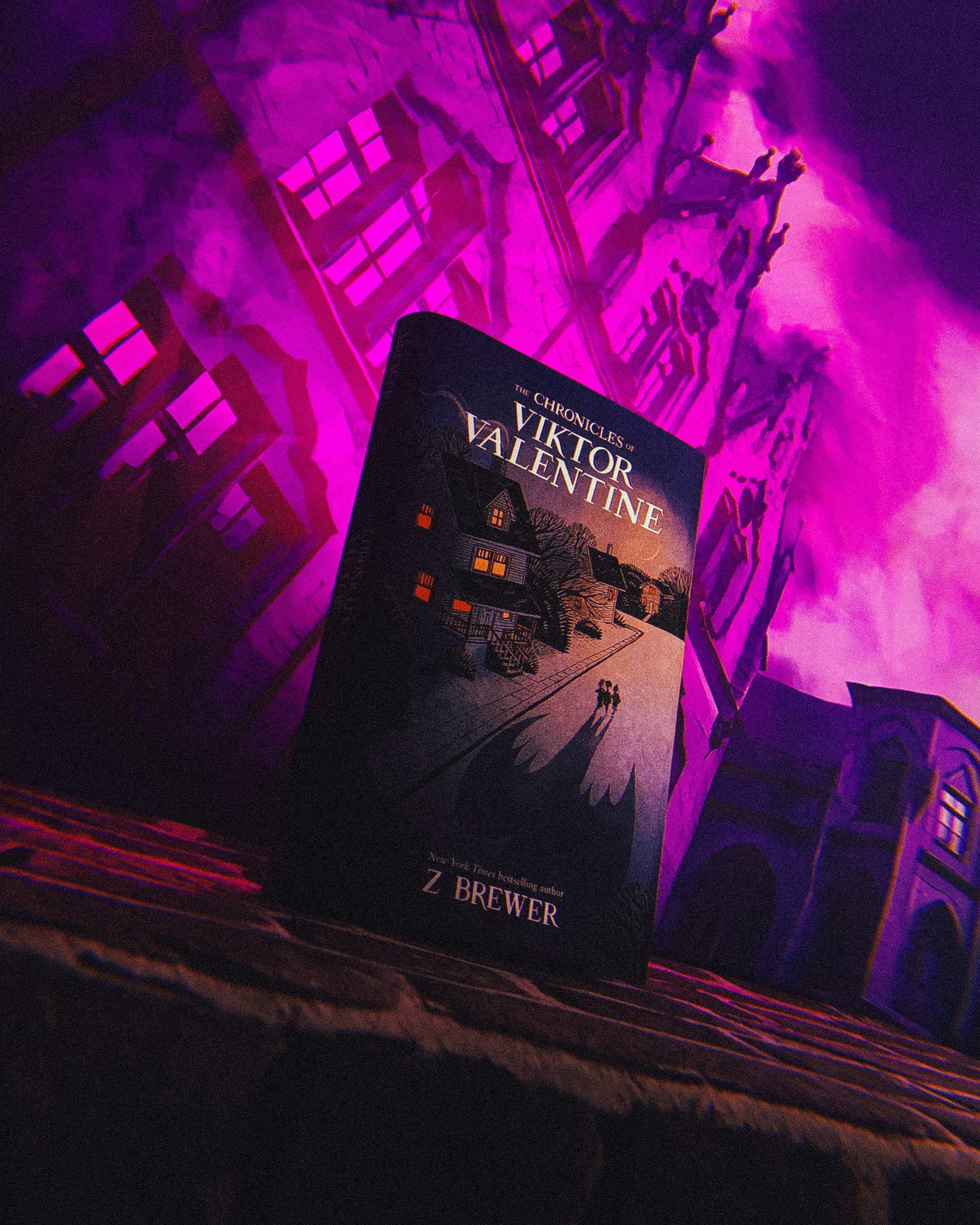
THE CHRONICLES OF VIKTOR VALENTINE by Z Brewer

Viktor Valentine wishes he were as excited for the start of seventh grade as everyone around him seems to be. Even his one and only friend, Damon, can’t help but seem eager to start the new school year, despite always being the first to complain about their small, boring town of Nowhere. All Viktor wants is for summer to never end—to hang out with his best friend eating ridiculous amounts of junk food and playing endless rounds of their favorite vampire-hunting video game. That’s not too much to ask, is it?

But things insist on changing around him. The school year does inevitably start, bringing with it a myriad of new worries and anxieties. Damon, already a popular kid, seems to want to spend his time hanging out with other people, and Viktor is afraid of being left behind. There are also the mysterious new neighbors, the youngest of whom takes a liking to Viktor—a feeling he would very much reciprocate if only he could find a way to overcome his infinite awkwardness. Most worrying of all, something is apparently going on with his parents, who are acting weirder than usual, keeping odd hours and returning home with deep, dark stains on their clothes and lips….

🎃

The Chronicles of Viktor Valentine was, despite the promise of its excellent cover, just an okay read for me. I was very into the novel for the bat’s share of it, when it was a mostly traditional but charming coming-of-age story about a seemingly regular kid dealing with growth and change and coming to terms with the fact that vampires may or may not exist in his world. Many of the characters were endearing and felt—despite some curiously stylized dialogue—entirely real. In particular, I enjoyed the depiction of Viktor and Damon’s relationship. It felt genuine, with author Z Brewer striking that delicate, bittersweet balance between faithful and fickle that feels so fundamental in youthful friendships. The setting—a small, sleepy suburban town with the appropriate name of Nowhere—felt suitably realized as well, full of familiar and quaint elements. It all came together to form an atmosphere that was cozy and nostalgic, if a little confining. 

Unfortunately, though, most of these charms were thrown away during the novel’s third act, where the story felt as if it was being forcefully shoved into an entirely different narrative. Which seemed, in fact, to be the case, as I found out soon after finishing that Viktor Valentine is supposed to take place in the author’s shared sanguine universe. I had no knowledge of Brewer’s vampiric saga beforehand, so this is not a judgment against it, but I do still expect complete and satisfying narratives from individual installments, particularly when they’re meant to be the launch of a spinoff series. That’s something I felt was taken away here in favor of crossovers, complications, and cliffhangers. Gone was the folksy familiarity of the characters—replaced by stilted, tired archetypes. The most egregious example of this can be found in Viktor himself, whose story of awkward adolescence and self-discovery is suddenly overshadowed by a hero’s quest that was nowhere evident at the beginning of the book. It was a climax filled with baffling choices, and I couldn’t help but feel disappointed. 

Then again, maybe this is all more of a me thing. Fans familiar with the established series will likely find a lot more to enjoy here, particularly in discovering all the interconnected bits and scattered cameos that I surely missed out on. Alas.

BENEATH THE TREES WHERE NOBODY SEES by Patrick Horvath

Samantha Strong leads a peaceful life in the town of Woodbrook. She appreciates the close-knit community, composed of mostly uncomplicated, salt-of-the-earth folk—folk who appreciate her dependable self right back. They think she is one of their own.

Samantha Strong hears voices. Whenever they get too loud, she heads out into the city, far enough away from her hometown. There, she picks someone to take into the woods, away from watchful eyes. Beneath the trees, Samantha Strong muffles the voices in her head.

And then somebody else—somebody like her—disrupts Woodbrook’s perennial peace, and the ensuing chaos threatens to overwhelm and overthrow Samantha’s cherished comfort and stability. She’s worked too hard—with so much care and so much diligence—to ever allow that to happen.

And so Samantha Strong goes to work.

🎃

Patrick Horvath’s Beneath the Trees Where Nobody Sees is a beastly, brutal, bloody ride—and I enjoyed every page of it. A simple story, really, but told in an effortless and economical way that makes it, despite all the gruesome events that unfold within, a brilliant reading experience.

Dexter meets The Busy World of Richard Scarry,” goes the elevator pitch for this hardcore comic. It’s perfectly accurate, although it somehow doesn’t entirely prepare you for what awaits. Horvath’s creatures are significantly less cartoonish than Scarry’s own industrious cast, for one, portraying them—with the help of soft, muted watercolors—in a more naturalistic light, making the darker aspects of the story hit that much harder. When the blood starts to inevitably flow, there’s no moment of shocked bemusement; there’s just the stark, sudden, sobering shift into the somber and the grim. 

The choice to go with anthropomorphic animals to tell such a murderous tale is an exceedingly effective one, to be sure, but it’s a testament to how well-crafted and well-executed the writing is that the book could work even without that animal element. Leave just the script, and the book reads like a classic crime drama in the same vein as the work of Ed Brubaker. As it is, though, I’m glad Horvath went with this route. There were scenes here that made my jaw drop all the way down to the floor—something a comic hasn’t managed to do since the early days of The Walking Dead. Stellar, stunning stuff. Everyone, immediately include this in your Hallowe’en reading. You won’t regret it. (Well, only if you’re squeamish.)

SEPTEMBER 2024

Hello. Here’s what I read during the month of September. Mostly talking about short stories this time around. I did read two other novels, but I can’t write about them here just yet because of reasons. Anyway! Good reading month.

“The Counselor” by Robin Sloan. This was provocatively written, but I’m not exactly sure what it was trying to say. The premise of someone being asked if they were ready to die and replying in the negative despite considerable suffering reminded me of a scene from, of all things, Harry Potter and the Methods of Rationality, the famous (infamous?) work of fan-fiction, where Dumbledore talks with this world’s pretentious version of Harry about willingly accepting death one day. Harry argues that the premise is absurd, reasoning that if someone really wanted to live today, then they would, barring some truly terrible circumstances, also want to live tomorrow, and beyond, ad infinitum. That always stuck with me, because I happen to think similarly. Anyway, fairly sure this story is more about the ethics of using generative artificial intelligence in the medical field than it is about that, though.

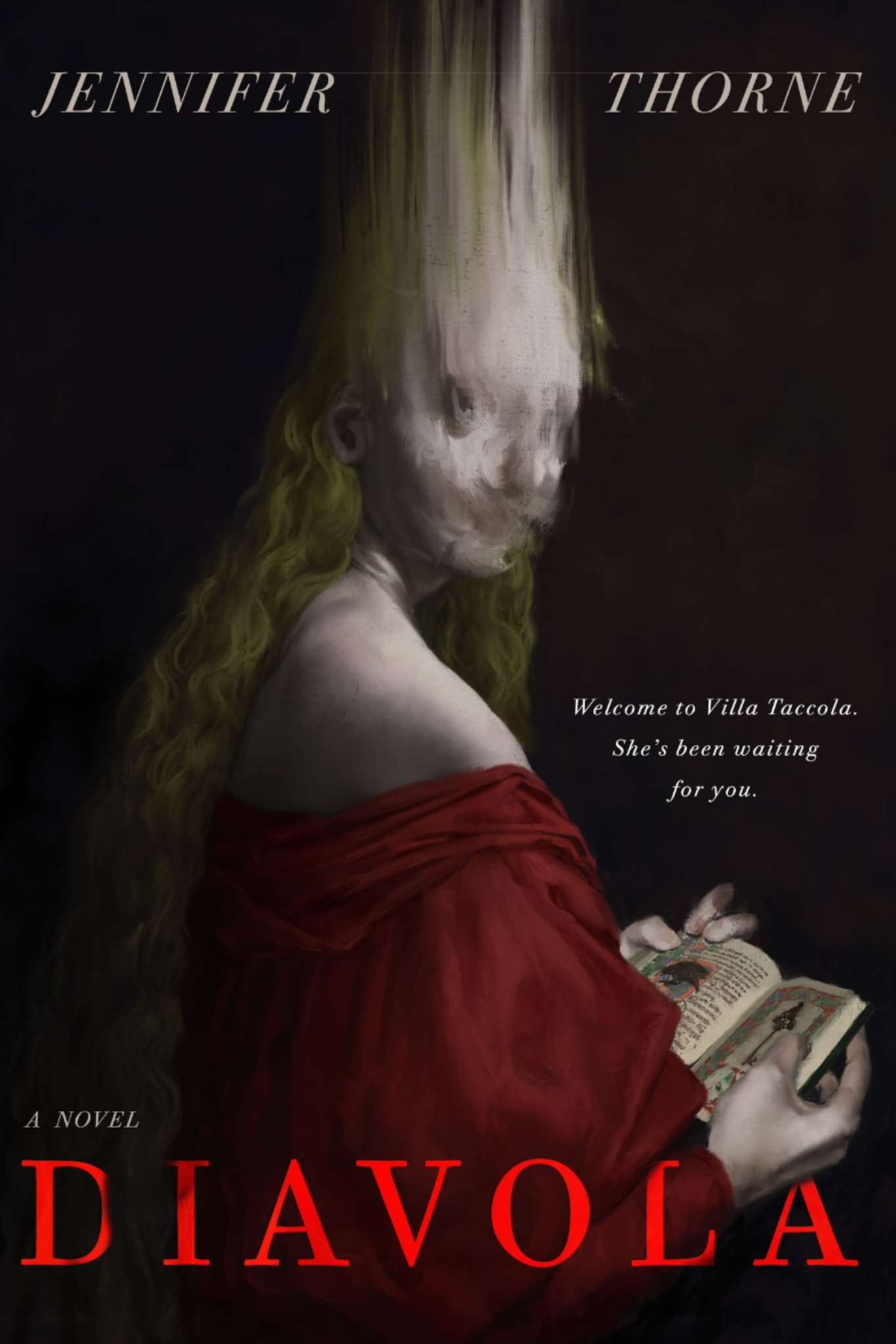
Diavola by Jennifer Thorne. Well, I loved this. So much that I’m now wishing I had saved it for the Hallowe’en season. As it is, though, this was really the perfect read for the summer-to-fall transition. This is touted as Gothic horror, which I suppose it is, but it’s the most thoroughly modern Gothic horror story I have ever read. Sounds contradictory, but author Jennifer Thorne really managed to transport that classic, old-word feel of the genre into the present day, and the result is a veritable thrill ride — in particular, that third act, which stands among the finest I’ve ever read with its relentless, brutal, and inevitably cathartic pace. Anna herself is such a refreshing protagonist, as well — smart and sardonic but never coming across as pedantic or annoying. To say that she’s one of the most relatable characters I’ve read lately feels like an obscene thing to say, given her arc here, but it is also true. But I’m glad we got such a steadfast protagonist who, from the get-go, knew what she wanted, and I’m glad we got a story that wasn’t even remotely afraid to give it to her. A damn good read. This isn’t even mentioning La Dama Bianca, who is a fantastic and terrifying secondary villain. Secondary, of course, because the real antagonist of this story is Anna’s perfectly loathsome family, whom Thorne portrays with perfect contempt.

“Judge Dee and the Executioner of Epinal” by Lavie Tidhar. The latest Judge Dee mystery. This felt… very first draft, let us say. The writing seemed very rushed and somewhat sloppy. Most of the jokes and references didn’t land at all. (There’s a Princess Bride callback that I would have normally loved, that being one my absolute favorite stories, but it just felt forced and out of place here.) Very disappointing. Definitely the weakest of these admittedly irreverent pieces of short fiction.

“It Waits in the Woods” by Josh Malerman. Part of the Creature Feature collection on Amazon. I read a couple of the other entries for the Hallowe’en season last year and they were very hit or miss for me, as these Amazon Originals tend to be. This one turned out to be very effective, though. A little meandering, particularly in the beginning, but with a great, creepy atmosphere throughout. There’s a couple of curious errors here and there, but nothing that took me out of the story.

AUGUST 2024

August was my birthday month. I reached my Memento Mori Goodreads Reading Challenge goal of 37 books just as I turned 37, which was very apt. That it also turned out to be one of the best reading months I’ve had in a while was just a nice little bonus. I got through a fair bit, so let’s dive in.

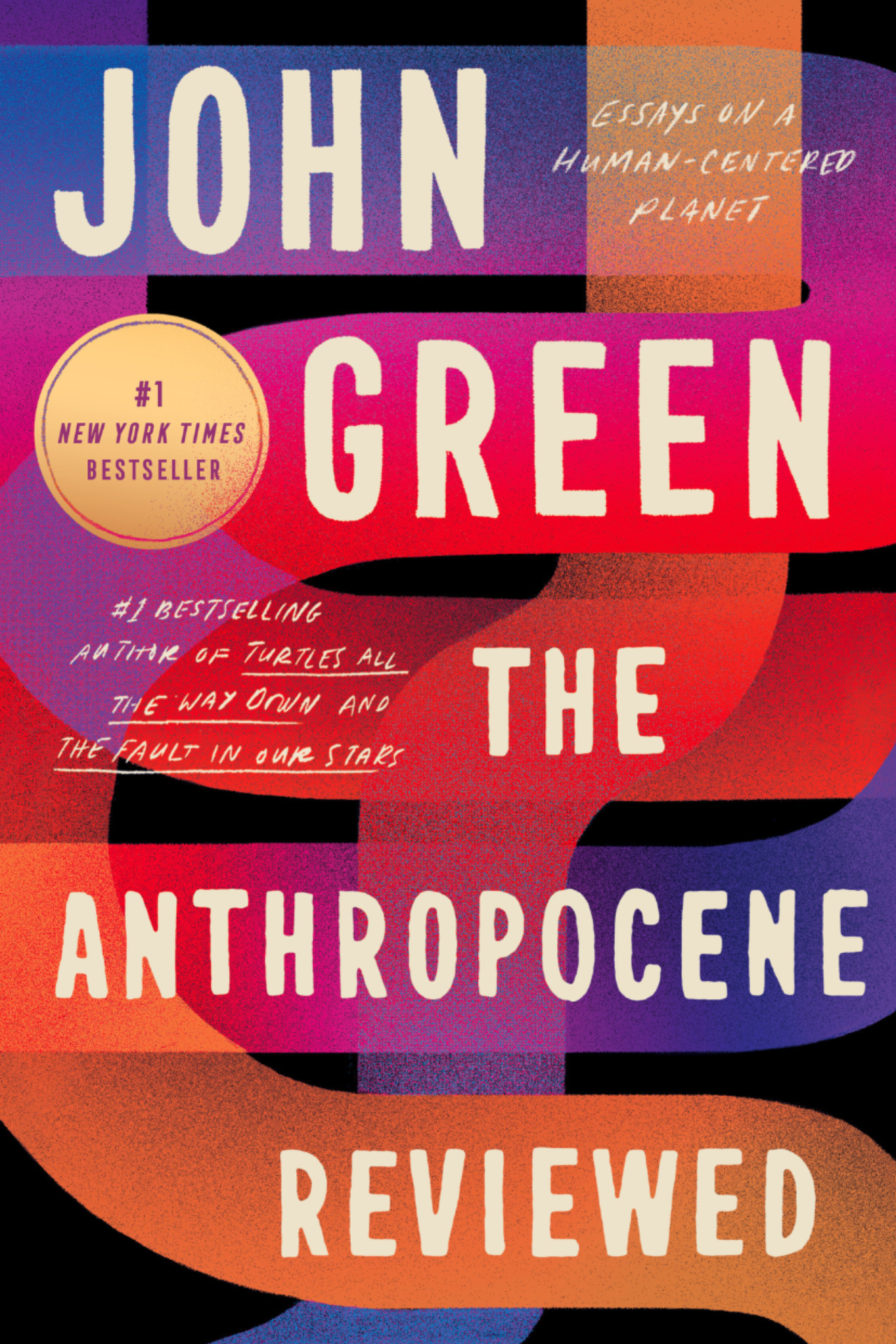
The Anthropocene Reviewed by John Green. The Green brothers have shaped and influenced my life in immeasurable ways. I love them both, but have always had a soft spot for John. Partly because, as a fellow anxious and bookish older brother who is often dealing with one existential crisis or another, I relate to him a lot. Mostly though, I’ve just always admired how he consistently chooses to tell his stories — from his books to the best of his video essays — through the fractured lenses of humanism and hope. The “Thoughts from Places” videos, which were my favorites during their Brotherhood 2.0 era, are excellent representations of John’s reflective style, and this collection of essays is essentially a continuation and expansion of that format. I took my time with this one — I started it back in January — and it’s been a delightful  companion throughout this stressful, hectic year. I give The Anthropocene Reviewed five out of five stars.

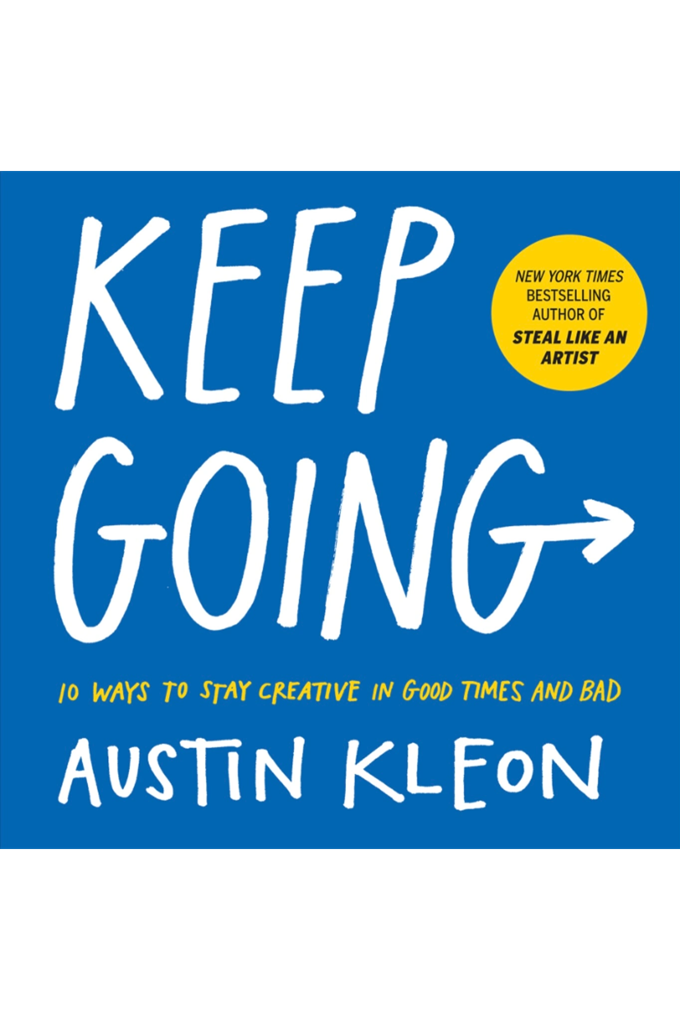
Keep Going by Austin Kleon. A re-read. I first picked this up during the pandemic, and it made that oppressive year feel a little less heavy.  This book’s focus is on the creative life, but I find that it’s infinitely more helpful to my personal life. A lovely book that I think everyone should read. Kleon, by the way, is one of the most interesting people you could ever follow online

It Came from the Trees by Ally Russell. Already wrote about this one, of course. Let’s hear it for rad friends doing rad things. 

The Good Neighbor: The Life and Work of Fred Rogers by Maxwell King. To be perfectly candid I picked this up because I was tired of reading about disappointing men. I wanted to read about someone decent, who did infinitely more good than harm, and I couldn’t think of anyone better and more appropriate than Mister Rogers. But also I just wanted to read more about this amazing man, particularly after watching A Beautiful Day in the Neighborhood at the start of the year. I didn’t grow up with Mister Rogers (to be perfectly honest, I think my younger self would have found him perfectly boring), but he’s someone who I’ve come to deeply admire the more I’ve learned about him through the years. The man was practically a saint, yes, but he was also a flawed individual who, through rigorous discipline and profound courage, tried his damnedest to be a force for good in the world. This expansive, engaging biography does an admirable job portraying this most human of humans.

I also read a bunch of short stories.

“Judge Dee and the Mystery of the Missing Manuscript” / “The Locked Coffin: A Judge Dee Mystery” by Lavie Tidhar. I really enjoy these clever, irreverent short stories. “The Mystery of the Missing Manuscript” is set in an ancient library, and Tidhar has a blast affectionately mocking obsessive bookish types. And I think “The Locked Coffin” might just be my favorite of the Judge Dee stories so far? It’s certainly the funniest — I laughed out loud multiple times. It just felt like a livelier story, with Dee himself seeming downright whimsical. Delightful stuff.

“Randomize” by Andy Weir. Super interesting premise and fun execution. Like a lot of these Kindle Single stories, though, it reads very much like the beginning of a larger, far more interesting story, rather than a thing that stands on its own.

“Emergency Skin” by N.K. Jemisin. Now this was far more like it. Much more complete and infinitely more narratively satisfying than Weir’s effort for this collection of Kindle Singles. Not necessarily the most original concept, but it was perfectly compelling and executed in an effortlessly stylish way, which goes a long way in terms of my enjoyment of a thing.

“The Penthouse” by Helen Phillips. Very effective piece of flash fiction. Enjoyed how downright sinister it felt. The closing line is a veritable banger.

“The Year Without Sunshine” / “Better Living Through Algorithms” by Naomi Kritzer. Kritzer may have turned into one of my favorite short story writers with these two offerings. Both absolutely wonderful in their own unique ways. “The Year Without Sunshine” in particular is one of those stories that fill you with hope and leave you thinking that, contrary to all current evidence, humanity’s going to be just fine, in the end. She deserves every damn Hugo she gets. 

“The Particles of Order” by Yiyun Li. Loved the atmosphere and writing here, but found the ending entirely unsatisfactory.

“A Pretty Place” by E.M. Carroll. I was looking to see if Carroll had any new work coming out. As big a fan as I am of their work, I still somehow managed to miss not only the name and pronoun change, but also this utterly unsettling and gorgeous story from last year. Obscenely good, as per usual.

“Obituary for a Quiet Life” / “The Coded Life of William Thomas Prestwood” by Jeremy B. Jones. These are narrative essays, which I never cover in these wrap-ups, but I was so struck by Jones’s writing that I had to include them. “Obituary for a Quiet Life” is a beautifully poignant piece, and “The Coded Life of William Thomas Prestwood” is just a stunning story that’s simply staggering in scope and so unlike anything I’ve read before. Wonderful, wonderful writer.

IT CAME FROM THE TREES by Ally Russell

Jenna can’t help but love the outdoors — it’s in her blood. Her grandfather was the first Black park ranger at the Sturbridge Reservation, after all. She’s spent most of her childhood camping outside, with both her family and various scout groups. For Jenna, the woods feel like home. 

And then Jenna sees her best friend, Reese, taken by a strange, massive creature in the woods, and her whole world is shaken. The forests that have been a sanctuary for much of her young life suddenly feel treacherous and sinister. Worst of all, most of the adults around her don’t believe her account, concluding that Reese simply ran away. Jenna will not allow the efforts to find her best friend dwindle, and so she takes matters into her own hands. After weeks of researching the disappearances and strange sightings that seem to plague her precious preserve, she joins another troop, determined to help Reese find her way back.

But the creature in the woods has other plans.  

○○○

Ally Russell understands horror. More crucially, she understands children’s horror. That much has been clear to me ever since I had the privilege to read some of her work in progress (full disclosure: Russell and I are internet pals). She can set a mean atmosfear (a term coined, as far as I know, by her, and one I’ve absolutely appropriated), and her character work is nothing short of stellar. We follow a handful of characters in It Came from the Trees, her debut novel, but she manages to imbue each one with enough quirks and peculiarities to make them feel not only distinct, but, more importantly, particularly in a category where the characters often tend to feel flat and hollow, wholly believable. By the end, you can’t help but cheer for this group of fearless ingenues as they stand up against a singularly terrifying phenomenon.

Which brings me to the thing that came from the trees.

I love the way Russell handles the creature here, treating it like a relentless force of nature rather than this otherworldly, mythical monster. Bigfoot here is less a boogeyman than he is a hurricane, and it makes for a more grounded set of scares, which I’ve always found make horror that much more effective. I also appreciate how Russell goes with the Jaws approach. too, having her land shark off-stage for much of the story, which does a lot to help build the tension and — say it with me — atmosfear. Like in that seminal film, each time the creature explodes out of the ocean of trees it is as memorable as it is terrifying. It’s a beast that feels properly dangerous and lethal, and it’s a testament to Russell’s writing that the fear you feel for this troop is palpable.

And despite all the brilliant scares, it’s this group of kids that truly make this story sing. Jenna is a wonderful protagonist: smart, determined, and resourceful — but still very much a kid. She spends most of the story absolutely terrified, but it never causes her resolve to waver. Saving her friend comes first, being scared has to settle for second. The rest of her troop similarly stands their ground, but I want to shout out Norrie in particular, who’s just an absolute delight to read. She brings a lot of comic relief, but is not without her pointed, poignant moments. 

Most of these characters are people of color, too, which bears pointing out because it’s central to the story’s theme of nature belonging to everyone — a declaration that’s there from the outset: “To the Black, Brown, and biracial kids who love cryptids,” Russell’s dedication reads, “I see you. This story is for you.”

We’re currently living in an era of excellent middle grade horror. With It Came from the Trees Ally Russell has, like the sasquatch of her story, solidly staked out her spooky territory.

JULY 2024

Hello. Here’s what I read during the month of July:

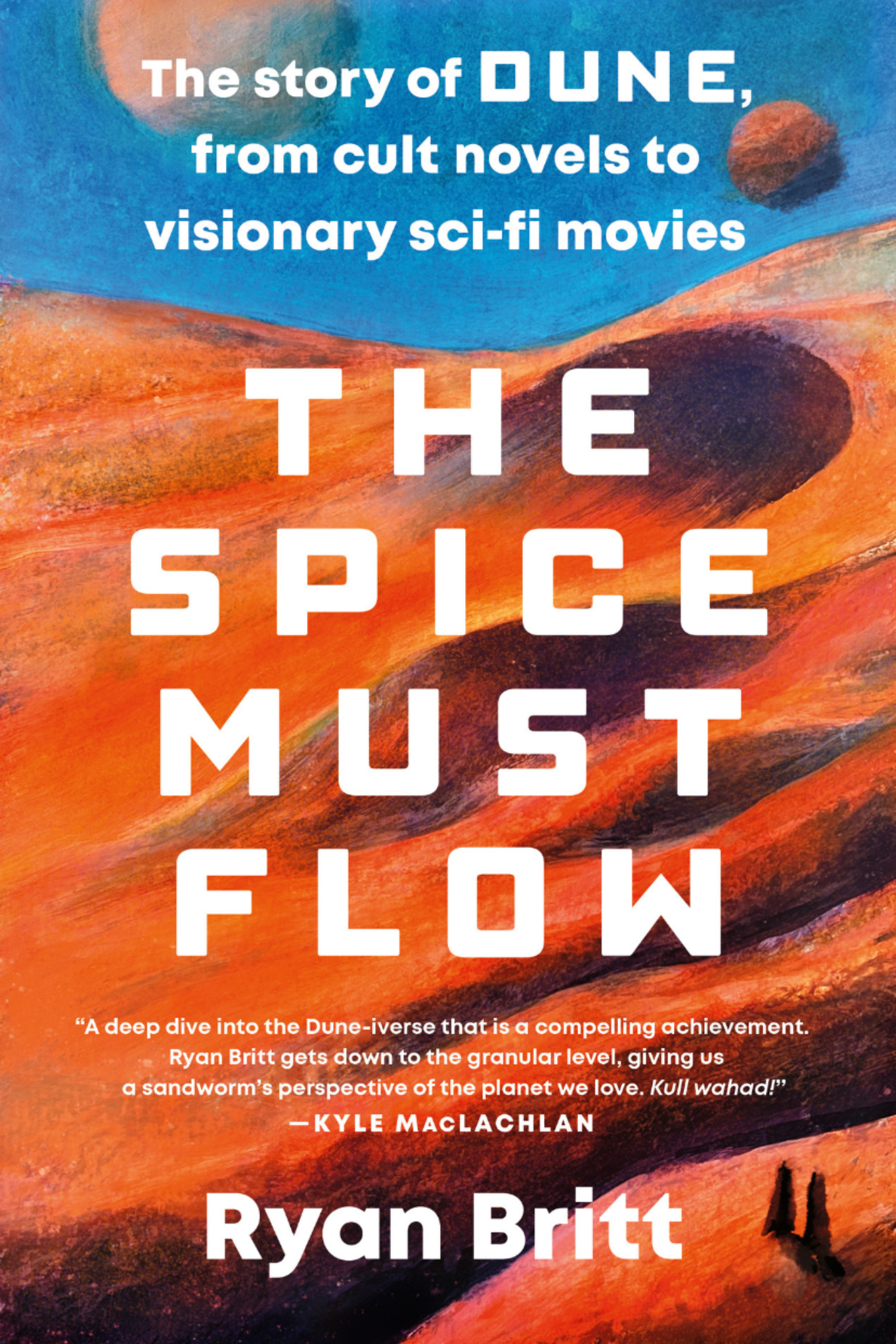
The Spice Must Flow by Ryan Britt. Books about works of art are one of my favorite things, particularly when they give a behind the scenes perspective as to how said art was made. But this is the sort of pop culture book that is meant to be a primer rather than a deep dive, and so, like the Fremen sandriders, it never really lets the worm go further below the surface. Still, Britt’s writing is punchy and highly entertaining, making this a perfectly fine and fun celebration of the revered franchise. 

This was the only book I managed to finish during the month. Did manage to squeeze in a couple of short stories, though.

“I’ll Miss Myself” by John Wiswell. Lovely little story that’s just a tiny bit too saccharine. Basically a not so subtle commentary on the online hellscape social media and its algorithms have wrought that have done such a number on our collective mental health. If anything, this story serves as a good reminder to check in on both your homies and yourself. You are so needed by everyone to do everything.

“Old Media” by Annalee Newitz. Intriguing story about fondness, friendship, and freedom with some compelling characters, but it never really quite clicked with me, unfortunately. 

And so July was… fine? Things are still somewhat hectic in my personal life, and it’s definitely affected my reading (one whole book) but I’m also not feeling like I’m in any type of slump. It’s tragic to say, but reading just hasn’t been much of a priority lately — because life. Still, I very much want to work on making it one again. Reading is as close to a meditative act as I’ve ever been able to get, and I definitely don’t want to lose that. 

JUNE 2024

Hi hi. Here’s what I read during the month of June. Unlike May, which was a A Terrible, Horrible, No Good, Very Bad Month, I actually managed to sneak in a few things this time around. It was a decent one.

The Wildman of Shaggy Creek by R.H. Grimly. After last month — which, as I’ve already said, was Terrible — I fell into a particularly bad slump.  I’ve always maintained that the best way to get out of one is to pick up a middle grade book — particularly if it’s a spooky one. Picked this up with the intention of starting my summer horror reading. That didn’t really pan out, but it did get my reading in general back on track. A nice, fun, and quick read. It’s a Goosebumps throwback, down to the format and even the spectacular cover art, which was done by Tim Jacobus, natch. It does a fine job evoking the nostalgia-laden series, stumbling only towards the end, where it wraps up everything entirely too neatly, whereas Stine would have rather died before wasting an opportunity to go with a perfectly terrible and tawdry twist.

The Suitcase Clone by Robin Sloan. Read this in anticipation of Moonbound. Sloan is at his most playful here — both in terms of the language (the fun he has with words is palpable) and plot (veritably pulpy). Like in his novel Sourdough, of which this is sort of a prequel, food and drink play integral roles here, and the descriptions are nothing short of delectable. Like, I’m in no way a wine guy, but this made me want to be a wine guy, you know? Great stuff. Sloan is a perennial fave.

Moonbound by Robin Sloan. As with most things I end up truly loving, I have no idea how to talk about this book. It grabbed me in a way no book really has since Psalm for the Wild-Built. Which is apt, I think, because in a lot of ways they are very similar: stories about a future in which, rather than succumbing to despair and desperation, people find a way to go on. My own cynical streak aside, these stories of radical optimism always resonate with me in a deep and pointed manner — second only to stories that are about stories themselves. So is it any wonder that I loved this so much, when it’s a hopeful story about an optimistic future and that it’s also, at its core, about stories and storytelling? Another kind of storytelling I’m deeply drawn to are those that deal with the metatextual and the self-referential. It’s something that Sloan has always done particularly well, and here he cranks it up in a considerable manner. And the result is an extravagantly whimsical and imaginative fable about friendship and bravery and the stories we tell ourselves to get us through the dark. I couldn’t help but adore this book. It tugged at my heartstrings from the first chapter on. I didn’t want it to end. I want to read it again.  Favorite book of the year thus far, needless to say. 

I also managed to read two short stories this time around. To be perfectly candid I had forgotten all about them after a couple of weeks, which I guess is a reflection of how I enjoyed them as a whole.

“Uncharted Waters” by Sally Hepworth. Was in the mood for a summer mystery when I picked this up. It turned out to be less of a thriller than it was a domestic drama, but the vibes were undoubtedly summery. I thought it was okay. The story and the setting were fine, but like a lot of these Kindle-exclusive short stories, the beginning was way too drawn out while the climax felt entirely rushed and anticlimactic. Which is why it ended up being so forgettable, unfortunately. 

“Tiger Chair” by Max Brooks. I am a fairly big fan of Brooks, I would say. World War Z was a formative reading experience for me, and Devolution was one of my favorite Hallowe’en reads a couple of years ago. Brooks’ books are all about world-building, something he is obscenely good at. His settings are always particular and precise. But the thing that makes his stories stand out for me is the visceral level through which we experience these meticulous environments. Brooks’ impeccable skill at setting a scene shines here,  but ultimately I found that it lacked that certain vulnerable viewpoint. It is a terrifyingly realistic tale, though, and, I’m sure, painstakingly researched. But it left me feeling cold. 

Things have been kind of hectic on my side for a couple of weeks and, even though reading hasn’t been exactly a priority lately because of that, I’m thankful to all these stories, regardless of enjoyment, for providing some much needed escapism. Onwards and upwards.

MAY 2024

Last time I complained about April being a rough month, and then May rolled around and was like ha ha ha and proceeded to kick my ass. So not much reading was done, needless to say. It was, sadly, pretty much the last thing I wanted to do.*

Butyeahanyway, I still managed to read a couple of things during the month of May, miraculously enough.

Alias Emma by Ava Glass. Really fun thriller with a stellar premise. Emma is a good character, if a little bland. The secondary characters are wonderful, though, and I wish some of their distinctiveness bled onto the protagonist. What really makes this book is its central conceit, which while contrived at times, is still believable and exciting enough to carry you on to the end. The climax proper was a bit off, though, feeling somehow both too sudden and too neat. Anyway, this is the start of a series, and the second book seems to take place abroad, and international spy stories are always fun.

This was, indeed, very much read because I was still on a spy high after finishing the original Bond series. The book suffered slightly from this because I found myself at times just wanting to read another Bond adventure. But that is, of course, entirely on me.

And that’s it from the book side of things. The only other thing I read was a short story, in keeping with my goal to read at least one every month.

“We Now Pause for Station Identification” by Gary A. Braunbeck. A considerably less whimsical version of Welcome to Night Vale. Neat little story with an effective execution but entirely too much going on. A lot of interesting ideas, but I wish the author would have stuck with one and developed it, instead of going with the throw-mud-against-the-wall-and-see-what-sticks approach that we got. Some solid, haunting imagery here, though, and I was captivated throughout.

I’m now in a bit of a slump after all that time not spent reading, but things on the personal front seem to be looking up, so fingers crossed that my reading will follow soon.

* Main Things I Wanted To Do:
       1) Rot in my bed
       2) Rot on my couch

APRIL 2024

Oh hello, here’s what I read during April. Which was A Terrible Month in Any and All Aspects. But I digress. I didn’t have the headspace for much else so it was all, once again, pretty much all Bond. But I’m finally done with the Fleming books so maybe we’ll let that character take a break for a bit.

On Her Majesty’s Secret Service by Ian Fleming. Great story, but not my favorite. Which is surprising because this seems to be one of the more acclaimed entries. But I found Fleming’s writing, usually so vivid and robust, sloppy and middling for most of the thing. It made it clear to me that I had reached the point in the series where every subsequent book would dole out diminishing returns, and I was sadly right for the most part. It’s fascinating reading these, knowing something of Fleming’s life story. How his failing health colored so much of his writing during this period, how, expecting the inevitable, he seemed to be taking his outlandish self-insert of a protagonist to a gradual end as well. There’s a real, deep sense of melancholy with Bond in these last few novels. Accidie was the term Fleming liked to use—spiritual listlessness. It’s appropriate, I suppose—Bond began the series reeking of it, already willing to hang up his spurs halfway through Casino Royale, but this characteristic was progressively pushed to the back seat as the series went on getting bigger and more ambitious, mirroring Fleming’s own growing fortune and increasing playboy tendencies. But as his health continued to decline, so returned the acedia to the world of Bond. The ending of this novel is full of it, and it is a blunt and brutal and entirely tragic affair. And it’s to Fleming’s credit that these concluding chapters feature the novel’s most exciting and striking prose. All the time in the world, indeed.

I also watched and thoroughly enjoyed the film version of this. I was surprised by how faithful it was to its source material, too, and it made me wish Eon kept going down this route. Anyway, George Lazenby was a rad Bond and I will not hear otherwise.

The Jugger by Richard Stark. An attempt to break away from Bond. By going to another stoic scoundrel of a character lol. But this series is great and I want to continue with it. Apparently one of the weaker Parker novels, going by reviews, mostly because it shakes up the established formula – but I ended up liking it a lot precisely because it shook up the status quo. Parker is not dealing with the usual heist here, but a hang-up — although he goes about in the same exacting way he would a traditional caper. The central dilemma is small, almost domestic, but I still found it intriguing, particularly the chapters dealing with Captain Younger and how he learns about Sheer. Younger is the type of secondary character you would think would be a bore to read about, but Stark injects him with enough guile and shrewdness to make his point of view chapters fascinating. And, of course, it makes it all the more fun to read how Parker will inevitably get the better of him. Although not, as it turns out, without any repercussions. A very fun, surprisingly dark entry. 

The aforementioned unfavorable reviews I came across made me wonder if I was just something of a contrarian when it came to these older series, but I feel it’s probably that I’ll always be more partial to underdogs (see: Lazenby). 

You Only Live Twice by Ian Fleming. I enjoyed this one, if mostly for the travelogue aspect, which, when not being horribly patronizing and racist, was actually fairly fascinating. The grounded realism of the earlier novels is long gone, though, replaced with Fleming’s liberal interpretations of the Saint George and the Dragon legend, which he seemed to be particularly fond of. It makes for some entertaining, albeit flimsy flights of fantasy. And while I enjoyed the sheer wildness of this story, for the most part I found the whole “Blofeld trilogy” disappointing. In particular with its central villain. Gone is the shadowy, menacing figure so brilliantly introduced in Thunderball, replaced by a boring, bombastic buffoon deserving of all the cartoon parodies that were to come. The book’s climax is also Fleming at his most unhinged, beginning with a truly bizarre fourth wall break, and ending with an incredibly unnecessary scene featuring the female lead going into a sex shop to try and get Bond’s mojo back. Staggeringly silly stuff, particularly when compared to the previous novel’s devastating denouement. 

The Man with the Golden Gun by Ian Fleming. The famously unfinished novel. I actually liked it quite a bit, first-draft feeling and all. The middle bits are contrived as hell, but the opening and ending feature some of that familiar Fleming finesse that long felt absent. There’s a lot more I wish could have been done with the book, but it’s all moot, since the long-suffering, eternally exhausted author died before ever doing a polishing pass on it. And so the last proper James Bond adventure can’t help but feel anticlimactic. Still, though, in spite of a weak latter half, these books are one hell of a run. And what a legacy to leave behind.

Octopussy and The Living Daylights by Ian Fleming. Bit of a down note on which to end this most thrilling of journeys. Still, not entirely disappointing. The two title stories are among the best of the Bond short stories. I was impressed by “Octopussy” in particular, mainly because of the intimacy of the material. It felt like Fleming at his most personal, and indeed, knowing his biography, it sometimes seemed like he was just writing about himself. A melancholy tale, full of regret and pulp and aplomb. In a lot of ways it is the quintessential Bond tale, despite the fact that the titular character doesn’t figure much into the plot. I also enjoyed “007 in New York,” for a lot of personal reasons. It’s very much an inconsequential tale where the most outrageous thing that happens is Bond sharing his decadent recipe for scrambled eggs. It’s much more of a lifestyle piece, and I always enjoyed reading about the life of this most particular of characters. I also found the abrupt ending absolutely hilarious. As if Fleming just went “Sod it, I can’t be bothered,” which is just highly relatable as a writer. One of my main takeaways from this series is that I found Fleming as a writer so endlessly fascinating. Playful and irreverent, one of those authors who you can really see is working the story out on the page. And it’s such a gift.

“Belle Mer” by Luanne Rice was this month’s short story. A provocative but kind of nothing story that never really goes anywhere. Surprisingly overwrought, despite the brief length.

MARCH 2024

Hihi here’s what I read in March (spoiler alert it’s mostly Bond stuff):

Dune by Frank Herbert. Already wrote about my experience with this, but yeah, this was great. Big worm! Big fan. And I’m terrible at watching movies in a timely manner so, no, I still haven’t seen part two, thanks. 

This month’s short story was “Jim Martini” by Michael Bible. A thoroughly modern corporate tale that at times reminded me of one of Mad Men’s surreal interludes. (Absolute favorite show, so not a bad thing.) Irreverent and playful. I dug it a lot.  ⠀

And that’s it for the regular reads. Literally everything else was Bond, because I am a ridiculous, obsessive person. 

Trigger Mortis by Anthony Horowitz. I just wish Horowitz wrote more of these.

For Your Eyes Only by Ian Fleming. Very interesting collection of short stories that find Fleming further experimenting with his Bond formula—to varying success. I didn’t think much of the first two stories, but really enjoyed the last three. In particular “The Hildebrand Rarity,” which, with its stunning underwater scenes, is a showcase of Fleming’s mastery at establishing mood and atmosphere. Also I do love a capsular setting, of which the luxurious yacht at the center of the story is certainly one of Fleming’s most opulent.  

Thunderball by Ian Fleming. Enjoyment of this was a bit marred by rewatching the movie and not being too thrilled by it. Still, a solid Bond entry. The Bahamas location was just great. Loved that Leiter got an extended role here, too. Also we got to go both inside a fancy yacht and a high-tech submarine, and that’s just super neat. 

The Spy Who Loved Me by Ian Fleming. Fleming’s infamous failed experiment. Admire him for going so out of his own comfort zone, but this is truly a royal mess. His female narrative voice is deeply unconvincing, for one. For another, the structure simply doesn’t come together. The first part reads like the maudlin diary entries of a juvenile caricature, while the second is a mid-century gangster farce, with Fleming at his most intolerable in terms of dialogue. Only the final part manages to feel like a Bond book, but it comes a bit too little, too late.   

And then I just read a bunch of Bond comics. I read too many of them, because, again, I am a ridiculous person.

James Bond: Vargr / James Bond: Eidolon by Warren Ellis, James Masters. Both re-reads. I had forgotten, but these were actually the first Bond things I ever read, having picked it up back when they came out because I was a big Ellis fan. I enjoyed them both a lot back then and, naturally, after having read entirely too much about this ridiculous character, I appreciate them a lot more now. 

James Bond: Hammerhead by Andy Diggle, Luca Casalanguida. Reading this after the Ellis and Masters run was like going from Casino Royale to Die Another Day. Fun, but lacked the wit and finesse of the previous comics.

James Bond: Service by Kieron Gillen, Antonio Fuso. Love Gillen but this was just bland as hell.

James Bond: Black Box by Benjamin Percy, Rapha Lobosco. Liked this one a bit more than the other non-Ellis runs. I feel like it did the globetrotting thing exceptionally well. And I enjoyed how simple and modern the storyline was. The Dynamite comics do a better job at bringing Bond to contemporary times better than the films, I feel like. They’re great at making our current, contentious times almost feel like another sort of war — neither hot or cold but perpetually hazy and chaotic. 

James Bond: Kill Chain by Andy Diggle, Luca Casalanguida. Liked this one a hell of a lot more than their previous effort. It felt much more in line with the Fleming novels. Bringing SMERSH into the modern day was an ingenious move, and having that not only feel believable but inevitable was just skillful storytelling.

James Bond: The Body by Aleš Kot, Various. One of the most fascinating Bond stories I’ve come across. One thing that I love about the Fleming novels is how surprisingly often they go into Bond’s psyche, something the films hardly ever do — at least until Craig’s tenure. The Body, though, is a thorough character study about what it means to be a blunt instrument wielded by a fallible, amoral government. The only place it falters is that at some point it feels like you’re reading about someone entirely different from the peculiar, singular character Fleming created. Still, some absolutely brilliant storytelling here.

James Bond: Himeros by Rodney Barnes, Antonio Fuso, Giorgio Pontrelli. This is what I mean by the Bond comics really going all out to make him a contemporary figure. This is an Epstein storyline, and not even a thinly-veiled one — the only things changed are the names. I guess it’s problematic in the sense that in this fantasy world Bond prevails and drags this evil ordeal out of the shadows and back into the light, but what is fantasy for if not for wishful thinking sometimes?

And now the only remaining question is: Will I read something not Bond-related any time soon? Ha ha ha who knows I don’t goodbye