DUNE by Frank Herbert

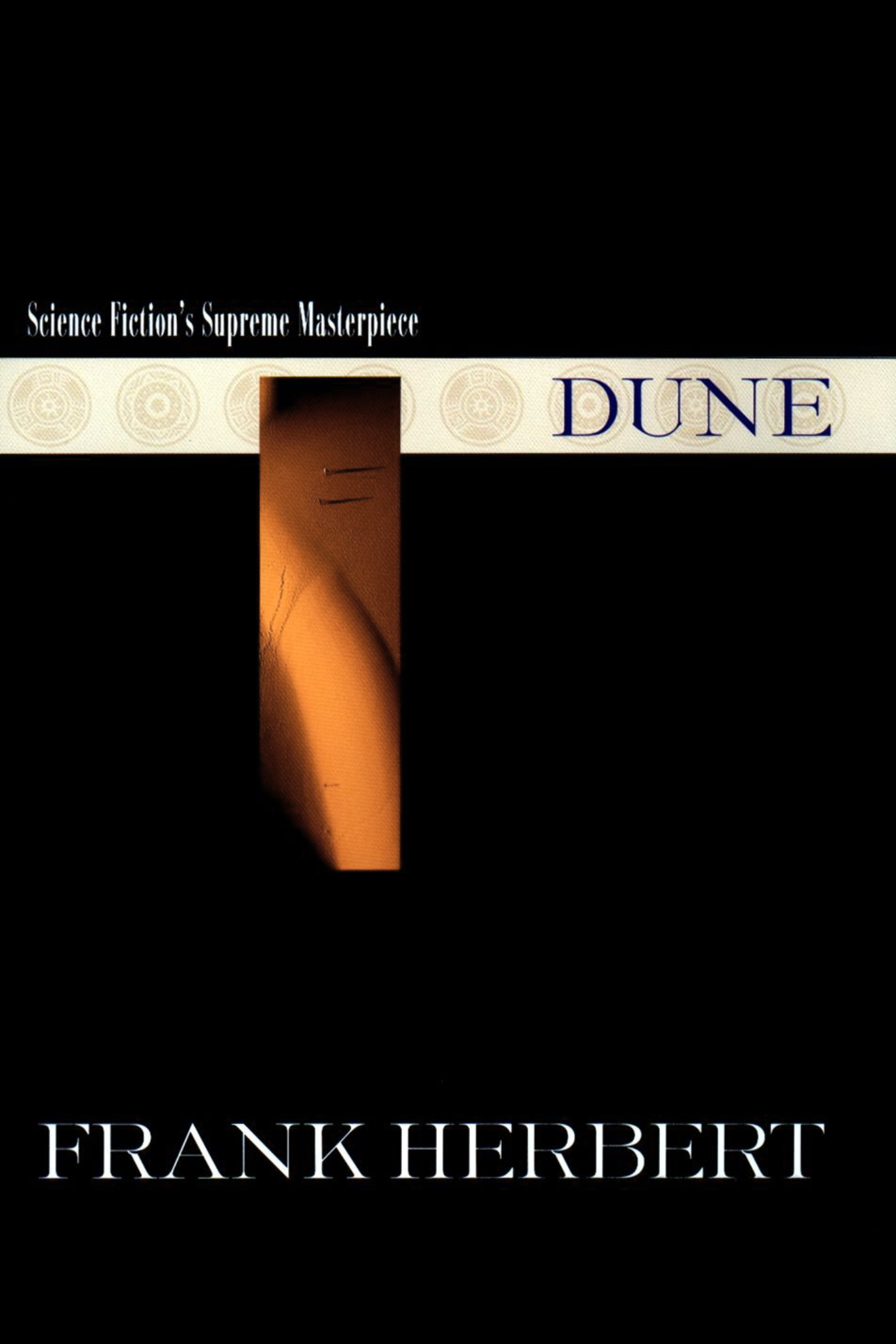
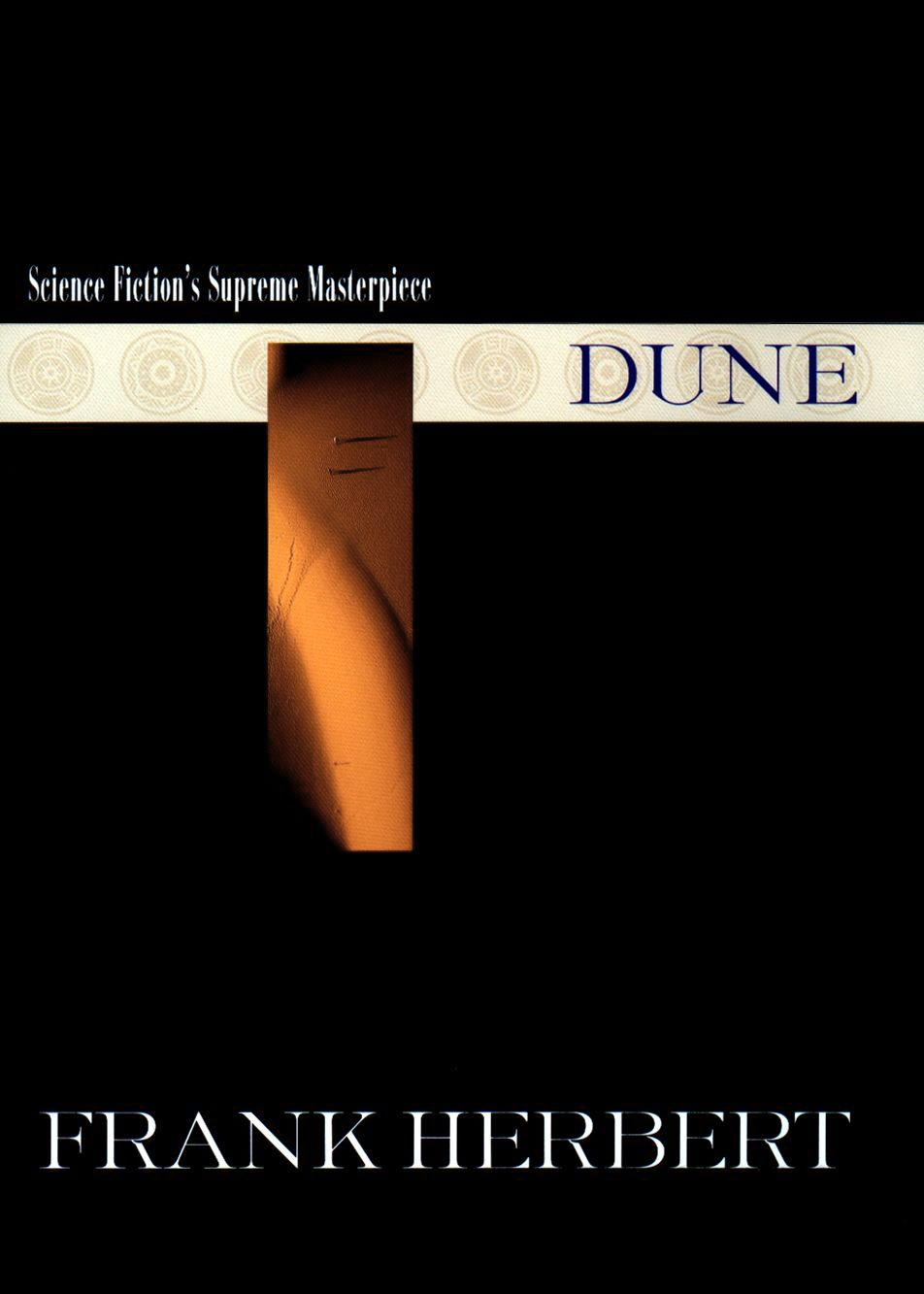
dune by frank herbertReading Frank Herbert’s Dune turned out to be a downright mesmerizing experience. Which was surprising to me because while I have obviously known about the book for ages I always assumed it would be a dry, dense, and difficult read. It turned out to be anything but. I found myself really taken in by Herbert’s prose, which is really stark and straightforward even when the story takes the most psychedelic of turns towards the climax. “Organic,” was the word that kept coming to mind. This story feels like a living, breathing thing in a way precious few others do. It’s no wonder it’s endlessly compared with The Lord of the Rings. It lives in that same mythic mind field.

I genuinely have no idea how so many people consider this a fully stand-alone novel, though, since the ending is so abrupt and honestly quite anticlimactic. Supposedly Herbert decided to write Messiah partly as a response to the public’s reaction to Dune’s themes, but I find it hard to believe that he didn’t have a sequel already in mind. As dense as the novel is, it does feel very much like the first half of a story. (Which is why I got the second book as soon as I finished this one. I look forward to reading it.)

But also, despite all the complex, intricate lore and cachet surrounding this classic of science fiction, at the end of the day, the story’s just a hell of a lot of fun, too. I had a blast reading this. Big worm! Big fan.

FEBRUARY 2024

Hello again here’s what I read in February:

Misery by Stephen King. I spent a lot of January reading about writers and figured I’d continue with that trend. This was as intense as I expected it to be, but also surprisingly psychedelic, which I really dug. A classic for a reason. ⠀

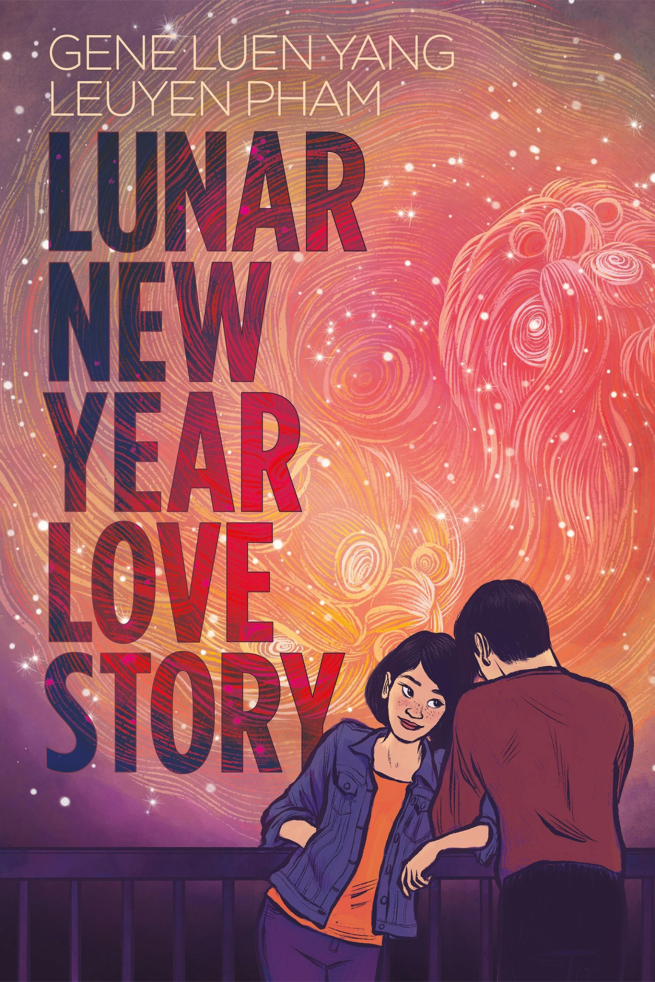
Lunar New Year Love Story by Gene Luen Yang, LeUyen Pham. Yang is one of my favorite authors, so I bought this without even reading the synopsis. I figured the title was fairly clear-cut, so I went in expecting nothing more than a simple, straightforward love story. A rare case of me underestimating one of the most thoughtful and nuanced writers currently working today. This is still very much a love story, to be sure, but it’s also a poignant, melancholy and at times strikingly dark exploration about the relationships we build and the ones we destroy, both romantic and familial. I wasn’t initially impressed with Pham’s artwork, but it ended up growing on me. Her detail work is wonderful and she portrays movement beautifully (traditional lion dancing features heavily in the story and some of the spreads depicting it are jaw-droppingly gorgeous). Wonderful read. ⠀

Artificial Condition by Martha Wells. This is the first book I’ve read so far this year that I didn’t completely love, which says a lot about the kind of reading I’ve been doing lately because this was still a hell of a lot of fun. I just really like Murderbot as a character and enjoy reading about its anxious shenanigans. ⠀

The Princess Bride by William Goldman. Despite the fact that I’ve long said this is my favorite story in the world, this was actually only my second time reading this novel. It’s a perfect book, really, one that hits all my spots: metafictional, whimsical, fantastic, earnest without ever losing its droll, playful edge. ⠀

I also read some short stories. I’m trying to make an effort to read more short stories.

“The Last Serving” by Lincoln Michel. Really enjoyed this Twilight Zone-style tale about what meat consumption could look like in the future. Short and sweet and perfectly morbid. ⠀

“The Krakatoan” by Maria Dahvana Headley. I had only read one other thing by this author (The End of the Sentence, co-written with Kat Howard). While I loved that excellent horror tale, this one just really didn’t do it for me. ⠀

I fell into a slump halfway through the month (which I hauled myself out of by reading Dune of all things), but still a very solid month, I think.

JANUARY 2024

Oh hi hello here’s what I read during the month of January.

Christmas Days by Jeanette Winterson. I observed the Twelve Days of Christmas by reading one story from this for the past, well, twelve days. It’s my first Winterson book, but it certainly won’t be the last, as I just fell absolutely head-over-heels in love with her writing. In this immaculate, gorgeous collection, Winterson runs through the gamut of the Christmas spectrum: from traditional ghost stories to whimsical fables to mawkish, sickly-sweet declarations of love — she writes it all with a poetic aplomb that I found irresistible. This extends even to her cooking instructions. In fact, a lot of the passages that affected me the most came not from the proper fictional stories themselves, but from the lengthy personal anecdotes that preceded the recipes included here (a notion that’s become something of a cultural meme, but in Winterson’s deft hands, it simply becomes another space in which to write another magical thing). Just a stunning, beautiful piece of work that I can easily see myself revisiting each year as part of my own personal Twelvetide tradition.

Bookshops & Bonedust by Travis Baldree. The coziest way to start the new year. Wrote about this here.

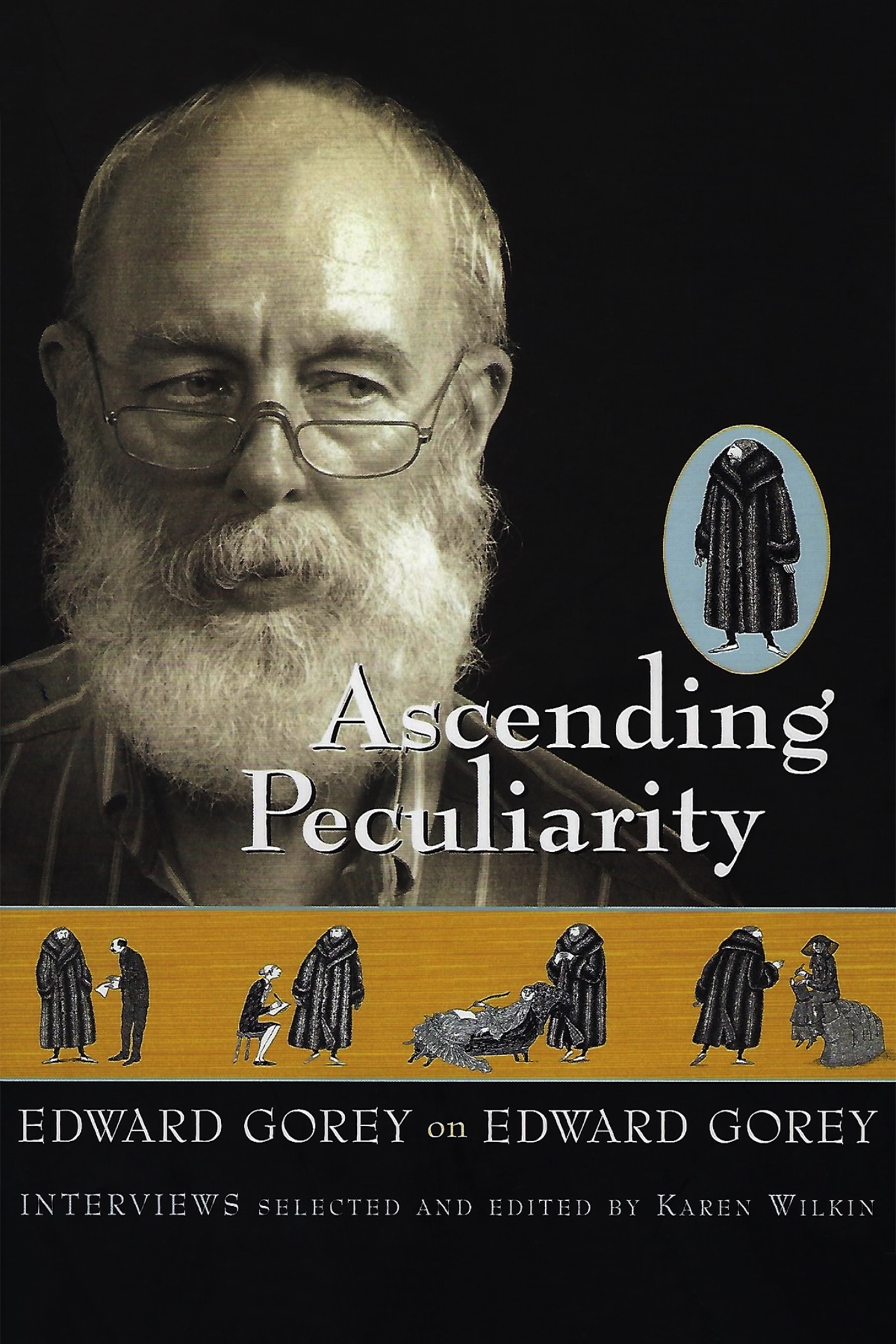
Amphigorey / Ascending Peculiarity by Edward Gorey. Gorey was a wonderful weirdo and I love him. Also wrote about this one.

Daily Rituals: How Artists Work by Mason Currey. I love reading about creative peoples’ creative habits and this was a delightful collection.

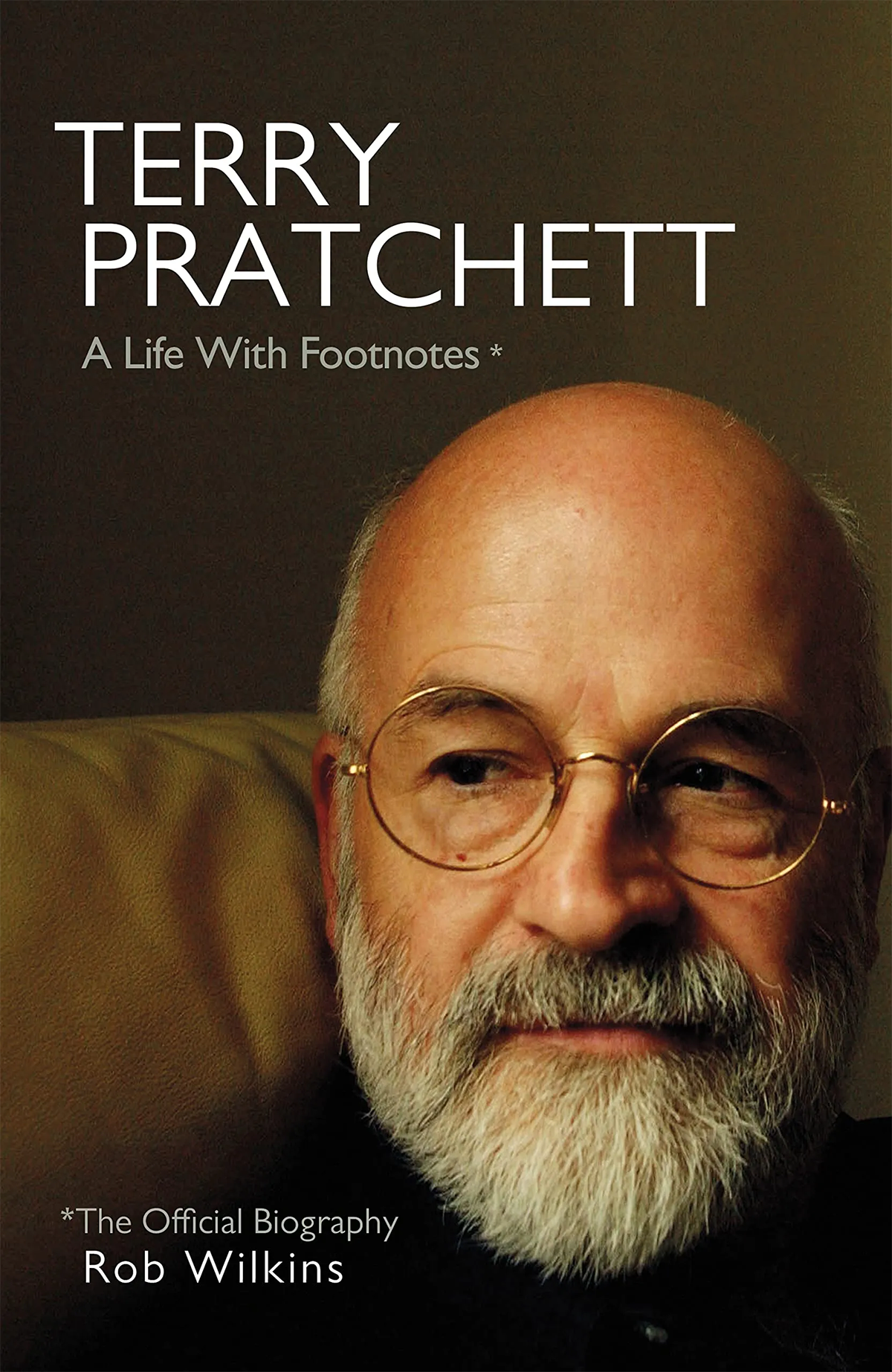
Terry Pratchett: A Life With Footnotes by Rob Wilkins. Already wrote about my experiences with this one. I miss Terry.

The Wee Free Men by Terry Pratchett. Wrote about this too. I really, really miss Terry.

My Father, the Pornographer by Chris Offutt. Heart-wrenching story about fathers and writing and obsession. One of the most fascinating memoirs I’ve ever read.

I also read some short stories:

The Beautiful People” by Robert Bloch I enjoyed mostly because at times it read like a particularly weird episode of Mad Men. An entertaining little shocker of a story, though. Nothing mind-blowing, but Bloch’s writing is effortless, making for the smoothest of reads.

“Selfies” by Lavie Tidhar had a great and creepy concept but was also entirely too short.

And that’s it. This was the best reading month I’ve had since last October. Which is surprising because January is usually a very uneven, slow period for me, characterized by reading slumps and just general exhaustion after the holiday season. But not only did I manage to read quite a bit this time around, I also ended up loving pretty much everything I picked up. It’s a nice change of pace. And a hell of a start to my reading year.

THE WEE FREE MEN by Terry Pratchett

the wee free men by terry pratchettI had to check. The Wee Free Men is the first Terry Pratchett book I’ve picked up in nearly eight years. I honestly couldn’t tell you why it’s been so long, because I adore Pratchett’s writing. Maybe somewhere deep down I feel I should deprive myself of wonderful things. I don’t know. In any case, Rob Wilkins’s wonderful biography shook me out of this foolish reverie, and I can only be grateful, because of course I ended up loving Tiffany Aching’s first outing, in the fiercest of ways.

“Fierce” is the appropriate word. Because while ostensibly a children’s book, Wee Free Men is also a sterling showcase of how Pratchett channeled his famous anger. An anger that stemmed not from malice or pettiness, but from a place of deep empathy. He took note of the myriad of ridiculous ways people could be awful to one another, how easily we can slip into selfish, sinister roles. He witnessed, in short, the injustice of the world, and he raged righteously and furiously against it. Thus: Tiffany Aching, an angry character if there ever was one — and one of the finest protagonists I’ve ever come across.

Like Terry, Tiffany chooses to be pragmatic with her rage. She may come from a small, sometimes infuriatingly closed-minded community, but it is her home. Her parents may not exactly pay much attention to her, but she knows she is cherished and cared for all the same. She has a little brother, who is often as sticky as he is annoying. She’s not entirely sure she loves him, not really, but she figures that doesn’t matter — he is her duty and her responsibility. So when outside forces threaten the safety of these things Tiffany considers her own, well, she just won’t stand for it. She will, indeed, fight back (with the help of some particularly aggressive and devoted blue-skinned pictsies). And it is a glorious and beautiful thing to behold.

The Wee Free Men is a story about family and duty; freedom and rebellion; the magic of the mundane. About how vital and important it is to take care of one another, not just because of sentimental reasons, but simply because that is how the flock carries on, forever and ever, wold without end. It is one of the finest things Pratchett ever wrote.

TERRY PRATCHETT: A LIFE WITH FOOTNOTES by Rob Wilkins

terry pratchett by rob wilkinsI laughed. I cried. I cried while laughing and I laughed while crying. Reading Terry Pratchett: A Life With Footnotes, Rob Wilkins’s biography of his deceased employer slash mentor slash partner was a beautiful emotional journey.

Usually I prefer my biographies to be a bit more impartial towards their subjects. A healthy distance, I find, makes for a clearer, more cohesive profile. Wilkins was literally unable to do that, so instead he delivered a profoundly intimate portrayal of a beloved friend – and the book is all the better for it, which goes to show how much I know.

It is also an exceptionally candid account, which surprised me to no end. These sorts of biographies tend to be written with rose-colored glasses on the author’s face, with the most unpleasant aspects of a person’s life either glossed over or simply not dwelled upon. Wilkins doesn’t shy away from the uncouth, churlish aspects of his relationship with the writer, who could be flighty and temperamental in the best of times, and a cantankerous, capricious bastard at the worst. It’s a refreshingly raw and honest approach, and it makes the more heartfelt, touching moments which abound in this book all the more pointed and impactful.

And it’s a remarkably funny book – as it damn well should be. Terry would be ineffably proud of his personal assistant.

But in the end the best possible thing I could say about this biographical tome is that it made me pick up a Pratchett book immediately after finishing it. Terry’s novels are, after all, small miracles, as Neil Gaiman sagely observed. Rob Wilkins tells us exactly why.

AMPHIGOREY by Edward Gorey

I got the first Amphigorey volume last year after finishing Mark Dery’s biography of Edward Gorey, Born to Be Posthumous. I finally picked it back up almost a full year later, and have been cheerfully reading a book from it every other day.

Until this lovely, lugubrious collection, The Gashlycrumb Tinies was the only proper Gorey book I had ever read. Which is wild even to me, considering how much love I have for the man’s art and style. This veritable beast of a volume boasts books like The Unstrung Harp, The Doubtful Guest, The Object-Lesson, The Willowdale Handcar, and The Westing Wing, however — stories that are regarded among Gorey’s best, so I very much feel as if I dove right into the deep end of bibliography.

The aforementioned books are all brilliant, but it’s The Unstrung Harp that in particular called out to, with its magnificently farcical and melodramatic portrayal of an author’s life. One surprising thing I learned from Dery’s book is that Gorey actually thought of himself foremost as a writer, and then as an artist — a notion that is clearly evident in this story.

It still stands that the man’s art often spoke louder than words, though, so I figured it pertinent to include some of my preferred pieces in this post.

BOOKSHOPS & BONEDUST by Travis Baldree

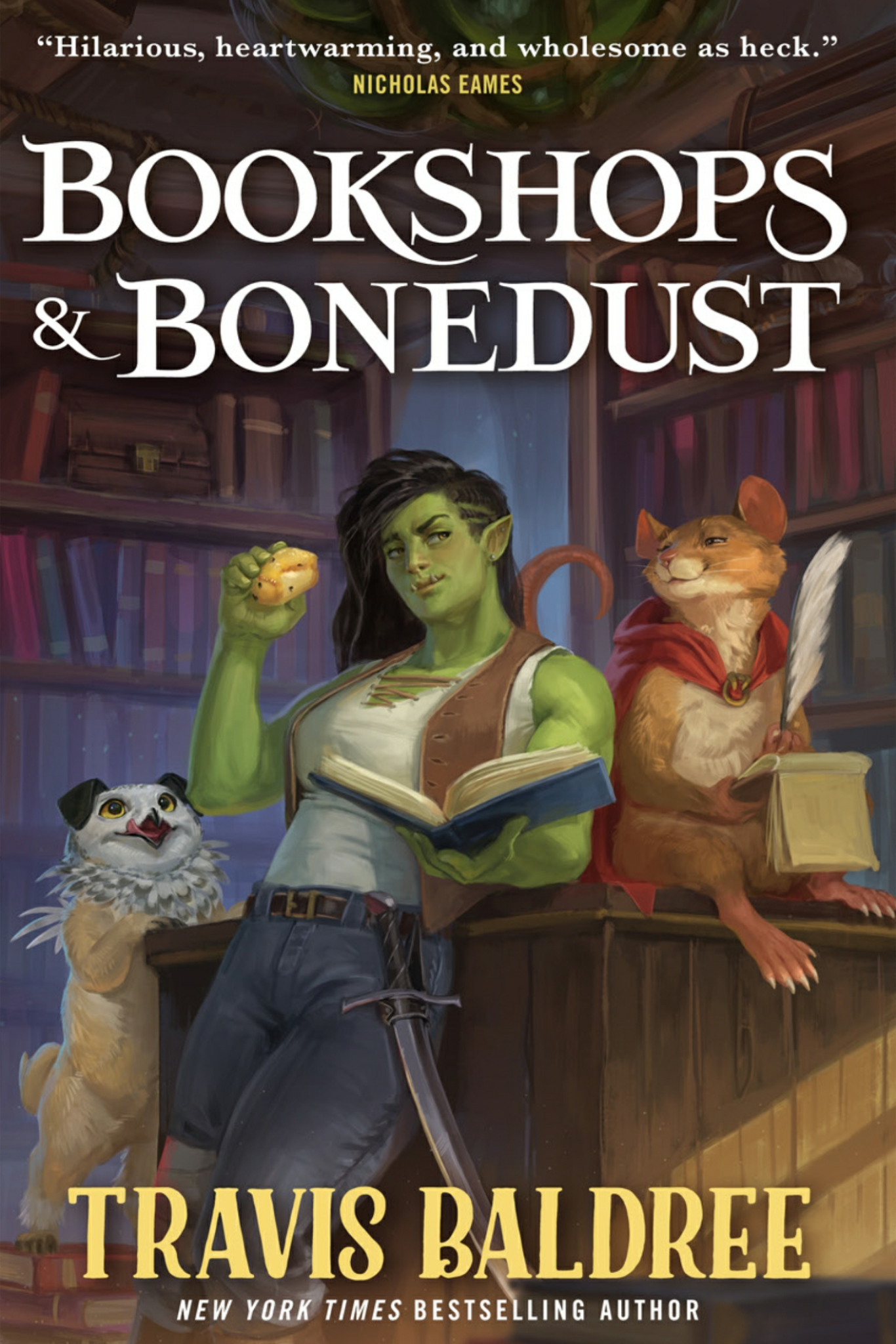
I enjoy books far more than I do coffee, so it’s a bit funny that I liked Bookshops & Bonedust a little less than I did Legends & Lattes. But that’s only because Lattes felt like such a breath of fresh air, whereas Bonedust feels much more familiar. Still welcoming, to be sure, but somewhat less spellbinding.

Even so, I found that this worked well as a companion piece to the first novel, further elaborating on its themes of found families and fresh starts while navigating its own motif established by the book’s epigraph: “Because the right things happen at the wrong time.” In Bonedust we find a Viv that is not only comfortable in her current circumstances, but thriving. Then when something happens which puts that life on hold, she’s understandably despondent. But the incident places her in the appropriate position to reconsider her prospects, and with the help of new companions — new perspectives — Viv begins to realize that her life will probably not always look the same, but that that may not be such a bad thing after all. Could, in fact, one day be desirable. And thus a foundation is laid.

I love the world Travis Baldree has conjured up for this series, but even more so, I love the characters he’s populated it with — these larger than life personalities full of wisdom and warmth. I will gladly revisit any time we are invited back.

A CHRISTMAS CAROL by Charles Dickens

A Christmas Carol is, I think, one of our most human stories. You could take away all its festive fittings and pious peculiarities and it will still remain just as impactful, this story about redemption and restitution. This story that, from the very start, implores us to have empathy for others. This story that practically begs us to not shun away from humanity, lest we lose our own.

People are a cyclical lot. We have a frustrating tendency to forget our lessons and repeat our mistakes. It’s part of why we write stories. To remind ourselves that we can and must be better; that what is lost can be found again; that there is always hope, should we have the courage to change.

Charles Dickens’ ghost story of Christmas is 180 years old, and remains one of our very best, most unequivocal reminders.

Happy holidays, everyone.

BALTIMORE by Mike Mignola, Christopher Golden

The Great War on a cold autumn night.  Captain Henry Baltimore is charged with a suicidal mission: to somehow lead his battalion across the notoriously impassable No man’s land. Indeed, they barely make any headway before being ambushed by the hidden Hessians. Later, Baltimore awakes atop a mountain of his massacred companions, with carrion-scavengers already circling overhead. Baltimore quickly realizes these are no ordinary birds of prey, but monstrous bat-like beings. He manages to wound one of them while trying to escape, but not before the creature mangles one of his legs, breathing into it a pestilent substance that soon renders it useless.

The brief encounter between man and monster ends up changing the course of not only Baltimore’s life, but the world’s. As the war comes to a close, a mysterious plague begins to spread all across Europe, leaving ghost towns in its wake.

It is to one of these ghost towns that Lord Henry Baltimore summons three of his acquaintances. They meet inside a ramshackle inn. The men do not know one another, the absent Baltimore seemingly being the only thread connecting them. While waiting for their associate, and lacking anything better to do in the drab, run-down place, they begin to tell stories, specifically about how they each came to be acquainted with the now nomadic nobleman. Stories that tell of Baltimore’s many losses. Of the man’s belief that he had awakened something sinister and supernatural during the war. Of his slow, painstaking transformation into a cold, ruthless warrior, fighting shadows in plague-ridden places.

And they tell their own stories in turn. Of the odd, ghastly events witnessed over the course of their lives. Of the experiences that led each of them to believe, unequivocally, in Lord Baltimore.

🎃

Well, I enjoyed the hell out of this.

Baltimore, or, The Steadfast Tin Soldier and the Vampire by Mike Mignola and Christopher Golden is one of those stories I tend to think of as “damn good yarns” upon finishing. Written in the same style and spirit of the Victorian era literature that has shaped and influenced much of Mignola’s work, Baltimore is a baroque, thoroughly Gothic tale that revels in its ornate, ostentatious nature. Like many of its purple predecessors, it exudes atmosphere in abundance, and, as a reader for whom this quality often reigns supreme, this book managed to hit all the right spots for me.

As the lengthy alternate title suggests, Baltimore is a re-imagining of “The Steadfast Tin Soldier” fairy tale by Hans Christian Andersen. Mignola and co-author Christopher Golden wisely preserve that story’s melancholic poignancy, making it the beating heart of their own tin soldier, while at the same time decking the rest of the story out in somber, funereal vestments. Instead of paper ballerinas, there is a dead spouse. And instead of a goblin jack-in-the-box, there are vampires.

Ironically, it’s those two elements that end up slightly hindering the book. Baltimore is very much a boy’s tale, with women featured in only the most peripheral of ways. It would have benefitted the story to give at least Elowen, Baltimore’s wife, an expanded role, considering she is his primary motivation. Instead, much like the ballerina in the original tale, her characterization is mostly paper-thin.

As for the vampires, I just found the lore around them muddled and lacking. You get the sense that Golden and Mignola wanted to go the Our Vampires are Different route, which is commendable, but given that most of this book — from the themes to the style in which it is written — adheres fairly strictly to traditional approach, makes this a somewhat odd choice.

But the appeal for me ultimately lies in the storytelling, at which this book spectacularly succeeds. Most of Baltimore is told as a nested narrative, courtesy of our three protagonists, who pass the time by telling stories, with each tale showcasing just how memorable and varied weird fiction can be. The story within a story is a device I particularly love, so of course this was the aspect of the book I enjoyed the most.

Nearly all of the pages boast woodcut-like illustrations, drawn by Mignola in his distinctive, striking style. They’re a little plain, but Mignola’s art has had a huge influence on me over the years, so it’s always a joy to see.

A damn good yarn, indeed.

HIDE AND DON’T SEEK by Anica Mrose Rissi

Publisher’s summary: A game of hide-and-seek goes on far too long…

A look-alike doll makes itself right at home…

A school talent-show act leaves the audience aghast…

And a summer at camp takes a turn for the braaaains…

This collection of all-new spooky stories is sure to keep readers up past their bedtimes, looking over their shoulders to see what goes bump in the night.

So if you’re feeling brave, turn the page.

🎃

Children’s horror stories have long been some of my favorite things to read. I have the utmost respect for the genre, knowing full well the extraordinary exploits and fearless feats particularly adroit authors can pull off within it. Trusting their tenacious, indefatigable audience, these are books that often go places those written for older audiences seldom dream of going. 

And yet, knowing all this, I still somehow end up underestimating them. A force of habit stemming, I’m sure, from the fact that for so much of my childhood my only contact with the genre was with the sundry of spooky kid shows that were so prevalent in the nineties. As excellent and formative as some of these programs were, they tended, as a necessity, to leave a lot to the imagination — to suggest rather than show. I suppose that’s what I’ve subconsciously come to expect from any middle grade horror affair now: sinister shadows and understated, unsettling scenarios. And then I read about a girl getting her eyes pecked out by a sadistic crow.

Which is exactly the sort of wake-up call you find in Anica Mrose Rissi’s Hide and Don’t Seek, a collection in the same vein as Scary Stories to Tell in the Dark, where, in lieu of character growth and empathetic engagement, we get a series of shuddersome setpieces sure to mess with even the most morbid of middle school minds. It’s a very, very effective selection and I enjoyed it a great deal. Rissi’s writing is sharp, shrewd, and succinct — perfectly suited for flash fiction of the creepy persuasion. I also appreciated how often Rissi played with form, with a handful of stories written in various styles and structures, from a series of letters to text messages to an entire story written like a playscript. It’s all very fun and whimsical.

Highlights: 

  • “Beatrice,” a truly unsettling creepy doll story.
  • “Truly Delicious,” a camp story written as a series of letters home from a young boy — which turns out to be an affecting way to tell a zombie story.
  • “The Girl and the Crow,” where the aforementioned eye scream event takes place.
  •  “Two Wishes,” a delightfully morbid Twilight Zone-like tale, complete with cruel twist ending.

The stories are accompanied by eerie and atmospheric illustrations by artist Carolina T. Modina, and they help a lot in terms of mood-setting. In some instances the drawing is considerably creepier than the story itself, even.

All in all, a great collection to pick up on this Hallowe’en season.