
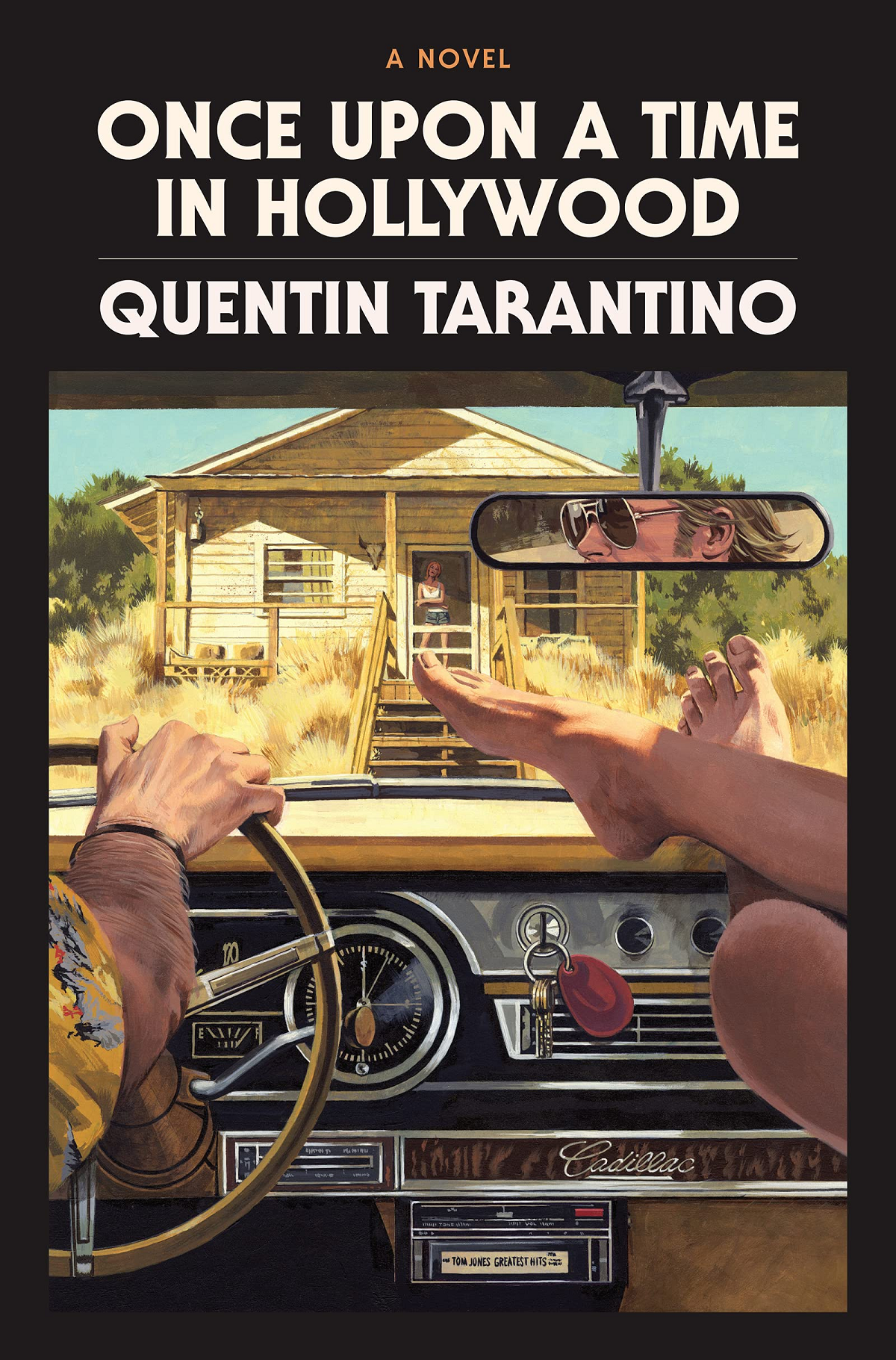
 I’m a pretty big Tarantino fan. Because of his dialogue, sure, but mostly because of his world building. His movies are full of artifice and painted with thick layers of Hollywood gloss, but they also, somehow, feel real. At least in the sense that you feel as if the story keeps going, long after the film reel runs out. Like the world of the story is so much bigger than the cinematic frame.⠀
⠀
It’s a conceit that is on full display in the Once Upon a Time in Hollywood novel, which turns out to be less of a novelization of the film than it is a considerable expansion of its world and story. ⠀
⠀
Hollywood is, fiery finale notwithstanding, probably Tarantino’s most laid-back film — essentially a day in the life of a handful of larger than life personas. The novel dials up this aspect considerably, omitting the more lurid aspects of the film in favor of a more down-to-earth, behind-the-scenes look at a version of Hollywood that the author/director grew up adoring and idealizing. ⠀
⠀
Which also means that this is a self-indulgent kind of book. It is full of tangents and asides, mostly focusing on the film industry, that vary between the insightful and the tedious. It is oddly repetitive, with previous passages being reiterated, almost word-for-word, several chapters later. There are also scenes that serve no real purpose other than to be provocative, and that’s a Tarantino schtick that was already old about four or five films ago.⠀
⠀
But Tarantino’s dialogue is still just as sparkling in prose form. And the aforementioned world-building is as staggering in scope as it is clever and creative. I dug this a hell of a lot.
 ricardo reading