
Hello. This was May. A criminal month.




The Human Bullet by Benjamin Percy. Genuinely, my only gripe is that I wish it had been a longer story. The premise is phenomenal (man wakes up from a coma after being shot in the head, dreaming all the while of a vastly different life—his reality, consequently, blurs), but Percy’s pitch-perfect pulp prose is pretty much the star of the show. This was just fantastic. I enjoyed it so much that I immediately went searching for anything else Percy has written. (Turns out I had already read something of his before, and I just didn’t remember: the Black Box arc of Dynamite’s James Bond comic, which I also quite enjoyed.)
American Criminal by Benjamin Percy. Percy is two for two. This was brilliant. A story about a heist artist who rips off other heist artists that reads like a modernized, infinitely more personable version of Richard Stark’s Parker character. I dug every single page of it. Percy is two for two, and he might just be a new favorite author.
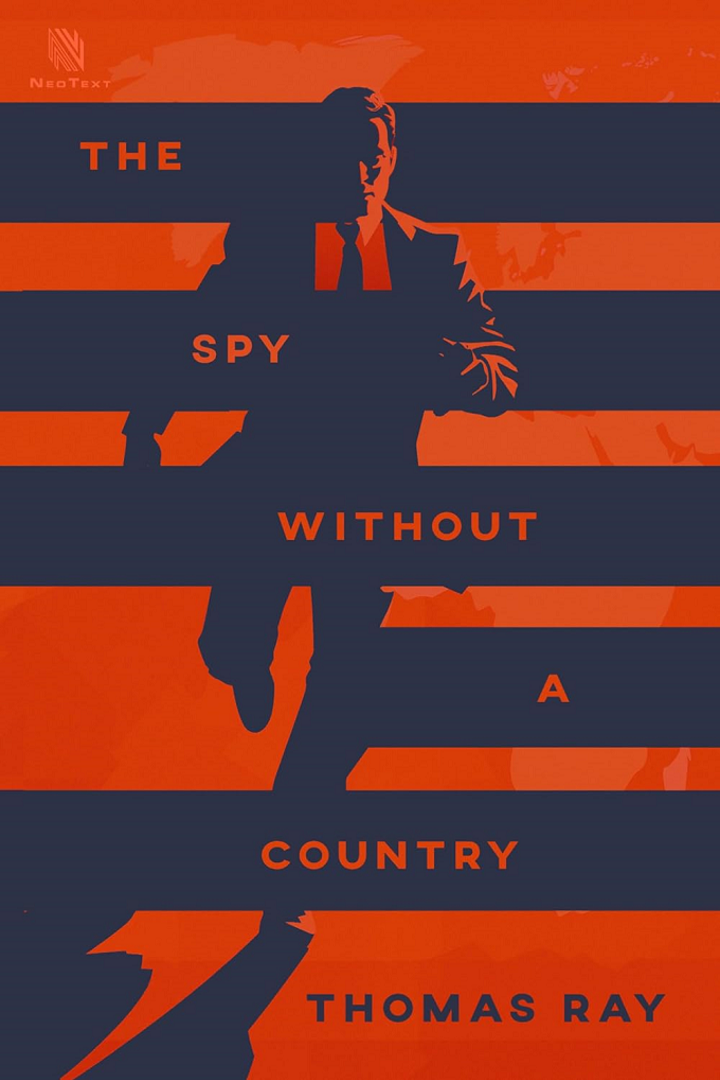
The Spy Without a Country by Thomas Ray. A US intelligence officer wakes up in the middle of a car wreck full of dead bodies with no memory of how he got there. Reasoning that his cover has been blown, he opts to come in from the cold—only to find that his handlers and fellow agents have no idea who he is. This is Black Mirror meets The Bourne Identity, and I was absolutely into it. Outlandish, to be sure, but made palatable thanks to Ray’s stark, straightforward style. It does get a little repetitive, though—particularly at the halfway mark, which is inherently circuitous—but overall, a very solid, sly spy story.
Heat 2 by Michael Mann, Meg Gardiner. Promptly going to shove this book into the hands of anyone and everyone who says novels can’t be as visceral, heart-pounding, and immediate as the best of thrillers. There are sequences here (multiple!) that rival scenes from the original classic film. I literally had to put it down a couple of times (multiple!) just to catch my bearings. What a ride. And what an inadvertent homage to Val Kilmer. His portrayal of Shiherlis was instantly iconic, and the character is considerably fleshed out and humanized in this epic novel.
Also, Michael Mann’s directorial style is so distinctive and visual that you wouldn’t expect it to translate well into prose—but I’ll be damned if he and Gardiner didn’t pull it off. Heat 2 is stylish as hell. It just exudes cool.
I know a film adaptation is inevitable—and I am certainly interested in seeing how that pans out—but what a brilliant move to do this story as a novel first. There’s so much going on here—enough to fuel multiple movies, let alone one. A wonderful, relentless beast of a novel. I loved the hell out of this.
Y2K: How the 2000s Became Everything (Essays on the Future That Never Was) by Colette Shade. I watched the original Bourne trilogy for the first time recently and found it to be such a perfect portrayal of a particular point in time that it sent me down a serious rabbit hole of early-aughts nostalgia—in particular, the aesthetics of the era. This, in turn, led me to learn about this recently released collection of essays. So, I had to get it. Obviously.
Of course, this turned out to be less about the visuals and vibes of a bygone era and more about the cultural anxieties and preoccupations of the time—and it is so much better for it. While I initially went into it for the nostalgia (and, to be perfectly fair, there is plenty of it here), I came to appreciate Shade’s surprisingly nuanced observations on many of the political choices and social mores of the era that would, eventually and inevitably, come to shape our modern Western malaise. (Spoiler alert: it was mostly capitalism’s fault.)
Obviously, though, this couldn’t truly be a work about the Millennial condition without some cringe involved. Shade comes from a relatively privileged background (her upbringing was solidly middle class, and she was gifted Nokia stock to help pay for college), and some of her takes can read, at best, a little naive, and at worst, entitled.
Shade demonstrates enough self-awareness to acknowledge her oversights, and they’re never severe enough to undermine her core argument, which is, essentially: our generation was promised a vibrant, flourishing future—and it was denied to us. Shade distills the shared anger and resentment stemming from that betrayal into a potent, poignant, and exceptionally readable volume.
I can’t really listen to music while I’m working my way through a book, but whenever I wasn’t reading, I was playing TLC’s “No Scrubs” and Moby’s “Porcelain” on a loop, pretty much. Seemed like the appropriate thing to do.
“The Havana Run” by Ace Atkins. I wanted a short story with summery, Caribbean vibes to close out the month, and this seemed to fit the bill. It had a solid premise—two down-on-their-luck former journalists take on a job retrieving some valuables from Cuba, only to find themselves caught in a criminal web of conspiracy and deceit—but I found the execution a bit lacking. It’s a light crime caper, but it never quite struck the right balance between humor and intensity. Still, Atkins’s writing is lively and sleek, and it kept the story moving along at a modest clip.
And those were the month’s misdeeds.
BOOKS BOUGHT—A THEME EMERGES SOMEWHAT:
- American Criminal by Benjamin Percy
- North Border by Benjamin Percy
- Bystanders by Benjamin Percy
- High by Adam Roberts
- Stealing for the Sky by Adam Roberts
- The Spy Without a Country by Thomas Ray
- Monk and Robot by Becky Chambers
- Slayground by Richard Stark
- The Talented Mr. Ripley by Patricia Highsmith
- The Bourne Identity by Robert Ludlum
- Y2K: How the 2000s Became Everything (Essays on the Future That Never Was) by Colette Shade
 ricardo reading