
Hello. This was October.


“Universal Horror” by Stephen Graham Jones. A fun, quick read with a lot of eerie, urban legend vibes. I was into it. Again, I really need to read more SGJ. Perhaps a novel, even! One of these days perhaps!
Up to No Ghoul by Cullen Bunn, Cat Farris. It’s been a few years since I read the first book in this series and, to be perfectly honest, I had forgotten most of the particulars. I do remember really enjoying it, though—especially the art. I had much the same experience with this sanguinary sequel. Bunn’s writing is always effortlessly creepy and cozy, and Farris continues to impress with her dynamic imagery—her splash pages, in particular, are always spectacular. Charming, whimsical, and wonderfully illustrated. Delightful stuff.
“Ghostmakers” by Warren Ellis. More of a flash-fiction piece, really, Ellis excels at those. This was rad and fascinating and I wish it were a more proper, fleshed-out short story.
Classic Monsters Unleashed edited by James Aquilone. The only book I read from my admittedly overly ambitious TBR for this Halloween season. I may not have felt up to tackling big books this year, but I still very much wanted to read some short stories throughout the month. This turned out to be a really fun collection, and I was thrilled to see that many of the featured authors absolutely understood the assignment. There were some duds, of course, but that’s just the nature of anthologies. Mostly, though, it’s chock-full of very clever, captivating, and surprisingly subversive takes on the famous and familiar fictional fiends. Favorites: “They Call Me Mother” by Geneve Flynn, “Dreams” by F. Paul Wilson, “Blood Hunt” by Owl Goingback, “The Viscount and the Phantom” by Lucy A. Snyder, “Modern Monsters” by Monique Snyman, “Beautiful Monster” by JG Faherty, “The Nightbird” by Michael Knost, “Moonlight Serenade” by Gaby Triana, “Dead Lions” by Richard Christian Matheson, “Hacking the Horseman’s Code” by Lisa Morton, and “You Can Have the Ground, My Love” by Carlie St. George, “God of the Razor” by Joe R. Lansdale.
The Girl Who Cried Monster by R.L. Stine. My Goosebumps book for this season! It was okay! It’s a Goosebumps book! It does have one of my all-time favorite twists in the series, I think. Just delightfully schlocky. I usually watch the corresponding episode of the TV show, but I simply forgot this time around. I’ve seen it before, of course, and I remember thinking it was one of the better episodes—mostly due to some excellent make-up effects.
Bent Heavens by Daniel Kraus. A brutal and truly terrifying story about how far people will go to demonize what they don’t understand. This may ostensibly be a young adult novel, but some scenes are so relentless in their intensity that they disturbed me far more than much of the mature horror I’ve read over the years. This went nowhere I expected it and it’s all the better for it.
Birthday Party Demon by Wendy Dalrymple. Read this while at my nephew’s second birthday party, natch. I needed a palate cleanser after the intensity of Bent Heavens. A fun and harmless riff on the style of young adult horror that dominated the nineties. I enjoyed all the aesthetics and some of the genuinely unsettling scenarios. I also liked the inclusion—modest as it may be—of queer elements, something that certainly wouldn’t have been an explicit thing back in the nineties. And although Dalrymple wears her influences on the sleeves of her dELiA*s henley top, I was still surprised by the twist ending.
Scarewaves by Trevor Henderson. This was a blast. The Scary Stories to Tell in the Dark influence is palpable, and this reads like a slightly more focused take on that kind of collection of creepy tales. I do wish the connective throughline had been introduced earlier in the book, though—it would have gone a long way toward making it feel like a far more concrete and cohesive story, and less like an arbitrary assortment of spooky scenarios (fun as they are). That said, the true star here is Henderson’s artwork, which, as anyone who has followed his invariably viral online creations would expect, is delightfully unhinged.
“The McAlister Family Halloween Special” by Cameron Chaney. Super fun, super short story. Chaney is great at cozy-yet-consummately creepy horror. Great stuff.
“The Emissary” by Ray Bradbury. I’ve never really gelled with Bradbury’s style. It’s full of a certain grandiloquence and sentimentality that I mostly find superficial rather than sincere—which is tragic, because I know Bradbury is one of the most earnest writers of the twentieth century, but what can I tell you. So I was very much ready to shrug this story off—at least, until that rug-pull of an ending kind of blew me away. Deliciously creepy, but also very sweet in a macabre sort of way? I loved it, and sadly, I can’t say that about most of the Bradbury stories I’ve read.
Pumpkinheads by Rainbow Rowell, Faith Erin Hicks. Tradition dictates.
And that was Halloween. A lot more subdued than previous years, to be sure, but I’m still glad I managed to read a decent amount of scary stories, despite the darkness.
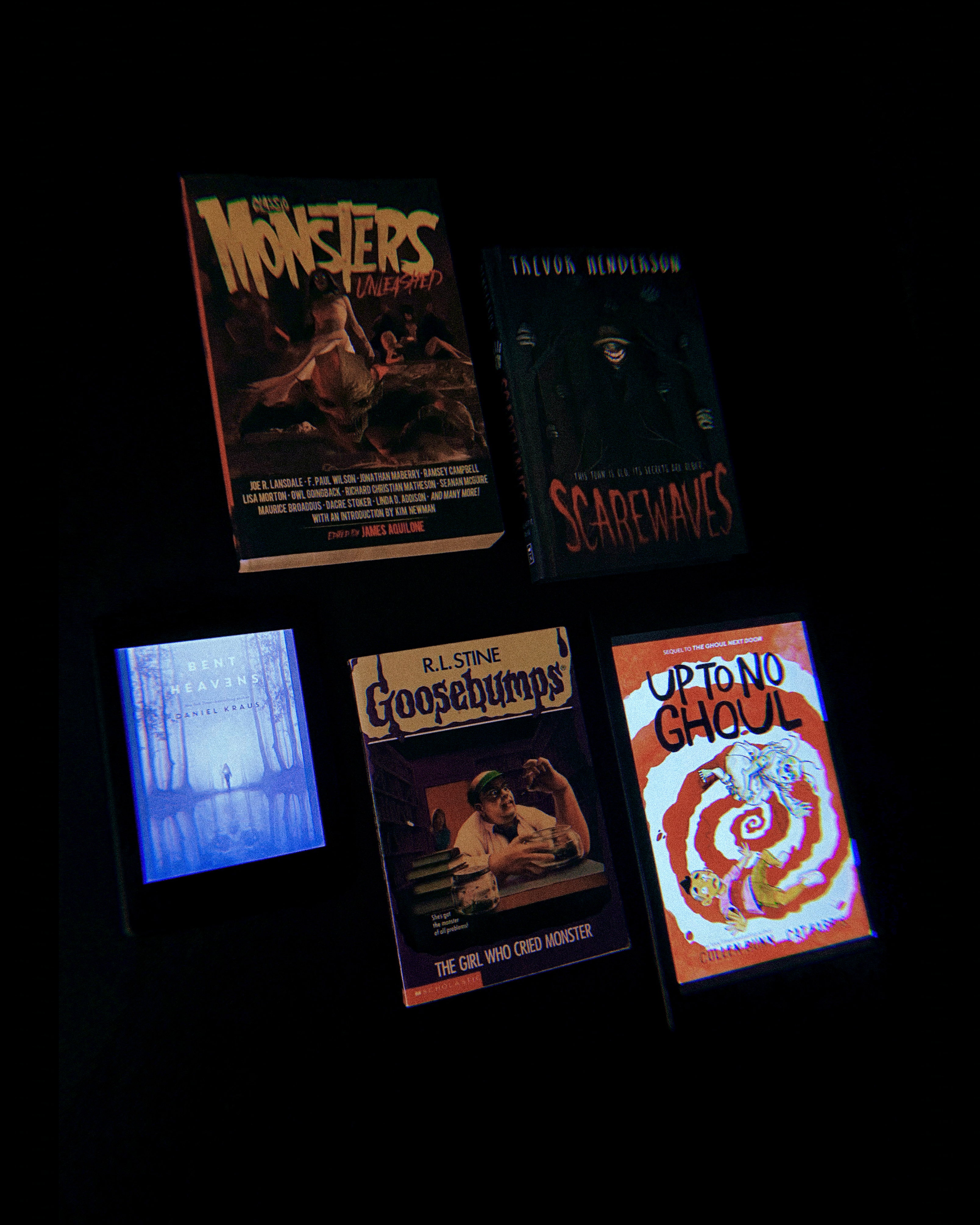
BOOKS BOUGHT—A MYSTIFYING MELANGE:
- Gates of Fire by Steven Pressfield
- American Psycho by Bret Easton Ellis
- A Grief Observed by C.S. Lewis
- Letters from a Stoic by Seneca
- Lincoln in the Bardo by George Saunders
- Scarewaves by Trevor Henderson
- The Rose Field by Philip Pullman
- The Haunted Looking Glass edited by Edward Gorey
- Helloween by Duncan Ralston





 ricardo reading