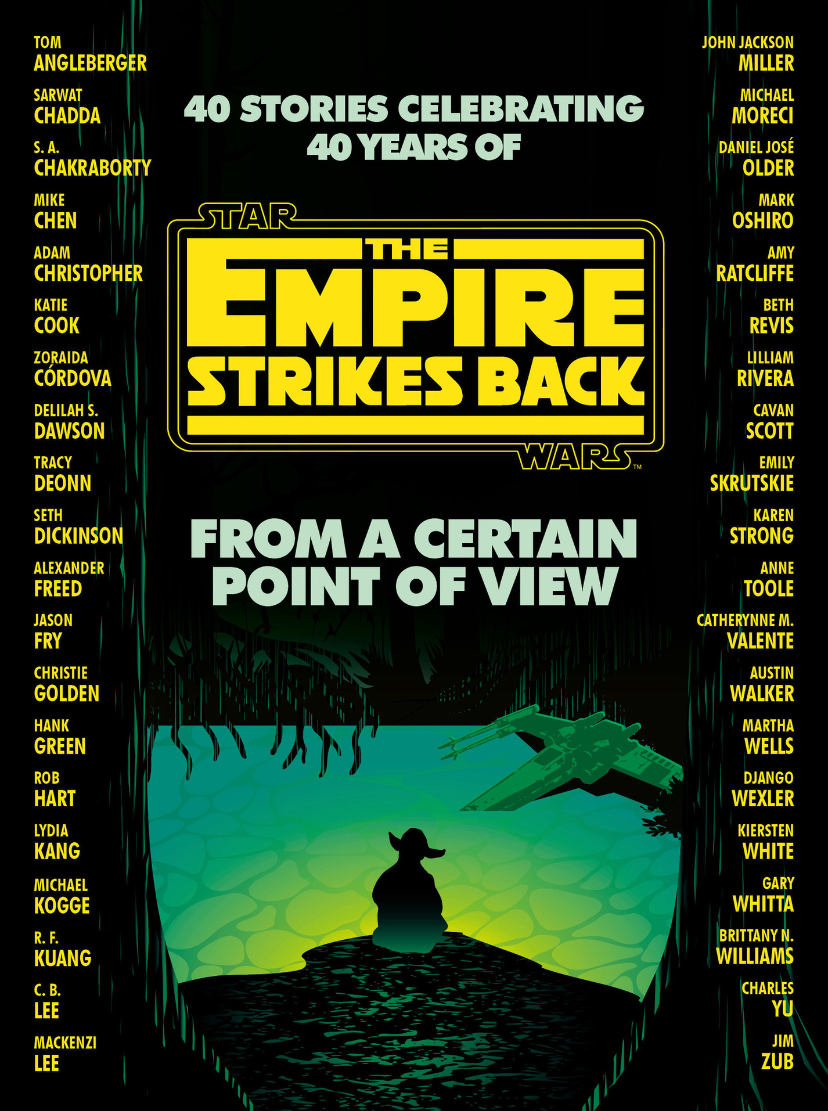
FROM A CERTAIN POINT OF VIEW: THE EMPIRE STRIKES BACK by Various

from-a-certain-point-of-view---the-empire-strikes-back-by-variousThe first volume of From a Certain Point of View was a surprise to be sure, but a welcome one. The Force Awakens had, well, awakened a long-dormant excitement for Star Wars within, pushing me down a nostalgic-tinged rabbit hole that led me to things like Star Wars Rebels (which still stands as my favorite piece of new SW media) and, eventually, inevitably, to the books. Up to that point in the aftermath of the Disney acquisition most of the stories had to do, naturally, with the new sequel trilogy of films, broadening the narrative and developing certain key characters. Occasionally some of the books dropped dealt with characters and events from bygone eras, but for the most part the expanded universe focused on the current. And then From a Certain Point of View suddenly arrived, an anthology featuring a wide array of writers telling the stories of dozens of peripheral characters from the film that started it all. It’s an idea that perfectly embodies this franchise’s most charming, playful notion: that everyone has a tale that needs to be told; that everyone has an important role to play in this far-away galaxy.

I ate it all up. The collection somehow managed to satisfy my nostalgic yen while also injecting some much needed, much welcomed fresh ideas to this familiar universe: from boasting a more diverse cast of characters (people of color! a touch of queer representation!) to playing with styles and genres. There was a lot of emphasis on lighthearted humor, of course, but a lot of the stories also packed quite the emotional punch. It was a wild ride, and definitely one of my favorite reads the year it came out. It made me hope they would continue with the concept, giving the rest of the films the same treatment. And so when this volume telling the story of The Empire Strikes Back was announced I was nothing if not thrilled.

Which just makes it all the more the shame that From a Certain Point of View: The Empire Strikes Back mostly disappointed me. It still boasts a broad battalion of authors — many of whom have written works I’ve enjoyed in the past — who do an admirable job with the material given while also continuing to ramp up the diversity aspect established in the first volume. Really, the ingredients that made me love the previous collection are all here, it’s just that, somehow, the recipe doesn’t particularly work with the story Empire ultimately told.

It makes sense. The first film introduced us to a vast cast of characters, giving the stories a wider area in which to play and let loose. In contrast, Empire’s story is smaller in scale and much more personal, concentrating less on the galaxy at large and more on the trials and tribulations of our protagonists. This leaves the authors of this collection to either focus on a scattering of minor characters or create new ones whole cloth. In any other context this would be a freeing conceit; here, though, it just ends up making the collection feel helter-skelter. Add to that the fact that quite a few of the stories are irreverent in nature, focusing on the humorous, slightly ridiculous side of the saga, eschewing the poignancy found in much of the first volume in favor of knowing winks at the audience. And while you will never find me stating that camp has no place in the Star Wars universe (it’s been there from the start, etched into its genetic makeup), I do think that, much like with the Force, there needs to be a balance.

In the spirit of said balance, I want to make note of the stories that did end up leaving a big impression on me, of which there were a handful:

Django Wexler’s “Amara Kel’s Rules for TIE Pilot Survival (Probably)” and Mackenzi Lee’s “There Is Always Another” feature the sort of clever cheek that does work for me, where humor is used to ground all these fanciful figures. The opening line in Lee’s story in particular will stand as one of the funniest in all of Star Wars.

I had hoped that dying would be enough to untangle me from the Skywalker’s family issues.

— Obi-Wan Kenobi’s Force ghost in “There Is Always Another” by Mackenzi Lee

Jim Zub’s “The First Lesson” and Lydia Kang’s “Right-Hand Man” in contrast, delve deep into the pathos of some of these mythical characters, and they were the stories I feel actually added some more substance to the story being told in the film. ⠀

And finally, Austin Walker’s “No Time for Poetry” and Alexander Freed’s “The Man Who Built Cloud City” both tell the type of story I currently enjoy the most in this universe, narratives which — much like my other two favorites, The Mandalorian and Rebels — manage to perfectly blend that mix of earnestness and enthusiasm that made Star Wars so damn precious and exceptional in the first place.

Perhaps it’s not the end at all. Perhaps it’s merely the darkest moment of a triumphant tale — when all is presumed lost, so that victory can be sweeter.

— Yathros Condorius in “The Man Who Built Cloud City” by Alexander Freed

I’ve mentioned it before but it bears repeating: disappointment is as much an integral part of being a Star Wars fan as the feeling of delight. And if there is anything to living in this post-Disney supersaturated world is that, for the foreseeable future at least, we can be certain there will soon be something else to anticipate, anyway.

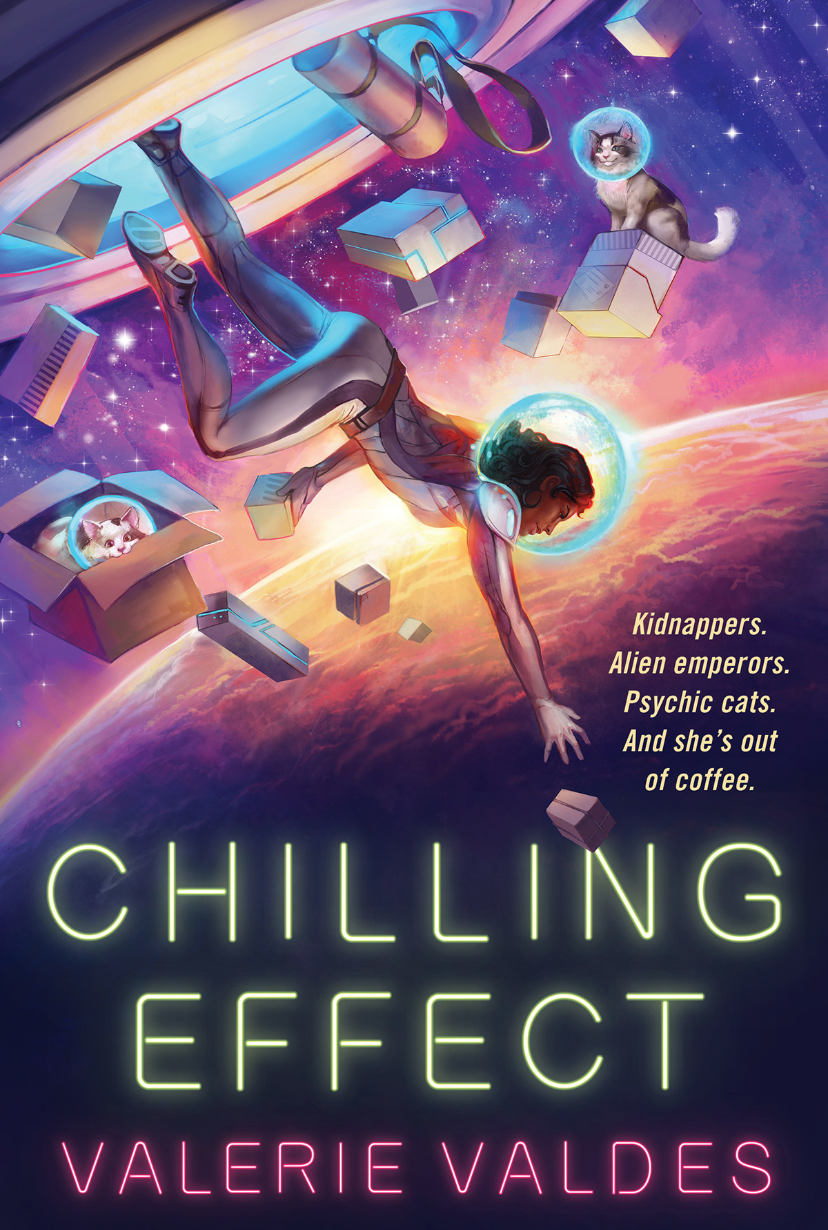
CHILLING EFFECT by Valerie Valdes

chilling-effect-by-valerie-valderEva-Benita Caridad Larsen y Coipel de Innocente — Eva, for short — captain of La Sirena Negra, is tired. She’s led a rough life, one riddled with tragedies and mistakes that she would soon like to forget. She’s doing a decent job at it, too, with having cut ties with most of her family and concentrating on growing her mostly legal shipping business. Helping her in this endeavor is a capable, crackpot crew that is beginning to feel like a sort of family. She’s even considering starting a new relationship. Eva Innocente’s past seems to be staying well behind her, where it belongs.⠀

Right up until it catches back up with her in the form of the shadowy, mob-like organization known as The Fridge, who Eva learns are holding her younger sister, Mari, captive. With the threat of harm coming to her sister lest she comply, the captain of La Sirena Negra is coerced into doing increasingly dangerous and bizarre tasks for the secretive faction, all while trying to keep her close-knit crew in the dark as to the origins of these odd jobs, a deceit that soon begins to unravel, bringing back all the tension and drama Eva has tried so hard to evade all these years.⠀

○○○⠀

What you definitely won’t get from that synopsis though is just how funny and irreverent Chilling Effect, the debut novel from Valerie Valdes, actually is. The book starts out fun and light, a tone that, thanks to characters who are instantly compelling, it manages to keep even as the tension and melodrama ramps up like a proper telenovela. Like many science fiction romps, Chilling Effect deals with a diverse, ragtag group of people traveling the universe and getting into trouble — a classic, well-established trope present in many personal favorites such as Cowboy Bebop, Firefly, and most recently Becky Chambers’ excellent Wayfarers series, to which, at least in the beginning, my brain kept comparing this novel to — you might say this novel is the delightfully vulgar, foul-mouthed cousin.⠀

Which brings me to the dialogue, an area in which Valdes excels. Main character Eva’s rhetoric in particular was a stand-out for me, packed as it is with shrewd Spanglish witticisms that I couldn’t help but appreciate: there are particular phrases (and insults and profanities) that I have never come across in a work of fiction before. It made me feel seen in a way I did not expect. It was great.⠀

The first half of the novel is episodic in nature, which is another aspect of the plucky crew trope that I highly enjoy. Unfortunately though as the vignettes gradually connected with the overarching storyline, the picaresque plot began to feel repetitive and drawn out, and it made the last half of the book a bit of a slog to get through.⠀

Ultimately it was the characters and the clever, sharp writing that compelled me to finish the space opera telenovela, and I wouldn’t mind traveling the galaxy and getting into trouble with these bunch of misfits again.

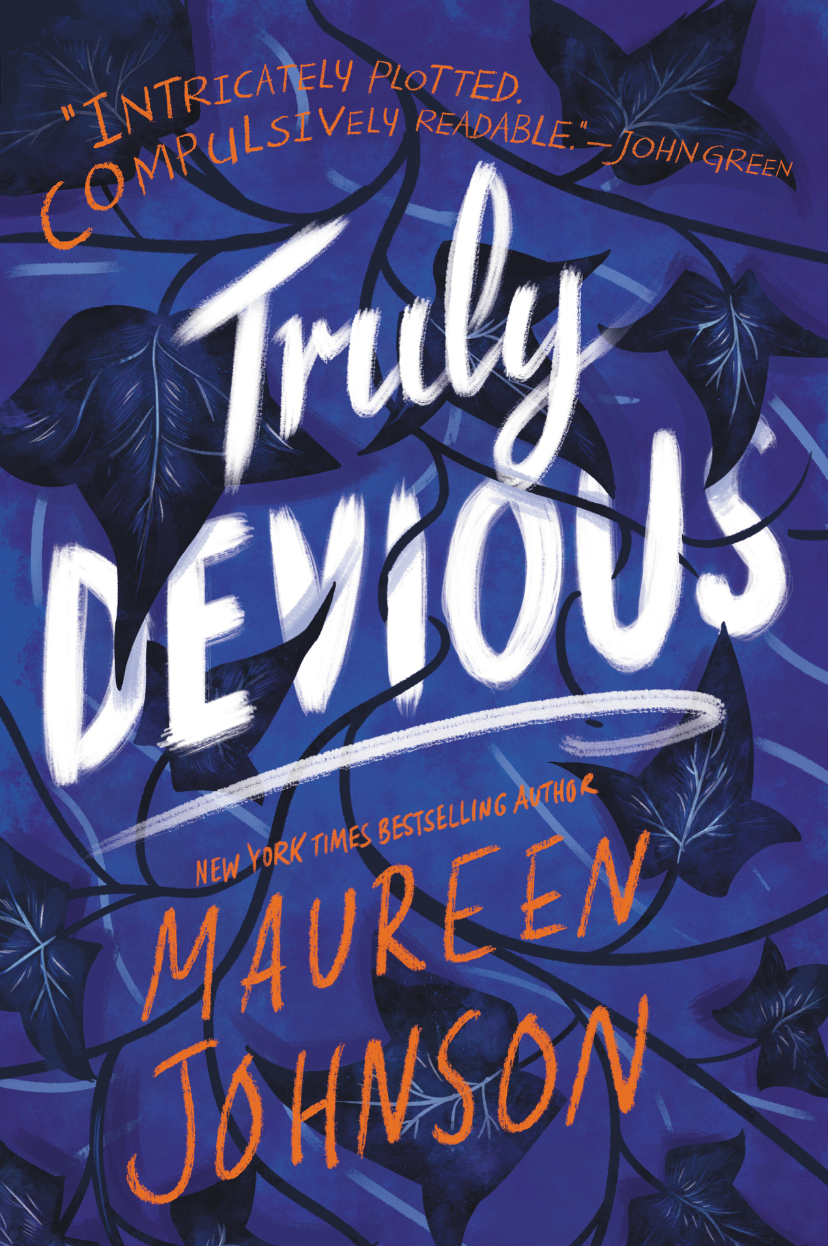
TRULY DEVIOUS by Maureen Johnson

truly-devious-by-maureen-johnsonStephanie “Stevie” Bell leads a life of crime — studying every aspect of it, at any rate. Most of her free time is spent reading old case reports or listening to true crime podcasts. She wants nothing more in life than to find a body in the library.⠀

She writes as much in her application letter to the Ellingham Academy, a boarding school that focuses on unorthodox learning, basing itself on its founder’s philosophy of play as the best method for gaining knowledge. The grounds also happen to be the site of a particularly heinous crime committed back in the early days of the institute that was never suitably, satisfyingly solved. It’s a cold case Stevie has long been obsessed with and is certain she can crack.⠀

She is soon admitted into Ellingham, but before she even gets close to thawing the famous case, however, she gets her primary wish granted when she stumbles upon the body of a fellow schoolmate. The victim appears to have been murdered in a theatrical fashion not that dissimilar to the ones carried out all those years ago in the school by someone calling themselves Truly Devious, and this — along with other ominous coincidences — leads Stevie to believe the incidents are somehow connected, and that there is still much of the old mystery to uncover.

Maureen Johnson’s Truly Devious is a riveting, utterly captivating read. A curious and effective mix between a classic Agatha Christie-style mystery and the more modern trend of true crime accounts — podcasts, in specific. Indeed, much of this book reads like a podcast transcript, which does a lot to help ground the story.⠀

A foundation that is much needed given the fact that Johnson populates the story with a cast of truly eccentric characters — think a Poirot mystery but with the residents of Stars Hollow running around. Curiously it’s the characters that prove to be both the book’s strength and weakness. One the one hand, the cast is wonderfully diverse, and Johnson has done an admirable job in terms of representation (cute queer representation! realistic portrayals of mental health issues!); on the other hand, they all have somewhat flat, one-note personalities: they are introduced at a certain level, dynamically speaking, and they rarely waver from it moving forward. In any other case these sort of hollow personalities would have been detrimental to the story, but Johnson writes such funny, witty dialogue for them (she essentially turns them into walking memes) that I can forgive it here. Murder mysteries are not traditionally known for fully-drawn, well-developed characters, at any rate; they deal with more flamboyant figures, the better to contrast with macabre misdeeds.⠀

But my favorite aspect of this novel is definitely the recounting of the Ellingham case, a narrative that is immediately arresting. Alternating between the chapters set in the modern day, the events are laid out through various forms: from website articles, to interview transcripts, to what seem to be passages of a nonfiction book (perhaps Stevie’s own report of the matter — the novel never explicitly states who is writing these). Johnson shows a deep understanding of the true crime genre with these entries, and they add an authentic air to the entire affair.⠀

Truly Devious is the first book in a series, naturally, and while I have had a hard time getting into sequels lately, I’ll be damned if this didn’t make me want to immediately pick up the next one.

HALLOWE’EN SEASON 2020

October is my best reading month. I’m a very seasonal, themed-oriented reader, and Hallowe’en, more than any other holiday, lends itself to these qualities pretty perfectly. I cut loose and read books that are a bit more fun than my usual fare, which makes it really easy to pick up book after book after book, something that I definitely don’t do in any other month of the year.

This particular Hallowe’en, however, felt a little off. It was to be expected considering, well, everything, but I guess I was just confident the holiday would lift my spirits up — it did during the harrowing aftermath of Hurricane María, after all. But as tragic as that event was, this pandemic is obviously so much worse and I foolishly ended up underestimating just how much it would affect my mood.

Add to that the fact that I decided to go all in on my bookstragram for Hallowe’en, wanting to put out pictures and reviews on a more or less consistent manner throughout the month. I succeeded, too, and I’m happy and proud I did it, but it was draining, and that sucked a bit of the fun out of it a bit.

I still ended up having a tremendous amount of fun, though, and I read a lot of damn fine books. I’m sad to see the spooky season go, but we all know that 𝖍𝖆𝖑𝖑𝖔𝖜𝖊’𝖊𝖓 𝖎𝖘 𝖊𝖙𝖊𝖗𝖓𝖆𝖑 anyway.


30 pumpkinheadsPUMPKINHEADS by Rainbow Rowell, Faith Erin Hicks

I first read this graphic novel by Rainbow Rowell and Faith Erin Hicks when it came out last year. It didn’t take much for me to love it. So much so that I decided I would start a new tradition of reading it at the beginning of every October from then on. Because while the month to me mostly means spooky, atmospheric books and vibes, it also means fresher, gentler nights spent in warm nooks and beds. I want to start the month with something just as cozy and pleasant, and you’ll not find a more comfortable, delightful — more autumnal — book than Pumpkinheads. ⠀

I loved it just as much this time around. That’s usually the case with stories written by Rainbow Rowell. She writes charismatic, immediately lovable characters, and Josie and Deja, our titular pumpkinheads, are some of her most charming yet. I really fell for them both, and I finish this story always wanting to know more about them. I want to read about their past pumpkin patch adventures just as much as I want to read about whatever future they have. I want to know what they’re up to. ⠀

Faith Erin Hicks’ art I’ve long been a fan of, and she brought her A game to this graphic novel. I love the world she’s drawn up here, which feels just as lush and warm and inviting as it did on my first visit. And colorist Sarah Stern (whom I failed to mention in my first review) has, in the opinion of this tropical, Caribbean boy, created the quintessential fall palette. This book is now pretty much what I picture whenever I think of the season. ⠀

Pumpkinheads, for me, acts as the perfect bright, light entrée before the headier, spookier course lined up for the rest of the month.
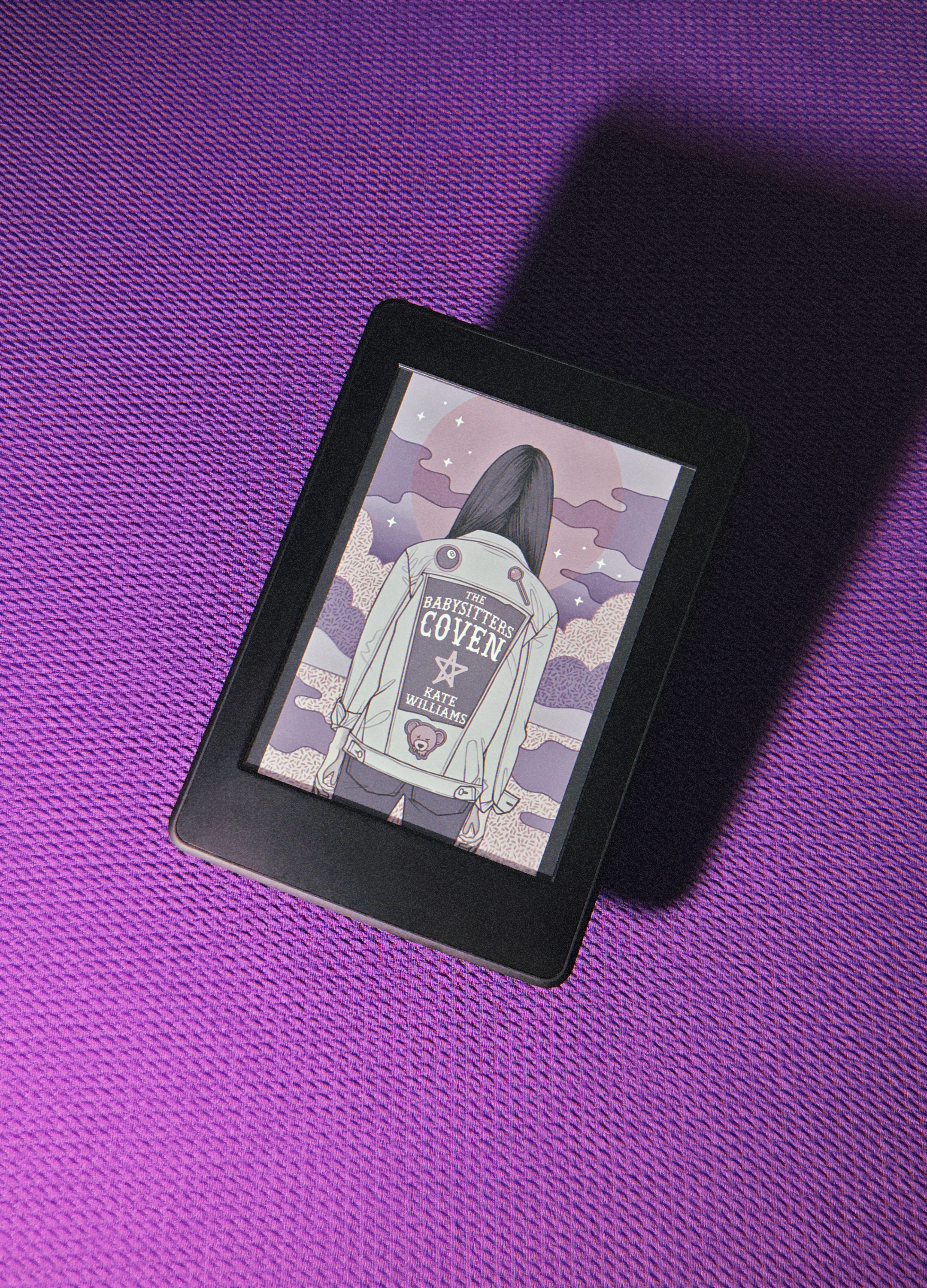

31 the babysitters covenTHE BABYSITTERS COVEN by Kate Williams

The Babysitters Coven didn’t do it for me at all.⠀

A shame, really. The novel has a promising premise (The Baby-Sitters Club meets Buffy the Vampire Slayer) and a strong, genuinely unsettling opening chapter. I was fully on board with it. But it unfortunately turned out not to be as fun as any of its initial inspirations, and any tension and mood set by the beginning quickly dissipates as the story turns from what seemed to be the start of a supernatural thriller into a prosaic high school pariah account. What little energy it regains as it slogs through the first act is again stopped dead in its tracks halfway through by an infodump sequence so egregious that it almost made me drop the book entirely.⠀

It’s a story that wears its influences on its flowy, Stevie Nicks sleeves, too, something that, when done well, I tend to appreciate. Here, though, these inspirations only act as reminders to the reader that there are better stories out there, so why aren’t you enjoying them instead?⠀

It’s also, bizarrely, not remotely as witchy as the title and the excellent cover make it out to be? I think there are only two mentions of witches and covens in the whole thing? The characters are more Eleven from Stranger Things and Charlie from Firestarter than they are the badass weirdos of The Craft, which is sort of what’s promised? Where was thy witchy goodness, book???


32 devolutionDEVOLUTION by Max Brooks

Reading Devolution by Max Brooks turned out to be a pretty physical activity for me. At numerous points I would put my Kindle down to pace relentlessly around the room for a while before picking it up again. At others I would alternate between tossing and turning in bed and just straight up yelling at the book. I read it in two days, finishing it with a seven-hour spree, and it kept me, quite literally, on the edge of my seat (or mattress, rather) the entire time. ⠀

It was downright exhausting. And also a hell of a lot of fun.

The colony of Greenloop is a modern marvel. Situated between the Cascades in Washington, this eco-community boasts all the comforts of modern city living in the midst of all the rugged beauty of the wilderness. Each dwelling is a smart house, powered by sunlight and biogas. If there are technical issues, a signal is sent to a nearby town where technicians and specialists will go up in self-driving vans to do any repairing. High-speed internet is, of course, readily available, and the residents can simply telecommute to work. Supplies and groceries are delivered weekly by drones. It is, by all accounts, a techno-utopia. A proverbial paradise.

Until nearby Mt. Rainier erupts, and while the compound is far enough away from the volcano to be safe from the initial blast, volcanic mudflow soon blocks the roads, while ash and debris interrupt any internet access and mobile reception. The remote, isolated Greenloop community is cut off from the world, and its residents — affluent urbanites for the most part — find themselves wholly unprepared for the events that follow. They have only a week’s worth of groceries, no tools, no survival skills of which to speak, and winter is fast approaching… bringing with it inconceivable primal terror.

Devolution is truly a wild, tense ride. In the vein of Jurassic Park, it’s a bloody — often gory — cautionary tale of human hubris. Of what happens when we convince ourselves we are masters of nature. Of the dangers of relying too much on the comforts of technology.⠀

As in Brooks’ previous novel, World War Z, much of the horror comes not from the monster but from the notion of just how easily the systems that we depend on can simply just… fail. Not just automated, mechanized systems, either, but social structures as well. Civilizations, Brooks’ novels remind us, can crumble just as easily as computers. A prospect more terrifying than any monstrous creature.⠀

Which isn’t to take away the spotlight from this book’s Sasquatch star. Bigfoot is properly terrifying here, and I appreciate how much effort and attention Brooks devoted to portraying it like an actual animal rather than some uncanny supernatural being. Any time you can inject some semblance of reality into your horror story will always make it that much more striking, and a creature that’s after you because it’s hungry rather than for any deliberately malevolent purpose… well, that just triggers some of our base, primal fears, from the time before we developed enough brains to fool ourselves into thinking that we somehow, through sheer will and determination, broke away from the food chain.⠀

I had a great time with this book. And it definitely cements Max Brooks as one of my favorite writers.
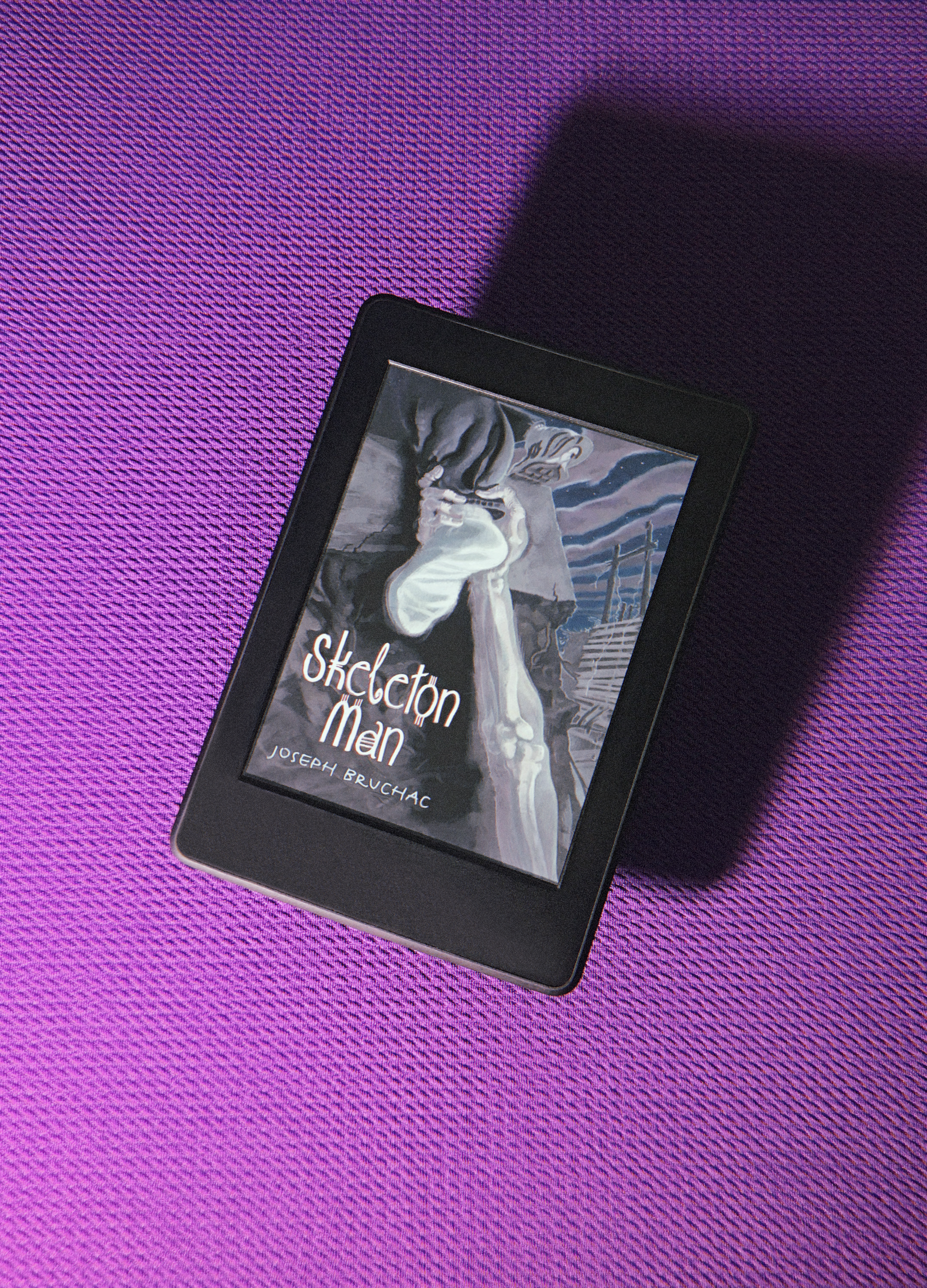

33 skeleton manSKELETON MAN by Joseph Bruchac

Joseph Bruchac is an honest-to-goodness storyteller. Not just in the sense that he is a prolific author, but that he still participates in the storied tradition of actually getting up in front of people and telling tales.⠀

Prolific as he is, I only found out about him earlier this year, listening to an interview with Adam Gidwitz wherein he sang the praises of Bruchac (they co-wrote a book in the Unicorn Rescue Society series). I immediately looked him up and the first thing I found was an old video of him telling a story of “The Skeleton Man,” about a man so lazy that, instead of going out hunting for food with the rest of his tribe, he cooks and eats his own flesh instead, until he is nothing more than a skeleton. Still hungry, the Skeleton Man proceeds to eats the rest of his family as they return, until one of his nieces, with the help of some wildlife, stops him for good.⠀

It’s a deliciously macabre story, and one that Bruchac tells with enthusiasm and delight to a crowd of mostly kids, who react with shock and glee in equal measure. I was captivated, watching this man telling this old Native American tale to a similarly captivated young crowd. I looked up his works soon after and was thrilled to find that he had written a full book based on this same Mohawk fable.⠀

A modern retelling of the story, Skeleton Man follows Molly, a young girl who, after the mysterious disappearance of her parents, is forced into the care of an uncle she never even knew she had. The uncle keeps her locked in the room of his decrepit house, letting her out only for school and to eat, which he is particularly insistent she does. She soon realizes that her “uncle” may not be entirely human but an otherworldly being with sinister intentions.⠀

I enjoyed reading this short novel as much as I enjoyed Bruchac’s telling of the original story (which you should definitely look up). This contemporary rendition reads like a refined R.L. Stine, in the sense that, while ostensibly written for a young audience, it never talks down to them, and certainly does not shy away from the shuddersome aspects of this spooky tale.

Skeleton Man is also a celebration of the strength of women, in particular Native American women. Bruchac dedicates this book to “all the young women who have yet to discover the courage that lives in their hearts,” and then, in the acknowledgements, he goes on to note just how deeply and how often strong women feature in traditional American Indian stories, a sharp contrast to the more commonly patriarchal European fairy tales.⠀

Bearing that in mind, and the fact that I read this on Indigenous Peoples’ Day, I feel it’s important to recognize the current epidemic of missing and murdered Indigenous women presently plaguing North America. I include some pertinent links, and encourage you all to read up on this tragedy and to please consider donating to relevant charities.


34 clown in a cornfieldCLOWN IN A CORNFIELD by Adam Cesare

In the aftermath of her mother’s death, teenager Quinn Maybrook and her father are looking for a fresh start. They decide that moving from Philadelphia to the rural town of Kettle Springs, Missouri might just be exactly what they need. Instead of finding peace and quiet, however, they encounter a town brimming with tension between the older and younger generations, each side blaming the other for the community’s recent misfortunes. A conflict comes to a head during a high school party, where someone dressed as the town’s mascot — a forlorn looking clown — drops by for a homicidal visit. What follows is a confrontation between the cynical-yet-idealistic adolescents of the town and this sinister symbol of stagnant traditions — a fight that will not only determine their own survival but that of Kettle Springs itself. ⠀

Adam Cesare knew exactly what he was doing when he called this Clown in a Cornfield. It’s as evocative a title as you can get. So much so that you don’t even have to mention the book’s genre; our reptilian brain simply knows.⠀

HarperTeen knew exactly what they were doing, too, when they tapped artist Matt Ryan Tobin for the cover art, which, down to the color scheme and font, evokes everything from Zebra imprint’s line of horror in the seventies; to the Point Horror series in the nineties; up to more recent properties like Stranger Things. Mainly, though, it brings to mind the work of Stephen King — it’s a horror book about a killer clown, after all. The expectations have been set. You know exactly what you are getting into.⠀

Except you don’t. Not quite. You do get a consummately creepy novel about a clown on a killing spree, to be sure — and it succeeds at being an excellent one at that — but you also get a story that features sharp social commentary that is all too relevant in our current landscape. That it manages to do so without feeling heavy-handed, and without letting it get in the way of, well, all the gory fun, speaks volumes of Cesare’s deft writing. This is a quick read, fun and riotous on the surface, with a lot more beneath if you care to look. Bodies in the basement, as it were.⠀

It’s a story that’s dressed up in classic horror garb: from the setup to the premise to its euphoric exploration — and subsequent subversion — of established tropes. It’s all meant to feel familiar. What sets it apart, though, is that beneath that vintage veneer lies a thoroughly modern narrative about prejudice and hate; generational conflict and social strife. All the tensions of present-day dramas — which Clown in a Cornfield cuts right through, purposefully and methodically, with a circular saw.
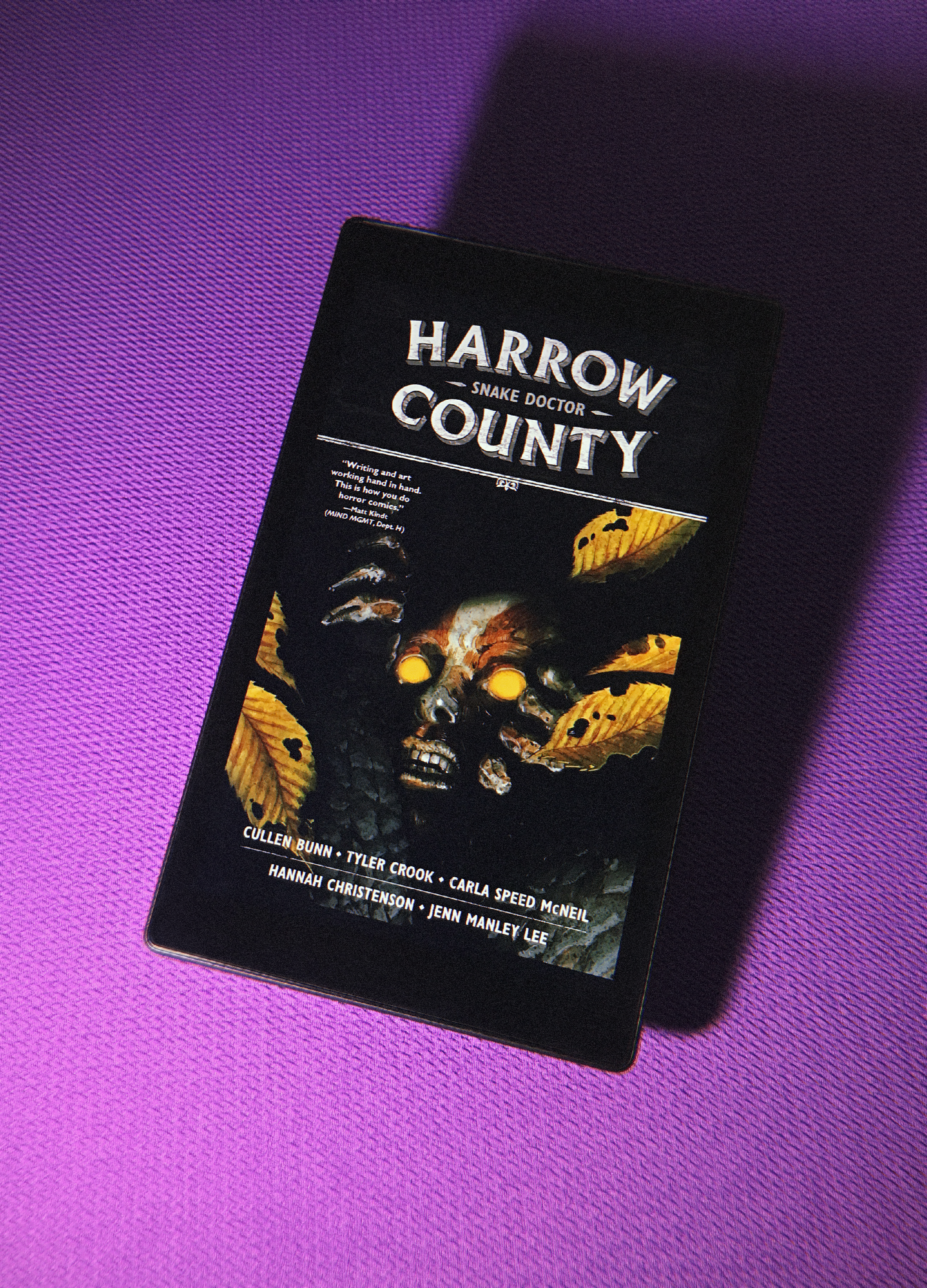

35 harrow county vol 3 snake doctorHARROW COUNTY VOL. 3: SNAKE DOCTOR by Cullen Bunn, Tyler Crook, Various

Harrow County by writer Cullen Bunn and artist Tyler Crook follows Emmy Crawford, a humble young woman who finds out she is the reincarnation of an infamous witch who was executed by the residents of Harrow after letting loose countless uncanny creatures — called haints — that went on to wreak havoc on the province. Feeling shunned from her peers, who fear retribution, she concentrates her efforts on demonstrating just how different she is from her past wicked aspect. The series progresses more or less with a monster-of-the-month format that is interspersed with a higher, more elaborate arc regarding Emmy’s power and identity. ⠀

I read the first two volumes of this series a couple of years ago for the Hallowe’en season and enjoyed them quite a bit. I failed to keep up with the comic, though, which meant that when I picked this ensuing volume I had a little trouble recalling what the actual story was about. But it’s a testament to Bunn’s writing that I felt caught up relatively quickly, pertinent details gleaned through context and dialogue. It helped, too, that this third volume (titled Snake Doctor) consisted mostly of standalone stories, with more of a focus on the secondary characters (the ghastly-but-sweet Skinless Boy, a haint and Emmy’s familiar, who gets an origin story of sorts here; and Bernice, her beleaguered best friend, who seems to be getting a larger story of her own in her dedicated issue). I had no problem getting invested once more in the characters and enjoying this set of issues.⠀

Harrow County is a gorgeous comic, with art and writing that is decidedly, deliciously lush (Crook handles the bulk of the art, but this volume also features the work of guest artists Carla Speed McNeil and Hannah Christenson who do a great job of shaking things up, visually speaking) and a tone that’s as ominous as it is welcoming (which I attribute to dialogue that just drips with congenial Southern charm). I hope to pick up the remaining volumes of the series soon, as it exudes a most appropriate atmosphere for the spooky season.
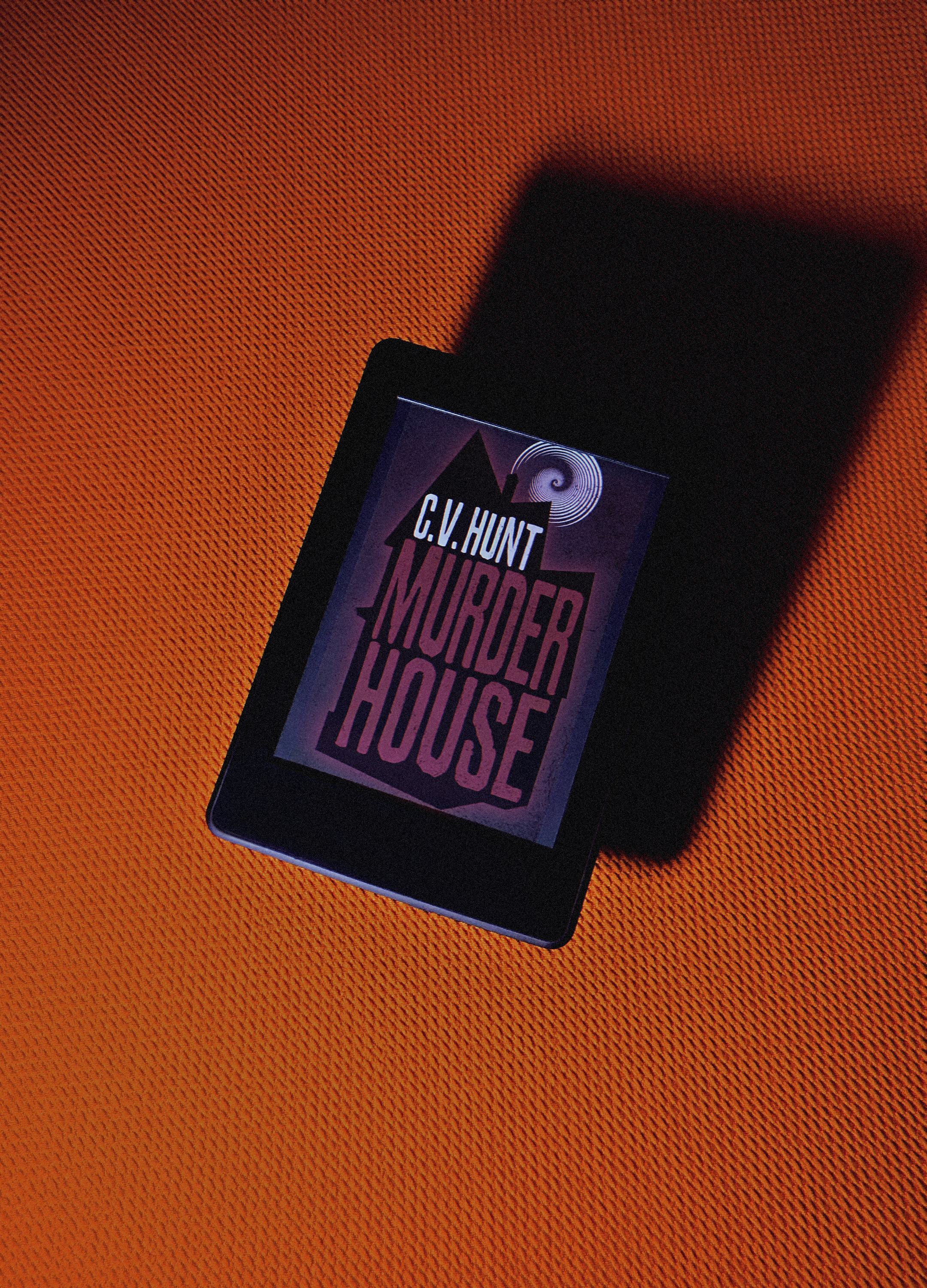

36 murder houseMURDER HOUSE by C.V. Hunt

C.V. Hunt writes a kind of horror I don’t typically go for. I tend to prefer scary stories that focus on atmosphere and carry more of a mischievous sense of playfulness. Hunt’s tales lean decidedly into the dark and gritty end of the spooky spectrum, featuring troubled, wretched characters who have been already put through the wringer of life before the horror that is to befall them even knocks on their door, as it were. Bleak stories about bleak people that, more often than not, end in a bleak manner. There’s a certain mindset I have to be in in order to properly appreciate this kind of fiction.

A mindset I must have been in when I read this slim novella recently because, while certainly dark and despondent, I found myself thoroughly compelled by it.⠀

Murder House follows Laura and her partner Brent as they move into a run-down house in a run-down part of Detroit. The building was the infamous scene of a particularly grisly set of murders about which Brent, a down-on-his-luck writer, is doing a book. Struggling financially, Brent convinced his publisher to let them live rent-free in the dilapidated digs during the writing process. Laura’s not too thrilled about the arrangement: for one thing their relationship is not at its healthiest point (to put it mildly) and she’s not certain it can survive the stress of maintaining a wreck; for another, the place itself just fills her with dread. She tries to be a supportive partner, regardless, but the inherent creepiness of the house soon begins to get to her. It eventually gets to Brent as well, and their already turbulent life threatens to veer entirely off the rails.⠀

I really admire how Hunt works with the haunted house aspect of the story. One of the primary plot points has to do with Laura having to stop buying her psychiatric medication in order to save money, (one of a handful of details that help make this story feel so grounded and real). She feels the effects of their absence at various points throughout the novella, which vary from mood swings to downright hallucinations. Hunt allows enough ambiguity here to make the reader question whether all the strange sights and sounds our protagonist keeps experiencing are the product of a haunted house or a haunted mind instead. Not a novel conceit by any means, but I appreciated Hunt’s empathetic approach to it: at no point does it feel exploitative; at no point does it feel as if mental health issues are being used for cheap thrills.⠀

The characterization here is notably strong, too. Brent and Laura both feel like real people — painfully so at times, with all their flaws and vulnerabilities. Laura in particular I found very well-realized, and the battles she’s fighting (both inner and outer) make her immediately endearing. You want her to get out of this horror story — out of this toxic relationship, out of this cursed house — relatively safe and unscathed. Murder House has other plans for our heroine, however, and it demands we bear witness.


37 the southern book club's guide to slaying vampiresTHE SOUTHERN BOOK CLUB’S GUIDE TO SLAYING VAMPIRES by Grady Hendrix

In the close-knit community of Charleston’s Old Village, Patricia leads a very sheltered and stale sort of life. Kept busy by her role as housewife and mother of two, she spends her days doing the countless crucial but uncelebrated things mothers often do in order to keep their families and homes afloat, but she still can’t help feeling unfulfilled and constrained. Her only outlet is the monthly book club she attends with a handful of other women in the neighborhood, wherein these prim, genteel Southern women read garish books full of murder and morbidity — books from which Patricia gets the kind of thrills she finds lacking in her small corner of the world. But she gets more than she wishes for one night after she is suddenly attacked by a deranged, elderly neighbor, an aggression that leaves her both physically and mentally scarred. Her protective bubble has been burst, and she senses that something evil and wretched has crawled its way in. Which is when the charismatic, handsome figure of James Harris descends upon the town, bringing with him desire and dread; disruption and upheaval; and more frisson than Patricia could have ever hoped for or wanted.⠀

There are so many things I enjoyed about The Southern Book Club’s Guide to Slaying Vampires, the latest from Grady Hendrix: what it brought to vampire lore, with James Harris being something halfway between the vampires in The Strain and Interview with the Vampire; how the vampire, in a sleek reversal of conventions, seduced not the women but their husbands, sweet-talking and stirring them into friendships and partnerships; how it’s told more as a thriller than a straight up horror novel, with the monster behaving like the serial killers the book club love reading so much about; how it condemned the casual, rampant misogyny of the men (in a book full of skin-crawling scenes featuring rats, cockroaches and other pests, the segment with the men shamelessly, relentlessly gaslighting and berating their wives stands as one of the most vile); how it provoked sympathy for Patricia, our persevering protagonist, right from the outset. Mostly I loved that Book Club, like every Hendrix book I’ve read so far, packed quite the emotional punch. ⠀

It’s not without its faults, however, mainly in regards to Hendrix’s handling of race, which leaves a lot to be desired. In many ways, this is a book about white supremacy (with Harris standing in as its ultimate symbol: a literal life-draining, racist, misogynist, uncompromising white man), about how the actions and inactions of a handful of wealthy white folk have great, detrimental effects on the marginalized communities around them. In the author’s note Hendrix writes about this book essentially being written from the point of view of his mother, who was a member of such a community, and that is a valid and interesting angle, but it also means that the harrowing experiences of Black people are perceived through the perspective of a privileged white Southern woman, and in a horror book where the bulk of the horror occurs to the mostly undepicted, unseen Black characters… Well, the optics aren’t great, to say the least.

To Hendrix’s credit he does try to acknowledge this problematic aspect near the end of the story, where the women of the book club recognize the consequences of their selfish actions — but it feels a little tacked on, and even then it comes accompanied with a hint of white saviorism. Again, not great. It’s a shame, really, as Mrs. Greene, the only major Black character, is terrific, and the story would have greatly benefited from being told, at least in part, from her perspective. Although it could be argued that the final confrontation is mainly told from her point of view, which slightly redeems her diminished role, as it is a gory, gruesome, and wholly gratifying affair.⠀

Still, the horror novels I tend to appreciate are those that have something to say, even if they stumble while delivering their gospel. The Southern Book Club’s Guide to Slaying Vampires has a hell of a lot to say, and it does stumble, and it’s a grand, boisterous, bloody spectacle all the same.
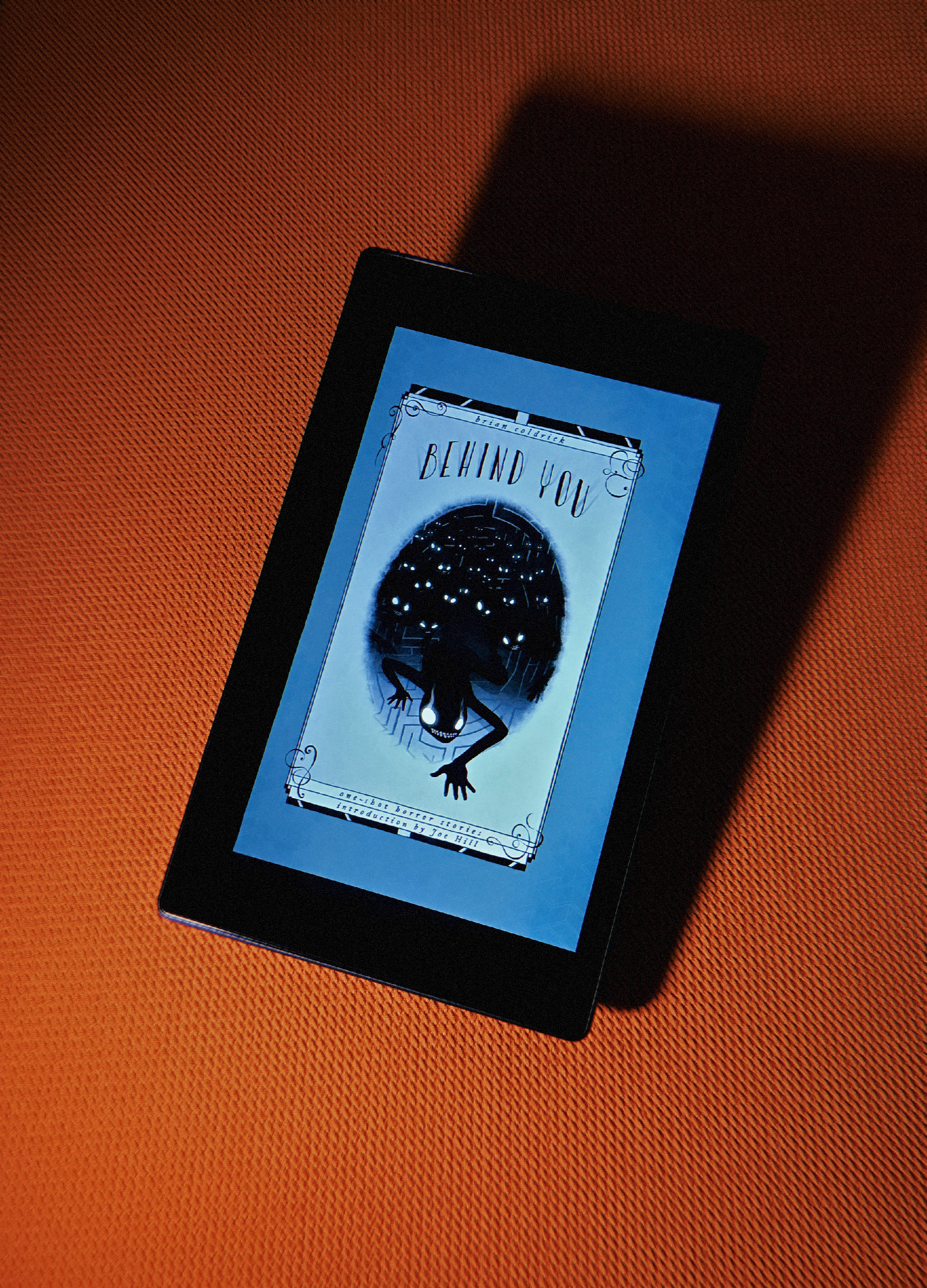

38 behind youBEHIND YOU: ONE-SHOT HORROR STORIES by Brian Coldrick

Behind You is basically artist Brian Coldrick going, “New Yorker cartoons but make ‘em spooky.” Single illustrations accompanied by a short piece of text and can range from the morbidly amusing to the downright unsettling. Coldrick has been at it for a while (I remember when his work was being shared around Tumblr a few years back) and has, according to Joe Hill’s introduction, “refined and purified the entire idea of Horror into a single, vital idea,” which, you know, coming from Stephen King’s progeny is high praise indeed. As far as I can tell, the series is still going, and this volume collects just a select handful of these creepy cartoons.⠀

The illustrations are, of course, the centerpiece, but the short text preceding them do a lot in terms of mood-setting and suggestion. They act almost as prompts: descriptive enough to tell at least part of a story, but simplistic and vague enough to let your mind entertain (or, depending on your disposition, torment) itself by thinking up the myriad of ways the scenes could play out. It’s almost as if you are the co-writer of this peculiar collection, which is an aspect I really enjoyed.⠀

The series is very much an online thing, however, and you’ll definitely get more from it if you have more than a passing knowledge of internet culture as a lot of the images here draw from content cultivated from memes and creepypastas (Slender Men, naturally, are abound). A lot of the images online are subtly animated, too, which add to the tone, and that element is obviously lost here in this static form.⠀

Behind You is a quick, fun Hallowe’en read, and you are sure to find an image that lingers in the back of your mind, especially if you read this alone in the small hours of the night. But I’m just assuming here because I definitely did not do that.


39 welcome to dead houseWELCOME TO DEAD HOUSE by R.L. Stine

Welcome to Dead House follows siblings Amanda and Josh as their family moves to the small, quiet town of Dark Falls (subtlety was never Stine’s specialty), to live in an old house their father has inherited from a previously unknown relative. In no time at all Amanda starts to experience weird things: she keeps seeing strange kids around the house, and hears mysterious giggling and whispering coming from her room at night. She’s soon convinced their new place is haunted, which her family thinks it’s only anxiety brought about by the move. But there’s also the fact that her usually easygoing dog gets agitated around the house, and seems to mistrust every single person they meet in town….⠀

No Hallowe’en is complete for me without Goosebumps. I’ve been slowly making my way through them for the last couple of years, having never read the books when I was kid. This was my first time reading Welcome to Dead House, the first book of the series, an it is an auspicious beginning at that. It’s certainly darker than most other Goosebumps book I’ve read thus far, which never really strayed too far from relatively innocuous territory, whereas Dead House goes for that PG rating from the get-go. We are, after all, promptly treated to a sequence featuring a mostly skeletonized family, complete with bits of flesh still dangling from their bones. It’s a surprisingly gruesome book, all things considered, especially towards the end, which genuinely caught me by surprise. Stine is definitely not afraid to go hard. I was a fearful, finicky child and probably wouldn’t have enjoyed this kind of thing back then, but my present adult self certainly appreciates it. It’s very much a Goosebumps book at its heart, however, which means despite the macabre coating it’s still goofy and fun and a little schlocky.

The narrative itself does feel more streamlined when compared to later books in the series, where the stories tend to be a bit looser and meandering. But mostly I like how it seems like Stine had the structure (the skeleton, as it were) pretty much all worked out since the start of the series, chapter-ending cliffhangers and all. Goosebumps, after all, almost wasn’t even series, since it didn’t really sell until kids started getting a hold of them in school book fairs and went on to spread them around through word of mouth, causing a wave that would keep Goosebumps afloat through most of the nineties. Talk about coming up with such a winning formula from the outset.


40 autumncrowAUTUMNCROW by Cameron Chaney

An old man laments the loss of an old flame when he hears the siren song of the sea. A widow builds a jack-o’-lantern effigy for her dead husband in the hopes of seeing him one more time. A strained relationship between siblings has uncanny, burning consequences; while all the way across town a lonesome boy makes friends with graveyard ghouls. There are faces in the forest and visitants from space; whispers in the wind and chattering in the cornfields. There’s something in the soil of the valley, folks say, that attracts all manner of curious folk and odd happenings to it like a magnet. The locals long accepted the quirks of their community and stand by it, but they still offer up a warning to visitors: tread carefully — there are monsters here. ⠀

Welcome to Autumncrow, Cameron Chaney’s first collection of short stories that is nothing if not an absolute treat. It’s also pretty much the perfect read to cap off the spooky season. Do not be tricked by the cover and the catchline like I was, though — I went in expecting only a quirky compilation of Hallowe’en-themed tales, and while we certainly do get a taste of that with some of the selections, most of these fictional offerings are rather straight up, honest-to-goodness horror stories, with all that entails. Chaney explores different aspects of the genre with evident glee, while simultaneously running the reader through the gamut of emotions: joy and melancholy; delight and dread; playfulness and solemnity — often all at once, and often all in the same story.

Taken as a whole, however, Autumncrow is also essentially an examination of grief and loneliness. Most of the stories feature protagonists who are, in some way, looking to belong — to some place or to other people or to themselves. “Follow me in,” is a refrain that’s repeated throughout the collection, by various people and entities (and perhaps by the town itself). Some characters heed this call willingly, others are a bit more hesitant, some are even forced — but all of them can’t help but feel the alluring pull of the valley.⠀

Which brings us to the setting: Autumncrow may not be the Halloweentown I expected it to be, but it is undeniably a far more interesting place. Chaney wisely plays it vague with the history of the place, leaving a lot to the reader’s imagination while still offering up enough particulars to make the town feel lived-in and, despite the paranormal phenomena, real. And like every real place, it is depicted as being sometimes dangerous, sometimes beautiful, sometimes just simply… there — but always, always alive. I would love to read more stories in this setting. Autumncrow Valley is the very same October Country Bradbury so fervently celebrated. ⠀

I was highly impressed by this collection. It’s well worth the read.

THE DEVIL’S DETECTIVE by Simon Kurt Unsworth

the-devil's-detective-by-simon-kurt-unsworthOne of my favorite short stories is “Murder Mysteries,” by Neil Gaiman. It is, like a title says, a murder mystery, told in the same manner and style as countless murder mysteries before it. But it is unique in the sense that it is set in Heaven, where an angel is tasked with finding out the culprit behind Creation’s very first murder (or “Wrong Thing,” as it is called in the story, because there is no word for this particular cruel act among the Heavenly Host). It is a favorite not only because the conceit is exceedingly clever, but because the world (for a lack of a better word) it creates is just as ingenious and fascinating. Heaven is an actual city, gleaming and perfect. Its citizens, the angels — equally gleaming and perfect — are portrayed as workers, defined by their roles. The whole of the cosmos is being constructed inside a factory-like building, aspects of it discussed and decided by committee and delegated to teams of ethereal employees. It allows Gaiman play with the conventions of the gritty genre while still writing about shining, perfect beings. Seeing writers play around like that in stories is always fun.⠀

It’s a story I was reminded of countless times while making my way through The Devil’s Detective by Simon Kurt Unsworth. In many ways it reads like a distorted, perverse reflection of Gaiman’s seraphic murder mystery. And Upside Down version, as it were. Which is nothing if not appropriate, I think: as above, so below, and so forth.⠀

In The Devil’s Detective Hell also takes the form of a city, one populated by humans and demons alike. The former are given bleak tasks and roles to perform, while the latter, predictably, torture and torment them. It is a dreadful place, although not in the way you might initially imagine it. Because Unsworth has wrought a version of Hell that represents the scariest thing he could possible conceive: a bottomless pit of bureaucracy. Hell’s “operations” are overseen by a board of demons, with most of their work being relegated through a middleman, even. There are bars and brothels; offices and housing complexes. Trains and cabs are used to get around. The modern world as the underworld — or vice versa. There are even detectives, a thankless job in Hell if there ever was one.⠀

This novel follows such a person, our unfortunately named protagonist Thomas Fool, one of Hell’s Information Men, the infernal analogue to the sleuthing occupation.⠀

Hell is hosting angels, there to attend a slew of meetings where the parties of both Heaven and Hell perform a long-established practice of trading souls. The arrival of these heavenly beings coincides with a string of particularly horrific murders. Something is killing the humans of Hell, in a manner so gruesome that their very souls are released forcibly from their bodies, manifesting in a blinding blue light that dissipates in the accursed atmosphere. An atrocity that Fool and his team are sent to investigate.

(In Unsworth’s Hell, those condemned to it are reincarnated into a new body, carrying no knowledge of their previous life other than they have sinned and are now paying for it. It makes sense in a sadistic sort of way: how much more oppressive would Hell’s suffering feel were you still alive, after all?)⠀

Author Michael Chabon once said that detectives are great protagonists in mysteries because they have inherent access to every layer of society, from the proletariat to the elite. They can knock on any door. In gritty murder mysteries, these sleuthhounds often act as our guide through the more disreputable side of life. The Virgil to our Dante. In The Devil’s Detective, Fool gets to fill both roles of The Divine Comedy. He is the guide through this strange, twisted world, sure, but he himself is dragged along a journey through circles of Hell he never even fathomed.⠀

I’m focusing on the worldbuilding because it is this book’s strongest aspect. Unsworth writes a very vivid, markedly macabre setting and does a great job establishing some semblance of logic to an inherently illogical place. There are rules in Hell, Fool repeatedly states throughout the story, they may not make sense, and they may get broken constantly, but there are rules just the same. It’s an engaging environment, and the sections where Fool just explores different districts of the city, searching for clues and answers, talking with characters of varying shapes and forms (the most curious of which being the Man of Plants and Flowers, a former human who has somehow transformed himself into, well, flowers and plants, and has spread himself throughout the city), were the ones that interested me the most. The world piqued my morbid curiosity, and I wanted to know more. It’s a rich backdrop, one that should easily lend itself to strong, solid plots.⠀

Which makes it that much more of shame that we don’t exactly get one here. There’s enough to maintain your interest throughout the book’s four hundred and so pages, but the mystery at the center of it all is a little lacking. I suppose it’s maybe because I’m not the most perceptive of readers, but one of the reasons I enjoy mystery stories so much is that I hardly ever figure them out before they are done, and I love being pleasantly surprised. I figured out the who-and-whydunit in The Devil’s Detective a couple chapters in, which meant that I read the rest of the book hoping that I was wrong because it seemed so obvious. It didn’t help that the resolution came accompanied with a lackluster final confrontation, in which our main character spends a lot of time being disoriented to the point of not being able to properly tell what is going on around him. The ending proper just sort of peters out, leaving the characters and the story hanging off the proverbial cliff, awaiting a second book to continue their tale. It was a little underwhelming, to say the least. ⠀

Still, I appreciated the excellent worldbuilding, and also the way the novel explores its central theme, which revolves around hope.⠀

At the beginning of the story, Fool receives a feather from the wings of one of the angels. The feather gives off a bright glow that never dulls, and gives Fool comfort and clarity. He keeps it close to him for the remainder of the story, embracing its light in moments of difficulty and distress. Hope is the thing with feathers, etc. ⠀

Hope is a double-edged sword in the world of The Devil’s Detective. At several points in the novel Fool bemoans the futility of it all. Why bother investigating horrific acts in Hell, when Hell will never cease to be a place in which horrific acts are the norm? Why bother standing outside the building in which the meetings between Heaven and Hell are held, waiting to become one of the souls chosen to be freed from torment? Fool is told plainly at one point that Hell lets its humans have some semblance of hope because it makes the ensuing torment that much more terrible. Shades of Gaiman, again: In an issue of The Sandman where protagonist Dream visits that universe’s version of Hell, Lucifer asks him what can hope serve in such a place. To which Dream replies, “What power would Hell have if those imprisoned here would not be able to dream of Heaven?” Why bother with anything at all?⠀

But hope also begets change. The feather acts as a catalyst for Fool. Against his better judgement, he starts to imagine a different way of life in Hell. He begins to feel hope. And the condemned humans, inspired by his acts, follow suit.⠀

And so The Devil’s Detective ends with change, both with Fool as a person and Hell as place, a change that happened because Fool and the people of Hell, despite their cruel circumstances, chose to go on, in the hopes that things will, eventually, get better. Which is all any of us can do, in the end, whether we’re living through hell or not. A fool’s hope indeed.

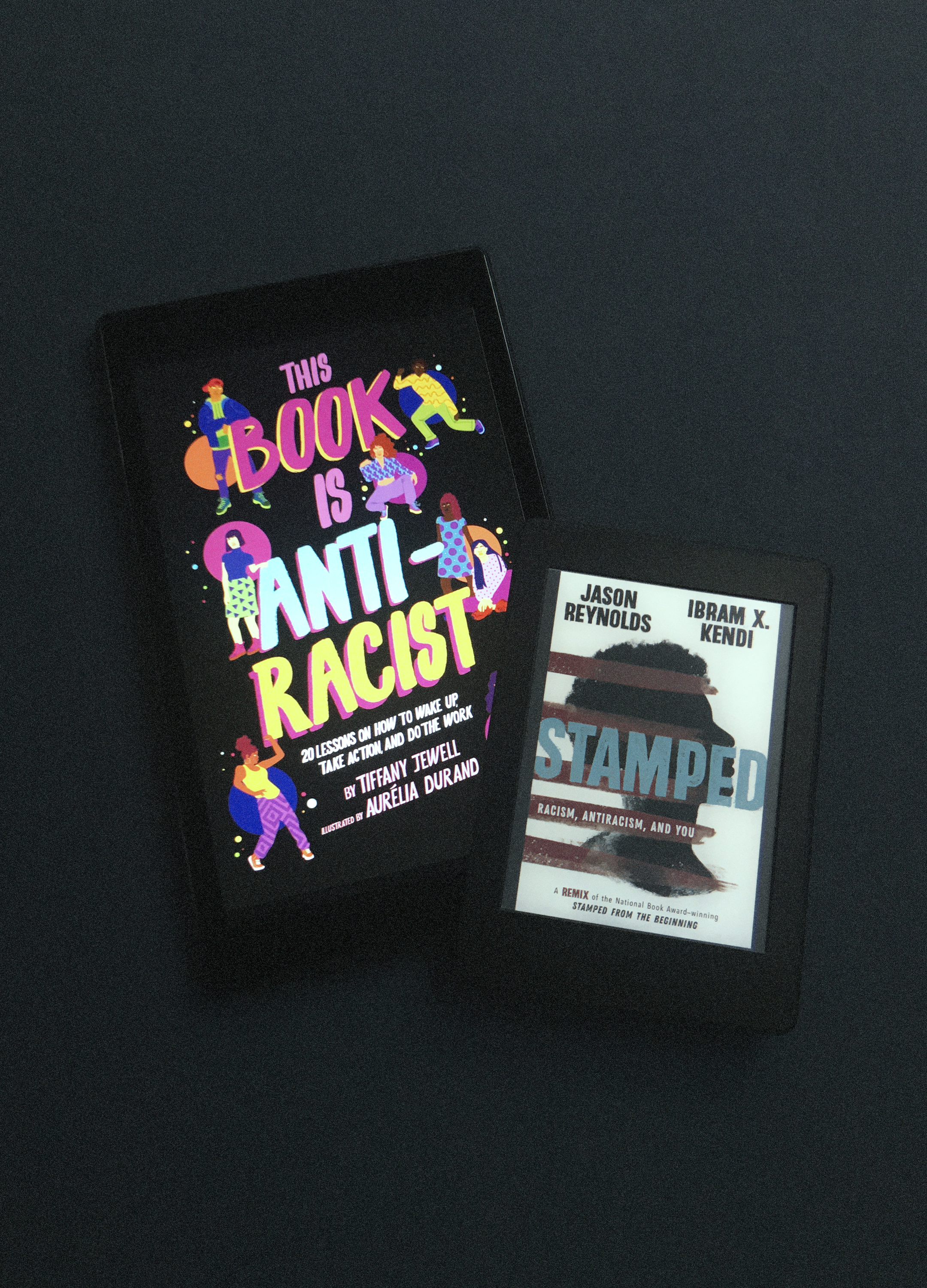
ANTI-RACIST READS

24-anti-racism

Reading. Learning. Growing.

There was a tweet making the rounds back when the BLM protests first started up, mocking the history books North American and colonized students have been indoctrinated with since time immemorial. It went: “Slavery was bad but then Lincoln fixed it! Then, segregation was also bad but Malcolm X didn’t need to be so mean about it. But MLK went on a big walk and fixed racism! The last racist left killed him but then he went to jail the end.”

Which is to say I probably learned more about BIPOC history and race relations from these two books (both of which are aimed at younger audiences) than I ever did in any history or social studies class. Which is only slightly wild, to say the least.

Stamped is a book I’ve been looking forward to since it was first announced. Dr. Ibram X. Kendi’s original tome is on my wishlist, and I will get around to it someday, but I confess to being more than a little bit intimidated by it. Heavy books about heavy subjects! There’s certain mental preparation I have to do before I am able to tackle them. But I was familiar with Jason Reynolds’ work enough to be certain that his own adaption for younger readers— or remix, as they call it — would be perhaps a bit more approachable, full of language that is as playful as it is thoughtful; as lyrical as it is meaningful. Which is essentially Jason Reynolds’ trademark style. And that is what we get here: an immanently readable, fiercely empathetic, endlessly illuminating history lesson. A handful of passages even made my eyes well up. Don’t pass up on this book.

On July 2, 1826, Jefferson seemed to be fighting to stay alive. The eighty-three-year-old awoke before dawn on July 4 and called out for his house servants. The enslaved Black faces gathered around his bed. They were probably his final sight, and he gave them his final words. He had been a segregationist at times, an assimilationist at other times—usually both in the same act—but he never quite made it to being antiracist. He knew slavery was wrong, but not wrong enough to free his own slaves. He knew as a child that Black people were people, but never fully treated them as such. Saw them as “friends” but never saw them. He knew the freedom to live was fair, but not the freedom to live in America. The America built on their backs. He knew that all men are created equal. He wrote it. But couldn’t rewrite his own racist ideas. And the irony in that is that now his life had come full circle. In his earliest childhood memory and in his final lucid moment, Thomas Jefferson lay there dying—death being the ultimate equalizer—in the comfort of slavery. Surrounded by a comfort those slaves never felt.

○○○

Whereas Stamped is concerned with the past and how it shaped our present, Tiffany Jewell’s This Book is Anti-Racist is more interested with how our current reality can shape our immediate future. And while Anti-Racist briefly talks about past events that led us to now, it is a thoroughly modern book. The amount of timely, relevant topics Jewell manages to cover in such a short amount of space (this book is less than 200 pages long) is truly staggering: activism (both true and performative); the internet’s influence on social discourse; internalized and institutionalized racism; prejudice and bias; identity and class. Jewell does more with these topics than a dozen hot take articles put together, and does so with grace, patience, and righteous outrage. Do not pass up on this book, either.

We have been conditioned to the bias of whiteness. We can undo this. People play a big role in keeping racism going. If we do not work to recognize our prejudices, we remain a part of the problem. When we become aware of our biases and our role in racism, then we can begin to understand how we are a part of a system that is much bigger than us.

My own education growing up may have been lacking, but I’m just glad that kids these days have access to books of this caliber, that discuss issues so often suppressed or actively ignored. Books that tell them — us — how things were, and how they are, and how they could be. Books that remind them — us — to keep growing, and learning, and reading.

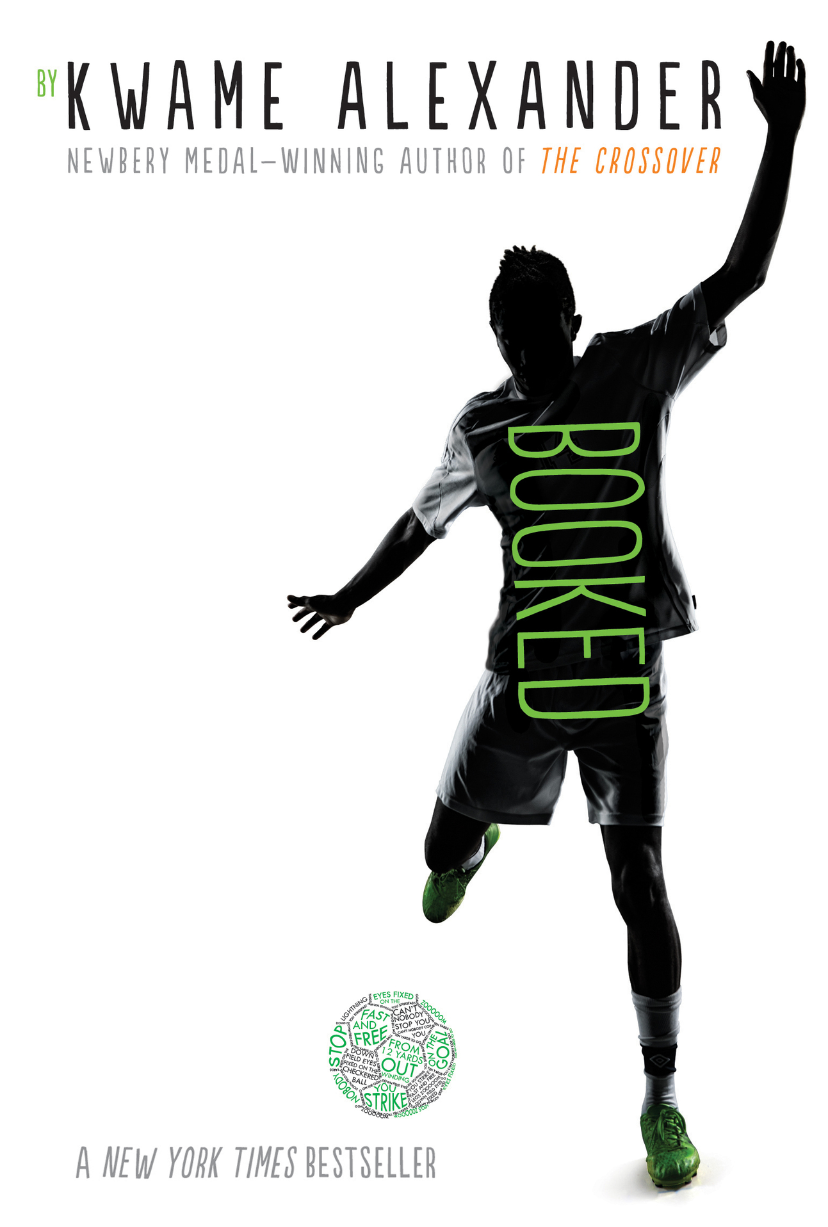
BOOKED by Kwame Alexander

booked-by-kwame-alexanderWell, hello there.⠀

Thing’s are a bit overwhelming, aren’t they? At least more so than they were before, and they already pretty dang whelming. I’ve certainly been feeling it, which is why I’ve been more or less neglecting this blog. I’m still reading, but haven’t felt enough creative energy for writing out my thoughts, much less for taking and editing pictures. I’ll get back on it soon enough, I expect.⠀

In the meantime: read more books by Black authors. The current discourse focuses mostly on non-fiction and understandably so: one of the many things the BLM movement has taught us is that most of us have so much to learn, still. Non-fiction works are crucial. But I am a firm believer in the power of fiction to help us see the world through the eyes of people who are not you, and I would be remiss if I didn’t mention the importance of reading it, too. Stories are, after all, the ultimate empathy engine.⠀

Kwame Alexander’s Booked is a particularly lovely example. I finished it back in April, and I liked it so much I read it again before the month was out. It’s about Nick Hall, a smart young Black kid who lives and breathes soccer, and how he deals with having his world turned upside-down after some turmoil erupts in his home life. Helping him deal with this is an eccentric, decidedly uncool, hip hop loving librarian who is constantly giving Nick books he thinks will help. I loved the emphasis of words in the story, too: Nick’s overbearing father is a linguistics professor with “chronic verbomania.” So much so that he has written a book of obscure words that he makes his son read every day. Nick resents this, of course, but he also very clearly loves words, as he is constantly using them in sly, clever ways. It’s a novel written in verse, which I had never read before, and I found the experience highly enjoyable. It’s very specifically a book about language, and about how words can hurt us just as much as they can heal us. Which is something we all need to be reminded of from time to time. ⠀

It also happened to round up the trifecta of sports books I was picking up at the time. That was another fun little reading detour for me.

DRAGON HOOPS by Gene Luen Yang

dragon-hoops-by-gene-luen-yangAt the beginning of this book, Gene Luen Yang, high school teacher and acclaimed author of graphic novels, is worried that he has no more stories to tell. He’s felt a hole in his life since his last book was released, and that was over six years ago, but he’s unable to find a story that just grabs his heart and runs away with it.⠀

Until he starts hearing the excitement in the hallways of Bishop O’Dowd High School. Their basketball team, the Dragons, is set to go to State and is causing quite the stir. Yang does not follow basketball so he has no idea what this means, but the hold it has on other people fascinates him, and he starts to think there might be a story there. He’s hesitant at first — the computer science teacher and comic book guy writing about sports of all things? But he feels the hook in his heart and so, tentatively, he takes the first step.⠀

Dragon Hoops is the true story about a basketball team overcoming all manner of odds on their way to becoming champions. It’s about the people that make up the team, and their stories. And its about the rich history of the game they play.⠀

A game in which, when I first picked up this book, I had next to no interest in, it having gone away in the aftermath Space Jam and Michael Jordan’s second retirement. Which, for me at least, made Yang the perfect audience surrogate: he begins his journey caring not much for the game but for the stories it generates. He ends it, not exactly a superfan, but as someone who now appreciates basketball and its deep cultural importance.⠀

Which perfectly mirrored my own journey with Dragon Hoops. There’s a reason why after finishing the book I: read Phil Bildner’s A Whole New Ballgame; have been keeping up with The Last Dance documentary miniseries on ESPN; bought Kwame Alexander’s Crossover; and, yes, re-watched Space Jam (still a masterpiece).⠀Like Yang, I haven’t become suddenly a superfan — I don’t think I’ll sit down and follow every single game once they start back up again — but I am definitely more interested in it, and appreciative of its history, and of its cultural impact.⠀

There’s just so many things Dragon Hoops does right for me. On the surface it’s just your typical tale of a team on its way towards victory. It’s a story we’ve seen countless times before. But the difference, as always, is in the telling:⠀

19-dragon-hoops-2It’s a story about basketball, but it’s also a perfectly accurate portrayal about the agony and joy of writing. We get to see Yang as he tries to write the story while the actual story unfolds. We see him struggle with what to add and what to omit as the action plays out in front of him. He talks with the people he’s portraying about how they should be depicted, and we see the changes in the art during these conversations. He even addresses the reader at one point. Which is one of the advantages of this being a graphic novel: these are all things you can pull off in comics that you can’t easily do in other mediums. And by this point in his career, Yang has such a handle on sequential storytelling that he takes full advantage of the form here.⠀(The art, despite all the times the author disparages it as inadequate in the book, is wonderful. Yang’s form is clean and clear, and it translates surprisingly well into the dynamic basketball scenes.)


It’s also a story about stories. A handful of chapters are focused on key members of the team. Preceding their stories however, we get a short history lesson on the game of basketball, which are fun and fairly informative: we learn why the game of basketball became so popular with minority communities and in the inner cities; we learn that women have always been playing the game pretty much since its inception; we learn the myriad ways different people took steps to take the game forward; and we learn many other things besides. The most interesting and impressive thing Yang does with these brief classes, however, is showing how their lessons are still relevant to the life of the individual being discussed in the chapter, thus creating a direct link between the past and the present. It’s very effective and probably my favorite thing this book does.⠀

19-dragon-hoops-3Tying all this together is the recurring image of stepping forward. Each and every person in this book, author included, is facing a set of challenges, varied as the people themselves: trying to win a basketball game; trying to decide whether or not to take a job offer; forming new friendships; balancing relationships; prejudice (in all its infuriating forms); how to best tell a story. And the thread that runs through each and every person facing these obstacles, from the past to the present, no matter how uncertain or how scared they were, is that they took a step forward. They stepped into the court. After all, how else are you going to know what happens unless you play the game?⠀

Dragon Hoops is a wonderful delight, and probably Gene Luen Yang’s best, most ambitious work to date. I see myself revisiting often (indeed, I’ve already read it twice).

A WHOLE NEW BALLGAME by Phil Bildner

a-whole-new-ballgame-by-phil-bildnerMason “Rip” Irving and Blake “Red” Daniels think they know exactly what to expect from fifth grade. They know their principal, Ms. Darling (real name) is going to stand at the entrance to greet all the students. They know that Ms. Hamburger (real name) is going to be their homeroom teacher. And, most importantly, they know they can finally try out for the district’s basketball team.⠀

But when they arrive at school nobody is there to greet them out in front. When they get to their homeroom they find, not Ms. Hamburger, but a young, long-haired, tattooed teacher called Mr. Acevedo.⠀

More changes await the two best friend that will turn their precious little world upside down, and especially so for Red, who thrives on order and routine. But they have one another. And they will soon find that every challenge comes with the opportunity for new allies as well.⠀

○○○⠀

Middle grade books do so much. Not only do they have to be breezy, fun reads in order to sustain the attention of kids who live in a world of extremely loud and incredibly constant distraction, but they often have to do so while exploring some serious, sensitive issues — without losing that sense of playfulness and optimism we tend to associate with childhood.⠀

It’s a lot to handle. We’re currently living through a sort of Renaissance in children’s literature, though, so there’s no shortage of books that manage to carry this weight — and Phil Bildner’s A Whole New Ballgame is certainly among these.⠀

It’s a simple story told with a lot of heart, with wonderfully realized characters. Rip and Red are charming and endearing and immediately likable. Their relationship is the heart of the book and its portrayal is fittingly heartwarming. Even side characters with limited roles like Avery and Rip’s mother are given their fair share of story. And of course you can’t help but root for Mr. Acevedo right from the get-go, an idealist who stands in for those modern educators who prioritize dynamic and fun learning methods, tailored to their student’s needs, rather than relying on the rigid and often outdated practices that hinder our current educational system, especially so in the Western world.⠀

Which is one of those serious subjects that creep in: the boy’s school doesn’t look the way they expected it to because of severe cuts in their district’s budget, something that happens all too often in the real world, as any teacher can surely discuss at length.⠀

Another interesting aspect of this book is in its depiction of disability. Avery is a wheelchair user who, rather than being treated as a one-dimensional character, as the trope tends to do, gets a fair amount of depth. Some of her experiences are discussed at length in a charming and amusing manner. (She even gets to be a bit of a jerk). And then there’s Red himself, who is on the autism spectrum. He struggles a bit with all the changes going on around him, but he’s portrayed as a tenacious and clever character. And luckily his best friend Rip offers plenty of support and encouragement, as does Mr. Acevedo and a handful of other teachers. I thought author Phil Bildner, a former teacher himself, did an admirable job with their depiction. ⠀

Middle grade books do so much. A Whole New Ballgame is certainly no exception.⠀

Oh and there’s a decent amount of basketball in here, too, as the title suggests. Like most books involving sports, though, it’s a metaphor. Because what’s life after sudden change if not a whole new….⠀

Well, you know.⠀

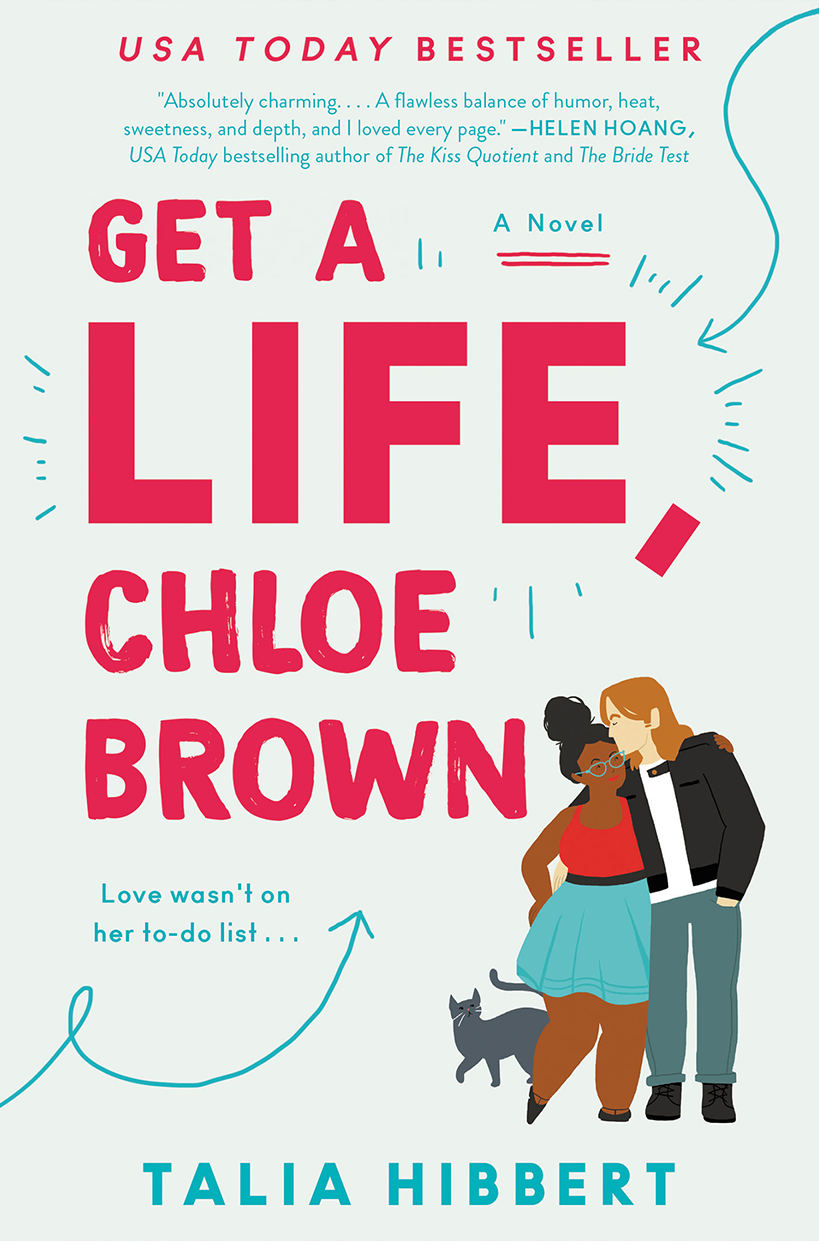
GET A LIFE, CHLOE BROWN by Talia Hibbert

get-a-life,-chloe-brown-by-talia-hibbertGet a Life, Chloe Brown begins with the titular character getting almost run over by a car, a sudden brush with death that, combined with a number of other issues she’s been dealing with, compel Chloe to, as the cover exclaims, get a LIFE. Type A person that she is, Chloe goes about this by making a list of the things she believes constitute a full, well-rounded life. The entries ranging from the momentous (move out of parent’s house; travel the world) to the positively frivolous (enjoy a drunken night out; have meaningless sex).⠀

It’s a pretty great beginning.

Chloe immediately begins checking off items by moving into her own flat in London, in a building managed by our other protagonist and inevitable love interest, Red — tall, literally ginger my god Hibbert, and handsome — a former painter who has withdrawn from the art world. Their relationship starts off, in classic rom-com fashion, as positively hostile: Chloe finds him an uncouth oaf; Red finds her a spoiled, standoffish brat. A series of mishaps and circumstances soon lead both characters to come together, however, with Chloe agreeing to build Red a website that will hopefully rekindle interest in his neglected art career, and Red helping Chloe get through her Get a Life list.⠀

It’s a pretty great set-up. You do worry for a moment that their frenemy dynamic might end up overstaying its welcome, but, refreshingly, it begins to break down and evolve only a couple of chapters in, as the stimulating chemistry between Chloe and Red softens their respective distant and defensive exteriors. Which is when they realize they’re also helping one another in entirely unexpected ways.⠀

○○○

I don’t tend to pick up many romance novels, although I quite like the few that I have read. The works of Rainbow Rowell and Stephanie Perkins quickly come to mind. But while their novels are certainly full of love and all its clutter, they tend to slant more towards the emotional side of the romantic spectrum. This novel decidedly leans toward the other end. The physical end. Whereas a lot of stories with romantic plots often leave you wanting to shout “would you just kiss already” at the stubborn, exasperating characters, Chloe Brown simply skips all that noise and just goes straight into the more risqué aspects of courtship. I was surprised but amused by how quickly — and frankly how often — the book got down to this sort of business. There are enough steamy scenes to fill up several saunas.

Which isn’t to say there’s no emotion to be found in this novel. Meaningless sex may be an item on Chloe’s list, but, as she also realizes, things aren’t always so straightforward, and people often carry their emotional baggage with them. Our main characters being no different.⠀

Chloe, for one thing, lives with fibromyalgia, and while she’s developed a myriad of methods to manage it, emotionally, it’s taken a toll. As is often the case with invisible illnesses, non-disabled people struggle to sympathize with those who deal with them. They can get, as Chloe puts it at one point, “bored with lists and rain checks and careful coping mechanisms.” And, sometimes, they leave. Which is where we find Chloe at the beginning: determined and resolute, but lonely.⠀

We find Red in a like manner. Dealing with his own trust issues stemming from the fallout of a particularly ruinous relationship that left him feeling adrift and uncertain about his life. That this former partner was, like Chloe, affluent, only adds to his inner turmoil, his more modest background having been a constant issue before.⠀

How Chloe and Red deal with these knotty circumstances is nothing if not compelling. How they support one another is, frankly, adorable. How they fall for one another is just thoroughly sweet and, indeed, quite sexy. The development of their relationship might seem a little rushed, but it’s believable, and you quickly root for them.

I’m doing it for you because that’s how people should behave; they should fill in each other’s gaps.

Mental health and chronic illness. Class conflict. Toxic relationships and their aftermaths. These are all complicated subjects that can prove too much for any single story to handle, but Chloe Brown does so with thoughtfulness and tact, and it’s what impressed me the most about this “kissing book.”⠀

They are also subjects that can weigh down a story, casting a somber shadow over even the most lighthearted of comedies. Chloe Brown avoids this hazard by boasting a small but well-realized and obscenely charismatic cast of characters. Because not only do both protagonists read as real, actual people, the side characters do as well. Chloe’s family in particular plays a substantial supporting — and supportive — role: Gigi, her glamorous, flamboyant grandmother (who my brain immediately envisioned as British Eartha Kitt, much to my delight) dutifully doles out wisdom and guidance with wit and candor to spare; and her two enigmatic and energetic younger sisters, Dani and Eve, routinely drop by her flat to check in on her well-being — and to also discuss the latest, greatest gossip, usually concerning Red. (The sisters were hilarious and fun to read, and I’m glad to see that Hibbert is going to tell their story in future installments.)

Talia Hibbert’s author biography states that she writes “sexy and diverse” stories. And she certainly delivers on both fronts with Get a Life, Chloe Brown. I want to make special note of the diversity aspect, though: Because while I don’t know much about the romance genre, I’m willing to bet that characters like Chloe (a self-assured, Black, fat, nerdy, disabled woman who is regularly revered over her beauty), or even like Red (whose constantly cheerful and confident demeanor belies intense insecurity), are not so readily found within it, simply due to the fact that they are few and far between in most other types of stories as well. Which is, of course, a shame. Representation is important, and fiction is always in need of other voices, and other lives.

Representation […] means accepting, then celebrating, the fact that difference is normal. To do that, we have to carve out space for the voices of marginalized people, because underrepresentation can’t be fixed unless you actively do the work.

Talia Hibbert

So I’m glad Hibbert is out there, actively doing the work, and that she’s using her voice to share Chloe Brown’s life with us.

We would do well to listen. That’s part of the work too.

○○○

So I quite enjoyed the book. Started this one in the middle of February, for obvious reasons, but while I liked what I read, it didn’t manage to hold my attention, and I put it down about halfway through.⠀⠀

Fast forward a couple of years, to March. The world is even more terrifying than usual, and most of us are stuck at home until who knows when. I’ve been doing fine, relatively speaking. In a decent place, mentally speaking. Until last week when 𝖙𝖍𝖊 𝖌𝖑𝖔𝖔𝖒 finally got me and caused me to spend the following weekend in a depressive daze.⠀

I had been reading a couple of thematically relevant books — mostly non-fiction accounts about humanity overcoming all kinds of calamities and disasters. Books that assured we were going to get through all this. Books that I absolutely refused to read after the anxiety hit. It all felt too real, too unwieldy. I wanted instead to read something as far removed from our current situation as possible. ⠀

Enter Chloe. It did the trick. I managed to crawl out of that dark headspace and into the light and delightful world of this book. I tore through the remaining half in a single, sleepless night.

If I had any real criticism to offer, is that I thought it relied too much on the cliché, at times. And also that it was definitely, maybe, just a tiny bit too melodramatic. But then again I figured that sort of went with the territory. I don’t know! You get swept up. I did.

I you’re looking for something to pick up something that’s light but still compelling in these dark and strange times, though, you could certainly do worse than reading about Chloe Brown’s life.