MASTER OF MURDER by Christopher Pike

master of murder by christopher pikeTeenager Marvin Summer writes bestsellers. His latest series of thrillers, The Mystery of Silver Lake, has taken the country by storm, and the public waits for the final book with fevered anticipation. Marvin is feeling the pressure, although nobody around him would be able to tell: he writes the books under a pseudonym — Mack Slate — so no one, save his younger sister, knows he’s actually rich and famous. Much to his chagrin, at times. If his schoolmates knew, he could surely get with any of the girls he frequently lusts over, and the arrogant jocks and overbearing teachers that look down on him would turn to idolization instead. But that’s a fantasy Marvin must entertain at least until he turns eighteen, lest his abusive, alcoholic father find out about his fortune and exploit it. So Mack Slate remains a secret.

Until one day Marvin finds a letter in his postbox proclaiming to know his secret, words that start a chain reaction that will turn his already complicated life upside down as the intrigue and murder that fill his fictional stories suddenly bleed out into the real world. 

○○○

Master of Murder by Christopher Pike was trash of the highest caliber — and I mean that as a total compliment. An outrageous, but ultimately fun ride. This read like Fear Street by way of Twin Peaks, where the central question was not “who killed Laura Palmer?” but “who hurt Marvin Summer?” instead. (The fact that the book felt Extremely Nineties only added to my enjoyment.)

This was my first Pike book! I tend to read mysteries and thrillers around this time, and seeing as how The Midnight Club adaptation on Netflix was one of my favorite things I saw this past Hallowe’en, I thought one of his books would be the perfect transition between spooky season and murder mystery month. The man wrote a mean and compulsively readable book, although at times it very much read like a first draft affair, partly due to all the unusual names that seemed more like placeholders than anything (Quade, Triad, Sesa, Pella — you know, traditional Pacific Northwest names), but also due to the prose itself, which was sometimes very clunky and decidedly juvenile. (Although maybe that last bit was meant to be intentional, seeing as how this was a story about a teenage author hopped-up on raging hormones.) Also it’s good that not much is known about Pike himself, as he rarely does any press, because Marvin Summer reads like a self-insert if there ever was one — and it’s not a flattering portrayal at all.

Still, I had fun with it. I just hope The Midnight Club gets another season, because Mike Flanagan and company could spin wonders out of this angsty adolescent murder mystery.  

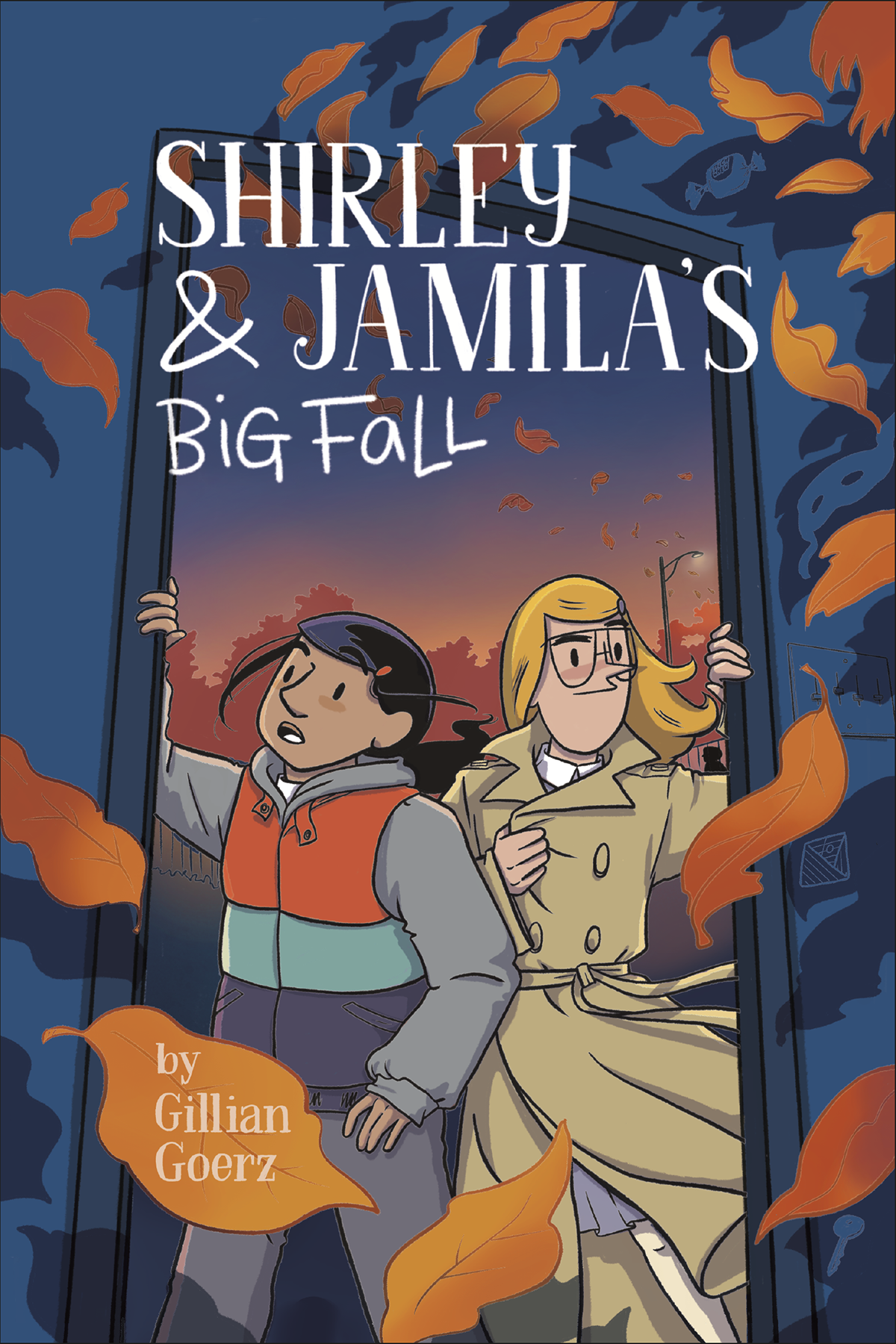
SHIRLEY AND JAMILA’S BIG FALL by Gillian Goerz

shirley and jamila's big fall by gillian goerzAfter their summer adventure, friends Shirley Bones (kid detective extraordinaire) and Jamila Waheed (new spunky kid on the block) prepare themselves for the school daze ahead. It turns out to be a busy term, and between all the extracurriculars, the friends find themselves with limited time to hang out together. Jamila in particular struggles to find new friends, being the new kid, until she meets Seena while trying out for the local basketball team. Like her, Seena is of Pakistani descent, and the pair form an instant connection over their shared cultural quirks. Jamila worries that her budding friendship with Seena will affect her relationship with Shirley, since the two couldn’t be any more different. Add to that the fact that Seena seems to be hiding a checkered past….

Seasoned sleuth Shirley Bones has no time for interpersonal drama, though — not when there’s a case to crack. A loathsome sixth-grader by the name of Chuck is known throughout the school as a notorious blackmailer. Possessing a veritable hoard of incriminating pictures, videos, and text messages, he lords over his  classmates, extorting favors in exchange for his presumed silence, lest he ruin their elementary school careers. Bones and Waheed soon make it their mission to take down the crooked character’s coercive enterprise.

○○○

I had an absolute blast reading Shirley and Jamila Save Their Summer, the first book of this seasonal series, last year. It helped that I picked it up knowing next to nothing about it, other than it involved kid detectives. So I was pleasantly surprised when I realized, halfway through the book, that the series was a Sherlock Holmes reimagining! It’s not overt from the outset (in fact, I don’t think even the blurb mentions it) so I had a lot of fun going back through the story and picking up all the references and homages, most of which seemed obvious in retrospect (the assonance of their names, for one). In a world saturated with interpretations of this world and its characters, this one in particular felt like such a fresh and clever take. I finished it eager to get back into this story.

I’m happy to report that I also had a blast reading the sequel, Shirley and Jamila’s Big Fall, and in fact would say that I liked it a bit more than the first book, if mostly because of the gorgeous autumn setting, which I am always a sucker for. This one is based on “The Adventure of Charles Augustus Milverton,” a story famous for featuring a villain that was even more revolting than Sherlock’s traditional nemesis, Moriarty. (Fans of BBC’s Sherlock will no doubt remember Lars Mikkelsen’s brilliantly repulsive portrayal of the character in the show’s third season.) Chuck is a great and outrageous juvenile analogue of the character, who, instead of doing the things he does for power and influence, here he’s just an overly privileged, pretentious child who has never been denied a thing in his life. It was a lot of fun to watch his machinations being undone by Bones and company. 

Goerz’s character work is wonderful. The supporting cast in the first book was a highlight, and although I’m sad to see they don’t play a role in this story, the newcomers are also immediately endearing. Seena is the obvious standout, but her family is also a delightful addition. That familial aspect is another thing I admire about these books. Middle grade stories tend to do away with grown-ups in some form or another, but in Shirley and Jamila’s lives, they are not obstacles to overcome, but integral. It’s a nice and lovely change of pace. 

The artwork remains exceptional. Goerz draws people in a simplistic style that’s very reminiscent of Raina Telgemeier’s work, but her characters are a lot more expressive. They are never static — their faces and postures change constantly throughout the pages and panels, lending the story a dynamic feel. But Goerz in particular excels at scenery: her backgrounds are beautiful and incredibly elaborate, positively bursting with fun little details. They are also super cozy, which is only appropriate, given the autumnal setting (the aesthetics of Seena’s family apartment are goals, as the kids would say). I usually fly through graphic novels, but I consciously slowed down while reading this one, the better to appreciate the art.

All in all, another highly enjoyable adventure featuring two intrepid sleuths that are quickly becoming favorites. And I can’t wait to see what surprises Winter has in store for them.

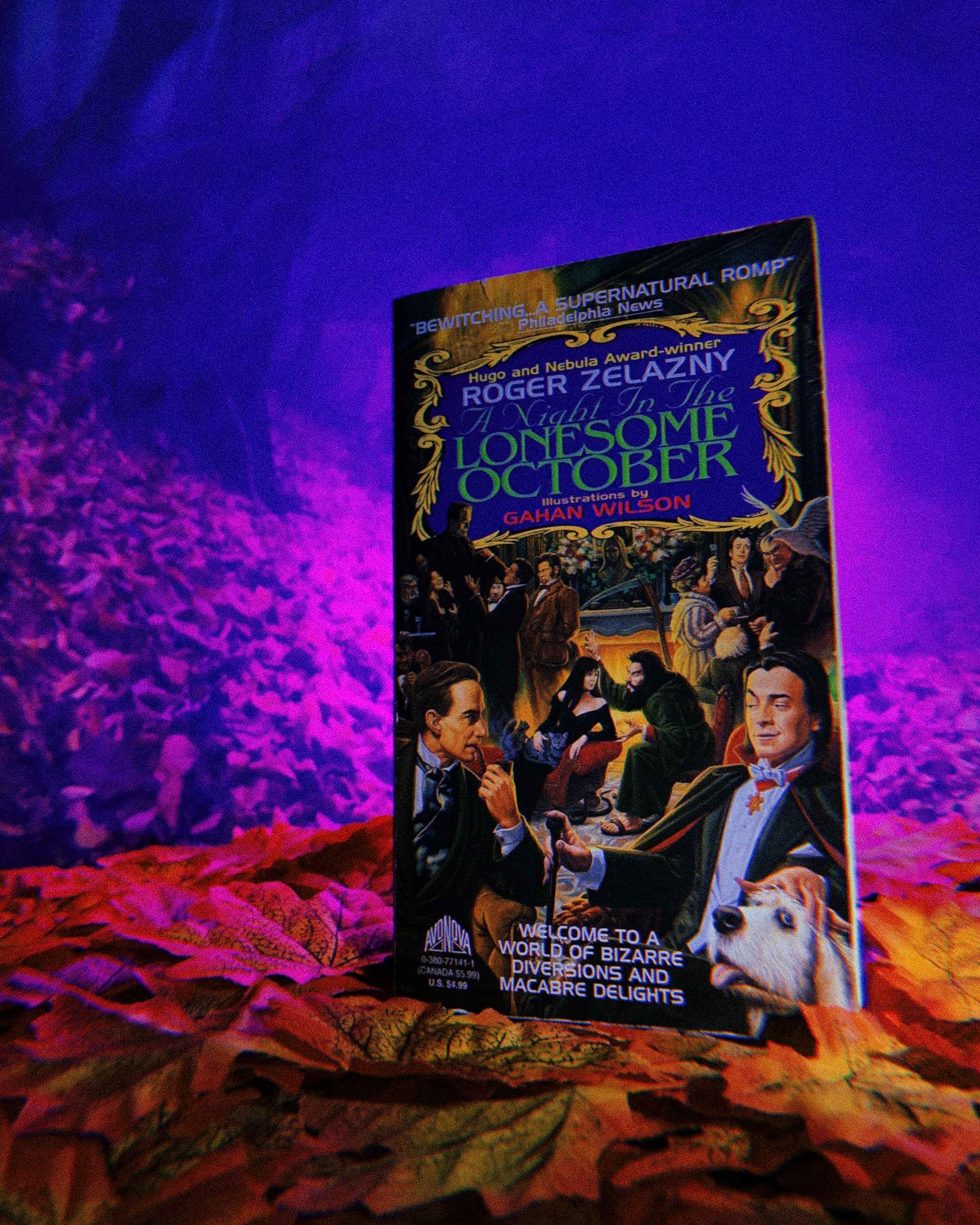
A NIGHT IN THE LONESOME OCTOBER by Roger Zelazny

a night in the lonesome october by roger zelaznySomewhere deep beyond the woods you know there stands a house that should not be there. Reality shifts and shimmers around it, surrounding the peculiar structure in a vortex of interdimensional voids and cosmic fissures and other things. The shutters clang against their windows. The house is entirely dark, save for a single flickering light in the topmost room. Inside the house that should not be there, someone is reading.

The man closes the book with, he believes, a flourish. Outside, the winds appear to have subsided. The house has, at the very least, stopped shaking. The man sighs and gets up from the bed. He puts the book he has just finished on a side table already full of books and loose papers and empty mugs. He looks at the rest of the chaotic clutter that makes up his room with a slight look of shame. He catches his reflection in the mirror above the dresser. His hair has grown longer and wilder in the month that he has been here, not to mention his beard. He resolves to tidy up his appearance before leaving later on in the night. But, before he gets to that, he spots a book on one of the shelves that line the walls of the room — a book he has been meaning to read for the longest while. He grabs it, thinking that it would be nice to pick up something with no relation to arcane rites or rituals. Sitting on the edge of the bed, he cracks the book open and begins to read.

Calcifer, his wing all but healed, flies back into the house just as the man makes his way down the stairs. He has cleaned up somewhat, the crow notes, although to him he still looks like something you’d find out in the woods. Something dead and ravaged. He doesn’t voice this thought, however.

“I was just making the rounds outside,” he says instead, alighting on a pile of books on top of a table in the entryway. “All clear now. No weird things shambling about or cracks in reality or nothing.”

“You sound disappointed about that,” the man says, taking his jacket from the coat tree near the front door. 

“No, it’s just,” Calcifer struggles to find the words. “That’s it? It’s over? We… we won?”

“Again,” says the man. “You sound disappointed.” 

“No,” the crow says, glaring. “No, it’s just that it feels slightly anticlimactic.”

“Yeah, I get what you mean,” says the man. “A few of the books I read this season were like that. Ah, well. They can’t all be hits.”

“That’s not what I mean at all and you damn well know it.”

“Alas.”

“No, not— Nevermind.”

Osseous walks into the foyer then, a small stack of books in their skeletal hands. 

“Thank you, Oz,” the man says, receiving the pile. He begins the complicated puzzle that is shoving a bunch of books into an already overstuffed bag. “Our feathered friend here was just complaining about how abrupt the conclusion to this whole thing was.”

“The Hallowed Ritual can feel like that, at times,” says the skeletal librarian. “It is a good thing. It means the other players played their parts well and without much trouble.”

Calcifer caws. “It’s not that I’m complaining or anything,” he says. “It’s just that, you know, it’s the Maleficent Monarchs we were talking about. Just thought it would, I dunno, involve more. Some epic battle or whatever.”

“I think he’s been reading too many of these books, Oz,” the man says with a grin.

The crow stares daggers at the man.

“Look,” the man says, while working on his storage conundrum. “You have to realize that despite the fact that Those That Dwell in the Dark are nigh omnipotent otherworldly beings, they also just happen to be a colossal bunch of losers.” 

Osseous nods their skull in agreement. “The Ritual has been going on for a long time. The other side has yet to win.” 

“That’s comforting, I suppose.” 

“Yes, well, maybe you’ll get your fight to the death next time, Calcifer.”

The crow starts to preen his feathers, ignoring the man.

The man shoulders his bulky rucksack. “Friends, the lonesome October has finally come to a close. Now we get to relax and enjoy the fact that the world has not yet come to an end thanks in part to our humble efforts.”

The man opens the front door. Outside the house that should not be there, moonlight shines on the fall foliage of the surrounding forest, making it gleam in the night. “It’s been surreal, guys,” he says with a frivolous bow. “Until next time.” 

The door closes and he is gone.

“Huh,” Calcifer says. “So that’s that, then.” 

A knock on one of the sidelights flanking the door. “Oh and happy Hallowe’en and all that!” The man’s declaration sounds muffled through the glass. He gives a thumbs up and disappears once more, into the night.

The librarian and the crow stand quietly for a moment.

“Hey, speaking of which, Oz. We get any trick-or-treaters out here?”

“Sadly, no.”

“I guessed. Shame.”

“Yes.”

“At least things should be quiet for a while,” Calcifer says, after a beat.

“Yes,” Osseous says.  “Well, the ghosts do tend to get restless come Yuletide.”

“I’m sorry, what?”

“The ghosts.”

Calcifer sighs as a myriad of questions quickly come to mind. He knows better now, though. Knows that any answer he seeks he can find without much difficulty, here in this house full of secrets and stories. At the moment, however, there is only one question he wants answered.

“We got anything to eat?” the crow asks. 

The librarian nods. 

Inside the house that should not be there, somewhere beyond the woods you know, the two friends make their way towards the kitchens.

🎃

A Night in the Lonesome October was a re-read for me, although it had been so long that I had forgotten most of the particulars. It certainly made an impression, though, since the little framing story that I had been writing throughout the season turned out to be my own humble riff on this wonderfully playful and spooky story about a group of occultists trying to impede — or invoke — the End of Days through the closing — or opening — of a gateway for the Great Old Ones. (“Humble,” he says, shamelessly.)

The influence shouldn’t have come as a surprise, though, since Zelazny was a writer after my own heart. The book is full of clever, whimsical wordplay (there’s a romantic subplot that exists solely as a means to a pun) and droll dialogue riddled with amusing arcane-babble (techno-babble’s mystical equivalent).

Lonesome October is also very much a love letter to classic horror, not only of the filmic and literary persuasion, but the historical as well (our narrator is, after all, Jack the Ripper’s canine companion). References and easter eggs abound, focusing mainly on the monster movies of Universal Studios and the lurid yarns of the Victorian era. Some Lovecraftian lore is thrown in for good measure. (And also Sherlock Holmes, because of course he would stick his pipe in at some point.) 

Each chapter corresponds to one night in October, and I had a tremendous amount of fun picking up this book every evening throughout the month. It turned out to be a grounding ritual as well — a reminder  that, despite my tendency to stress out over wanting to watch all of the things and read all of the books and write all of the stories, this ludicrous holiday should be, above all, an enjoyable time. This book made my October even more fun than it already was (and, indeed, much less lonesome). 

And it has been a good one. I watched some decent movies. Read some fine books, of course. Even wrote a mad bit of a short story!  So I think we can jot this month down as a success. Surely we’ve managed to keep the darkness at bay for a little while longer. 

Happy Hallowe’en, you lovely weirdos.

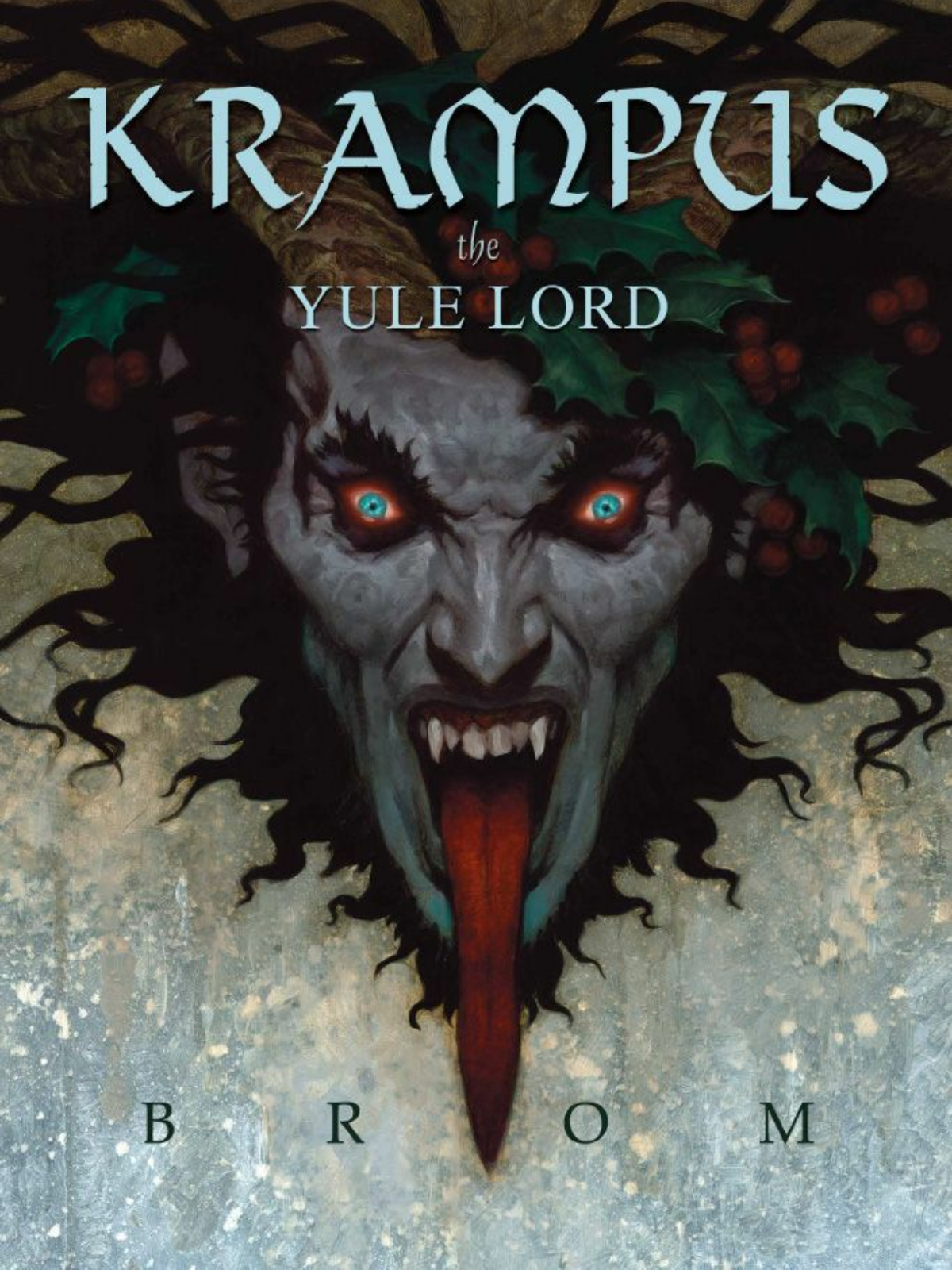
SLEWFOOT by Brom

slewfoot by bromr̵̢̲̟̦͔͂͠í̷͖́͊f̵̧̧̮͖͖̩̠̎̉͜͜t̶̜̊͛̃͝s̵̖̥̖͆́̒̀́̎͊̈͘͝ ̸̩̞̣̣̺͚̇̔͊͛̈́̃̌ͅi̸̡̢̨̛̺͍̬̰̹͈̮͌̑̑́̊̚n̸̰̥̞̍̈́̒ ̸̧̛̟̝̟͖̺̓ͅt̷̹̬͈̉͊̄ḩ̴̦͈͚̞͎̃͗̏̔́̕̕͠ę̶̀͆̐͐̈́̿̀ ̴̢̡̡̲̟̘̏̐̚f̴̨͈̳̼̣͉̱̫̬̏́̑̊̈́̚͜͝a̷̙͖͒̊̿͗̇b̴̧̙̥͍̪̦̟̟͖̈͝ͅr̸̨̭̹̦͔̙̪̬̦̐̅̿̾̅͌͑̉i̵͎͉̪̲̭̣͈͍̼͚̔̄̀̌̔͗̾c̵͕̦̼͎͗͑̅͒ ̴̫̟̼̗͓͗̂̈́̂̕͝o̵̝͖͗͐̓̾̽̀f̸̊͆̾̀͊́ͅ ̴̨̡͈͎̙̤̝͈͓̖̃̈̈́̓́̒̆̈̆r̴̡̤̞̻̘̯̈́͆͛̅́̽̋͆͘ę̷̟̥̪͖̞̣̮̒͗͛̆̃̿͐͘̚ă̶̢̢͙̲͉̯̫͈̭̊̾͐̍͒͝ͅl̴̢̠̲͉̤͇͍̫̀̚ị̶̗̻͓̪̮͙͔͒t̴̗̣͛͒̒͌̈́̎͂͑͝͝y̸͎͍̔̋̌̃̊́̓̈̓̈́

ċ̵̨̪͇̝̮͓̞͉͙̒̏͋̀ä̵͔̲̦́̒̿͆̆͂̽̓n̸̢͈̪̬̮̩͕̹̭͍͐͂̋̍̃̍̈́ ̵̢̨̘̺̭̙͙͚̬̤̍͑̓ỷ̷̡̙͓̤̖͖̊͛̅̐͋̂͠o̶͍͚̹̫͙͐̉̈͂u̶̮͙̠͚̯̭̥̘͌͗̔̏͝͝ ̷̢̢̱̖̞͙̿̃́̈́̓̀͆̊͘ͅs̷̢̨̱̯̙͖̳͒ë̷̟̤͕́́́̍͒̇ę̵̡̞̱͓̫͎̬̺̻̔́̓̓̅̓͌͂͝ ̶̹̪͖̼̹́͒̎̈́͒͠ṱ̴̰͙̏͌͂͒͒͗̌͑͝h̸̜̣̏̃̽͊̄̃̌͊̐͠ḛ̸̥̟̥̖̯͚̋m̶̨̧͙͕͂͐

t̸͈̟̪̠̹̏̇̑̉̽̚̚h̶̺̱̖͛͗̿e̷̱͊̐ỵ̸̳̺̺͈̘͍͈͋ ̶͓̬͎͇̙̠̯̙͆ä̶̢̞̟͇̾̕r̶̺̙͔͙͖̀͑͋́͆̚e̷̢̡͎̠̻̞͉̝̋̿̄͛ ̴̨̢̡̦̪͔̗̥̞̀͂͂͋̆͌̃͑͝c̶̡̨̬̝͕̯͖̲̻̚ơ̴̡̡̙͛͆̈́̑̇̉̄m̵̫̺͖̻͓̓i̸̡̜͕̙͖̫̦̗͙̋͂͜ņ̷̡̙̫͑̑́͂̌͗͌͝͝g̷̛̦̹̠̬̦̺̃͂͛̃̒̇ 

🎃

Slewfoot is one hell of a slow burn. Author Brom takes his time crafting this Pagan and Puritan mashup, dedicating the larger part of the book to its construction. Both seemingly incompatible worlds come crashing together with the meeting and burgeoning friendship between Samson, an old beast of the forest, and Abitha, a widow — making this story a lot less like the film The VVitch (which I was expecting) and more like a strange combination of Guillermo del Toro’s The Shape of Water and Pan’s Labyrinth (which I was decidedly not expecting). (This also meant that I kept picturing the titular creature as played by Doug Jones, which only helped this tale.) 

Although Brom’s writing is clear and serviceable — and the passion he has for this peculiar story is evident — this first half is somewhat of a slog to get through, the narrative insistent on pushing us through the muck and mire of convoluted lore and mythology before getting us to the action proper. The story doesn’t truly pick up until its third act, which begins with a heartrending and infuriating (and, from what I can gather, fairly accurate) depiction of a witch trial, and ends with a massacre. After spending so much time focusing on the ill treatment of Abitha, its main character, witnessing the struggle and slander being piled on top of her to an almost oppressive, stifling degree, the euphoric release she is ultimately afforded in the final few chapters feels entirely and utterly satisfying, and we can’t help but revel along with her.

A dark, undoubtedly bewitching tale. Slewfoot is full of haunting imagery* and harrowing historical horror. I enjoyed it quite a bit.

* Literally, in this case, as Brom is an accomplished artist and illustrator and as such fills his novel with stunning artwork. I only wish more pieces had been included.

HORSEMAN by Christina Henry

horseman by christina henryOutside the house that should not be there, there is pandemonium. A vortex of vexations engulfs it, utterly. In furious desperation, Unspeakable Things try to get in and quickly find that they cannot. The Keeper’s wards hold. The darkness remains, for the moment, without.

Inside the house, in the eye of this peculiar storm, there is relative calm. The librarian, the man, and the crow are in the study. They form a lazy triangle: Osseous on the armchair, holding a cup to their skull; the man on the carpeted floor, resting against a bookcase, paging through a book; Calcifer on the windowsill, looking at the chaos outside.

Keeper. Reader. Seeker. 

Calcifer is thinking of the conversation they had earlier in the night. Between Osseous talking in their esoteric, poetic style and the man just prattling on about how everything is a story and they were all just characters with roles to play, it turned out to be a rather vague and muddy affair.

“Roles in the Ritual are often nebulous, mercurial things,” Osseous had said. “By which I mean they are neither rigorous nor rigid. Take mine, for instance. I am Keeper. As a librarian, I keep books. As householder, I keep this house. As caretaker, I keep my companions safe.” 

“It’s wordplay, more than anything,” the man had  said. “You are Seeker.  It’s what you’ve been doing all along. Exploring the house. Asking questions. You want to know. You seek answers. Specifically, considering our persuasion, you seek out stories.”

A confusing, cryptic clutter. But it was that last thing the man said that made the crow reflect. Because, in a weird way it was true. Calcifer had left his murder behind because, while perfectly nurturing and comfortable, he wanted more out of his life than to sleep and eat and mess around with his many relatives. He wanted to light out into the unknown. He wanted some semblance of adventure. And what were adventures if not stories?

Calcifer fluffs up his feathers, shaking himself out of reverie.  He had been around books and bookish people for too long now. He was also finding out that he did not mind that much. 

“It’s best not to think about these things too deeply,” the man had also said. “Otherwise it will just seem like someone is making it up as they go along.”

So Calcifer doesn’t dwell on it for much longer. He figures, you figure out life as you live it. He figures, you figure out the story as you write it. He figures he is getting rather hungry.

Outside, headless horsemen charge into the night. Hooded executioners garbed in black sit on stumps and sharpen their axes. Fearsome flattened figures ooze out from behind the trees. Cruel clowns swing chainsaws through the mist. They can feel it, the waning of the month, the withering of the Veil. They can feel their dark, cruel masters reaching out from the Vicious Void. The house shall fall, they tell them. The walls will crumble. We will come out of the Dark and it will all be over.

🎃

Christina Henry’s Horseman turned out to be the epitome of the three star read for me. I didn’t hate it. It didn’t blow me away. It was fine. 

I do think it’s a little long, and would have benefitted from some more editing. Particularly, there’s a weird repetition thing going on that actually starts with the very first chapter, which is essentially an ode to Brom Bones, the bombastic “baddie” of Washington Irving’s original short story. Brom, the protagonist’s grandfather, is big and strong and imposing, you see. Not only that, but he’s also imposing, big, and strong, as well as, it is known, strong, imposing, and big. The tautological tendency was more conspicuous in the paragraphs that would literally say the same thing as the ones preceding it, only with slightly different wording. It’s an odd quirk that feels less like a motif than it does an oversight, and the fact that it runs throughout the length of the book is baffling.

Aside from that, I enjoyed most of Henry’s writing. The story is very atmospheric, which I am always into. It’s full of deliciously creepy imagery, and it even gets surprisingly gory at times. I also thought the characters were great. Brom Bones is a blast, being such a larger-than-life figure (further augmented by his grandson’s unbridled adoration and idolization). But Ben is the real standout, making for a layered and dynamic protagonist. Curiously, the Horseman gets the short shrift here, relegated mostly to the background. But then again, this is more Ben’s tale than it is the famed goblin’s. 

I do want to focus on one of this story’s most interesting aspects, which is that a fair bit of it revolves around Ben’s identity as a transgender man. Folks from the trans community can, of course, better speak as to how well Henry portrays Ben’s journey, but, narratively speaking at least, it seems slightly superficial here. At the beginning, his identity is mostly incidental: Ben considers himself a boy and that is that — the opinion of others be damned. And I really dug that. People from underrepresented communities can and should appear in more stories that don’t solely revolve around their marginalization. But then the book tries, especially towards the end, to tie Ben’s identity to the story’s larger theme of belonging. It makes narrative sense: What better way to illustrate that theme than by having a character figure out and accept who they truly are? Only that’s not really Ben’s story for much of the novel. He starts knowing fully well who he is and is in fact comfortable in his identity. And although the story at times tries to sell us this notion that Ben is somewhat shunned by the people of Sleepy Hollow, the text only ever shows support and acceptance from most people around him. For the most part, the other characters don’t react to Ben’s identity much at all, other than maybe thinking the child a little odd (tame, considering the time period). The rare moments of true ire and disdain against him are ultimately blamed on the supernatural influence of the antagonist. And in fact the only real pushback Ben gets comes from his grandmother, who wants her grandson to fit into a more traditional, socially acceptable mold — but even then that conflict is resolved not even halfway through the novel. 

Which is fine! Again, stories about marginalized folk don’t have to be only about their strife and struggle. I just thought it was peculiar that Horseman tries, at the literal homestretch, to restructure itself into this story of a trans man’s search for acceptance and identity featuring a protagonist who had already found these things. It would have made for a more dramatic story, to be sure, but that particular journey was seemingly already over and done with before the first chapter even began. It ends up making that particular angle of the story ring a little, well, hollow.

What’s left is still a fun, supernatural romp, though. Spooky and strange enough to make for a decent Hallowe’en read.

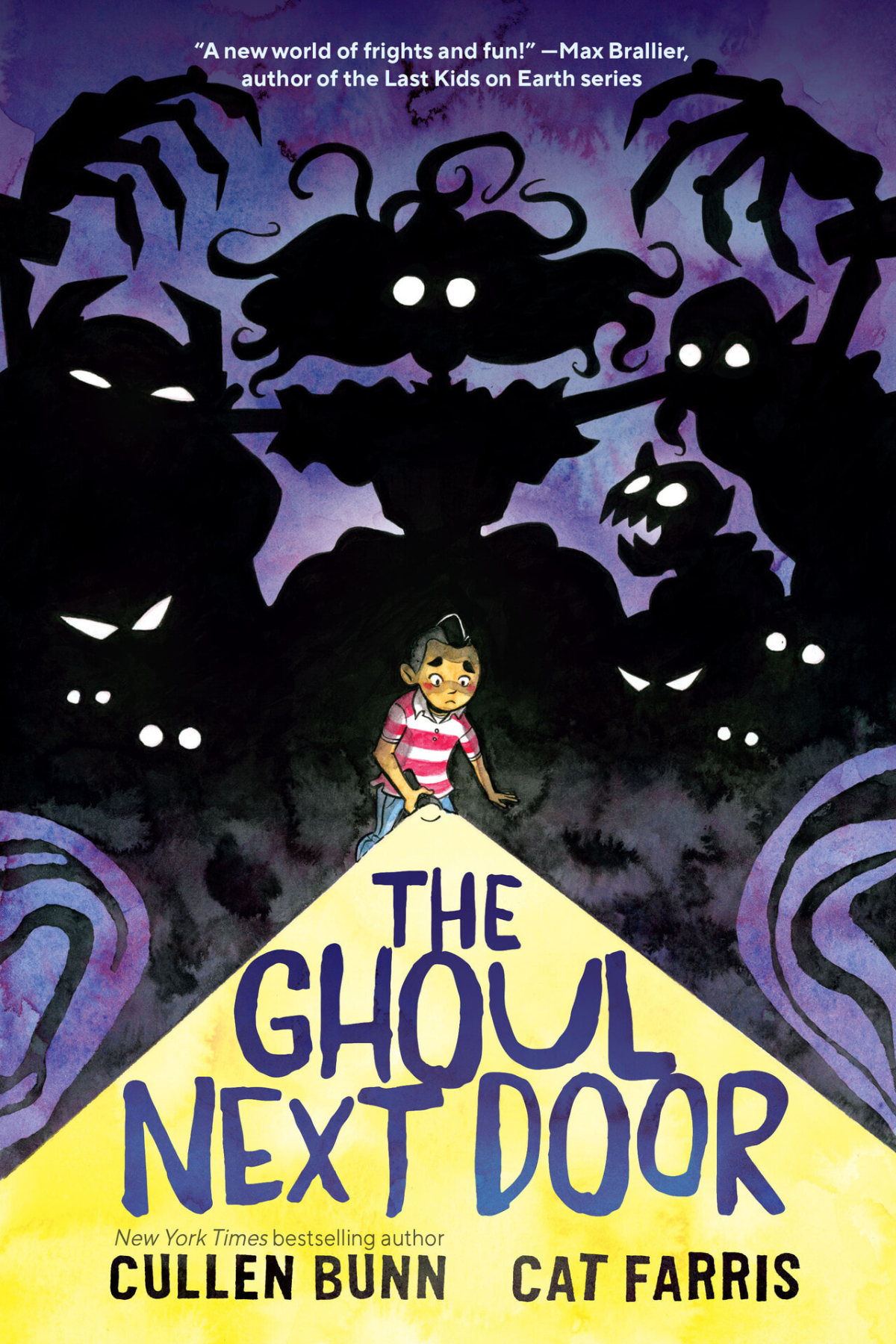
THE GHOUL NEXT DOOR by Cullen Bunn, Cat Farris

the ghoul next door by cullen bunn, cat farrisMiddle schoolers Marshall and Grey are walking to school one morning, history projects in hand. Marshall, practical and prudent, has drawn up a poster of Sally-Bea Hurst who, after being accused as a witch, fled Salem to Ander’s Landing, the small New England town they call home. Grey, inquisitive and imaginative, has made an elaborate scale model of the local cemetery, a place that fascinates him and which, much to his best friend’s chagrin, often cuts through as a shortcut to their school. Marshall, ever cautious, opts to go the long way around this time, leaving Grey to walk the graveyard by himself. Distractedly comparing his work to the somber surroundings, Grey trips, his project flying out of his hands and landing at the bottom of what turns out to be a freshly dug grave. His mind jumps to grave robbers at once, and so, wanting to get away, he quickly goes to retrieve his project — only to see it being snatched up by a clawed hand. 

Shortly after, Grey starts to get nightly visits from the strange, hissing figure, who seems to be more interested in leaving him lurid, macabre gifts than actually hurting him. Grey and ghoul soon form an unlikely bond that threatens to drag them both down into the deep, dark dwellings of the dead.

○○○

The Ghoul Next Door was a tremendously fun read. Equal parts charming and creepy. It’s a balance writer Cullen Bunn knows how to strike well, since he employed a similar tone in Harrow County, an excellent horror comic full to the brim with southern congeniality to go along with its southern gothic spooks. Harrow County is, of course, aimed at an adult audience, so it is decidedly more mature and macabre than this middle grade affair, although that’s not to say the horror aspect of this story was held back in any way. Ghoul Next Door is full of striking, spine-chilling imagery, especially so in its opening segments, which brought to mind other deliciously spooky stories such as Neil Gaiman’s The Graveyard Book and more recent efforts like Katherine Arden’s Small Spaces series. Artist Cat Farris does amazing work here, her whimsical, watercolor illustrations making for a clever contrast to the story’s peculiar proceedings, as well as affording it some seriously spectacular atmosphere (her splash pages in particular are beautiful and wonderfully detailed).

It’s an atmosphere I wish could have been carried through to the end, since the final act drops much of the story’s initial spookiness in favor of a more adventurous tone. Still, the ghoulish world that Cunn and Farris have fashioned is fascinating, and I would gladly return to visit its colorful caverns down the line. (There is a sequel that also boasts a playful title — Up to No Ghoul — and it involves vampires. Of course I’ll come back.)

HORRORSTÖR by Grady Hendrix

horrostör by grady hendrixAmy Porter feels directionless and unfulfilled. Currently living out her existence in the retail purgatory that is ORSK — a big-box furniture store and a flagrant IKEA knockoff — that barely pays her enough to make rent, she wishes for better things. Her aspirations aren’t unreasonable: she’d be grateful for a whatever desk job in a whatever office.

For her, the world was divided into two kinds of jobs: those where you had to stand up, and those where you could sit down. If you were standing up, you were paid hourly. If you were sitting down, you were salaried.

But it’s indicative of her present melancholic mindset that she considers relocating to a different ORSK location in another town her only viable prospect. Her transfer application is subject to the whims of Basil, though, her overbearing bore of a supervisor, so she opts to spend her remaining time in the location being as inconspicuous as possible.

A strategy that is immediately undermined by the continual discovery of damaged inventory, among other odd occurrences. Basil suspects someone is squatting on the premises after closing and, determined to find this trespasser, recruits a couple of employees to that end. Amy, despite her best efforts at imperceptibility, is one of the drafted. She’s reluctant, but needing both to stay in Basil’s good graces and the extra money, she agrees, thinking that nothing will come of the search, anyway.

But the figurative hell of the store is made manifest when, instead of a human intruder, they find a vindictive specter determined to make the ORSK partners the latest in its long line of victims.

○○○

Horrorstör was a fun, interesting read. Fun in the sense that it’s more on the playful side of the horror spectrum, full of whimsical, clever devices (my favorite: the promotional material for ORSK furniture pieces that precede every chapter, which begin like regular, mundane ads but get increasingly sinister as the book progresses). Interesting because this is an earlier work of an author I consider a favorite, and it was fascinating to see the foundations being laid out for what would be recurring themes and motifs in his later stories: the resolute and nuanced female lead; the importance of carving out your own space in a cruel and rudderless world; the almost irreverent approach to horror, boasting an almost comedic tone that is disrupted suddenly by moments of shock and terror (mostly involving rats and confined spaces — not a Hendrix book if the protagonist isn’t at one point stuck somewhere with various vermin crawling all over them). It’s a Grady Hendrix novel, through and through, but it’s also very much the work of a writer trying to find his voice. Its seams are visible: the characters have iffy morals and motivations; the themes spelled out rather than demonstrated; the balance between mood and style inconsistent, at times toppling one another.

Still, I enjoyed this for what it was. I like the conceit of a commonplace commercial structure being the passageway for a demonic dimension (capitalism is literally hell, etcetera). Hendrix’s writing is, despite some stumbles, clear and effortless — the man writes compulsively readable books. Amy was a solid protagonist, a direct precursor to all the great women that populate the rest of Hendrix’s output. Also, the book itself is laid out like an IKEA catalog, and that’s just fun.

It’s less polished work, but that’s characteristic of journeyman efforts, and I do wonder if I would have enjoyed this novel a lot more if I had read it sooner. I wish I could have connected more with the story, but mostly I found that it lacked the emotional punch that I’ve come to expect from Hendrix’s books.

EXHALATION by Ted Chiang

exhalation by ted chiangExhalation is quite simply one of the most breathtaking collections I’ve ever had the pleasure of reading. I’ve admired Chiang’s work for a long time, though I’ve shamefully read little of it until now. This will hopefully change now. It’s certainly reignited an interest in short fiction, which I find myself seeking out more after starting this. 

Which is interesting because one running thought I had throughout my reading of Exhalation was that I wouldn’t really call a lot of its entries stories — at least not in the traditional sense. A good portion of them read more like thought experiments than they do proper narratives. The fact that they explore exceedingly interesting hypotheticals meant that I enjoyed my time with them, although perhaps in a different way than I would, say, something by more traditional fabulists. 

I guess it’s to be expected. Chiang comes from a scientific background, after all, and his approach to stories is less “what if” than it is “how would this work for real.” He takes these speculative realities and, rather than tell us a conventional narrative within, he often opts to define them to us. It works because Chiang is nothing if not a brilliant communicator of ideas. It’s probably why the writer he brought to my mind the most was Carl Sagan, one of the great explainers of our age.

Then, of course, I realized this was just me making unnecessary distinctions. Because what is to elucidate something efficiently and effortlessly if not telling a damn good story, be it fiction or fact? It’s all stories, in the end.

So yes, Ted Chiang is one hell of a teller of tales, and it’s never more evident than in my three favorite pieces in this collection:

  • “The Merchant and the Alchemist’s Gate” reads like a fable straight out of the Arabian Nights with a transtemporal bent about a fabric merchant that stumbles upon a store full of alchemical wonders, one of which is a stone arch that acts as a gateway through time. I was so struck by it that by the time I got to the first of what I was certain must be three tales-within-the-tale I was already exclaiming, “Oh my god.” It reminded me of just how much truly excellent stories excite me. It shouldn’t have come as a surprise, though: both “Story of Your Life” (the basis for the film Arrival) and “Tower of Babylon,” the only two other stories by Chiang I had read before this collection, elicited the same sort of response. A beautifully complex piece of fiction masterfully told.
  • A few pages into “Exhalation,” the collection’s title story, and I was already utterly fascinated by the world it was creating: one of mechanical brings, very much like humans in thought and behavior, but composed of brass and gold instead of organic material, run artificially by air (which in this story acts as a secular, natural explanation for the soul — a notion that I love). I finished it with tears in my eyes. A beautiful meditation on life and death; our role in the universe and the responsibility we have to know it and explore it. (Also, I really liked picturing the main character as this world’s equivalent to Leonardo da Vinci. Setting up a device to dissect your own brain is a Leo move if I’ve ever heard one.)
  • “Omphalos” is one of the many stories in which Chiang toys with theological themes. It’s set in a world that is very much like our own, but in which Young Earth creationism is factually true. Again, points for Chiang for rendering a belief for which I have no patience for in real life so fascinating and sympathetic. The story proper deals with the discovery of a truly geocentric system, and the religious implications this holds for our characters.

And although it wasn’t one of the stories that connected with me, Chiang’s grasp on narrative is also obvious in “The Truth of Fact, the Truth of Feeling” which explores the ways in which our ability to recall moments and events perfectly could impact the human psyche. Told in two complementary threads: one set in the near future in which technology that records every single moment of your life is readily available, and about a father struggling with what that means for human relationships; the other set in the distant past, centering on a man learning how to read and write and the ways in which this clashes with his tribe’s oral tradition. 

People are made of stories. Our memories are not the impartial accumulation of every second we’ve lived; they’re the narrative that we assembled out of selected moments. Which is why, even when we’ve experienced the same events as other individuals, we never constructed identical narratives: the criteria used for selecting moments were different for each of us, and a reflection of our personalities. Each of us noticed the details that caught our attention and remembered what was important to us, and the narratives we built shaped our personalities in turn.

A wonderful collection of stories, and one I see myself revisiting.

ANGELS & VISITATIONS by Neil Gaiman

angels-and-visitations-by-neil-gaimanSandman’s fault, naturally. ⠀

Angels & Visitations is Gaiman’s first collection, compiling some of his fiction and nonfiction. It’s sort of a proto-version of Smoke & Mirrors, a later collection, although there are some pieces here that weren’t included in that later anthology, so this was my first encounter with them. It was interesting to read, in a retrograde sort of way. Smoke & Mirrors is an all-time favorite, and one of the books I’ve returned to the most, but even though Visitations is pretty much the same beast, it didn’t end up impacting me as much as its later incarnation did. Which was expected, to be fair: this is a much slimmer collection, for one; and it didn’t have the added benefit of being read by a young and impressionable twentysomething.⠀

Still, some of the new-to-me pieces were very intriguing, in particular the short story “Webs,” which brought to mind Hayao Miyazaki’s Nausicaä of the Valley of the Wind, and featured a highly intriguing setting that I wouldn’t mind seeing Gaiman revisit. And of course it was nice to see old favorites again (“Chivalry,” “Troll Bridge,” “Looking for the Girl,” “Murder Mysteries”).⠀

Will definitely give this miscellany points for boasting a cover by the inimitable Dave McKean (always a visual treat) and for including illustrations by some great artists for each of the stories — both elements that were sadly lacking in Mirrors.

A PRAYER FOR THE CROWN-SHY by Becky Chambers

a prayer for the crown-shy by becky chambersRenowned tea monk Sibling Dex and wayfaring robot Splendid Speckled Mosscap have come out of the wilderness of Panga. Putting their search for fulfillment on hold, Sibling Dex accompanies the eager and inquisitive robot on its mission to find out what exactly, if anything, humanity needs. To that end they hit the road, stopping at the various and radiantly diverse human communities of the moon and taking with grace and gratitude the experiences and lessons they each have to offer.

○○○

A Psalm for the Wild-Built was my favorite read of last year, what with its gentle, quiet story about two lost souls trying to understand one another as well as themselves speaking to this particular lost soul in a way few other stories have. It’s no surprise that its follow-up, A Prayer for the Crown-Shy, was my most anticipated read this year. I’m not great with series, usually, often finding them to be a bit too inconsistent for my liking. But it’s a testament to author Becky Chambers’ talent (or rather, perhaps, to my undying love for her writing) that I had absolutely no concerns or anxieties over this book prior to its release — no worries about whether it was going to live up to any expectations my brain may have thought up. Only a certainty I was going to enjoy it immensely. It was more of a feeling than anything, which is, I think, the appropriate approach to the kind of books Chambers writes. 

Part of that assurance was due to the inherent plotless nature of these Monk and Robot stories. Chambers has doubled down on her most common criticism that “nothing happens in her books,” arguing that reading about people simply living life, in all its intricate and complex threads, can be as compelling as any conflict-laden drama.

When I think about my life in the real world that I find most interesting or most captivating, they’re all the most ordinary things. Life is interesting. 

Becky Chambers

Both Psalm and Prayer are slice-of-life in the truest sense of the term — more vignettes than they are full episodes dense with schemes and action. These books feel less like you are reading than you are just having a conversation with a couple of  friends (albeit of the particularly empathetic and reflective sort), but that’s part of their charm and their oh-so-comforting appeal. Your mileage may, of course, vary with this style of storytelling, but I find myself gravitating to these book-shaped warm embraces the older I get and the more weight of the world I feel. 

Which is all a roundabout way of saying I loved reading this book. I loved spending time in its warm solarpunk world. Loved the themes it explores of listening to what your body and your spirit need, and how that may or may not relate to your perceived purpose in life. 

 ○○○

I finished Psalm last year thinking it was the book I needed to read at that particular moment in my life. I wasn’t expecting this book to do the same, to have my life reflected in such a stark, revealing manner again — but even in that aspect Prayer managed to deliver. I’ve been through a lot these past couple of months, my personal life subjected to much change and upheaval. Most of these developments are for the better, but I still find myself feeling tired and weary and uncertain (not to mention guilty for feeling all of this in the first place). 

They’d spent too much time around tired folks to not recognize the same condition in themself. They were running up against a wall, and it didn’t matter whether they understood where the wall had come from, or what it was made of. The only way to get through it was to stop trying, for a while.

This prayer, like the psalm before it, is another reminder (and a promise): Whatever it is you’re going through is valid, and doesn’t need to be justified, to neither anyone nor yourself, and that it’s okay —  and vital and necessary — to just give your boisterous brain and rattled, anxious body a damn break sometimes.

You don’t have to have a reason to be tired. You don’t have to earn rest or comfort. You’re allowed to just be.

○○○

These books mean a hell of a lot to me, so you can imagine my sadness upon learning that Chambers has no imminent plans to continue writing further Monk and Robot books, choosing to focus on other creative projects. Although I supposed it was to be expected, endings being such a prominent theme in Prayer. There’s Mosscap grappling with its own mortality after a piece of its body breaks down and it struggles over the ethics of having it repaired or replaced. Most poignantly, in the final chapters, we see the robot admit to not wanting to reach the final destination of its tour with the monk, fearing it would mean the end — of their travels together; of their talks; of their companionship. Sibling Dex feels very much the same. Neither of them wants their time together to come to a close. Neither did I. Indeed, when the ending did finally arrive in such a breviloquent manner, it caught me so much by surprise that my immediate reaction was just to sob. I simply wasn’t ready. I adore so, so many things about these books, but these two characters are the true gift Chambers has given us. I miss them already.