BORN TO BE POSTHUMOUS: THE ECCENTRIC LIFE AND MYSTERIOUS GENIUS OF EDWARD GOREY by Mark Dery

born to be posthumous by mark deryEdward Gorey is someone who is in my pantheon of personal icons, so Mark Dery’s exhaustive (and sometimes exhausting) biography of this somber cypher of  a man definitely made for some fascinating company these past couple of weeks.

Written in the affected and often ornate style of its subject, Born to Be Posthumous: The Eccentric Life and Mysterious Genius of Edward Gorey is chock-full of fascinating and gossipy anecdotes, and a myriad of quotations from people who belonged in circles that Gorey, being the consummate loner, was never really an intimate part of, but frequented enough to leave a lasting, singular impression, like a particularly epigrammatic, histrionic spectre.

[Gorey] asked some friends to move everything out of his apartment (“because I was already back up here on the Cape”) but had neglected to tell them about the mummy’s head gathering dust in the closet. “It didn’t occur to me to say, ‘And don’t forget the mummy’s head'” As it happened, they didn’t notice the mysterious object swaddled in brown paper on the top shelf. The super, however, did. “I got a call from a detective at some precinct or other who said, ‘Mr. Gorey, we’ve discovered a head in your closet,’ and I said, ‘Oh for god’s sake.'” 

Posthumous is not a perfect biography by any means. It could have done with some more thorough editing, since Dery has a tendency to repeat himself. He also devotes far too much time and space speculating about Gorey’s sexuality, a fruitless endeavour if there ever was one, as Gorey’s life — much like work —  defied any real categorization. As Dery himself notes in the introduction, Gorey  “was inscrutable because he didn’t want to be scruted.” Gorey was famously evasive when it came to questions about his sexuality (as indeed, to questions about his personal life in general), often providing vague, demurring answers. The closest he ever came to admitting anything was in an 1980 interview for Boston Magazine. When asked directly, he responded, “I suppose I’m gay.” A declaration that is then, in typical Gorey mercurialness, immediately followed up with, “But I don’t identify with it much.” Dery seems to take issue with these sorts of statements, making the argument that they come from a privileged position and that they actually prevent Gorey from being properly considered as an important and prominent queer icon. It’s a fair assessment, and I’d allow that a more concrete answer would certainly add another interesting perspective from which to look at the life and work of the artist. But I don’t really see the point in making the “sure he says he’s this here but was he really” type of speculation Dery repeatedly insists on doing. Especially when Gorey’s declarations, while admittedly glib, seem to be fairly definitive in their indifference. (For whatever it’s worth, Gorey was most definitely queer, and also assuredly asexual.) Ultimately, though, as fashion writer Guy Trebay is quoted as saying near the end of Posthumous, remarking on the futility of sexual speculation, Gorey was “far queerer than queer.”

Gorey didn’t fit neatly into philosophical binaries: goth or Golden Girls fan? “Genuine eccentric” or (his words) “a bit of a put on”? Unaffectedly who he was or, as he once confided, “not real at all, just a fake persona”? Commercial illustrator or fine artist? Children’s book author or confirmed pedophobe who found children “quite frequently not terribly likeable”? 

Rampant conjecture aside, Dery truly shines when it comes to analyzing and discussing Gorey’s diverse variety of work, looking at much it from the lens of movements and philosophical schools of thought like Surrealism, Dada, and Taoism, all of which Gorey actively dabbled in throughout his life. They are also all topics that involve many complex and enigmatic ideas, but Dery does a commendable job at getting them across clearly. (Posthumous may be a hefty tome of a biography, but it is also an eminently readable one.) Dery’s admiration for Gorey is particularly palpable in these segments, which made for some of the most enjoyable parts in this book.

In the end, Born to Be Posthumous is a fascinating deep dive into the life of one of the most fascinating and brilliant literary eccentrics of the twentieth century. Or whatever.

LESS by Andrew Sean Greer

less by andrew sean greerArthur Less is concerned. About getting older, for one (his fiftieth birthday is fast approaching). About his stalled career (he has written one moderately successful novel, but has been unable to sell anything else). About love, most of all (a past flame is dying while a more recent one is moving on). And so when he receives an invitation to the wedding of his most recent ex, he just decides to run away. In true chaotic and novel fashion, he does this by accepting each and every invitation to a talk, interview, conference, teaching position he has been offered over the past year. His hasty, haphazard plan ends up taking him around the world — literally. But while Arthur Less will find that, however far from home he may be, his worries and anxieties that have caused his life and career to stagnate, are never really far behind, and somewhere along the way, he will have to find the courage to finally face them.

○○○

First read of the new year! It was fine! That was my reaction immediately after finishing Andrew Sean Greer’s Less. Just… this is fine. At best, I thought it was a clever, charming little book; at worst, I wondered just how this managed to win the Pulitzer Prize for Fiction because it seemed — as the title suggests — such a small and slight story. Not really an auspicious start to my reading year, to say the least.

But it’s a week later and I reflect back on the story and go through my notes, I find myself responding much more warmly to it. (That happens with books sometimes. Some stories just need a little space.) I rather liked a lot of the acerbic humor and dry wit of the book (courtesy of the novel’s mysterious narrator), with the first half of the book boasting the kind of carefree, irreverent tone that I just really enjoy reading. 

As with almost every sunset, but with this one in particular: shut the fuck up.

And actually the reason I was so initially underwhelmed after finishing the book mostly had to do with the fact that it abandons this tone towards the end, in favor of a much more contemplative, maudlin mood. Which is fine and lovely, but not what I wanted out of the novel.

What I responded to the most was the novel’s protagonist, who, appropriately, turns out to be the book’s saving grace. Less is an absurd, lovely mass of anxiety and contradictions who has, as one character points out, “bumbled through every moment and been a fool; you’ve misunderstood and misspoken and tripped over absolutely everything and everyone in your path” but who still manages, somehow, someway, to come out the other side relatively unscathed and, indeed, somehow, someway, better than before. As someone who inadvertently wanders and wonders through life in a similar fashion, I found Arthur Less highly relatable. I wanted him to emerge from his trials and tribulations, not victorious, but enlightened. He’s the sort of character who, while frustrating and ridiculous (again: highly relatable), you can’t help but cheer on.

So while it may initially ring hollow and superficial, Less is actually less that, and more of a modest and understated meditation on love and lust and loss; on writing and wandering; on anxiety and acceptance. It turns out to be well worth your while.

(And maybe it’s an auspicious start to my reading year after all.)

YEAR IN REVIEW ○ 2022

2022 has truly been the definition of a roller coaster year. It began with the ending of a relationship and the beginning of a move to my own place. Halfway through the year I caught the dreaded Plague after avoiding it for so long. Then at the end I got sick with something the tests assure me wasn’t the Plague but it certainly knocked me out like it, making me miss a large part of the holidays with my friends and family. Add to that my general constant struggle with anxiety and… well, it’s been a lot. I don’t need to tell you it’s been a lot. You know it’s been a lot.

How I managed to read close to a hundred books along the way is honestly a mystery to me. I try to not put much stock in challenges or numbers. I use my Goodreads Challenge not as a challenge but, because I am a ridiculous person, as a memento mori instead, plugging into it whatever age I’m going to be that year. It’s not that hard to meet — I’m not that old yet. But I would be lying if I didn’t like looking at those large numbers. That I didn’t like feeling like I Read A Lot Of Books.

But the thing that I learned this reading year is that I really don’t. Yes, I read a lot of books, but I don’t feel like I have much to show for it. I didn’t read many books that blew me away, for one. Most that I read were just okay. Which is perfectly fine — not every book I pick up has to blow me away. I just wish to pick better choices.

It’s the pursuit of comfort, I suppose. I don’t blame myself for going for the familiar and the comfortable, especially not during fickle, precarious times. But a thought I kept coming back to as I reflected on my reading throughout the year was how I read a lot less when I was younger, but how so many of those books form an integral part of my soul now. And how that had less to do with the quality of the books themselves than it did with the quality of the time I spent with them. I didn’t finish a book and immediately jumped on to the next, on that neverending search for serotonin. I finished them, and dwelled on them. Sometimes I even read them again, which I scarcely do these days. I gave them time to become a part of me. This wasn’t a conscious choice on my part. I just didn’t have the resources that I do today, which I guess made me more deliberate with my reading. And much more adventurous, too, as I often went with books that seemed interesting and new and challenging.

Which is all to say that, as far as reading resolutions go for the coming year, this would be the main one: To find some of that magic younger me possessed. To be more deliberate and particular with my reading. To choose quality over quantity, always. 

I believe this in turn would result in better, more thoughtful reviews, too. My poor blog seems to be in a constant state of neglect — not to mention my bookstagram. I always make it a resolution to be better at both, but in particular my website, and that will remain the same for this next year.

Anyway.

I don’t want to give the impression that everything I read this year was a big pile of meh. I still had a lot of fun. Still managed to read some fine books that I hope will form part of my soul in their own way. Some that I have already revisited and plan to do so again. I always make it a point to say that books are my shining beacons of light in this tempestuous world. These were some of my lighthouses in 2022:

SECURITY by Gina Wohlsdorf

This one turned out to be a good argument for the importance of form in stories. I first tried reading it a couple years ago and found it boring and tedious. I got the paperback edition after coming across a handful of reviews saying that the physical version made for a better reading experience. 

They were entirely correct.

This time around, instead of finding it a slog to get through, I was fascinated from the word go and positively flew through the thing.

One of the most interesting thrillers I’ve read in a while. Also, if it wasn’t for the film Glass Onion, this book would have my favorite twist of the year.

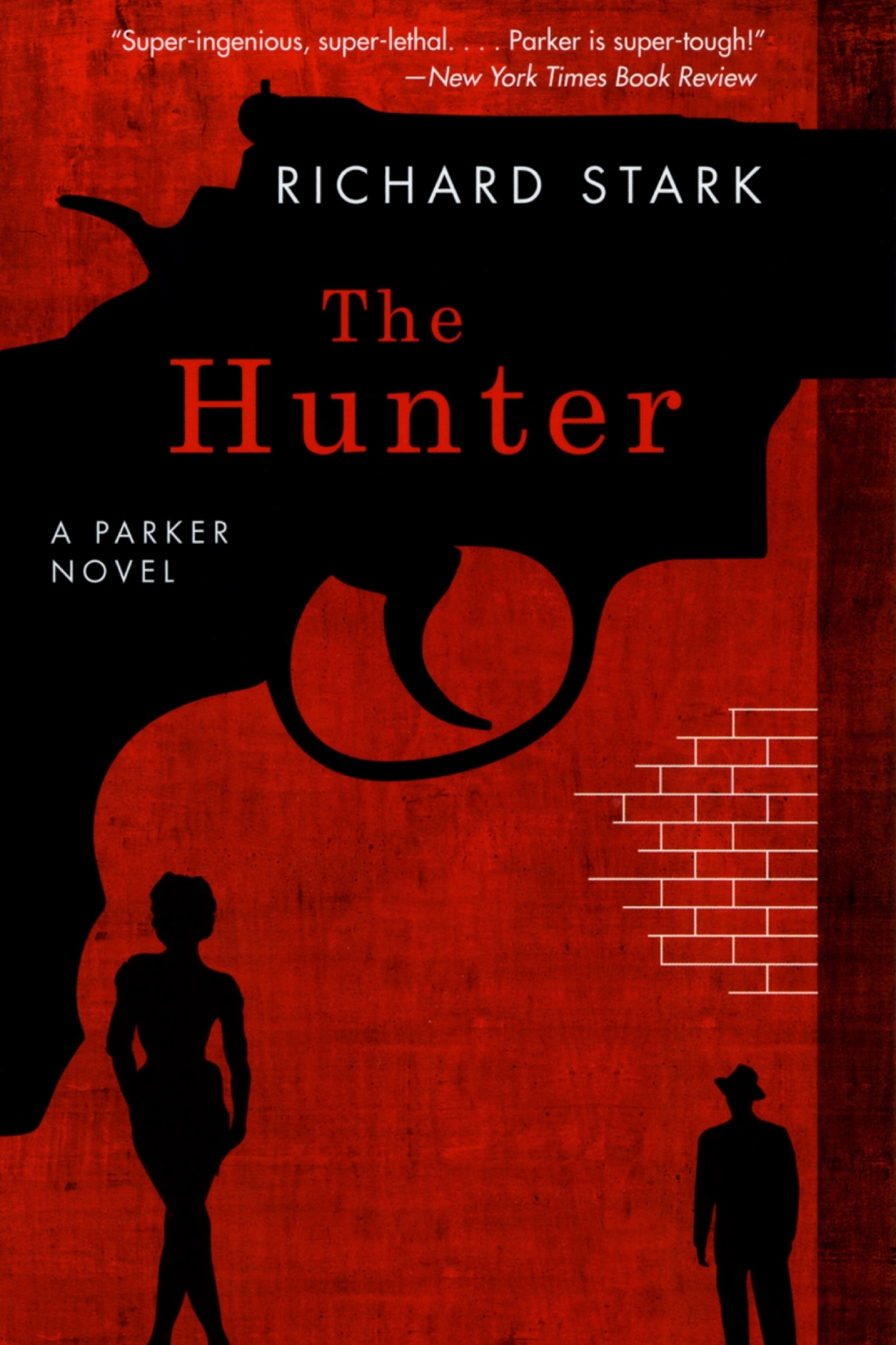
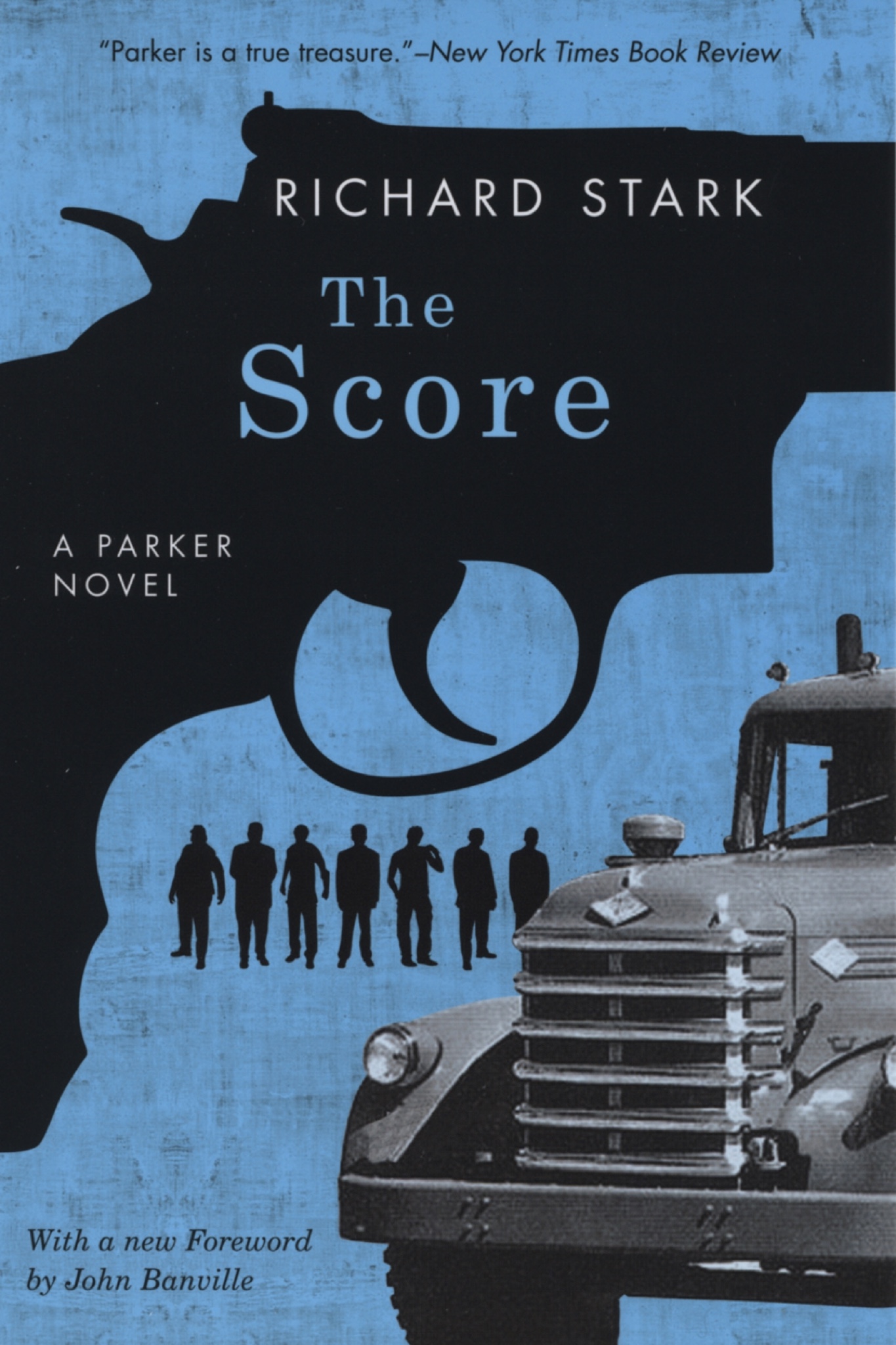
THE HUNTER / THE MAN WITH THE GETAWAY FACE / THE SCORE by Richard Stark

I found myself in a slump earlier this year. So I did what I normally do and read all of the Parker graphic novel adaptations by the inimitable and sorely missed Darwyn Cooke again.  After I was done with those, I figured it’d be fun to finally pick up the original novels by Richard Stark, which I’ve been meaning to do since I first read these comics.

They definitely got me out of the rut, and I went through a handful of them in quick succession. Incredibly fun, incredibly fast reads that don’t demand much other than for you to sit back and enjoy the ride.

These three were my favorite of the ones I read, but I hope to continue with this series.

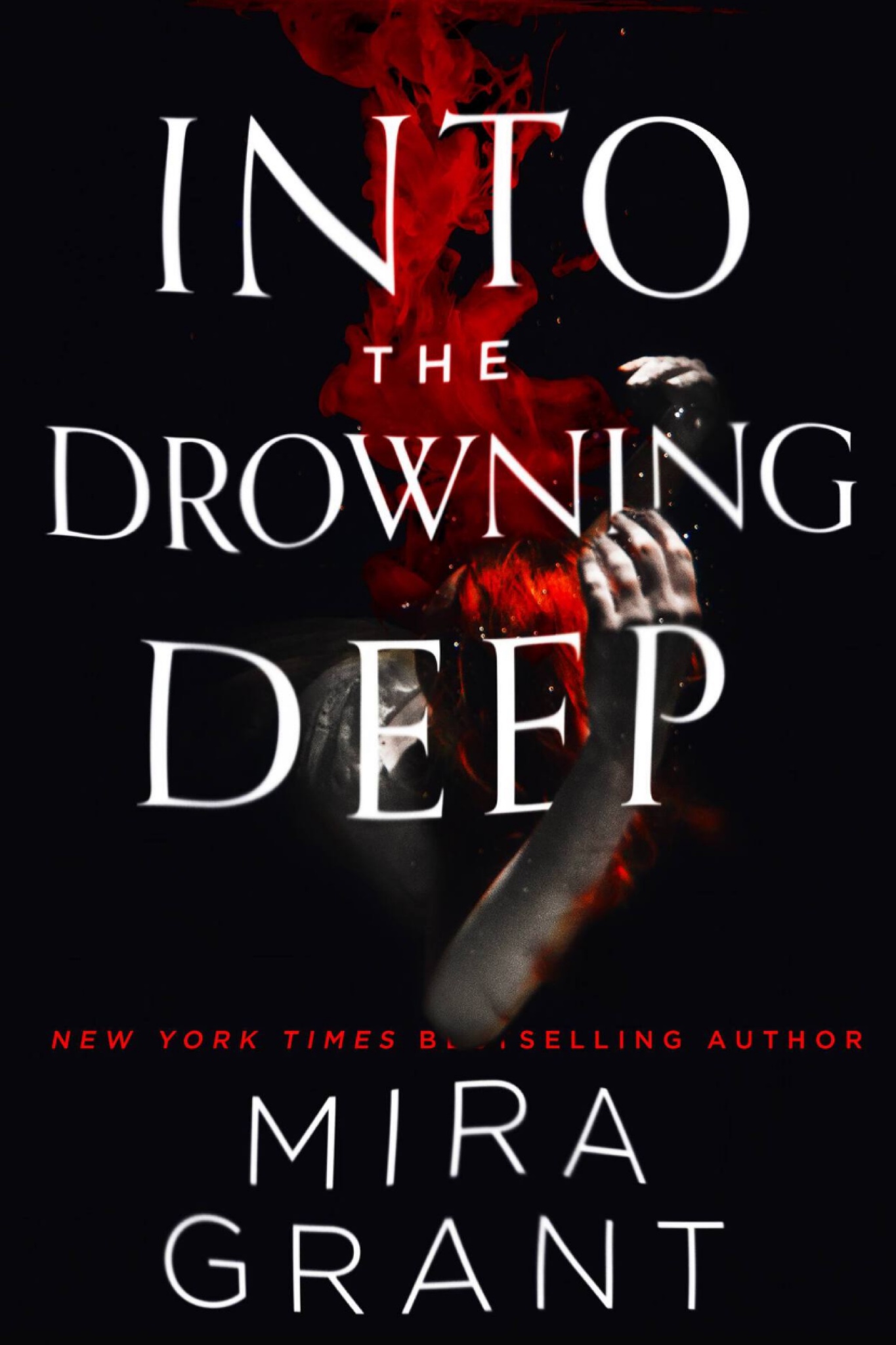
INTO THE DROWNING DEEP by Mira Grant

I read a handful of excellent horror titles this year. Indeed, I build my entire Hallowe’en around this premise. The one that ended up thrilling me the most wasn’t even read during the spooky season, though, but summer instead. Something that feels just a tiny bit sacrilegious. But Summer Spooks are a thing in my world, and this one is a prime example.

I’m a sucker for more grounded horror*, and this read very much like Jurassic Park-but-with-freaky-mermaids and I dug the hell out of every tense, gory moment of it.

* Nonsense but make it sciencey!

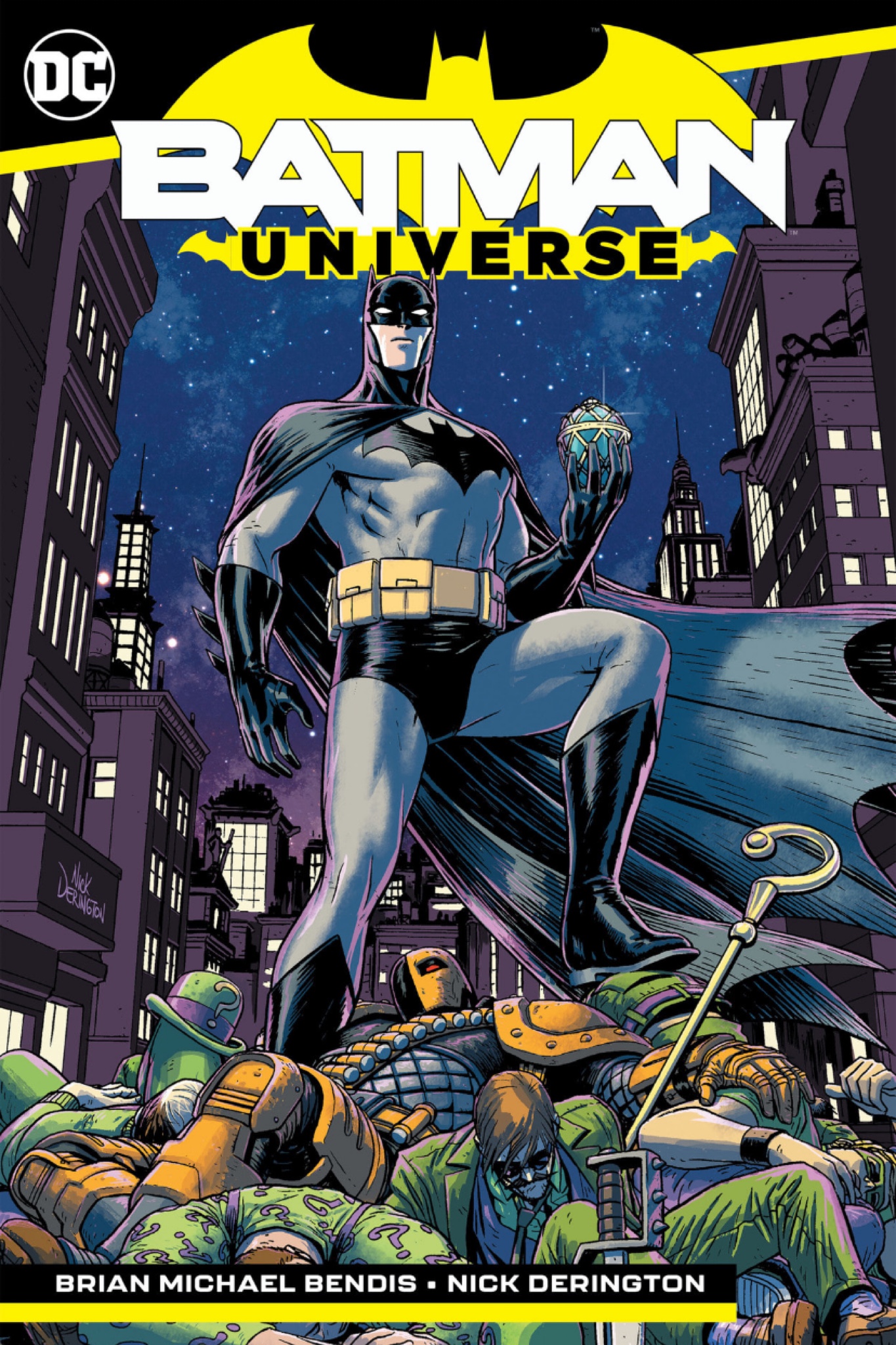
BATMAN: UNIVERSE by Brian Michael Bendis, Nick Derington, Dave Stewart

2022 turned out to be the year that stepped lightly off the superhero train, in a way.* It wasn’t a conscious choice. I just found myself not getting excited about anything that was coming out unless it felt fresh and new. 

That only really happened twice this year**, with The Batman pretty much being the Batman movie I’ve always dreamed of, and Universe by Bendis, Derington, and Stewart being the Batman comic I didn’t know I wanted and needed. The most fun I had reading all year.

* In film and television, anyway. I will probably always read superhero comics.
* The fact that both instances involved Batman shouldn’t be surprising, as Batman is the best.

PATINA by Jason Reynolds

Jason Reynolds is an author who never fails to impress me. His dowright poetic use of language. The way he manages to pack so much into such compact packages.

Patina is the second book in the Track series, which I’m going through slowly because it’s so obviously something special. The title character was one of my favorite protagonists this year.

THE WOMAN IN THE LIBRARY by Sulari Gentill

I do love when mysteries turn towards the meta. (Again, blame Rian Johnson.) Like Security, this one plays with tropes and conventions in a way that deeply satisfies me. I had an absolute blast reading it.

My third favorite twist of the year. (2022 was a good one for twisty fiction.)

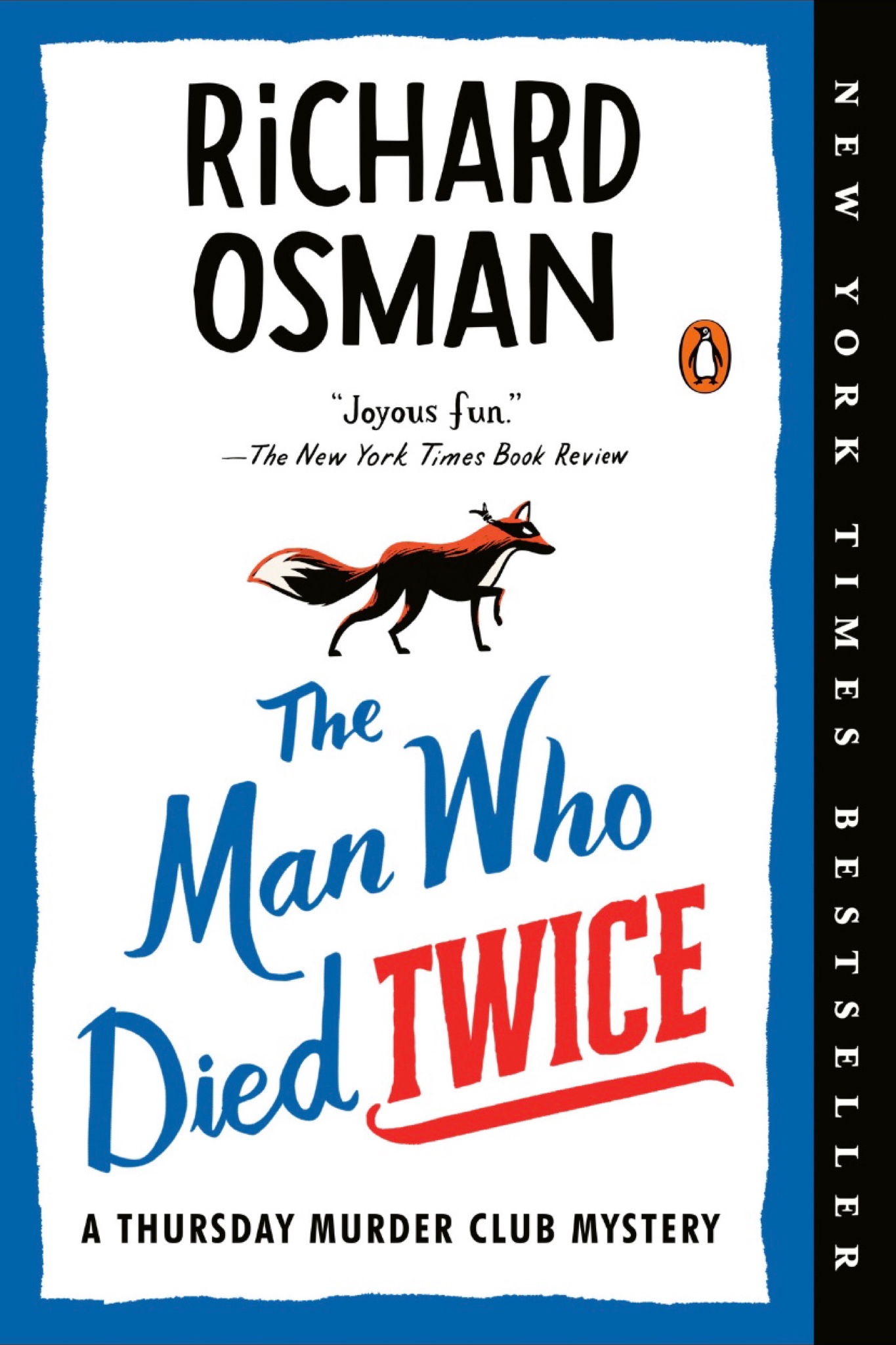
THE MAN WHO DIED TWICE by Richard Osman

Murder mysteries still reign supreme in this household, although I read only a few of them this year. But the Thursday Murder Club continues to capture my heart. Osman has a wonderful knack for writing immediately engaging characters — especially so with his antagonists who, while not exactly lovable, are certainly charismatic. It’s really an enviable quality.

I didn’t like this one more than the first book, but only because nothing quite compares to meeting favorite characters for the first time. The central mystery here was much more up my alley, though. Magnificently twisty.

EXHALATION by Ted Chiang

This was also the year I rediscovered the joy of the short story. And Exhalation was the perfect book with which to do so.

Chiang’s work astounds me, and this brief collection easily has a couple of stories I would now consider all-time favorites. “The Merchant and the Alchemist’s Gate” is a perfect, precious pearl of a story, and one of the absolute best things I’ve read in years.

LEGENDS & LATTES by Travis Baldree 

Another entry into the “low stakes stories about people just hanging out” genre that I find myself gravitating towards more and more the older I get.

Went into this one without any great expectations, but it ended up becoming one of my favorite reads of the year.

Cozy, clever, and heartwarming. I loved the world of this book and see myself coming back to it often.

A PRAYER FOR THE CROWN-SHY by Becky Chambers

My most anticipated book of the year and it did not disappoint. Chambers has turned into a favorite author in just a scant handful of years.

Like its predecessor, I read it twice in as many days. Illuminating, soul-enriching, life-affirming. I love this world and the characters of Sibling Dex and Mosscap like I’ve loved precious few others.

The news that Chambers would not be revisiting this series any time soon pretty much devastated me, but as it stands, it is a perfect duology.

My favorite read of the year, to the surprise of literally no one.


Once again, I hope you had a wonderful year, in both your reading life as well as your personal one. Always look towards the light. See you next year.

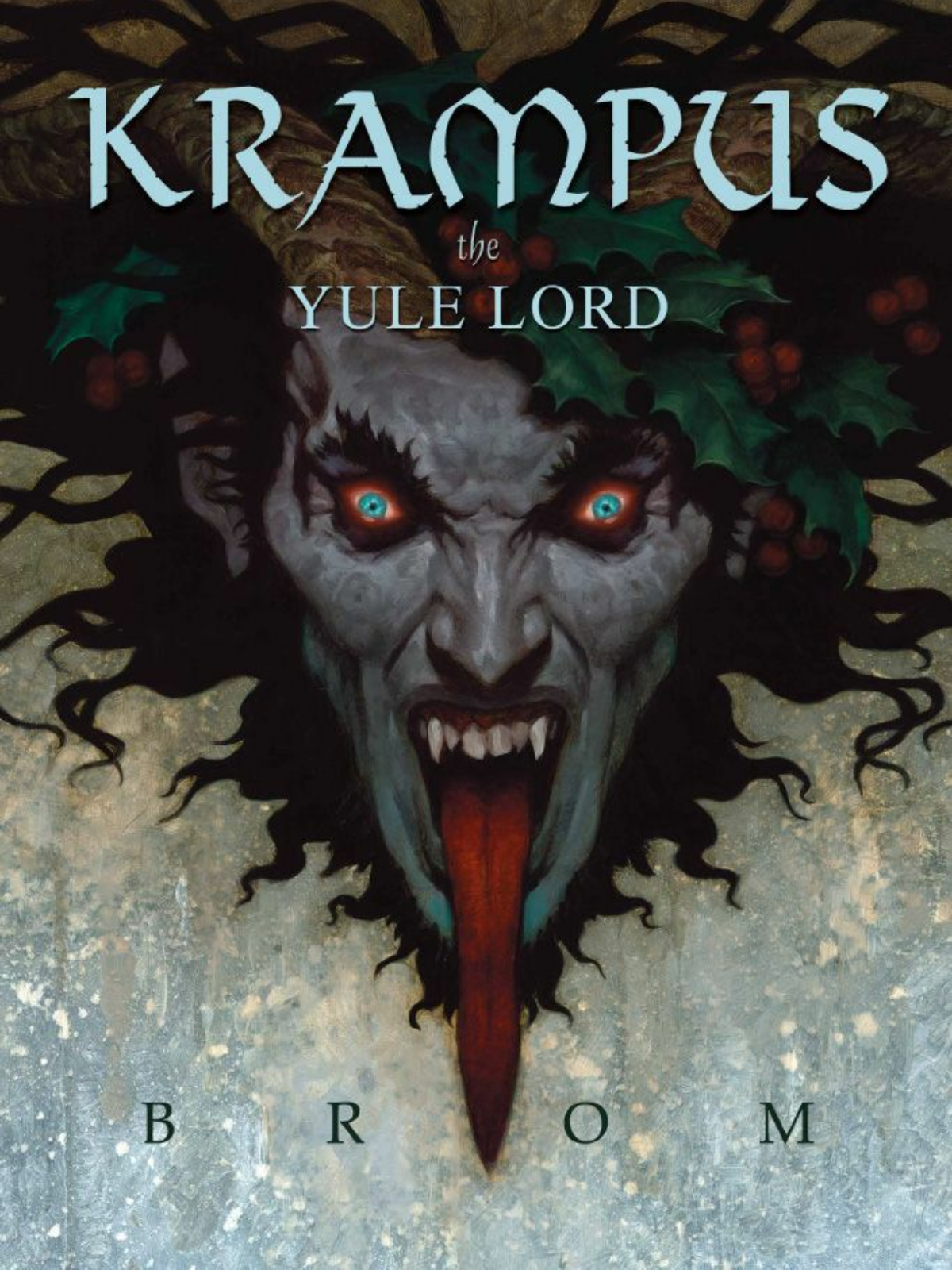
KRAMPUS: THE YULE LORD by Brom

krampus-by-bromJesse feels like a loser. His soon-to-be ex-wife, Linda, told him as much before she left, taking their daughter Abigail with her. He needed to get his act together, she begged him. To take his music seriously. To build a better life with his family. But Jesse’s insecurities always manage to get the best of him, and so he fails to progress. Now Linda and Abigail are living with a corrupt cop who has always had it in for Jesse due to some of his somewhat illicit side-hustles. And he’s alone, living in a bleak trailer with a mood to match. To make matters worse, it’s Christmas Eve, and Jesse has nothing to show for it — no gifts to present to his adoring daughter. Jesse feels like a loser, all right. On top of it all, he must also be losing his mind, because he swears he has just seen Santa Claus drop out of the sky and run into his trailer park, and a pack of monsters following behind him.

Krampus feels like a loser. He has been imprisoned under the earth for the better part of a millennia by now, placed there by a traitorous Santa Claus, betrayer and usurper. His false holiday has overtaken the tried-and-true traditions of Yuletide, making the world forget about its old gods and spirits and, indeed, the Yule Lord himself. Full of vengeful rage, he sends his faithful Belsnickels after the jolly old fraud, intent on unleashing the spirit of Yule back into the world, where it rightfully belongs.

Fate will make Jesse and Krampus cross paths, forming the unlikeliest of duos, finding that they need one another to fulfill each of their ambitions.

○○○

I didn’t think much of Brom’s Krampus: The Yule Lord, unfortunately. It’s a shame, since Slewfoot was one of my favorite reads this past Hallowe’en season, and in many ways this is very much the proto-version of that book, with all its focus on Pagan traditions and customs, and its fervent criticism of Christianity. In Slewfoot, this angle was compelling because its main character was a woman fighting against Puritan superstition and oppression with the help of the title character, an old forest god that, to the colonists, represents the evils of the natural world. Here, Krampus — basically a more fanatical, whimsical version of Slewfoot — uses his disdain for monotheistic narrow-mindedness to… mostly help a small-time crook get back with his wife and daughter?

Which is basically my main gripe with this book. Jesse’s story, while interesting in a crime drama sort of way, bears no real relevance to Krampus’s plot against Christmas, other than in the most peripheral of ways. And the problem is that, despite this novel’s title, Jesse is very much the main character: he’s the one who gets a proper arc; the one whose journey forms the emotional center of the book. The way the story is constructed, though, ends up as acting like a detriment to both plots: whenever a particular thread is picked up it feels like an interruption of the other, rather than a complementary narrative. It makes the novel seem as if two vastly different books have been forcefully fused together, forming a very oddly-shaped beast. It doesn’t help that the characters themselves comment on this same thing, either, with Jesse forever complaining about Krampus’s obsession being an obstacle for his own objective. Again, it’s a very peculiar choice.

I didn’t hate the book, though. Even if it’s not what you expect going in, you still end up invested in Jesse’s story. And on the more fantastical side of the tale, I found Brom’s Norse take on the whole Christmas mythos fascinating. It’s a little overwrought, but it also makes complete sense to make trickster figures like Santa Claus and Krampus related to the god of mischief himself. Krampus was an interesting character — a monster with a romantic bent. I enjoyed reading his melodramatic rants and outbursts. Really, it’s just a shame that he ends up becoming a supporting character in his own book.

Once again, Brom’s art is stellar, and once again I wish there was much more of it here.

SECURITY by Gina Wohlsdorf

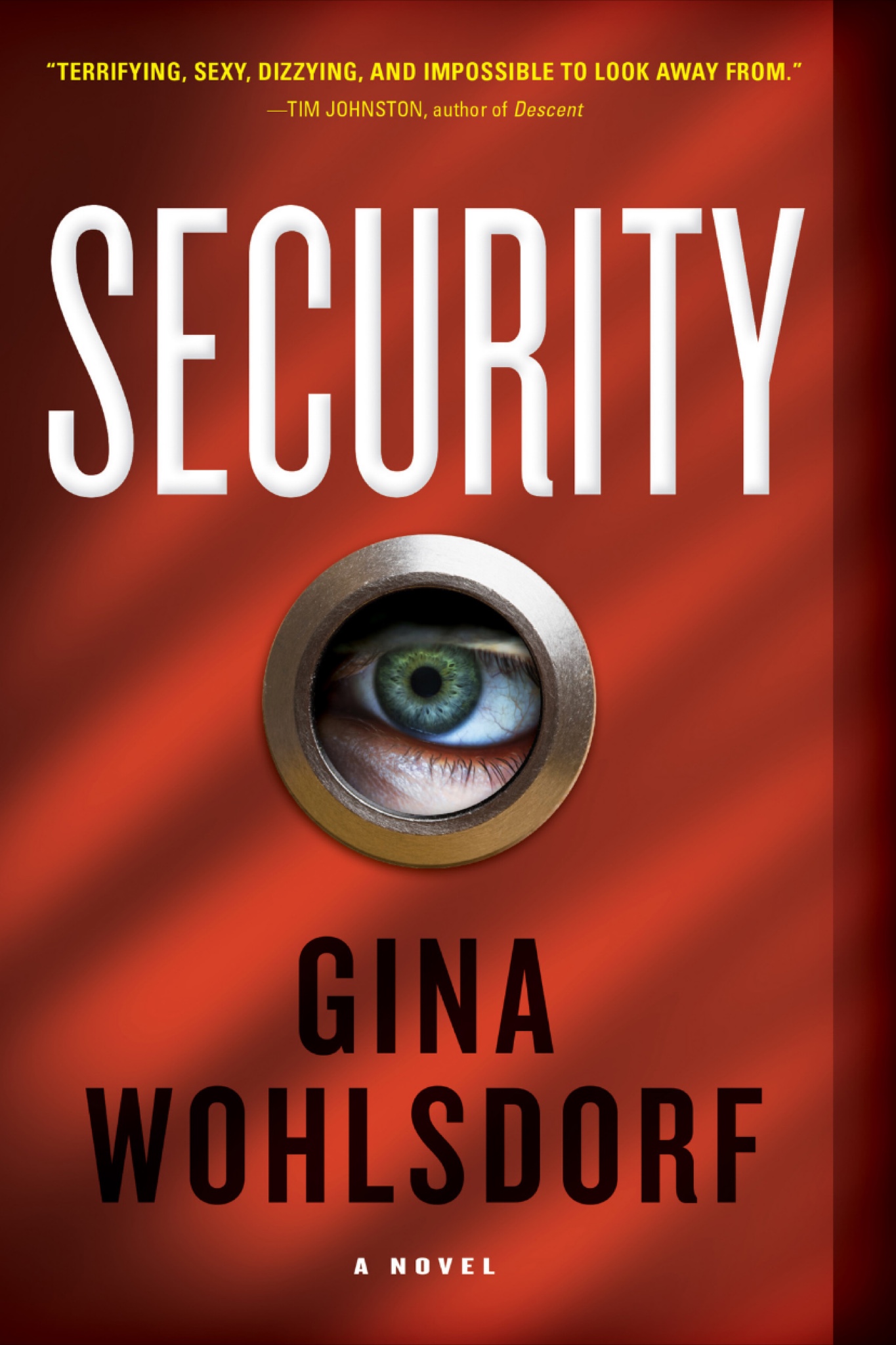
security by gina wohlsdorfThe Manderley Resort is a modern marvel. Designed and built as an exclusive getaway for the glitterati, it boasts only state of the art technology, with a security system to rival those of most governments, the better to ensure the peace and privacy of its pecunious patrons.

The day before the hotel opens for a press preview,  a small group of employees work through the night to make sure things will go smoothly. It’s a stressful enough time for Tessa, the hotel manager, without having her distant foster brother come barging into the resort and her life, dragging along with him their complicated, cluttered history. The rest of the group bring their own convoluted baggage to stir into the pot of the hotel, the pressure of which is sure to come to a head sometime during the night.

Witness to all of this is a seemingly all-knowing, all-seeing presence, tucked away in a secret room on the topmost floor, monitoring all these people that he can watch through Manderley’s myriad of security cameras hidden everywhere throughout the resort. Cameras through which he can watch these domestic dramas play out. Cameras through which he can see the killer in the Michael Myers mask holding the knife that he uses, effortlessly and methodically, to cut through the tension of everybody in the hotel.

○○○

Gina Wohlsdorf’s Security is a lot of fun. Pulpy, and very tongue-in-cheek (the killer is literally dressed up as Michael Myers). The plot is inventive and intense. Its narrator — who, with their exceedingly detailed asides that increasingly veer into the abstract and existential, reads like a Stoic spec ops Patrick Bateman — is one of the most interesting I’ve ever read, and really is the star of the book. The reveal behind their identity stands as one of the most genuinely surprising and entertaining twists I’ve come across in recent memory.  I had a blast reading this book.⠀

 But, a couple of weeks after finishing it, it’s the format that has stuck in my mind more than anything else. ⠀

 I first tried reading the ebook version  a couple of years ago, but quickly found the robotic narration tedious. I came across a couple of reviewers that felt similarly, but also how they fared so much better when they picked up an actual, physical copy. So, still interested in the premise, which is great (modern hotel with extremely high tech security becomes a deathtrap), I purchased the paperback version. And I was glad to find that it was, indeed, a much better experience. The particular writing style still took a few chapters to get used to, but, thanks to the design of the book, eventually became immersive rather than tiresome. 

The main stylistic conceit of this slick thriller is that its chapters are meant to represent the many (so many) security cameras hidden throughout the hotel — the story’s sole setting. At times, when things are happening all at once, the paragraphs will rearrange themselves into a grid, as if you’re viewing a multi-monitor setup in a control room. More than an aesthetic, gimmicky choice, it’s actually justified in the story when you slowly learn more about who the narrator is and what they do.

The ebook, though, seemingly eschews all of that, leaving these sections as regularly formatted paragraphs. And while the text itself remains the same, there’s a dynamic that’s lost in the digital translation. There’s something stimulating about your eye moving freely across the grid, knowing you can read the sequences out of order and still be just as informed as if you read them sequentially, if not more so. It’s an element that adds to the tension and thrill of the overall story, and without it feels less immediate and more, as previously mentioned, robotic and mechanical, almost as if you’re reading a Wikipedia entry rather than a proper book.

 As someone who reads mostly digitally these days this was a good reminder of how format is much more than convenience, and can be used to add depth and verve to a story. 

○○○

Clever devices aside, a story is nothing without good writing, and Wohlsdorf does a spectacular job here, elevating what would be a convoluted, run-of-the-mill suspense story with flair and panache.

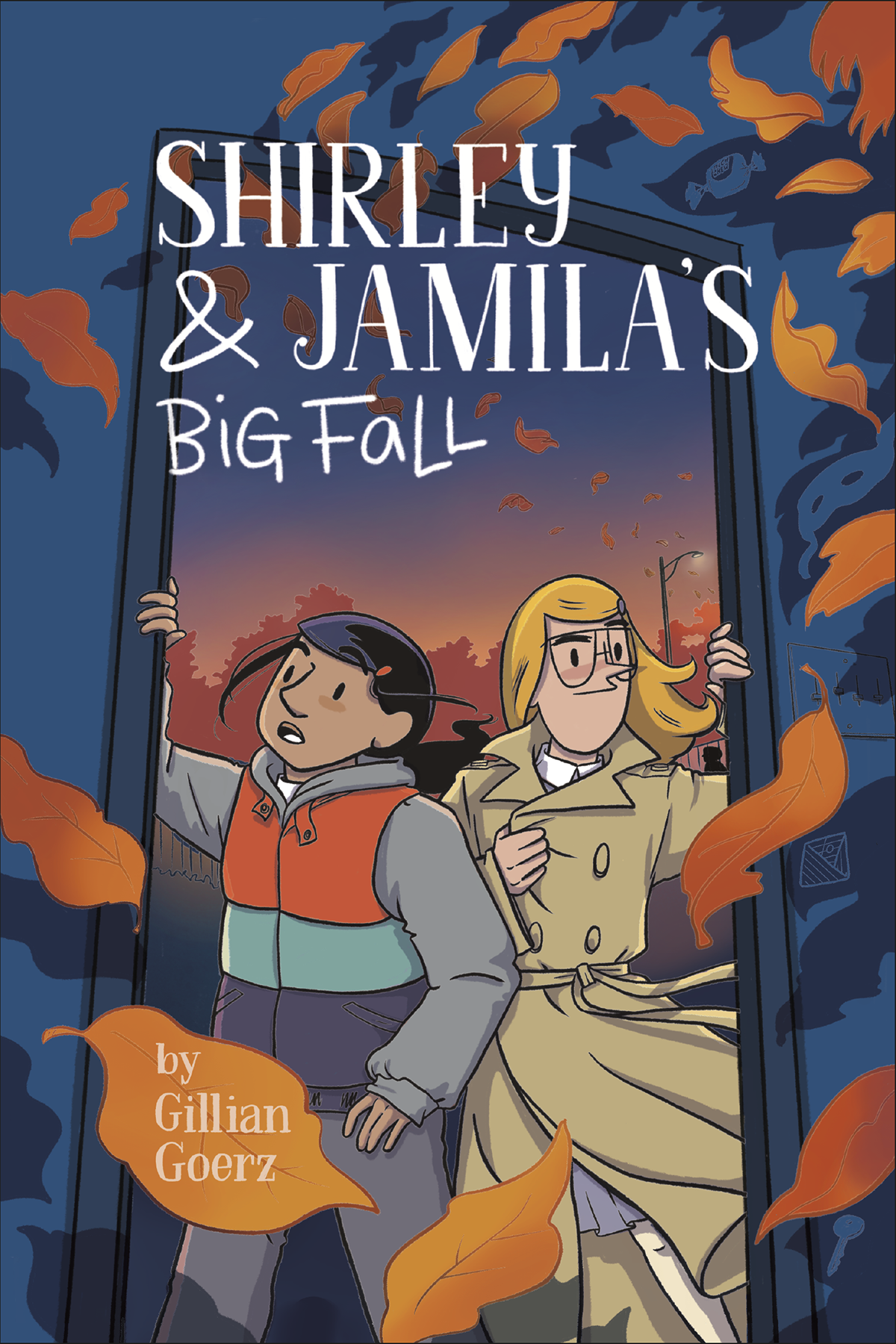
SHIRLEY AND JAMILA’S BIG FALL by Gillian Goerz

shirley and jamila's big fall by gillian goerzAfter their summer adventure, friends Shirley Bones (kid detective extraordinaire) and Jamila Waheed (new spunky kid on the block) prepare themselves for the school daze ahead. It turns out to be a busy term, and between all the extracurriculars, the friends find themselves with limited time to hang out together. Jamila in particular struggles to find new friends, being the new kid, until she meets Seena while trying out for the local basketball team. Like her, Seena is of Pakistani descent, and the pair form an instant connection over their shared cultural quirks. Jamila worries that her budding friendship with Seena will affect her relationship with Shirley, since the two couldn’t be any more different. Add to that the fact that Seena seems to be hiding a checkered past….

Seasoned sleuth Shirley Bones has no time for interpersonal drama, though — not when there’s a case to crack. A loathsome sixth-grader by the name of Chuck is known throughout the school as a notorious blackmailer. Possessing a veritable hoard of incriminating pictures, videos, and text messages, he lords over his  classmates, extorting favors in exchange for his presumed silence, lest he ruin their elementary school careers. Bones and Waheed soon make it their mission to take down the crooked character’s coercive enterprise.

○○○

I had an absolute blast reading Shirley and Jamila Save Their Summer, the first book of this seasonal series, last year. It helped that I picked it up knowing next to nothing about it, other than it involved kid detectives. So I was pleasantly surprised when I realized, halfway through the book, that the series was a Sherlock Holmes reimagining! It’s not overt from the outset (in fact, I don’t think even the blurb mentions it) so I had a lot of fun going back through the story and picking up all the references and homages, most of which seemed obvious in retrospect (the assonance of their names, for one). In a world saturated with interpretations of this world and its characters, this one in particular felt like such a fresh and clever take. I finished it eager to get back into this story.

I’m happy to report that I also had a blast reading the sequel, Shirley and Jamila’s Big Fall, and in fact would say that I liked it a bit more than the first book, if mostly because of the gorgeous autumn setting, which I am always a sucker for. This one is based on “The Adventure of Charles Augustus Milverton,” a story famous for featuring a villain that was even more revolting than Sherlock’s traditional nemesis, Moriarty. (Fans of BBC’s Sherlock will no doubt remember Lars Mikkelsen’s brilliantly repulsive portrayal of the character in the show’s third season.) Chuck is a great and outrageous juvenile analogue of the character, who, instead of doing the things he does for power and influence, here he’s just an overly privileged, pretentious child who has never been denied a thing in his life. It was a lot of fun to watch his machinations being undone by Bones and company. 

Goerz’s character work is wonderful. The supporting cast in the first book was a highlight, and although I’m sad to see they don’t play a role in this story, the newcomers are also immediately endearing. Seena is the obvious standout, but her family is also a delightful addition. That familial aspect is another thing I admire about these books. Middle grade stories tend to do away with grown-ups in some form or another, but in Shirley and Jamila’s lives, they are not obstacles to overcome, but integral. It’s a nice and lovely change of pace. 

The artwork remains exceptional. Goerz draws people in a simplistic style that’s very reminiscent of Raina Telgemeier’s work, but her characters are a lot more expressive. They are never static — their faces and postures change constantly throughout the pages and panels, lending the story a dynamic feel. But Goerz in particular excels at scenery: her backgrounds are beautiful and incredibly elaborate, positively bursting with fun little details. They are also super cozy, which is only appropriate, given the autumnal setting (the aesthetics of Seena’s family apartment are goals, as the kids would say). I usually fly through graphic novels, but I consciously slowed down while reading this one, the better to appreciate the art.

All in all, another highly enjoyable adventure featuring two intrepid sleuths that are quickly becoming favorites. And I can’t wait to see what surprises Winter has in store for them.

MASTER OF MURDER by Christopher Pike

master of murder by christopher pikeTeenager Marvin Summer writes bestsellers. His latest series of thrillers, The Mystery of Silver Lake, has taken the country by storm, and the public waits for the final book with fevered anticipation. Marvin is feeling the pressure, although nobody around him would be able to tell: he writes the books under a pseudonym — Mack Slate — so no one, save his younger sister, knows he’s actually rich and famous. Much to his chagrin, at times. If his schoolmates knew, he could surely get with any of the girls he frequently lusts over, and the arrogant jocks and overbearing teachers that look down on him would turn to idolization instead. But that’s a fantasy Marvin must entertain at least until he turns eighteen, lest his abusive, alcoholic father find out about his fortune and exploit it. So Mack Slate remains a secret.

Until one day Marvin finds a letter in his postbox proclaiming to know his secret, words that start a chain reaction that will turn his already complicated life upside down as the intrigue and murder that fill his fictional stories suddenly bleed out into the real world. 

○○○

Master of Murder by Christopher Pike was trash of the highest caliber — and I mean that as a total compliment. An outrageous, but ultimately fun ride. This read like Fear Street by way of Twin Peaks, where the central question was not “who killed Laura Palmer?” but “who hurt Marvin Summer?” instead. (The fact that the book felt Extremely Nineties only added to my enjoyment.)

This was my first Pike book! I tend to read mysteries and thrillers around this time, and seeing as how The Midnight Club adaptation on Netflix was one of my favorite things I saw this past Hallowe’en, I thought one of his books would be the perfect transition between spooky season and murder mystery month. The man wrote a mean and compulsively readable book, although at times it very much read like a first draft affair, partly due to all the unusual names that seemed more like placeholders than anything (Quade, Triad, Sesa, Pella — you know, traditional Pacific Northwest names), but also due to the prose itself, which was sometimes very clunky and decidedly juvenile. (Although maybe that last bit was meant to be intentional, seeing as how this was a story about a teenage author hopped-up on raging hormones.) Also it’s good that not much is known about Pike himself, as he rarely does any press, because Marvin Summer reads like a self-insert if there ever was one — and it’s not a flattering portrayal at all.

Still, I had fun with it. I just hope The Midnight Club gets another season, because Mike Flanagan and company could spin wonders out of this angsty adolescent murder mystery.  

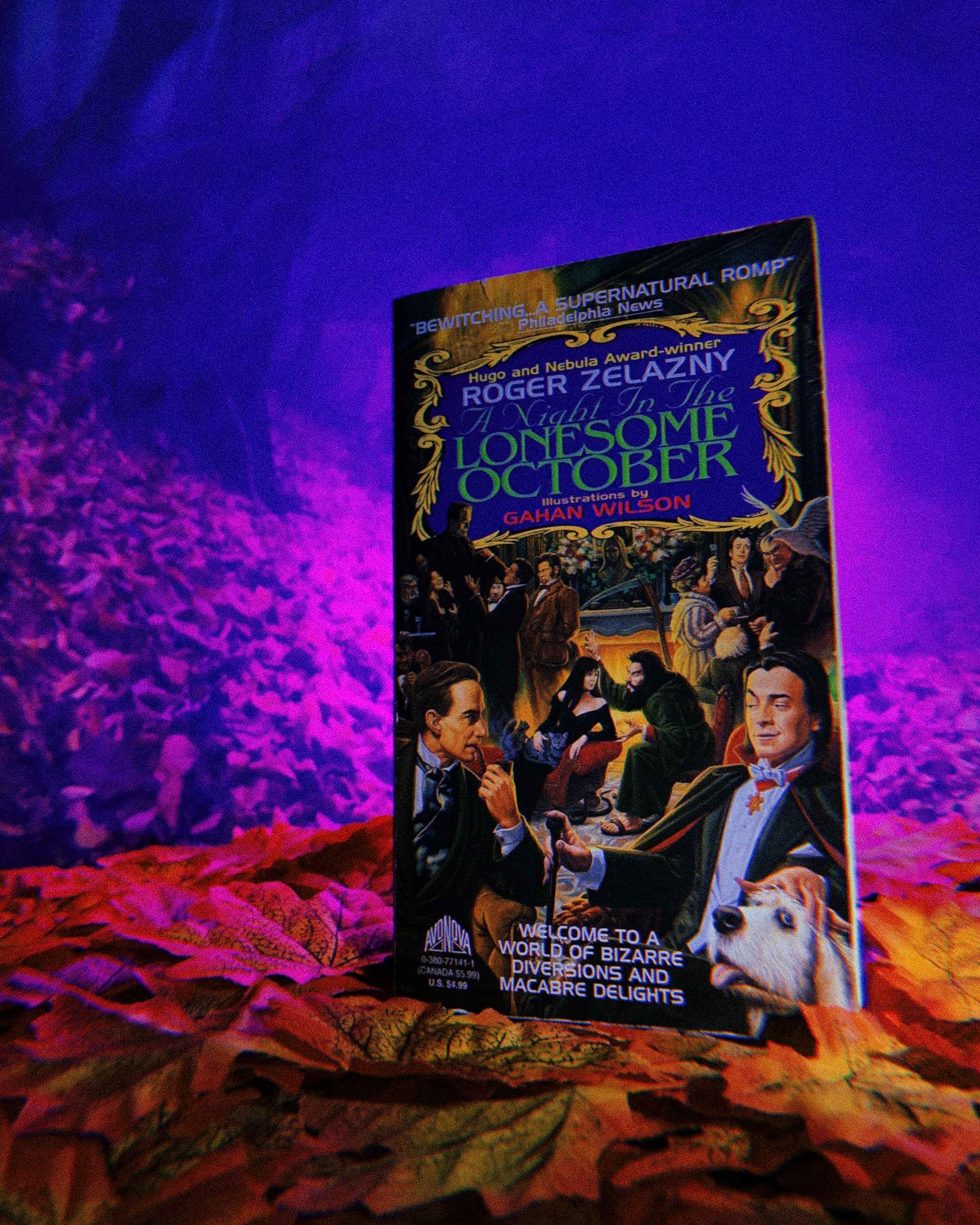
A NIGHT IN THE LONESOME OCTOBER by Roger Zelazny

a night in the lonesome october by roger zelaznySomewhere deep beyond the woods you know there stands a house that should not be there. Reality shifts and shimmers around it, surrounding the peculiar structure in a vortex of interdimensional voids and cosmic fissures and other things. The shutters clang against their windows. The house is entirely dark, save for a single flickering light in the topmost room. Inside the house that should not be there, someone is reading.

The man closes the book with, he believes, a flourish. Outside, the winds appear to have subsided. The house has, at the very least, stopped shaking. The man sighs and gets up from the bed. He puts the book he has just finished on a side table already full of books and loose papers and empty mugs. He looks at the rest of the chaotic clutter that makes up his room with a slight look of shame. He catches his reflection in the mirror above the dresser. His hair has grown longer and wilder in the month that he has been here, not to mention his beard. He resolves to tidy up his appearance before leaving later on in the night. But, before he gets to that, he spots a book on one of the shelves that line the walls of the room — a book he has been meaning to read for the longest while. He grabs it, thinking that it would be nice to pick up something with no relation to arcane rites or rituals. Sitting on the edge of the bed, he cracks the book open and begins to read.

Calcifer, his wing all but healed, flies back into the house just as the man makes his way down the stairs. He has cleaned up somewhat, the crow notes, although to him he still looks like something you’d find out in the woods. Something dead and ravaged. He doesn’t voice this thought, however.

“I was just making the rounds outside,” he says instead, alighting on a pile of books on top of a table in the entryway. “All clear now. No weird things shambling about or cracks in reality or nothing.”

“You sound disappointed about that,” the man says, taking his jacket from the coat tree near the front door. 

“No, it’s just,” Calcifer struggles to find the words. “That’s it? It’s over? We… we won?”

“Again,” says the man. “You sound disappointed.” 

“No,” the crow says, glaring. “No, it’s just that it feels slightly anticlimactic.”

“Yeah, I get what you mean,” says the man. “A few of the books I read this season were like that. Ah, well. They can’t all be hits.”

“That’s not what I mean at all and you damn well know it.”

“Alas.”

“No, not— Nevermind.”

Osseous walks into the foyer then, a small stack of books in their skeletal hands. 

“Thank you, Oz,” the man says, receiving the pile. He begins the complicated puzzle that is shoving a bunch of books into an already overstuffed bag. “Our feathered friend here was just complaining about how abrupt the conclusion to this whole thing was.”

“The Hallowed Ritual can feel like that, at times,” says the skeletal librarian. “It is a good thing. It means the other players played their parts well and without much trouble.”

Calcifer caws. “It’s not that I’m complaining or anything,” he says. “It’s just that, you know, it’s the Maleficent Monarchs we were talking about. Just thought it would, I dunno, involve more. Some epic battle or whatever.”

“I think he’s been reading too many of these books, Oz,” the man says with a grin.

The crow stares daggers at the man.

“Look,” the man says, while working on his storage conundrum. “You have to realize that despite the fact that Those That Dwell in the Dark are nigh omnipotent otherworldly beings, they also just happen to be a colossal bunch of losers.” 

Osseous nods their skull in agreement. “The Ritual has been going on for a long time. The other side has yet to win.” 

“That’s comforting, I suppose.” 

“Yes, well, maybe you’ll get your fight to the death next time, Calcifer.”

The crow starts to preen his feathers, ignoring the man.

The man shoulders his bulky rucksack. “Friends, the lonesome October has finally come to a close. Now we get to relax and enjoy the fact that the world has not yet come to an end thanks in part to our humble efforts.”

The man opens the front door. Outside the house that should not be there, moonlight shines on the fall foliage of the surrounding forest, making it gleam in the night. “It’s been surreal, guys,” he says with a frivolous bow. “Until next time.” 

The door closes and he is gone.

“Huh,” Calcifer says. “So that’s that, then.” 

A knock on one of the sidelights flanking the door. “Oh and happy Hallowe’en and all that!” The man’s declaration sounds muffled through the glass. He gives a thumbs up and disappears once more, into the night.

The librarian and the crow stand quietly for a moment.

“Hey, speaking of which, Oz. We get any trick-or-treaters out here?”

“Sadly, no.”

“I guessed. Shame.”

“Yes.”

“At least things should be quiet for a while,” Calcifer says, after a beat.

“Yes,” Osseous says.  “Well, the ghosts do tend to get restless come Yuletide.”

“I’m sorry, what?”

“The ghosts.”

Calcifer sighs as a myriad of questions quickly come to mind. He knows better now, though. Knows that any answer he seeks he can find without much difficulty, here in this house full of secrets and stories. At the moment, however, there is only one question he wants answered.

“We got anything to eat?” the crow asks. 

The librarian nods. 

Inside the house that should not be there, somewhere beyond the woods you know, the two friends make their way towards the kitchens.

🎃

A Night in the Lonesome October was a re-read for me, although it had been so long that I had forgotten most of the particulars. It certainly made an impression, though, since the little framing story that I had been writing throughout the season turned out to be my own humble riff on this wonderfully playful and spooky story about a group of occultists trying to impede — or invoke — the End of Days through the closing — or opening — of a gateway for the Great Old Ones. (“Humble,” he says, shamelessly.)

The influence shouldn’t have come as a surprise, though, since Zelazny was a writer after my own heart. The book is full of clever, whimsical wordplay (there’s a romantic subplot that exists solely as a means to a pun) and droll dialogue riddled with amusing arcane-babble (techno-babble’s mystical equivalent).

Lonesome October is also very much a love letter to classic horror, not only of the filmic and literary persuasion, but the historical as well (our narrator is, after all, Jack the Ripper’s canine companion). References and easter eggs abound, focusing mainly on the monster movies of Universal Studios and the lurid yarns of the Victorian era. Some Lovecraftian lore is thrown in for good measure. (And also Sherlock Holmes, because of course he would stick his pipe in at some point.) 

Each chapter corresponds to one night in October, and I had a tremendous amount of fun picking up this book every evening throughout the month. It turned out to be a grounding ritual as well — a reminder  that, despite my tendency to stress out over wanting to watch all of the things and read all of the books and write all of the stories, this ludicrous holiday should be, above all, an enjoyable time. This book made my October even more fun than it already was (and, indeed, much less lonesome). 

And it has been a good one. I watched some decent movies. Read some fine books, of course. Even wrote a mad bit of a short story!  So I think we can jot this month down as a success. Surely we’ve managed to keep the darkness at bay for a little while longer. 

Happy Hallowe’en, you lovely weirdos.

SLEWFOOT by Brom

slewfoot by bromr̵̢̲̟̦͔͂͠í̷͖́͊f̵̧̧̮͖͖̩̠̎̉͜͜t̶̜̊͛̃͝s̵̖̥̖͆́̒̀́̎͊̈͘͝ ̸̩̞̣̣̺͚̇̔͊͛̈́̃̌ͅi̸̡̢̨̛̺͍̬̰̹͈̮͌̑̑́̊̚n̸̰̥̞̍̈́̒ ̸̧̛̟̝̟͖̺̓ͅt̷̹̬͈̉͊̄ḩ̴̦͈͚̞͎̃͗̏̔́̕̕͠ę̶̀͆̐͐̈́̿̀ ̴̢̡̡̲̟̘̏̐̚f̴̨͈̳̼̣͉̱̫̬̏́̑̊̈́̚͜͝a̷̙͖͒̊̿͗̇b̴̧̙̥͍̪̦̟̟͖̈͝ͅr̸̨̭̹̦͔̙̪̬̦̐̅̿̾̅͌͑̉i̵͎͉̪̲̭̣͈͍̼͚̔̄̀̌̔͗̾c̵͕̦̼͎͗͑̅͒ ̴̫̟̼̗͓͗̂̈́̂̕͝o̵̝͖͗͐̓̾̽̀f̸̊͆̾̀͊́ͅ ̴̨̡͈͎̙̤̝͈͓̖̃̈̈́̓́̒̆̈̆r̴̡̤̞̻̘̯̈́͆͛̅́̽̋͆͘ę̷̟̥̪͖̞̣̮̒͗͛̆̃̿͐͘̚ă̶̢̢͙̲͉̯̫͈̭̊̾͐̍͒͝ͅl̴̢̠̲͉̤͇͍̫̀̚ị̶̗̻͓̪̮͙͔͒t̴̗̣͛͒̒͌̈́̎͂͑͝͝y̸͎͍̔̋̌̃̊́̓̈̓̈́

ċ̵̨̪͇̝̮͓̞͉͙̒̏͋̀ä̵͔̲̦́̒̿͆̆͂̽̓n̸̢͈̪̬̮̩͕̹̭͍͐͂̋̍̃̍̈́ ̵̢̨̘̺̭̙͙͚̬̤̍͑̓ỷ̷̡̙͓̤̖͖̊͛̅̐͋̂͠o̶͍͚̹̫͙͐̉̈͂u̶̮͙̠͚̯̭̥̘͌͗̔̏͝͝ ̷̢̢̱̖̞͙̿̃́̈́̓̀͆̊͘ͅs̷̢̨̱̯̙͖̳͒ë̷̟̤͕́́́̍͒̇ę̵̡̞̱͓̫͎̬̺̻̔́̓̓̅̓͌͂͝ ̶̹̪͖̼̹́͒̎̈́͒͠ṱ̴̰͙̏͌͂͒͒͗̌͑͝h̸̜̣̏̃̽͊̄̃̌͊̐͠ḛ̸̥̟̥̖̯͚̋m̶̨̧͙͕͂͐

t̸͈̟̪̠̹̏̇̑̉̽̚̚h̶̺̱̖͛͗̿e̷̱͊̐ỵ̸̳̺̺͈̘͍͈͋ ̶͓̬͎͇̙̠̯̙͆ä̶̢̞̟͇̾̕r̶̺̙͔͙͖̀͑͋́͆̚e̷̢̡͎̠̻̞͉̝̋̿̄͛ ̴̨̢̡̦̪͔̗̥̞̀͂͂͋̆͌̃͑͝c̶̡̨̬̝͕̯͖̲̻̚ơ̴̡̡̙͛͆̈́̑̇̉̄m̵̫̺͖̻͓̓i̸̡̜͕̙͖̫̦̗͙̋͂͜ņ̷̡̙̫͑̑́͂̌͗͌͝͝g̷̛̦̹̠̬̦̺̃͂͛̃̒̇ 

🎃

Slewfoot is one hell of a slow burn. Author Brom takes his time crafting this Pagan and Puritan mashup, dedicating the larger part of the book to its construction. Both seemingly incompatible worlds come crashing together with the meeting and burgeoning friendship between Samson, an old beast of the forest, and Abitha, a widow — making this story a lot less like the film The VVitch (which I was expecting) and more like a strange combination of Guillermo del Toro’s The Shape of Water and Pan’s Labyrinth (which I was decidedly not expecting). (This also meant that I kept picturing the titular creature as played by Doug Jones, which only helped this tale.) 

Although Brom’s writing is clear and serviceable — and the passion he has for this peculiar story is evident — this first half is somewhat of a slog to get through, the narrative insistent on pushing us through the muck and mire of convoluted lore and mythology before getting us to the action proper. The story doesn’t truly pick up until its third act, which begins with a heartrending and infuriating (and, from what I can gather, fairly accurate) depiction of a witch trial, and ends with a massacre. After spending so much time focusing on the ill treatment of Abitha, its main character, witnessing the struggle and slander being piled on top of her to an almost oppressive, stifling degree, the euphoric release she is ultimately afforded in the final few chapters feels entirely and utterly satisfying, and we can’t help but revel along with her.

A dark, undoubtedly bewitching tale. Slewfoot is full of haunting imagery* and harrowing historical horror. I enjoyed it quite a bit.

* Literally, in this case, as Brom is an accomplished artist and illustrator and as such fills his novel with stunning artwork. I only wish more pieces had been included.

HORSEMAN by Christina Henry

horseman by christina henryOutside the house that should not be there, there is pandemonium. A vortex of vexations engulfs it, utterly. In furious desperation, Unspeakable Things try to get in and quickly find that they cannot. The Keeper’s wards hold. The darkness remains, for the moment, without.

Inside the house, in the eye of this peculiar storm, there is relative calm. The librarian, the man, and the crow are in the study. They form a lazy triangle: Osseous on the armchair, holding a cup to their skull; the man on the carpeted floor, resting against a bookcase, paging through a book; Calcifer on the windowsill, looking at the chaos outside.

Keeper. Reader. Seeker. 

Calcifer is thinking of the conversation they had earlier in the night. Between Osseous talking in their esoteric, poetic style and the man just prattling on about how everything is a story and they were all just characters with roles to play, it turned out to be a rather vague and muddy affair.

“Roles in the Ritual are often nebulous, mercurial things,” Osseous had said. “By which I mean they are neither rigorous nor rigid. Take mine, for instance. I am Keeper. As a librarian, I keep books. As householder, I keep this house. As caretaker, I keep my companions safe.” 

“It’s wordplay, more than anything,” the man had  said. “You are Seeker.  It’s what you’ve been doing all along. Exploring the house. Asking questions. You want to know. You seek answers. Specifically, considering our persuasion, you seek out stories.”

A confusing, cryptic clutter. But it was that last thing the man said that made the crow reflect. Because, in a weird way it was true. Calcifer had left his murder behind because, while perfectly nurturing and comfortable, he wanted more out of his life than to sleep and eat and mess around with his many relatives. He wanted to light out into the unknown. He wanted some semblance of adventure. And what were adventures if not stories?

Calcifer fluffs up his feathers, shaking himself out of reverie.  He had been around books and bookish people for too long now. He was also finding out that he did not mind that much. 

“It’s best not to think about these things too deeply,” the man had also said. “Otherwise it will just seem like someone is making it up as they go along.”

So Calcifer doesn’t dwell on it for much longer. He figures, you figure out life as you live it. He figures, you figure out the story as you write it. He figures he is getting rather hungry.

Outside, headless horsemen charge into the night. Hooded executioners garbed in black sit on stumps and sharpen their axes. Fearsome flattened figures ooze out from behind the trees. Cruel clowns swing chainsaws through the mist. They can feel it, the waning of the month, the withering of the Veil. They can feel their dark, cruel masters reaching out from the Vicious Void. The house shall fall, they tell them. The walls will crumble. We will come out of the Dark and it will all be over.

🎃

Christina Henry’s Horseman turned out to be the epitome of the three star read for me. I didn’t hate it. It didn’t blow me away. It was fine. 

I do think it’s a little long, and would have benefitted from some more editing. Particularly, there’s a weird repetition thing going on that actually starts with the very first chapter, which is essentially an ode to Brom Bones, the bombastic “baddie” of Washington Irving’s original short story. Brom, the protagonist’s grandfather, is big and strong and imposing, you see. Not only that, but he’s also imposing, big, and strong, as well as, it is known, strong, imposing, and big. The tautological tendency was more conspicuous in the paragraphs that would literally say the same thing as the ones preceding it, only with slightly different wording. It’s an odd quirk that feels less like a motif than it does an oversight, and the fact that it runs throughout the length of the book is baffling.

Aside from that, I enjoyed most of Henry’s writing. The story is very atmospheric, which I am always into. It’s full of deliciously creepy imagery, and it even gets surprisingly gory at times. I also thought the characters were great. Brom Bones is a blast, being such a larger-than-life figure (further augmented by his grandson’s unbridled adoration and idolization). But Ben is the real standout, making for a layered and dynamic protagonist. Curiously, the Horseman gets the short shrift here, relegated mostly to the background. But then again, this is more Ben’s tale than it is the famed goblin’s. 

I do want to focus on one of this story’s most interesting aspects, which is that a fair bit of it revolves around Ben’s identity as a transgender man. Folks from the trans community can, of course, better speak as to how well Henry portrays Ben’s journey, but, narratively speaking at least, it seems slightly superficial here. At the beginning, his identity is mostly incidental: Ben considers himself a boy and that is that — the opinion of others be damned. And I really dug that. People from underrepresented communities can and should appear in more stories that don’t solely revolve around their marginalization. But then the book tries, especially towards the end, to tie Ben’s identity to the story’s larger theme of belonging. It makes narrative sense: What better way to illustrate that theme than by having a character figure out and accept who they truly are? Only that’s not really Ben’s story for much of the novel. He starts knowing fully well who he is and is in fact comfortable in his identity. And although the story at times tries to sell us this notion that Ben is somewhat shunned by the people of Sleepy Hollow, the text only ever shows support and acceptance from most people around him. For the most part, the other characters don’t react to Ben’s identity much at all, other than maybe thinking the child a little odd (tame, considering the time period). The rare moments of true ire and disdain against him are ultimately blamed on the supernatural influence of the antagonist. And in fact the only real pushback Ben gets comes from his grandmother, who wants her grandson to fit into a more traditional, socially acceptable mold — but even then that conflict is resolved not even halfway through the novel. 

Which is fine! Again, stories about marginalized folk don’t have to be only about their strife and struggle. I just thought it was peculiar that Horseman tries, at the literal homestretch, to restructure itself into this story of a trans man’s search for acceptance and identity featuring a protagonist who had already found these things. It would have made for a more dramatic story, to be sure, but that particular journey was seemingly already over and done with before the first chapter even began. It ends up making that particular angle of the story ring a little, well, hollow.

What’s left is still a fun, supernatural romp, though. Spooky and strange enough to make for a decent Hallowe’en read.