
This was November.
November was for murder.
Mostly.




No Country for Old Men by Cormac McCarthy. My first McCarthy. By all accounts, the easiest of his books to get into, which I guess is why I went with it. Still a fairly dense read, though—at least thematically. I thought I would find his famously unconventional writing style off-putting, but I actually loved it. Which, of course, I would: I went from reading stuff like Harry Potter in my early adolescence right into distinctive, experimental books like A Heartbreaking Work of Staggering Genius and The People of Paper in my angsty teenage years. The sheer stylization of these books is a huge part of why I fell in love with them, and I got a similar sensation with this one.
This is, of course, a bleak-as-hell narrative—though not without its heart or charm. I found it quite funny at times. At others, profound. At others still, disturbing. The segment near the end where Moss picks up a teenage hitchhiker and forms a strange and worrying rapport with her that leads—spoilers, I suppose—to both their deaths was unsettling to read in light of the recent revelations concerning McCarthy’s own youthful muse. Something to reckon with when reading the works of proficient, problematic, painfully flawed people.
The Last Devil to Die by Richard Osman. I thought the plot was a bit too meandering and all over the place at first, and it seemed to be on track to become my least-enjoyed Murder Club adventure. But then we got to the halfway point—the literal heart of the book, as it were—and I could not stop bawling for the next scattering of chapters, so of course I ended up absolutely loving it. It helps, too, that the twists were all genuinely thrilling and deeply satisfying. Again, some of the most beautiful characters I’ve ever come across. What a gift they all are.
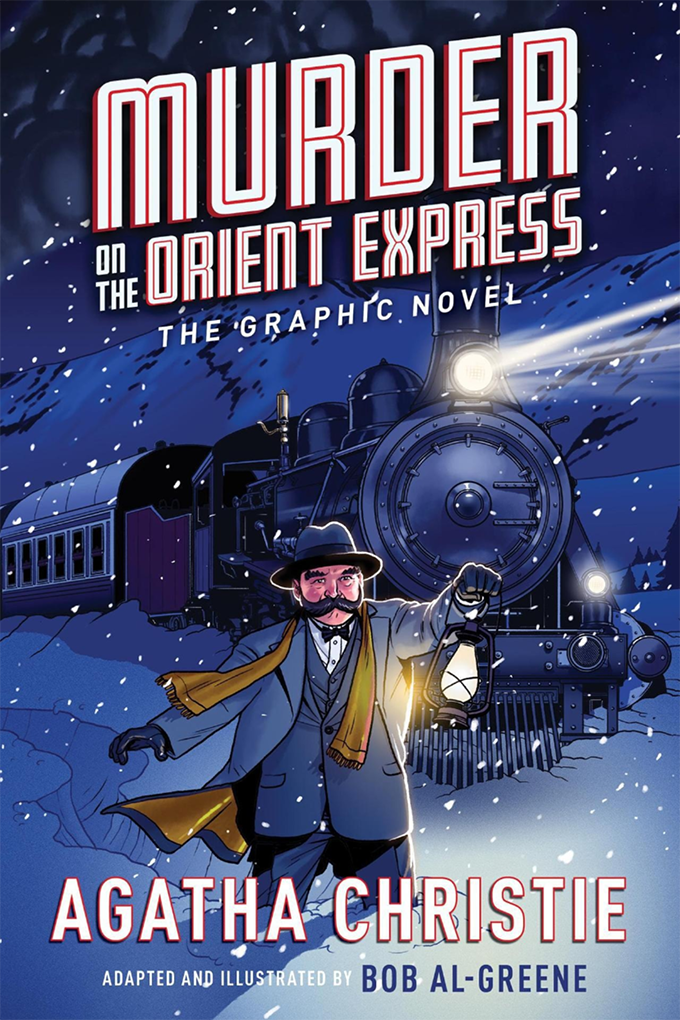
Murder on the Orient Express: The Graphic Novel by Agatha Christie, adapted and illustrated by Bob Al-Greene. A very solid adaptation. I really dug Al-Greene’s portrayal of Poirot, which seems to pay homage to every interpretation of the character: David Suchet’s intense stare, Peter Ustinov’s stocky build, Kenneth Branagh’s ridiculous and amazing mustache. I was very into it. I liked the art style, for the most part, though it did feel somewhat static, at times. I realize these books are mostly just people standing around and talking, but there are, I think, more dynamic ways to portray that. Overall, very good. I was once again reminded how, despite pretty much every adaptation of this story treating it as this huge, sensational case that makes Poirot question the very nature of morality, the book version is very much like, “There’s another case solved. Anyway!” and I’ve always found that discrepancy between renditions highly amusing.
The Impossible Fortune by Richard Osman. Again, I enjoyed reading this because I love these characters so much, but I definitely found this the weakest book yet. It’s overlong and a little aimless. Osman is usually very good at juggling large casts, but with this one, he probably had too many up in the air—he didn’t seem to know quite what to do with them. Characters would unceremoniously disappear for chapters at a time, only to be brought back and contribute next to nothing. Joyce was the most egregious example here—her throughline with Jasper was lovely and thematically rich, and it felt like it was going to play a larger part, only to be more or less put on the back burner. Joyce has always been the beating heart and soul of these stories, so this treatment was fairly disappointing.
That said, I loved everything with Connie, Tia, and Ibrahim. And I particularly loved the subplot with the Ritchies. Kendrick is a wonderful character, and it’s about time Ron got to properly shine in one of these, although all the mentions of his failing health kept breaking my heart. One thing I love about this series is its treatment of its elderly characters: they’re proper grafters and go-getters—roles we don’t normally see people their age in—and that’s always a fun and thrilling thing. But it doesn’t shy away from the reality of aging. These are people in their twilight years, after all, and their bodies and minds are slowly but surely giving out on them. That doesn’t mean they shouldn’t have their dignity, however, and Osman does his damnedest to give it to them. It’s the most poignant aspect of these books, and a large part of why I will keep returning to them.
Medium Raw by Anthony Bourdain. At least once a year, I find myself intensely missing Bourdain’s voice. Usually, I just watch one of his shows again (the underappreciated—even by Bourdain himself—The Layover remains one of my comfort shows). This time I went for another of his books. This is actually only my second Bourdain book. I don’t know why it’s taken me so long to get to them. (That’s not exactly true—the reality is that they make me sad.)
This is more a collection of essays, and the balance can sometimes leave a lot to be desired. There are some “hit pieces” that fall flat, mostly because they feel like Bourdain holding on to the remnants of a past, rowdier self. There are others that ring more true, because the anger behind them comes from a righteous place. But, as always, Bourdain is at his best when he writes outside of himself. He was, above all, an enthusiast, and that comes through the most in the pieces that focus on fellow culinary figures and past colleagues he still admires and respects.
The best of these essays happen to come back-to-back: his particularly professional profile of David Chang and his affectionately tender and reverent ode to Justo Thomas, the fish butcher at Le Bernardin. My absolute favorite piece, though, is “Lust,” a rapturous, orgiastic, around-the-world tour in which Bourdain tells us about some of the great dishes he’s had, the places that influenced them, and, most importantly, the people who made them. A bloody valentine indeed.
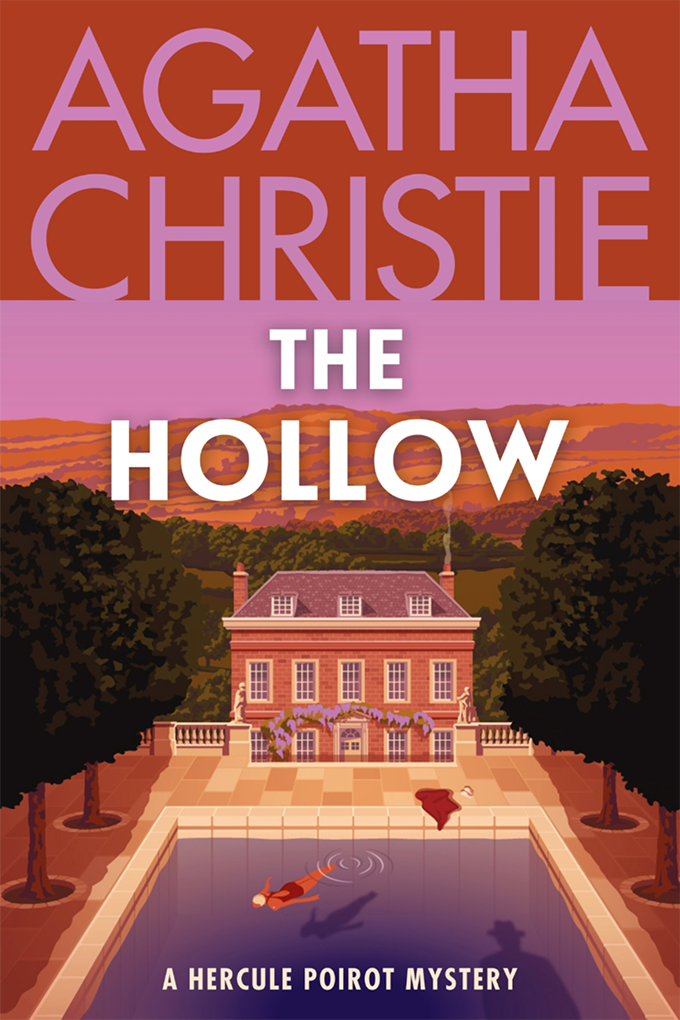
The Hollow by Agatha Christie. This one took a while to get going, but once it did, I found it to be one of Christie’s most thought-provoking and psychologically nuanced books—of the ones I’ve read so far, at least. There are a lot of interesting attitudes and viewpoints explored here. Lady Angkatell is the most conspicuous example, of course. She’s so very clearly a neurodivergent character, and it’s fascinating to read about this from the perspective of someone who never really had the proper language for it. It’s an empathetic portrayal, to be sure, but also a condescending one, what with all the talk of the matriarch’s nature being childlike and ethereal, almost like a faerie—not a proper person, in other words. I did love that she was a bit of an asshole, though, rather than an ingénue. Neuroatypical folks can be assholes! (The role of the ingénue is instead fulfilled by the victim’s precocious son.)
Then there’s Henrietta, whom Christie uses to explore how creative people can sometimes feel disconnected from their emotions and reality, as though they’re observing their own lives from a distance. It’s a theme I’ve read a lot about, but I love Christie’s approach here: somewhat tortured, somewhat bohemian, all charm. Everyone in this book turns out to be a terrible person, in varying degrees (the victim most of all—being a controlling, misogynist creep, yet beloved and idolized by everyone, including the author, which was only slightly infuriating), but it can’t be said they were not fascinating. And, of course, there’s Poirot, who’s portrayed in a rather puckish fashion here, witnessing it all from a distance with a macabre sort of glee (which is another theme in the story). I liked it a lot.
“On the First of November, the Ghosts Arrive” / “The Dark Feels Different in November” / “The Alchemy of November” / “All This Blood and Love” / “Death’s Footsteps” by Nina MacLaughlin. I read “On the First of November, the Ghosts Arrive,” the opening essay in a meditative series about the nature of November, last year, and was so struck by it that I resolved to make it a tradition to read it every year. This time around, I thought it would be a fine idea to read the rest of the “Novemberance” pieces throughout the month—and it was. MacLaughlin’s writing is nothing if not spellbinding and soulful, perfectly encapsulating the ethereal essence of this most haunting of months.
And that was my bloody November. Probably my best reading month in this entire annus horribilis. Certainly the most enjoyable. I’m finally feeling my spirits lifting somewhat, which is about damn time. I would very much like to close the year out feeling at least a little like my old self.
Up next, properly: Christmas.
BOOKS BOUGHT—MURDER MOST MERRY:
- Murder on the Orient Express: The Graphic Novel by Agatha Christie, adapted and illustrated by Bob Al-Greene
- The Impossible Fortune by Richard Osman
- The Meaning of Night by Malcolm Cox
- Christmas Sweater Weather by Jacqueline Snowe
- Merrily Ever After by Catherine Walsh
- Told After Supper: Ghostly Tales for Christmas Eve by Jerome K. Jerome
- A Merry Little Lie by Sarah Morgan

 ricardo reading