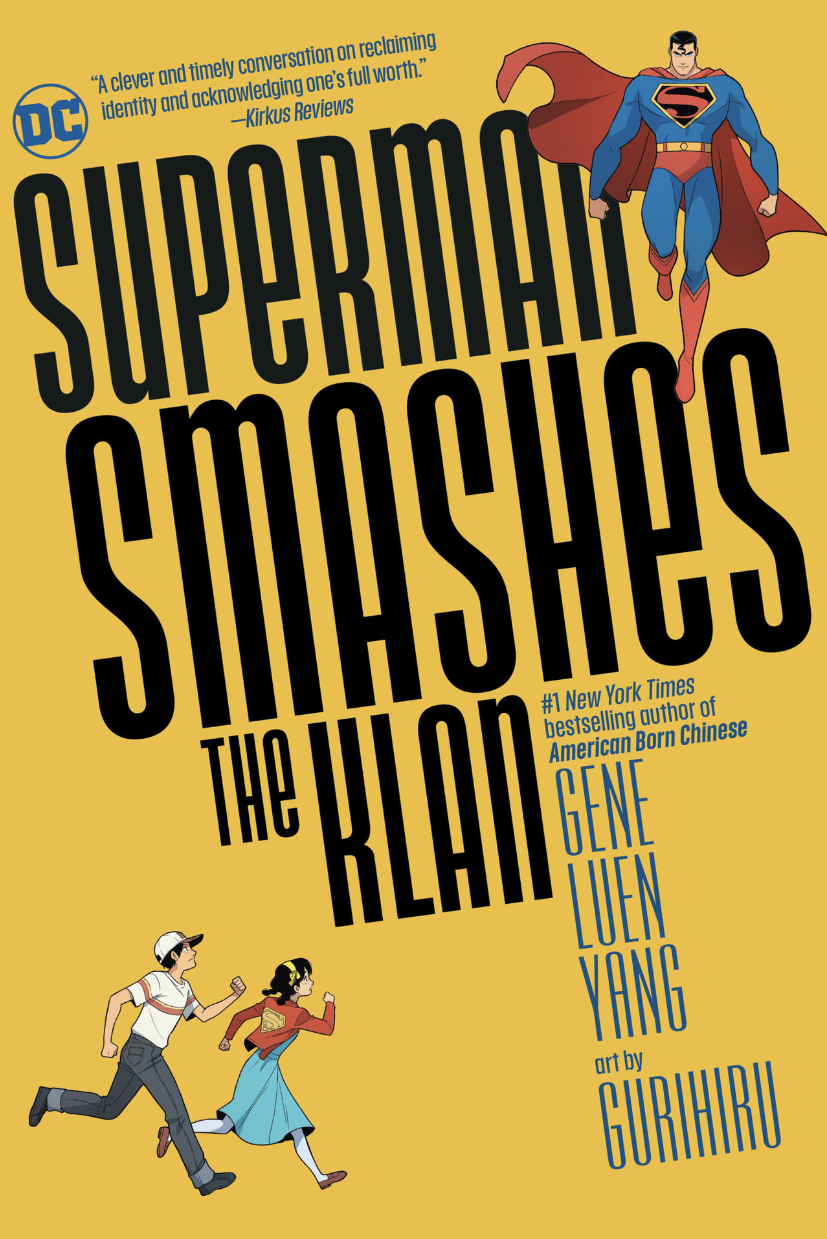
SUPERMAN SMASHES THE KLAN by Gene Luen Yang, Gurihiru

superman smashes the klan by gene luen yang, gurihiruThe Lee family has just made the move from Chinatown to the surrounding suburbs of Metropolis thanks to the patriarch’s new job at the city’s health department. Teenager Roberta has difficulty acclimating to their new surroundings, but her older brother, Tommy, seems to be thriving in the new home, making fast friends with the locals and even trying out for the community center’s baseball team. Tommy shines at the practice, and that gets him on the bad side of a fellow player who storms off the lot in a jealous fit. Later that night, the Lees wake up to find a wooden cross burning out in their front yard, and they realize that old prejudices have come knocking on their door. The Clan of the Fiery Cross, a white supremacist hate group, soon takes credit for the loathsome act, which not only gets intrepid reporter Lois Lane involved, but the famous Superman as well. The group’s influence turns out to run deep, however, and manages to exhibit enough resources to cause even the Superman considerable trouble, notably through the use of mysterious green rocks that seem to weaken the Metropolis Man of Tomorrow….

○○○⠀

Superman Smashes the Klan, written by Gene Luen Yang and illustrated by Gurihiru, is an important book. It was one already when it was first serialized a couple of years ago, highlighting as it does moments of U.S. history that are either glossed over in contemporary conversation or just plainly, actively suppressed, whitewashed into obscurity. It resonated with an audience that was growing increasingly aware of the prejudice and injustice that is so deeply rooted in Western culture and which, thanks in part to the heated, hateful rhetoric of modern politics, was gaining enough momentum and stimulation to aggressively push itself into the public eye once more. Readers saw movements like Black Lives Matter and similar social justice organizations reflected within. ⠀

In a lot of ways I’m kind of sad that [Superman Smashes the Klan] hit like this. A story from 1946 shouldn’t be as relevant as it is.

Gene Luen Yang

Fast forward only a year, and the recent, disturbing onrush of heinous, cowardly attacks against Asian American and Pacific Islander communities have now given the story a renewed relevance, and an alarmingly greater sense of urgency. ⠀

The range of topics Yang manages to pack into this relatively slim volume is wide and impressive indeed: racism (both outer and inner); classism; identity; code-switching. These are all themes you’ll find within the pages of this book, and they are handled with prudence and proficiency (Yang is nothing if not a master storyteller). But what engaged me the most was the story’s exploration of identity, because of how well it tied to both the Lee family and to the character of Superman himself. A running motif throughout the book has to do with the characters constantly concealing facets of themselves in order to fit in and blend with the world around them. Roberta and Tommy’s father chides his wife for speaking Cantonese around their children, preferring to immerse them in an English-speaking world, an edict that extends even to their traditional names (Roberta rather than Lan-Shin). Tommy, to his sister’s chagrin, constantly cracks jokes about their race with the locals in the hopes of being more readily accepted. Superman himself — who is, lest we forget, an immigrant — holds back on his own powers and represses his extraterrestrial identity, fearing the response of the public were they to find out. Not calling attention to one’s self is often an intrinsic part of the immigrant experience, something that Superman creators Joe Shuster and Jerry Siegel, being the sons of European Jewish emigrants who also changed their names once they reached the States (from Shusterowich and Segalovich, respectively), would have understood, as they, consciously or not, imbued their creation with the same concerns in mind.⠀

It’s why so many writers over the years — from contemporary ones like Yang and Grant Morrison, to those from way back in the forties who wrote the original radio play on which Smashes the Klan was loosely based (a fact that surprised me to no end) — have often depicted Superman as the ultimate defender of the disenfranchised and the oppressed: because he’s someone who can easily imagine what being powerless would feel like, and has the power to do something about it.⠀

I’m guessing that the Superman writers knew on a visceral level, three years out from WWII’s end, that pursuing a peaceful future in America requires tolerance — the willingness to respect, be good neighbors to, and invest in those who do not look like us or live like us.

Gene Luen Yang

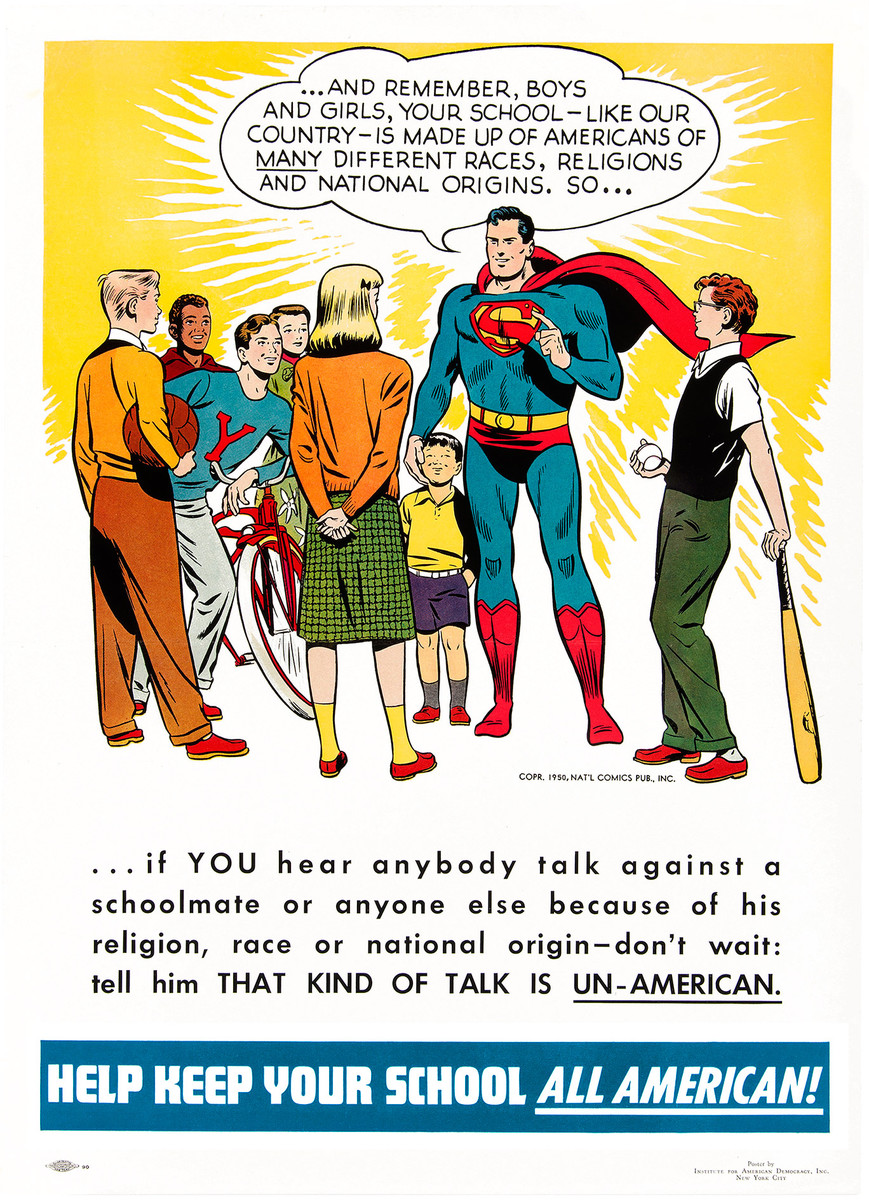
It’s important to remember that Superman is, and always has been, a warrior for social justice.Superman_American_599fc05023f332.03698933As it often happens with stories that reflect the trying times of the real world, one wishes things were different: that the events depicted in the pages of these books are just things of the past, human failures that we outgrew and overcame and which bear no resemblance to the reality of today. Sadly, we live in no such world. Which is why we still need these types of books: to reflect our current condition, yes, but also to distort and transform it, to allow us to see what could be. These stories are hope, distilled. ⠀

Superman Smashes the Klan is then ultimately a book full of hope. As well it should be. It’s a Superman book, after all.⠀

This also means that, despite the weighty subjects this story touches upon, this isn’t a heavy-handed book at all. Again, this is a Superman book, and it contains all the colorful, flashy fun that this implies. Yang has a wonderful take on the character, writing an earnest Boy Scout figure of endless charm in such a way that somehow never veers into schmaltzy overbearing territory. The rest of the cast are distinguished as well, in particular Roberta, who acts as our daring protagonist. Her role in the radio play was relegated to a single line in a single episode that didn’t even bother to give her a name — here, she gets a spectacular stand-out scene where she gets to call out Superman for endangering those around him by inhibiting his own abilities. It’s one of the crucial, central acts of the book, and one that also happens to fit so well with the overall Man of Steel mythos (which is yet another thing Yang handles wonderfully well here).⠀

In terms of art, I love the work that Gurihiru, the Japanese design team consisting of penciller Chifuyu Sasaki and colorist Naoko Kawano, did here. They brought an anime aesthetic that’s not usually found in the world of Western superhero comics, but that lends itself wonderfully to a Superman story. They have produced a beautiful, beautiful physical object.⠀

The book ends with “Superman and Me”, an essay by Yang that connects various threads of history: that of Superman and the original “Clan of the Fiery Cross” radio play; of anti-Asian racism in the United States; of the author’s own experience with prejudice. The result is a deeply compelling read that not only enriches and puts into greater context the fictional story that precedes it, but it’s also strong enough to stand as its own invaluable history lesson. Yang ends the personal piece with the following appeal:⠀

Superman is one of our nation’s — and the world’s — most enduring icons. He seems to have always been there, and he’s not going away anytime soon. Ever since defending a Chinese American family in 1946, he’s stood for tolerance, justice, and hope.⠀

Even today, the immigrant from Krypton challenges us to follow his example more fully and more perfectly.⠀

We have to meet this challenge.⠀

After all, though our yesterdays may be different, we all share the same tomorrow.

○○○

In the spirit of a tomorrow full of tolerance, justice, and hope, I’ve compiled a small list of relevant resources that I encourage you all to check out.⠀

THE FIRE NEVER GOES OUT by Noelle Stevenson

the-fire-never-goes-out-by-noelle-stevensonReading Noelle Stevenson’s The Fire Never Goes Out was a cathartic affair. I picked it up during a particularly demanding week, emotionally speaking, in my life, and found a lot of the emotions I was experiencing at the time (good, bad, unseemly) echoed in this book. It helped give many of these messy feeling some semblance of shape and form, which in turn made me feel less like a vulnerable blob just floating in the void.⠀

It was also a slightly surreal experience in the sense that this book is essentially a candid glance behind the curtains of a career and life of someone whose work has provided you with a great deal of amusement and delight over many years and, despite knowing that compassionate and lively art can come from grief and hardship, seeing it depicted in such a frank and vulnerable manner can still be somewhat of a shock to the system. The raw, intimate vignettes collected in this volume are as surprising and startling as they are engaging and illuminating.⠀

The Fire Never Goes Out is a portrait, and a work in progress at that, in the truest sense of the term. It’s honestly been a privilege to watch Stevenson’s work grow all these years, and hope I get to see it evolve even further.⠀

Trigger warnings for: self-harm, body image issues, mental health discussions, homophobia, religious content, mass shooting mention

THE VISION by Tom King, Gabriel Hernández Walta, Jordie Bellaire

the-vision-by-tom-king,-gabriel-hernandez-walta,-jordie-bellaire

Well this seems like the perfect time to revisit this most surreal superhero comic.⠀

Along with seemingly the rest of the world, I caught the first two episodes of WandaVision over the weekend. And I thought they were fine! A little clunky, perhaps, although I suppose it’s to be expected given that the show is the MCU’s opening stride into uncharted territory. But I love the concept of the thing, which is weird enough and new enough for me to not support the endeavor.⠀

It helped that the series definitely seems like it’s inspired by the 2015 run of The Vision by Tom King, Gabriel Hernández Walta and Jordie Bellaire, which still stands as one of my favorite comics in the last few years. Like WandaVision, it views our titular character through a domestic lens, although the effect in the book feels more immediately uncanny and sinister: Vision has created a family in his own image, part of his continuing efforts to become more human (more “normal” as he frequently puts it), a venture that is destined to end in catastrophe as the ominous opening captions in the very first issue candidly, wickedly declare.⠀

The comic has been hailed as “Revolutionary Road with robots synthezoids,” which also means that it’s not exactly what you might call a happy book. Much like that story and those it inspired (like Mad Men), The Vision is a dark, cerebral, meticulous tale of melancholy, anxiety, and the sheer harrowing grace of human nature — viewed through the eyes of an artificial superpowered being who may just be exactly like us.⠀

It’s also a book that perfectly illustrates the notion that you can tell literally any and every type of story with superhero comics. IfWandaVision explores even a modicum of the terrain laid out in this comic book, then we are in for a curious, wild treat indeed.

LIGHT OF THE JEDI by Charles Soule

light-of-the-jedi-by-charles-soule

One of my reading resolutions for this year was to read more non-fiction books, and my intentions were to start off 2021 by doing exactly that. But then this dropped on my device, and I opened it meaning to read just a handful of pages in order to get the lay of the land, as it were. But a couple of pages quickly turned into a couple of chapters, and before I knew it I was halfway through the book with absolutely no plans to stop.⠀

Then again, I began last year with a Star Wars book. Just as well I started this year with yet another one. It’s like poetry, sort of. It rhymes.⠀

And what a first book to start things off, anyway.⠀

I have been excited for this new era of Star Wars ever since details started to come out. I love the Skywalker gang of melodramatic misfits dearly, but the saga sorely needs to step away from them to feel fresh again. It needs to gain some more space to breathe. Hundred of years before their story sounds like distance enough.⠀

Light of the Jedi met and exceeded each and every one of those expectations. Charles Soule managed to write a Star Wars story that felt both familiar and new; that feels relevant to our current climate while still also adhering to themes that are intrinsic to Star Wars; that feels intense and austere while also being just an incredibly fun thrill ride. In short, Soule has written one of my favorite entries in the entire saga. Can’t wait to see what more he brings to this universe. And I definitely can’t wait to see where this era is headed. The future (the past?) looks bright.

YEAR IN REVIEW ○ 2020

So 2020 was a year that certainly happened.

I don’t want to write much about the year on a personal level. I used to do that with these reflections, but the last couple of years have been rough, to say the least, both on a personal scale and, you know, a global one, and I find myself with little energy to expound much on the hardships of life at the close of it all. I doubt there’s much I can say that hasn’t already been said by thousands of others, anyway. We’re all passengers on Spaceship Earth after all; we’re all going through the same kind of bedlam.

So I talk about books and stories. It’s the best I can do.

Books are — and they always have been — the beams of light that break through the darkness of any given time period, after all. I can’t think of a better, more appropriate way of saying good riddance to this plague year than by putting forth a small selection of these bright, shining beacons. These talismans against despair.

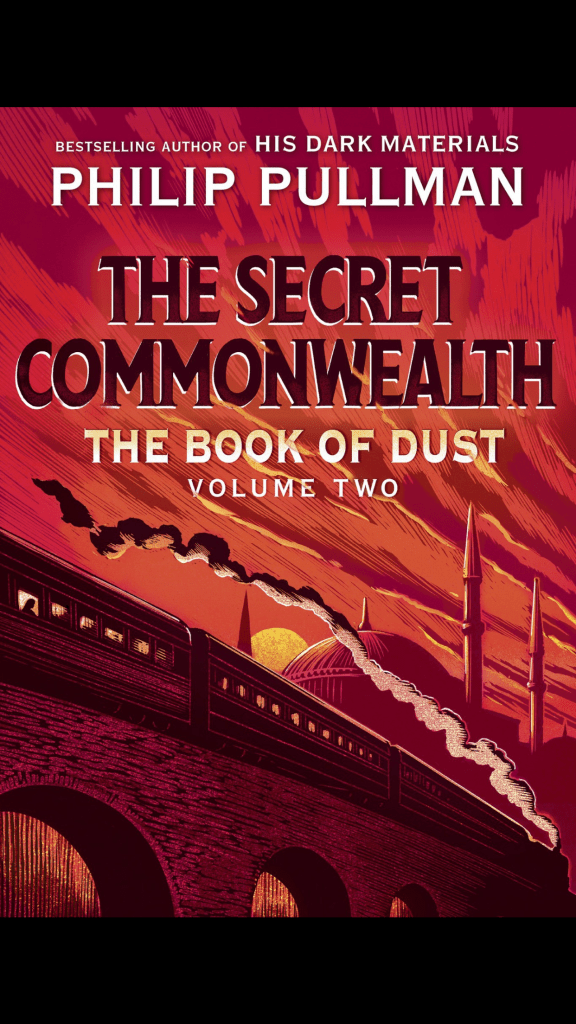
THE SECRET COMMONWEALTH by Philip Pullman

The world of His Dark Materials has long been a safe space for me. Every visit is a pleasure and a privilege, and I return home feeling comforted and fulfilled.

My dæmon would totally be a grackle, by the by.

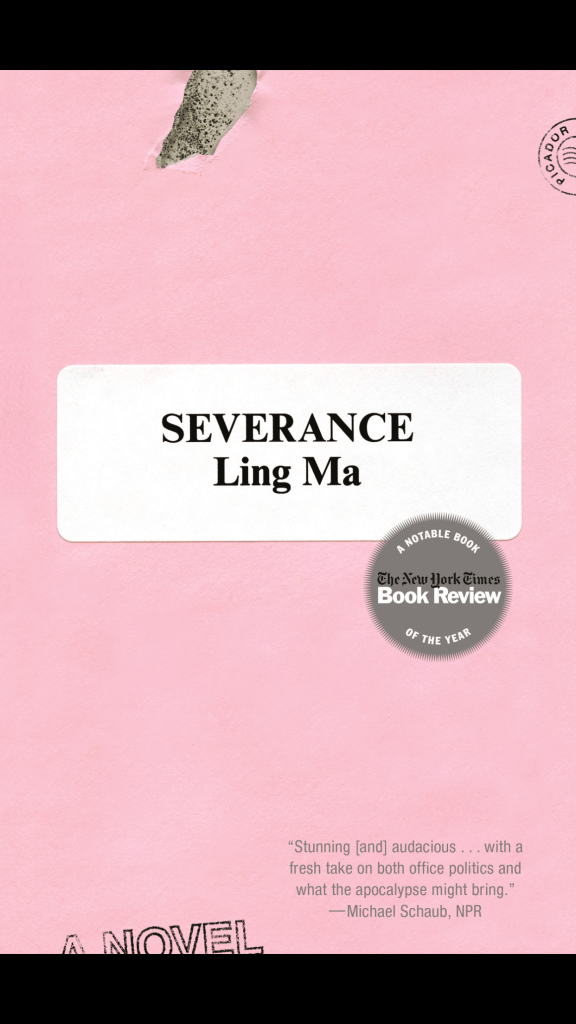
SEVERANCE by Ling Ma

I read this unconventional zombie apocalypse novel shortly before our own brush with a plague. I was already impacted by just how relevant this satirical story seemed to be (we’re all sort of zombies shambling through life already), but I certainly didn’t expect it to become even more relevant as the year went on.

We can be more than zombies, y’all.

DAISY JONES & THE SIX by Taylor Jenkins Reid

The Seven Husbands of Evelyn Hugo was the best book I read last year. I didn’t love this one as much, but it still managed to jam its way into my soul.

Taylor Jenkins Reid writes beautifully flawed and human characters that you can’t help but fall in love with.

I listened to the audiobook for this and it really did enhance the experience.

DEAR MARTIN by Nic Stone

A tragic, hopeful, painfully relevant story about a young Black man trying to grow in a society that constantly tries to stamp him back down.

In a world that is tragically full of stories like that of this book’s protagonist, author Nic Stone urges to bear witness and be better.

THE CARDBOARD KINGDOM by Chad Sell, Various

Nostalgia was another recurrent theme in the media I consumed this year. It’s what initially led me to this graphic novel.

That it turned out to be far more progressive, optimistic, and kind than any story I grew up with can only be, I believe, a good thing.

Today’s kids get a bad rap, but they’re going to save the world.

DRAGON HOOPS by Gene Luen Yang

I may have stopped caring about basketball a short while after Space Jam came out, but I’ve long been a fan of Gene Luen Yang and will read anything he puts out.

Just as well this turned out to be his best, most compelling work yet.

The Last Dance documentary came out right after I read this and I loved noticing how well the two different pieces of media complemented one another.

STAMPED by Jason Reynolds, Ibram X. Kendi

The Jason Reynolds remix of Ibram X. Kendi’s primer on racism and antiracism is, quite simply, an essential read.

Ostensibly written for younger audiences, it can make an excellent entry point for adults (like me) who may find Kendi’s weighty tome a little intimidating. Reynolds has a casual writing style that flows effortlessly while still packing quite the emotional punch.

HER RIGHT FOOT by Dave Eggers, Shawn Harris

A sort of thematic companion to Stamped. Dave Eggers’ lyrical deep dive into the history and symbolism of the Statue of Liberty is another perfect thing to read in these cruel, fractured times.

We have to do better, y’all.

DEVOLUTION by Max Brooks

My favorite Hallowe’en read this spooky season. A story about humanity’s futile attempt to gain mastery over nature just hits different in these times of viral and climatic upheaval, you know?

But also this book about people versus bigfoot is just a hell of a lot of gory fun.

PIRANESI by Susanna Clarke

This was the last book I read this year. It seemed fitting to end this dreary period characterized by lockdown and isolation with a story about a man trapped inside his home and his head.

It might just also be the best book I read this year. I need more time to dwell on it. But suffice it to say Susanna Clarke is a mage and anything she writes is a gift to the world.

This story ends on a note of hope. I can only wish our story this year does, as well.


I hope you all have a safe and happy New Year. ⠀

I’ll see you on the other  side.

PIRANESI by Susanna Clarke

piranesi-by-susanna-clarkePiranesi was the very last book I read in 2020. I finished it thinking that it was probably the best thing I read in the entire year, but that I needed time to dwell on it before I could say for certain.⠀

I think two weeks is more than ample time. It’s not only the best book I read last year, but it’s also simply one of the best I’ve read in, I don’t know, the last decade? Susanna Clarke just writes the kind of stories I love reading the most: full of wizardry and wordplay and whimsy and wistfulness. Fairy tales, in other words, in their purest, most primal form. ⠀

Alan Moore, the comic book writer and actual honest-to-goodness magician, often writes about art as being true, literal magic, a notion that has always stuck with me:⠀

Art is, like magic, the science of manipulating symbols, words, or images, to achieve changes in consciousness. The very language about magic seems to be talking as much about writing or art as it is about supernatural events. A “grimoire,” for example, “the book of spells,” is simply a fancy way of saying “grammar.” Indeed, to “cast a spell,” is simply, “to spell.” To manipulate words. To change people’s consciousness.

It’s an interpretation I love, because while I don’t really believe in actual, wave-thy-wand magic, I sure as hell believe in the power of art.⠀

Which is all really to say, for what seems the hundredth time, that I think Susanna Clarke is a true mage, and I will read any spell she chuses to cast on the world.

SEVEN DAYS OF US by Francesca Hornak

seven-days-of-us-by-francesca-hornak

I was going to attempt to do one of my overly verbose, wordplay-filled summaries for this novel, as they are turning out to be one of my very favorite things to write, but I found that the publisher’s copy is actually pretty perfect as on its own, particularly in capturing the frantic, frenetic tone of the story. It goes:

It’s Christmas, and for the first time in years the entire Birch family will be under one roof. Even Emma and Andrew’s elder daughter—who is usually off saving the world—will be joining them at Weyfield Hall. But Olivia, a doctor, is only coming home because she has to. She’s just returned from treating an epidemic abroad and has been told she must stay in quarantine for a week…and so too should her family.

For the next seven days, the Birches are locked down, cut off from the rest of humanity, and forced into each other’s orbits. Younger, unabashedly frivolous daughter Phoebe is fixated on her upcoming wedding, while Olivia deals with the culture shock of first-world problems.

As Andrew sequesters himself in his study writing scathing restaurant reviews and remembering his glory days as a war correspondent, Emma hides a secret that will turn the whole family upside down.

In close proximity, not much can stay hidden for long, and as revelations and long-held tensions come to light, nothing is more shocking than the unexpected guest who’s about to arrive….

I mean, come on.  I suppose it does also make it sound like a Lifetime and/or Hallmark movie, but, unremarkable and problematic as they may be (must they all center around white, upper-middle class people and their problems, in this the year of our Lord 2020), you kind of have to admit that they seemed to have cracked a hell of an alluring formula. Why else would my mother audiences keep coming back for more? 

But that’s the vibe I got from Francesca Hornak’s Seven Days of Us. And while I may not generally be a fan of  the tried and true trope of melodrama stemming from people not communicating clearly with one another, I’ll be damned if I didn’t enjoy the hell out of it in this telenovela of a novel. Admittedly, my interest in it only began about the midway point, finding the first half’s set-up and exposition excessive to the point of being tedious. The nearer the story got to Christmas however, the more all the secrets and pent up tension from the preceding pages threatened to explode. The outcome of which was the bookish equivalent of not being able to look away from a trainwreck. I was surprised to find myself gasping and harshly whispering out things like “ⁿᵒ” and “ᵖˡᵉᵃˢᵉ ᵈᵒⁿ’ᵗ” and “ᵒʰ ᵍᵒᵒᵈ ᵍᵒᵈ ʷʰʸ” so often. It was pretty great.

Much of that enjoyment was a direct result of Hornak’s remarkable job at writing this bevy of fastidious, slightly unlikeable characters. You may not wish to spend some time with them in real life, but you can certainly, assuredly, relate and empathize with every single one of them. We might not be going through many of their specific set of issues (Olivia labeling them first world problems is spot on for the most part), but we know how family can be a battleground almost as often as it is a haven. It’s another time-tested trope — one that rings particularly true in this time of quarantine and lockdowns. 

It’s a little wild to think that this stay-at-home angle was probably the one aspect of the novel the author must have thought not many readers would find relatable. Why would she? This book was first published in 2017, after all. Back when we were all still taking the act of being able to go outside your house and mingling with other people who are not immediately related to you totally and utterly for granted. Ha ha ha who would have ever thought.

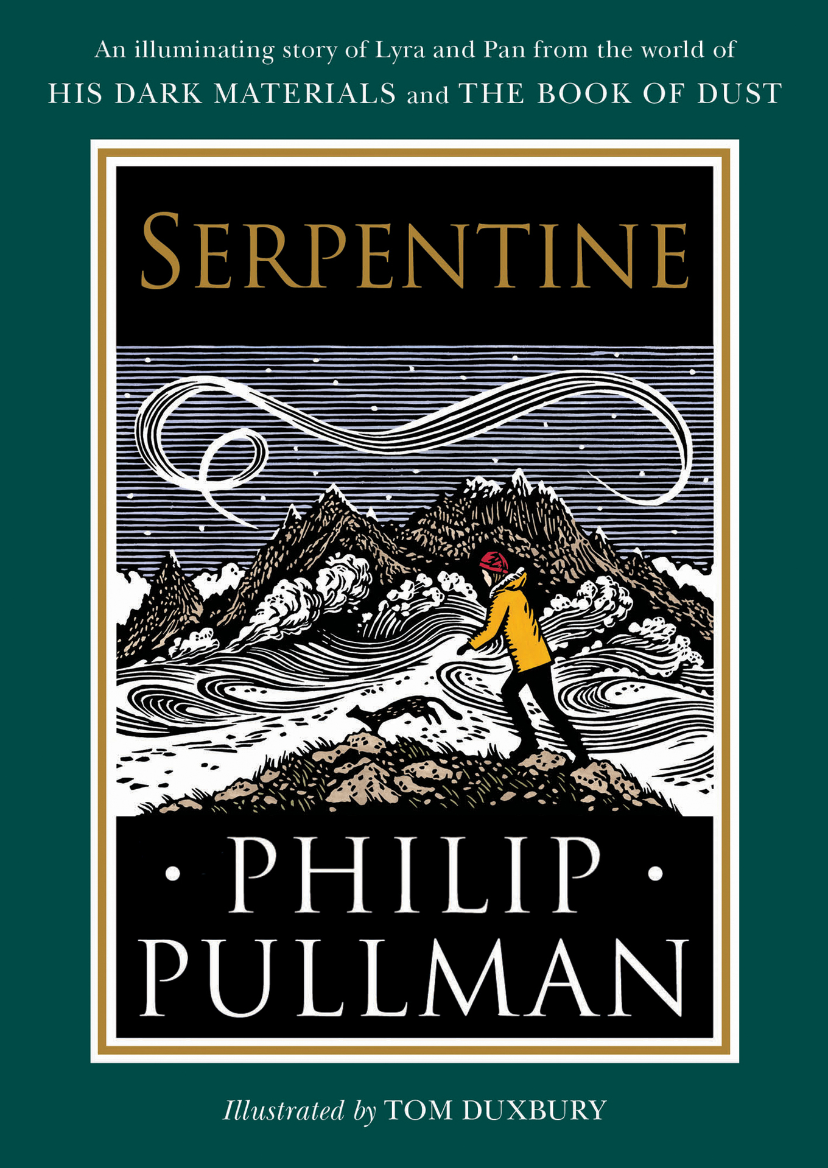
SERPENTINE by Philip Pullman

serpentine-by-philip-pullmanI began this year by reading Philip Pullman’s The Secret Commonwealth, so I only thought it fitting that I would end it by reading yet another of his fantastic expeditions into human nature. Serpentine is a brief excursion into Lyra’s world, and actually acts as a sort of thematic prequel to Commonwealth, the second entry in The Book of Dust series. ⠀

Serpentine tells a small, intimate story in which Lyra Belacqua joins some colleagues at an archaeological site that happens to be near the home of a past acquaintance — someone who just might be able to answer some of the many burning questions Lyra has been carrying ever since the events related in His Dark Materials. She and her dæmon, Pan, have been growing apart in the aftermath of these earlier exploits, a predicament they can’t seem to be able to solve, causing them both great emotional turmoil. Lyra, true to her curious nature, is determined to decipher this dilemma. She gets some clarification by the end of this novella, but the relationship between humans and their inner-selves is something that will preoccupy Lyra well into her adulthood. Indeed this concern forms the central theme in The Secret Commonwealth (and, I suspect, The Book of Dust as a whole).⠀

I was well into my twenties when I first read His Dark Materials, but the series still ended up being acutely formative. It’s a story that spoke to me on a host of different levels (not least of which a spiritual one) and even though I’ve never sat down and revisited the novels, they still, to this day, live rent-free in my head and heart.⠀

This makes every subsequent glimpse into this world feel like a privilege and a homecoming. There’s something intensely warm and comforting about these novels — probably due to the fact that despite them being mostly dark, serious tomes of the fantastic, they are also some of the most human books out there.⠀

Which is a roundabout way of saying that each return visit to Pullman’s world has felt like coming home. Like visiting old friends. Like gaining some fresh, new insight— however small — into what it means to be human and alive. And the experience of reading Serpentine was no different.

When it comes to human affairs, a billion invisible filaments connect us to our own pasts, as well as to the most remote things we can imagine; and I hope that, above all, these books are about being alive and being human.⠀

KINDRED SPIRITS + THE PRINCE AND THE TROLL by Rainbow Rowell

46 rainbow rowellHey so speaking of — did you know Rainbow Rowell once wrote a Star Wars story? Well, Star Wars-adjacent, at any rate. For World Book Day a couple of years ago she came out with a short little story about a group of fans waiting in line for the premiere of The Force Awakens. I read it a short while after the story came out and, like a lot of Rowell’s work, I pretty much loved it. Here’s a short review from an old blog:⠀

I love Rainbow Rowell. I love her quirky and clever and passionate writing (if there was a book equivalent to Gilmore Girls, it would be a Rowell book). I love her amazing and uncanny ability to make you fall for a character in almost no time at all.

This same talent is brilliantly showcased in Kindred Spirits, a slim novella that, over the course of sixty-two pages, manages to have more character development than most sprawling, brick-sized novels.

It’s an unfair gift, really.

This is a story about three Star Wars geeks camping out in desolate line in front of an Omaha theater for the premiere of The Force Awakens. It is lovely, and it is charming, and it is so wonderful. I finished the story in one sitting, desperately wishing there was a full-length novel featuring these characters that I could immediately pick up. Heartwarming and beautiful.

Like every December since the first film in the sequel trilogy came out, Star Wars has been on my mind a lot, which is why I decided to revisit the slim volume. I enjoyed it just as much this time around, appreciating especially how it captures the eager, edgy excitement a lot of fans of the saga felt in the run-up of the release of TFA. You know — before the dark times. Before the Discourse. This does tragically make the story act somewhat like a time capsule, however, portraying as it does a facet of fandom that seems quaint and innocent considering the meaningless gatekeeping and toxic rhetoric that is so maddeningly prevalent these days. Alas. ⠀

You and I can still enjoy things, though. It’ll be our secret. ⠀

○○○⠀

Shortly after finishing the novella, I was made aware of a series of fairy tale retellings a bunch of prominent authors were doing for the Amazon Original Stories initiative. Rowell was one of these writers, contributing The Prince and the Troll, an odd little tale that doesn’t seem to be an interpretation of any one fable in particular but instead plays with the troll-under-the-bridge narrative. The story seems to be a blend of Rowell’s realistic contemporary style and the dark whimsy found in her fantasy fiction. This makes it a bit disjointed but it works for the most part. The aforementioned gift is once more in full display here as I also finished this peculiar yarn wanting to know more about the two protagonists, and about the world in specific, which appears to be a sort of post-climate apocalypse mythical land (that, you know, still has Starbucks). Also because once I read that title I just knew Rowell would make them fall in love with each other and that I would buy it hook, line, sinker — and, reader, I did.

THE VISITOR by Sergio Gomez

the-visitor-by-sergio-gomezIn the proverbial middle of nowhere a group of travelers wait out a severe snowstorm inside of a diner. Inside they find warmth and food and drink and casual conversation. Most of them quickly develop the quick camaraderie commonly found between people sharing in a particular, peculiar experience. They are hopeful the rough weather will disperse before long, allowing them to continue their particular journeys. ⠀

A fellow traveler will soon be trying to join them, however, one with less than benevolent intentions in mind — and the group will quickly realize that there are far more dangerous things outside than the miserable elements.⠀

○○○⠀

You know, I’ve never really associated the holiday season with horror. Dwell on it enough and it does begin to make a perverse sort of sense, though. Fiction centered around the holidays (and around Christmas especially) is brimming with stories about disparate groups of people finding themselves stuck in an isolated, often claustrophobic setting, after all, and that is as traditional a horror set-up as you can get. Why not just throw a monster into the mix?⠀

The monster in The Visitor, a novella by Sergio Gomez, arrives in the shape of an alien, coming to terrorize our protagonists. Despite the otherworldly antagonist and the wintry setting however, this story is less The Thing than it is Predator, as we quickly find out this creature wants to join in on the Yautja fun by trying to hunt down our core characters one by one.⠀

This being a brief sojourn of a story, my only expectation was to have a good time — a prospect that was indeed met. Gomez has written a tight tale that boasts a breakneck pace, while also somehow finding the space to develop the characters enough that we can recognize and sympathize with their plight. Not an easy thing to do in less than a hundred pages, but Gomez did a creditable job with the material.⠀

If there is one thing I found lacking was the monster itself, especially in terms of its appearance. Gomez keeps it understandably vague, but the impression that we can glean from the details he does drop ends up being… a tiny bit goofy. This is disappointing seeing as how the cover depicts what looks like a traditional Grey alien, which is an image that has always haunted and disturbed me (hullo, my name is Rick, and Whitley Strieber’s Communion is one of the most terrifying books I have ever read). I would have found the story much more effective and unsettling if we got the same spindly extraterrestrial inside the story itself. But I confess that this is more of a personal preference than it is actual criticism.⠀

The Visitor is a fun and bloody ride that makes for some excellent holiday reading.