PATINA by Jason Reynolds

patina-by-jason-reynoldsAnother pickup from this past weekend. I had read Ghost, the first entry in the Track series by personal fave Jason Reynolds a couple of years ago, and it more or less blew me away. So it’s nothing but a shame that it took me so long to get to its follow-up, Patina, because I ended up loving and appreciating this story even more.

Ghost is an explosive story, literally beginning and ending with shots going off. Patina, in comparison, is a much quieter story, dealing as it does with the many routines and responsibilities of its title character. It’s a subdued tone that belies deeper, heavier themes, though. Still waters run deep, etcetera.

Reynolds’ dedication reads, “For those who’ve been passed the baton too young.” Patina is the story of a young Black girl forced to grow up entirely too soon. After the sudden death of her father, and after her mother’s increasingly degenerating diabetes takes away her legs, Patina “Patty” Jones, all of twelve, feels it’s up to her to pick up the pieces of their upended life. So she assumes responsibilities of the household, making sure her mother is taken care of and especially looking after her baby sister, Maddy. Unable to suitably take care of her daughters, the girl’s mother arranges for them to move in with her doting brother-in-law and his wife, which eases the burden some, but Patina remains convinced that the load is hers to carry alone. It’s a weight that is slowly but surely suffocating our protagonist. And so, like Castle Crenshaw before her, she uses running as an outlet and escape.

That’s kinda what running was to me. A way to shut people up. A way to… I guess, sometimes even shut myself up. Just turn it all off. Leave everything, all the hurting stuff, the unregular stuff that seemed so regular to me, in the dust.

This is only the second entry in this series, but it’s clear that one of the central themes in the Track books is about recognizing and dealing with trauma, using the act of running as a metaphor (the act of which, as Reynolds has previously stated, is your body dealing with physical trauma). It’s a symbolism that in Reynolds’ clever and poetic hands goes the distance. (The novel’s main conflict has to do with Patina’s reluctance to share her responsibilities and accept help from other people… while at the same time training for a relay race, which is all about relying and trusting your fellow runners.)

Ultimately what makes this story so compelling is that we’ve all had a Patina (or multiple Patinas) in our lives. They are our mothers and our sisters; our partners and our friends. Practical women who find themselves carrying the weight of the world on their shoulders. Women who, far too often, go uncelebrated and unrecognized. Patina recognizes, and it celebrates.

Compassionate and wonderful. Jason Reynolds never fails to impress.

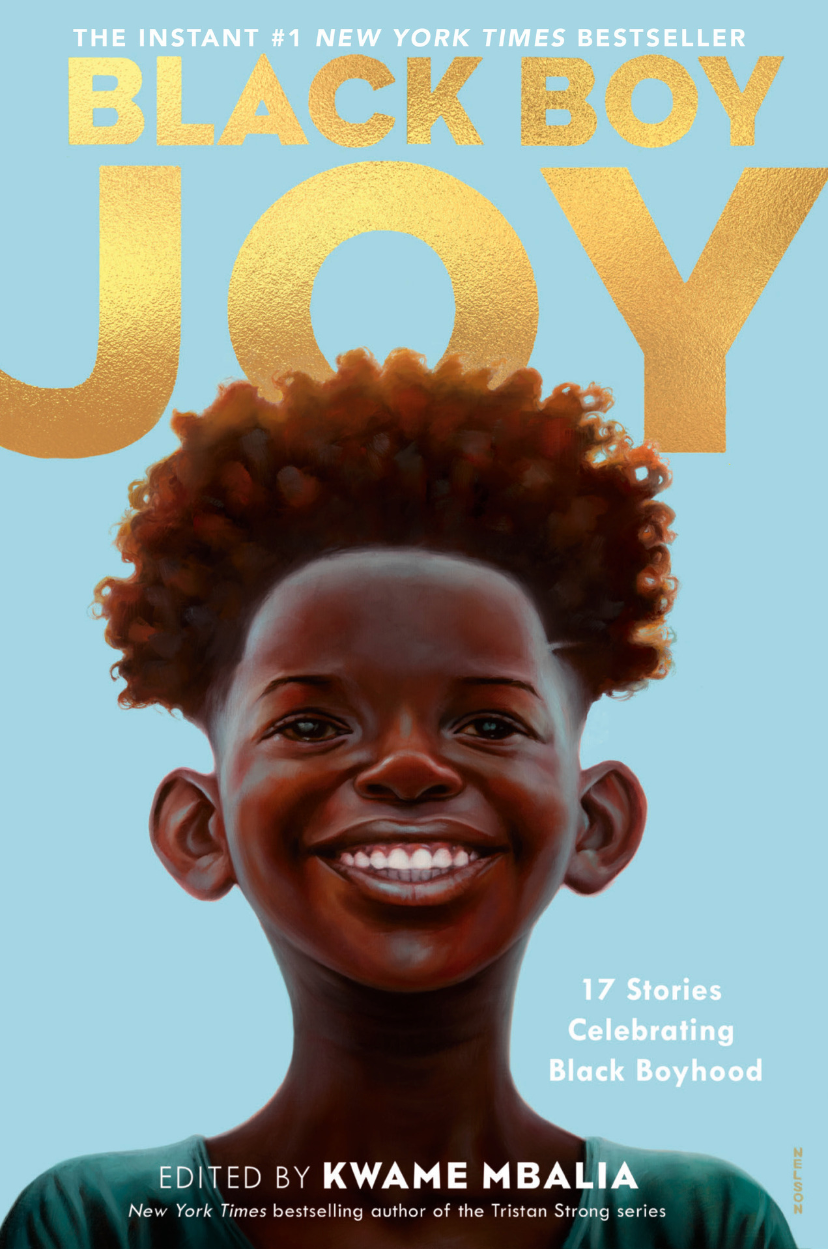
BLACK BOY JOY edited by Kwame Mbalia

black-boy-joy-by-variousRead this over the weekend and it was, as the cover promises, an absolute joy. A wonderful collection of stories celebrating Black boyhood written by some of today’s most captivating authors. Some I was already familiar with — my main dude Jason Reynolds; fantasy darling P. Djèlí Clark — for most, though, this was my first experience with their work, but I will definitely be checking out more of their stuff from now on.

Honestly, most of the stories delivered, but some standouts:

  • “There’s Going to Be a Fight In the Cafeteria on Friday and You Better Not Bring Batman” by Lamar Giles, which read exactly like an episode of Craig of the Creek and was just one of the most wholesome things I’ve ever read. (Also for having the absolute best title in the collection.)
  • “The Legendary Lawrence Cobbler” by Julian Winters, for some lovely bit of queer representation.
  • “First-Day Fly” by Jason Reynolds, for having the collection’s perhaps most simplistic story (a kid getting ready for his first day back to school) be also its most playful in terms of style (it’s written in the second person).
  • “Coping” by Tochi Onyebuchi, for being the skateboarding story of my dreams. Also one of the first effective pieces of fiction I’ve read that deals with the pandemic.
  • “The Gender Reveal” by George M. Johnson, for bringing the nonbinary rep and also the tears.⠀
  • “Our Dill” by Justin A. Reynolds, for being the funniest of the lot.⠀
  • “Percival and the Jab” by P. Djèlí Clark, for bringing Jumbies back into my life and leaving me wanting more.⠀

These stories are framed by vignettes written by Kwame Mbalia, the collection’s editor. They follow a griot (a West African storyteller and musician, here presented as a sort of wizard, because that’s what artists are) and his young apprentice as they travel through worlds collecting joy, which they store in a massive jar, to be used for later. They succeed, needless to say. Black Boy Joy is a beautiful collection.

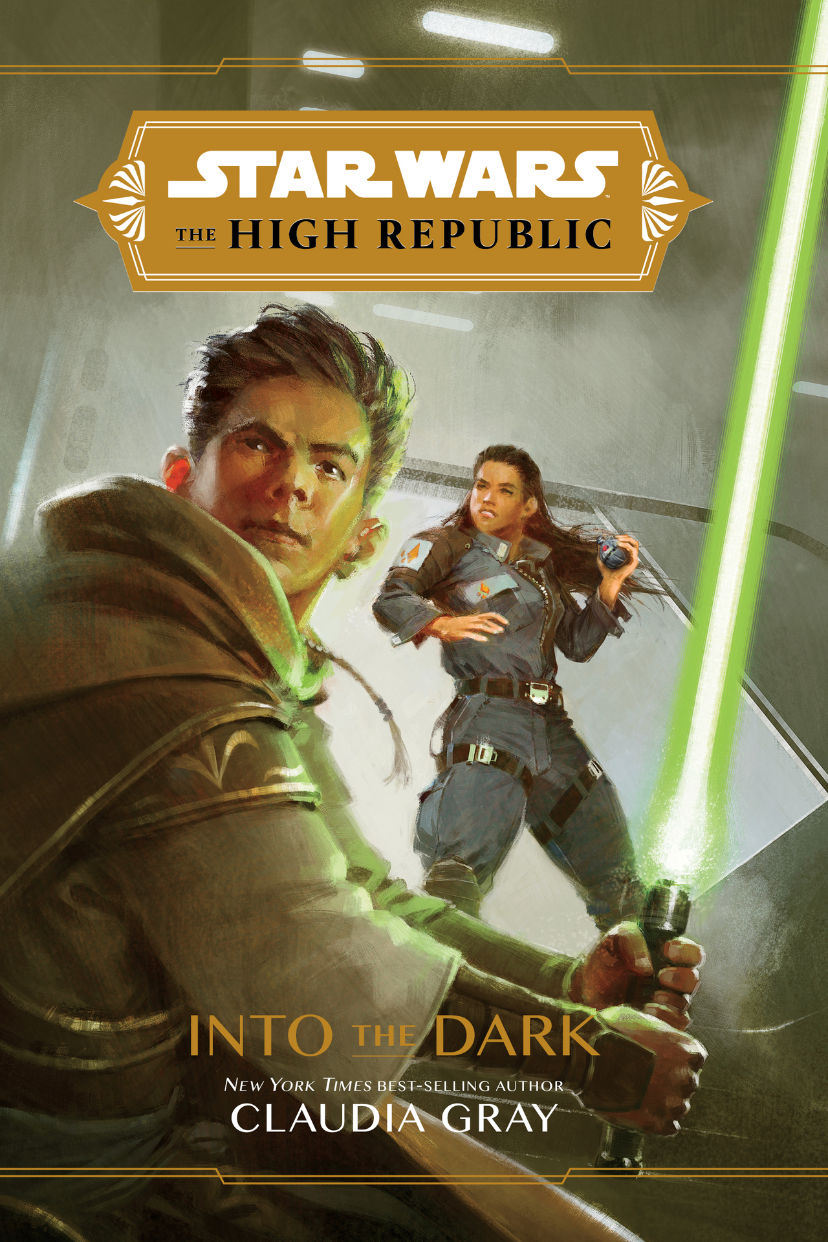
INTO THE DARK by Claudia Gray

Publisher’s summary: Padawan Reath Silas is being sent from the cosmopolitan galactic capital of Coruscant to the undeveloped frontier—and he couldn’t be less happy about it. He’d rather stay at the Jedi Temple, studying the archives. But when the ship he’s traveling on is knocked out of hyperspace in a galactic-wide disaster, Reath finds himself at the center of the action. The Jedi and their traveling companions find refuge on what appears to be an abandoned space station. But then strange things start happening, leading the Jedi to investigate the truth behind the mysterious station, a truth that could end in tragedy….

○○○

Claudia Gray is my absolute favorite Star Wars writer. From Lost Stars to her Leia books to Master and Apprentice, I have enjoyed her forays into this galaxy far, far away.

Which only makes it more of a shame that I really couldn’t get invested in Into the Dark, her first entry into the High Republic era. 

Don’t get me wrong: Gray continues to be an excellent Star Wars author. She’s included here a bunch of characters that I loved (bookish Padawan! space Matthew McConaughey! a sentient rock!). And Gray continues to write about the Force better than any other author — I highlighted a great many lines from this novel. 

But still, the story felt a little lacking.

It’s a by-product of being part of a multi-platform storytelling project, I suppose. The main story of Star Wars: The High Republic is being told through a trilogy of books, while a slew of stories told through audiobooks, comics, YA and middle grade novels acting more or less as support and supplementary material. And it’s this extra content that seems often to get bogged down by too much continuity noise and baggage that spins out of the primary plot line.

And it’s also because this novel just largely lacked Gray’s opposing outlook angle that is present in most of her works: Lost Stars (literal star-crossed lovers, one of whom is a Rebel, the other an Imperial); Bloodline (Leia, the rebel senator, begrudgingly teaming up with someone who holds an entirely different ideology); Master and Apprentice (Qui-Gon’s mystical approach to the Force at odds with his Padawan’s more pragmatic, traditional take). We find it even in her non-Star Wars work, such as in Defy the Stars (two people on opposing sides of a war fall in love). It’s a technique that Gray particularly excels at, allowing her as it does to better explore the gamut of the tensions and conflicts that make up a proper pulp narrative, making for a more involved and compelling read.

We get hints of that in Into the Dark — Jedi Masters feeling conflicted towards the Order’s austere methods; a Padawan questioning the path laid out by their Master — but it’s not the engine that drives the plot, and I found myself thinking it would be a richer, more substantial story if that were the case.

Regardless, Gray has only been adding great things to Star Wars’ already significant lore, and I hope she gets to do so for a long time. I’ll still be there reading every step along the way.

CHRISTMAS READS 🎄 2021

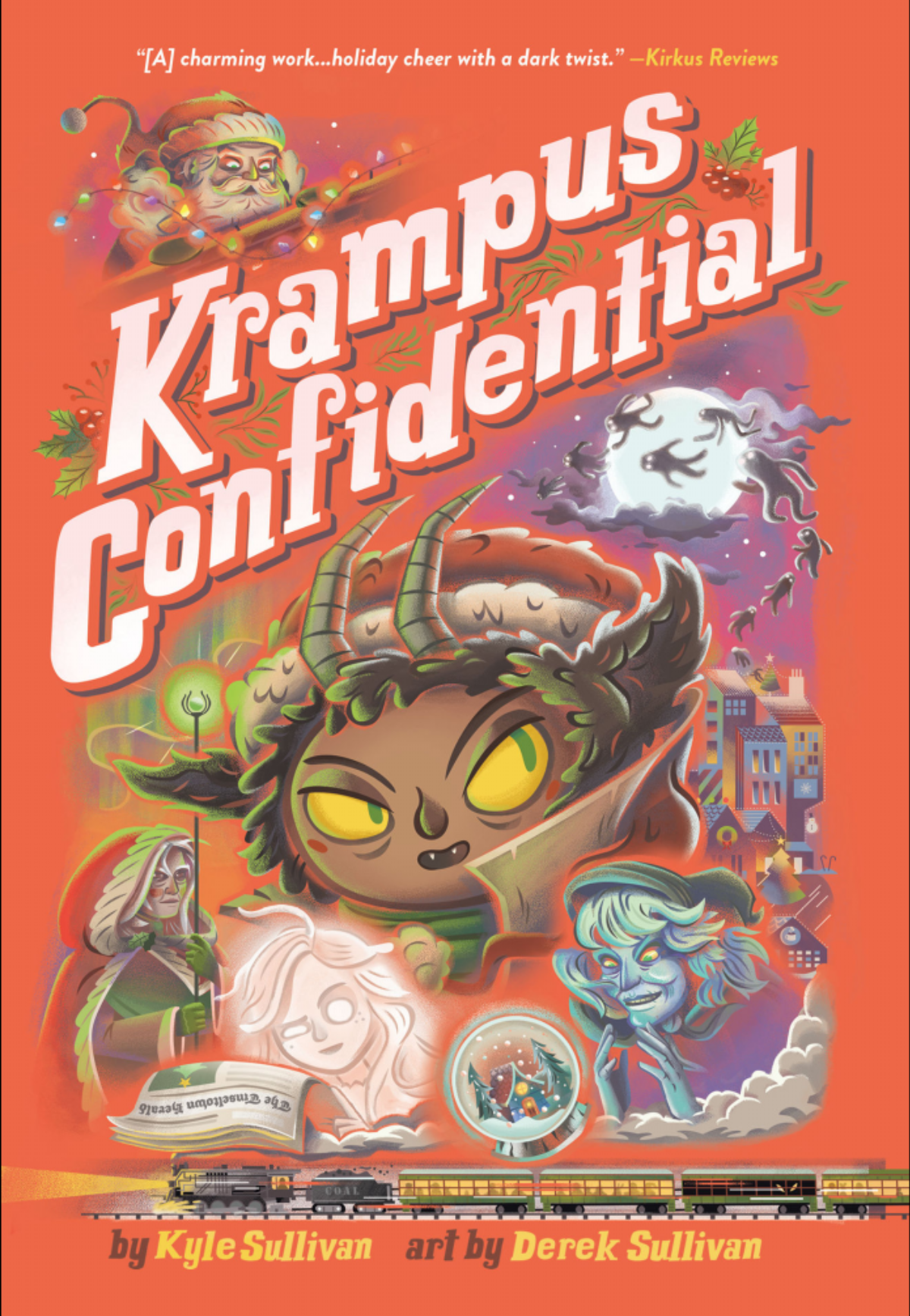
krampus confidential by kyle sullivanThank goodness for fantastic middle grade novels. December has been a little rough to say the least, so the escapism these books provide has been a welcome relief. ⠀

Krampus Confidential by Kyle Sullivan follows amateur sleuths Ruprecht (a Krampus) and Marley (a ghost, natch) as they take on a case brought to them by a particularly terrified elf. Hijinks ensue, and Ruprecht soon finds himself on the sights of both the Tinseltown police and the festive city’s surprisingly seedy underbelly. ⠀

This is a charming, clever story full to the brim with imaginative concepts and waggish, witty wordplay (the Christmas puns — they are copious). Artist Derek Sullivan supplies a lot of the atmosphere through his illustrations, which are liberally dispersed throughout the book. I really like his style. It brought to mind the work of Mary GrandPré. Thoroughly enjoyed this hazy fable. Had a tremendous amount of fun with it.⠀

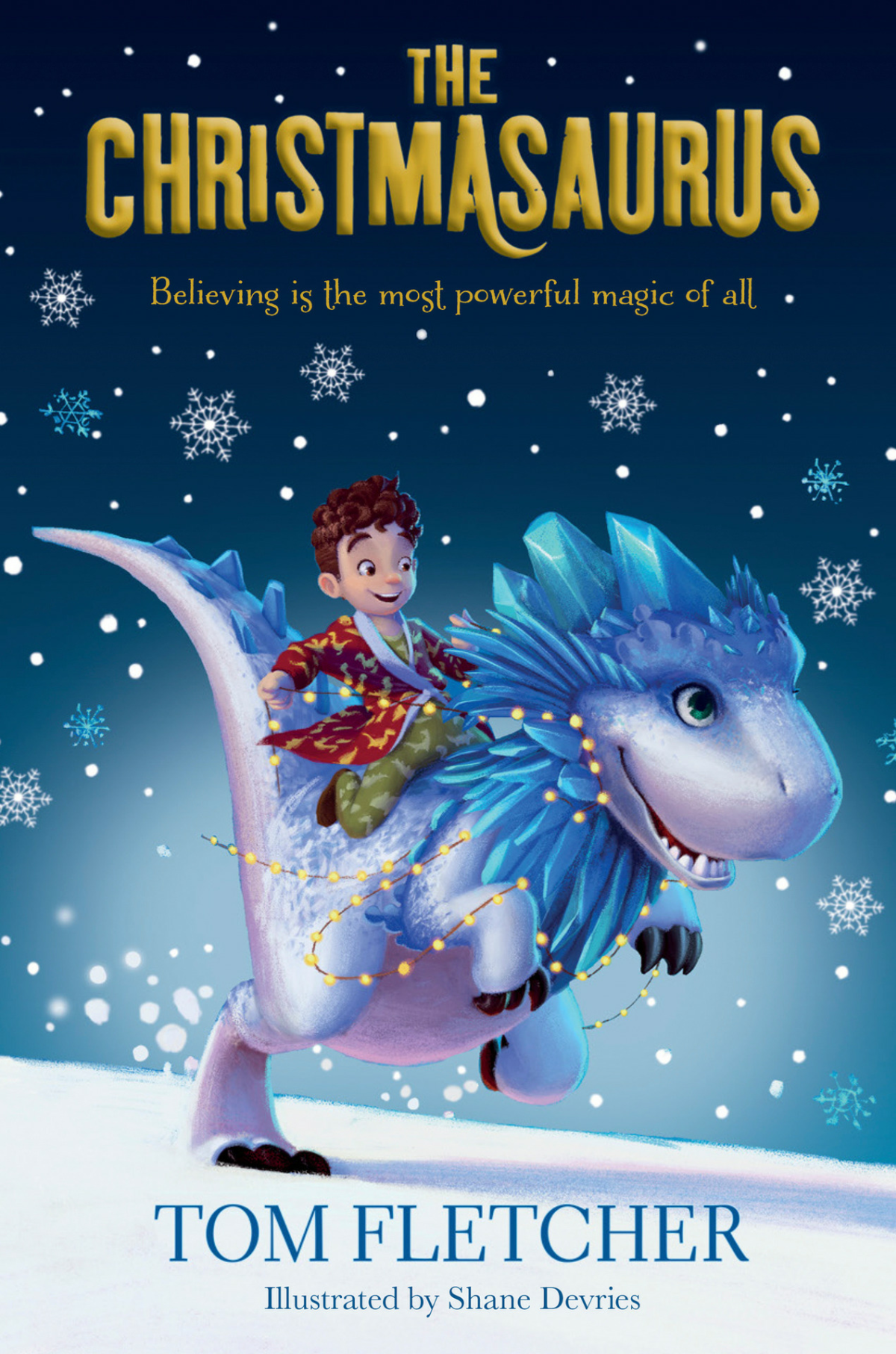
the christmasaurus by tom fletcherTom Fletcher’s The Christmasaurus is another highly imaginative beast, following the magical misadventures of a dinosaur born in the North Pole and his budding friendship with a lonely boy. Like Confidential, it is full of fanciful notions and whimsical wordplay. It turned out to be a bit much for me, though. One of my notes fusses over the sheer amount of alliteration scattered throughout, which given my usual enthusiasm for assonance, says rather a lot. But the book does skew terribly young, so it’s also simply a matter of not connecting with the story enough. I bet this would make a fantastic read-aloud, though.⠀

I did really enjoy some of the characterization. William is a lovely protagonist, wistful and kind without coming off as mawkish. He is a wheelchair user, and Fletcher did an admirable job depicting that aspect in a mindful, unassuming sort of way. I also liked artist Shane Devries’ depiction of Santa here, jubilant and gloriously fat, sporting stylish shaved sides as well as a man bun adorned with pins made out of frost. It’s a totally extravagant look and I was very into it.⠀

Always got to appreciate the books that shine so bright they help guide you out of the doldrums.

FINLAY DONOVAN IS KILLING IT by Elle Cosimano

finlay-donovan-is-killing-it-by-elle-cosimanoFinlay Donovan’s life is a bit of a mess at the moment. There’s the impending divorce from her cheating husband, for one, an already complicated situation made messier by the threat of a custody battle for their children over Finlay’s fickle finances. An author of romantic thrillers, she’s nearing the end of a contract for a book she has not even begun to write, the advance of which has long been spent, and the bills keep on piling up.

And that’s all before a frantic meeting with her agent leads to Finlay being mistaken for a hit woman by someone willing to pay an absurd amount of money for her presumed services. Finlay initially balks at the offer, but her overwhelming situation leads her to reconsider, setting off an explosive chain reaction that will have the struggling suspense writer live through a veritable thriller full of dead bodies, hidden identities, cops, and the local mafia.

○○○

A particular peeve of mine is when thrillers begin slowly. It just seems contrary to the genre. I’m all for a slow burner of a story, but more often than not I enjoy when these stories embrace their pulp roots and just start with a veritable bang.

So I knew I was going to have fun with Elle Cosimano’s Finlay Donovan Is Killing It when, by page ten, we already know not only the status of the protagonist’s relationships but also her occupation, her finances, her ex’s love life, and her mostly harried, hectic lifestyle caring for two tireless toddlers. By the second chapter we’re already well into the whole conceit of the plot. Two chapters after that, we have a dead body, and then we’re off to the criminal races. Cosimano came here to tell a story damn it there’s no time to waste. Pulp roots, I tell you.

The first half of this book is essentially an excellent exhibit of economics and exposition. Finlay is nothing if not a chaotic character, and Cosimano immediately puts us right in that tumultuous headspace by taking us on a whirlwind ride through her protagonist’s bewildering world — the better for us to accept this story’s wild, preposterous premise.

I admit to having a hard time suspending my belief for this narrative, which is my annoying wont for these types of stories — light mysteries/thrillers that aim for exhilaration over veracity. It took a viewing of Knives Out when I was halfway through this novel that, actually, its premise is no less ridiculous and unlikely as the one in that film, which I consider an all-time favorite. That slight change in perspective helped me accept the story for what it was. And honestly, is it really that far-fetched to think that a Type A personality like Finlay would totally go for this type of scheme? “My life is already absurd — might as well go into the assassination business.”

I enjoyed Cosimano’s characterization. She’s consciously dealing with a lot of stock characters — the amateur sleuth and the intrepid companion, the hunky cop, the international villain — but she writes them with enough mettle that they don’t feel too plain or generic. I particularly loved Finlay’s friendship with Vero, her no-nonsense nanny-cum-accountant, which is sweet and touching in its own morbid sort of way. Get you a friend who would help you bury a body, etcetera.

The aforementioned pace does unfortunately dwindle some about halfway through the story, making the middle chapters a bit of a slog to get through. It picks up again once the third act kicks in, although it never really quite regains the momentum of its opening chapters. A shame, but a minor complaint all in all. I had fun with Finlay, and would definitely check out whatever antics she and her crew get into next.

BAGS (OR A STORY THEREOF) by Patrick McHale, Gavin Fullerton, Whitney Cogar

bags-(or-a-story-thereof)-by-patrick-mchale,-gavin-fullerton,-whitney-cogarHere’s a book that I didn’t get to cover on Hallowe’en. Mostly because I forgot. October is kind of a lot.

BAGS (or a story thereof) is the graphic novel adaptation of a short novel written by Patrick McHale, a few years before he started working on Over the Garden Wall. Unable to land animation gigs, he woke up one day and decided to write a novel. He gave himself one week, because he thought that was how it was done. He barely edited. He did his own illustrations. He had it printed and sold it on Etsy for a while. Then came artist Gavin Fullerton who thought it’d be fun to adapt the short work in comic form, to which McHale said, “Sure why not?”

Thusly: BAGS, which tells the story of one John Motts, an everyman sort of figure who, after losing his doted on dog, embarks on a humble odyssey that will take him across his familiar town, the surrounding forests, and beyond, encountering along the way corrupt cops, talking walruses, and, not least, the devil.

This is a surreal take on the hero’s journey. A story that is aware of its own absurdity and indeed relishes and thrives in it. If you’ve ever seen the by-now classic Over the Garden Wall miniseries, the more dreamlike elements of that story can give you a hint of the weirdness that is contained within the bags of this tale. McHale’s writing is at times poignant and poetic, and at others purposefully simplistic and nonsensical. This style is reflected in Fullerton’s own art by contrasting the stark realism of his backgrounds and other characters with John’s distinctly cartoonish veneer, appearing as he does like a mix between Charlie Brown and Chris Ware’s Jimmy Corrigan.

The art is further complemented by the contribution of colorist Whitney Cogar, who has also done work on the Garden Wall comics. She gives the book a classic, timeless feel by going with a style that simulates the four color printing process prominently used in the early days of comic books (complete with Ben Day dots).

I liked BAGS quite a bit. Mainly because it felt like nothing else I’ve read in a long while. It’s quirky and offbeat, but also lacking any pretense. It’s totally sincere, which makes it surprisingly moving. It’s hard to hate a lost dog tale, anyway, and this one is no different in that regard.

HALLOWEEN PARTY by R.L. Stine

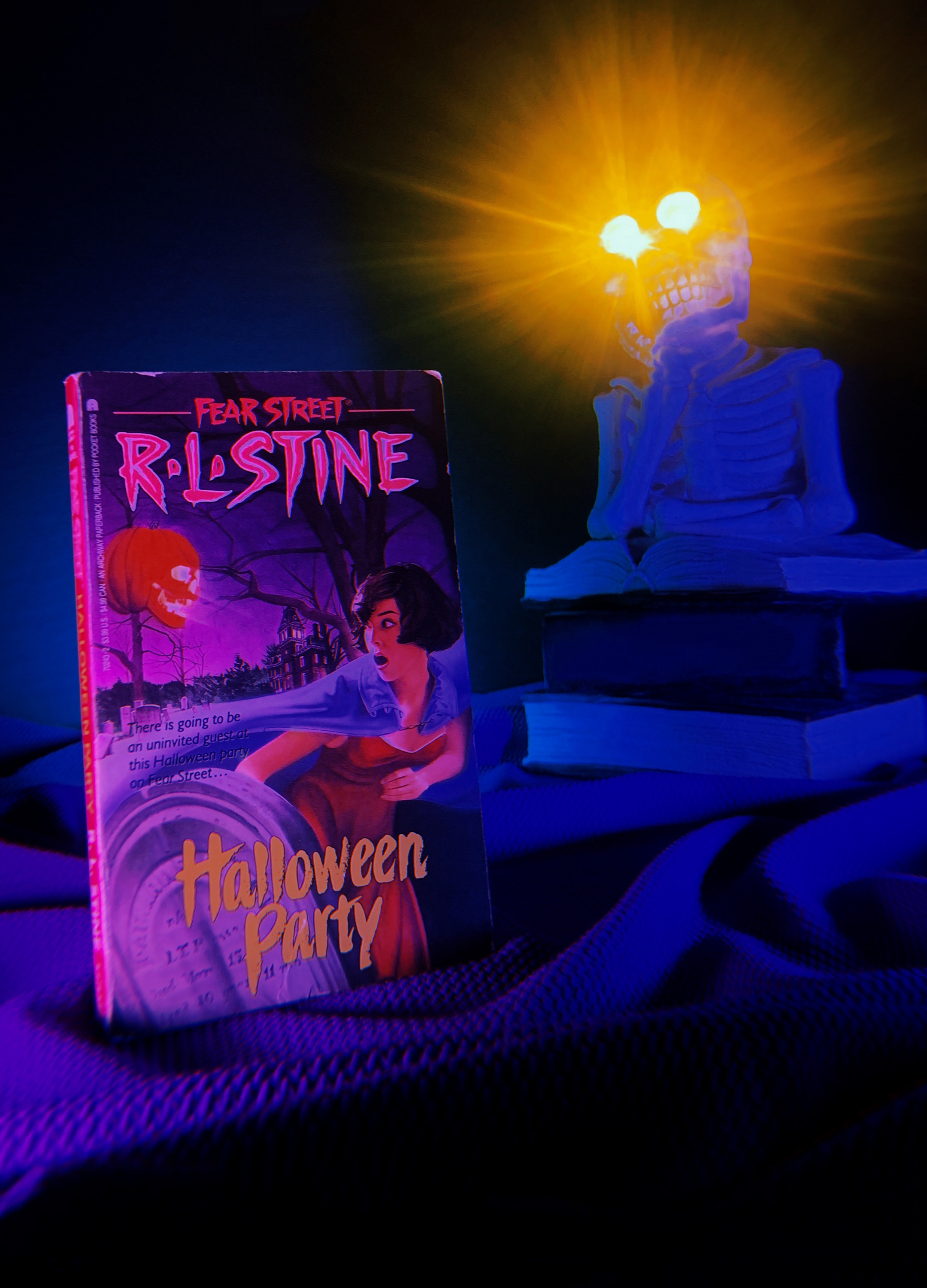
blog - halloween party by r.l. stineThey all received the same black-bordered envelope. Inside was an invitation to a Hallowe’en party to be thrown by Justine, the newest new girl at Shadyside High. She and her uncle have just moved into their old family mansion at the end of Fear Street, and what better setting for an All Hallows’ Eve celebration? Couple Terry and Niki are among the invited, but quickly begin to question the motives behind the bash. Why have only nine people been invited? And why invite a group of people who barely share anything in common with one another? They go to the party, regardless, hoping to get some answers. They get more than they bargained for when the body of a fellow reveler turns up with a carving knife sticking straight out of his chest….

🎃

I honestly could not think of a better way to finish off the spook season than with a Fear Street book. And what could be more fitting than going for the one titled Halloween Party?

This is technically my first proper Fear Street! I started reading the series this summer, as part of my whole Summer Spooks deal, but none of the books I read were actually 𝘴𝘦𝘵 on the titular street. This one most definitely is, though, and it’s a whole different vibe.

I had a lot of fun with it. It’s trashy and schlocky and totally appropriate for the day. It also surprised me by including a fair bit of deaf representation. In a young adult book! From the ‘90s! It’s not perfect, needless to say, but still — you go, Stine. Niki is a certified badass of a character. 

Hallowe’en has long been my favorite time for reading, and I always have a blast delving into the spookier side of my library. It’s sad that the season has come to an end, but as Niki points out towards the end of the party: “It’s always Halloween on Fear Street.”  ⠀

𝕳𝖆𝖑𝖑𝖔𝖜𝖊’𝖊𝖓 𝖎𝖘 𝖊𝖙𝖊𝖗𝖓𝖆𝖑, in other words. 

I hope you all have a good one.

WHAT LIVES IN THE WOODS by Lindsay Currie

blog - what lives in the woods by lindsay currieAspiring writer and Agatha Christie aficionado Ginny Anderson is looking forward to spending her summer break attending a mystery writing workshop with her best friend. Plans swiftly derailed when her dad, who restores old crumbling buildings to their former glory for a living, is hired to renovate the Woodmoor estate, a sprawling manor in the outskirts of Lake Michigan, and wants to bring the family along. The mansion is the subject of many rumors in the neighboring town: of creatures that stalk the surrounding woods; of inhospitable spirits that still haunt the antique abode. Impressionable Ginny finds herself frightened at the prospect of spending her summer in a house of horrors and she wishes she could just go back home, to her friend and her workshop. Her frustration turns out to be greater than her fear though, and,  determined to emulate the heroes written by her personal hero, she sets out to either find enough proof to convince her parents to leave the dreadful place — especially after she encounters a ghastly presence that would very much like the same — or to solve the mystery at Woodmoor once and for all. ⠀

🎃 ⠀

Lindsay Currie’s What Lives in the Woods was originally going to be a buddy read, chosen because my friend and I were both under the impression that it was going to be a middle grade horror full of forest frights, which was the mood we were after. I began reading it first, though, and quickly found myself frustrated by the fact that this seemed to be very much a haunted house story. Which is fine — love a good haunting — just not what I was expecting. Yes, the back blurb does mention the haunted house element, but look at that cover! At that title! What else are we supposed to think? Not to mention the fact that creepy beings stalking the woods are frequently mentioned in the opening chapters. They are, sadly, a no-show in this spooky story. Maybe they’re being set up for a sequel? I don’t know!⠀

So I was disappointed. Which is tragic because the story taken on its own is actually fairly decent. There’s a historical mystery that’s interesting, even if it’s only really explored during the last few chapters when it could have been the focus from the outset. Currie is excellent at writing tense scenes with unnerving imagery (there’s a particularly good jump scare, and those are very hard to pull off in written form). But again, this is a supernatural mystery more than it is horror, and so those types of scenes end up feeling a little out of place, as if they’re from a different story. 

This may be a classic case of judging a book by its cover, But coming from a design background so I believe that packaging and presentation are important. They provide the context, form the filter through which the content within will be viewed. My expectations were shaped by a display that evokes a certain narrative that is different from the one within, and I just think it only does it a disservice, in the end. Granted this particular criticism is directed more at the publisher, as authors rarely have any say in how their work is marketed. Currie wrote an immanently readable book that I would have enjoyed more under different circumstances.

MEXICAN GOTHIC by Silvia Moreno-Garcia

blog - mexican gothic by silvia moreno-garciaPublisher’s summary: After receiving a frantic letter from her newly-wed cousin begging for someone to save her from a mysterious doom, Noemí Taboada heads to High Place, a distant house in the Mexican countryside. She’s not sure what she will find—her cousin’s husband, a handsome Englishman, is a stranger, and Noemí knows little about the region.

Noemí is also an unlikely rescuer: She’s a glamorous debutante, and her chic gowns and perfect red lipstick are more suited for cocktail parties than amateur sleuthing. But she’s also tough and smart, with an indomitable will, and she is not afraid: Not of her cousin’s new husband, who is both menacing and alluring; not of his father, the ancient patriarch who seems to be fascinated by Noemí; and not even of the house itself, which begins to invade Noemi’s dreams with visions of blood and doom.

Her only ally in this inhospitable abode is the family’s youngest son. Shy and gentle, he seems to want to help Noemí, but might also be hiding dark knowledge of his family’s past. For there are many secrets behind the walls of High Place. The family’s once colossal wealth and faded mining empire kept them from prying eyes, but as Noemí digs deeper she unearths stories of violence and madness.

And Noemí, mesmerized by the terrifying yet seductive world of High Place, may soon find it impossible to ever leave this enigmatic house behind.

🎃

I started Silvia Moreno-Garcia’s Mexican Gothic for Hallowe’en last year. I was enjoying it, too, noting how Moreno-Garcia had the Gothic undertones and atmosphere utterly down. But then I dropped it, and I couldn’t quite tell you why. Well, I could: there was a pandemic going on, sucking the joy out of everything and anything at the drop of a hat. It was — and still is, depressingly — a thing. So I decided to leave it for this next Hallowe’en season, and as it approached, I found myself excited to pick the book back up again. 

You can imagine my disappointment when I found that I did not enjoy it as much as I expected. Which is nothing but a shame as all the elements were still there: Moreno-Garcia’s writing is gorgeous, pitch-perfect in its baroque tone and flowery wordage; the atmosphere — atmosfear — it evokes is palpable and practically seeps from the page; Noemí, our intrepid bon vivant of a heroine with the quick wit and indomitable will, is simply marvelous; its villains are suitably abhorrent, showcasing as they do a grotesque version of white entitlement towards other culture’s religions and lands and bodies; the story’s central theme of colonialism and its ruinous blight of a legacy is one that quite literally hits close to home as someone who lives in an actual modern day colony.

And yet… it didn’t quite connect with me. Perhaps that was because of the above-mentioned epidemic exhaustion; but more likely it was just that the story felt distant, with too many of its true horrors told rather than shown; evils obscured rather than exposed. Moreno-Garcia keeps her protagonist in the literal dark for much of the novel, and at arm’s length from many of the other characters, a detachment the reader feels by extension. A dense fog envelopes High Place, this story’s setting. At times it felt like a similar gloom shrouded this novel, and perhaps it just proved too thick for this particular lector to penetrate.

Whatever the case may have been, Moreno-Garcia’s prowess is undeniable, and I don’t regret reading this weird, visceral, phantasmagoric vision of hers.

THE WOODS ARE ALWAYS WATCHING by Stephanie Perkins

blog - the woods are always watching by stephanie perkinsJosie and Neena are best friends about to graduate high school and heading off in different directions — or Neena is, at least. Josie enrolled in a city college and will stay at home, while Neena is bound for glamorous California. Feeling a mix of melancholy and resentment the pair plan a getaway hiking through the local North Carolina mountains, in the hopes the adventure will create meaningful, unforgettable memories before they part ways.

Their plans are quickly unraveled, however, as both environment and emotions seem to be working against them. Neither of them has any worthwhile outdoors experience, and so they are soon overwhelmed by the elements. Adding to that is the pair’s pent up personal drama, which comes to a head on their very first night where bitter words are shared in the dark. Not wanting to abandon what could be their last exploit together, they continue their trek through the woods in stubborn, stony silence. On their last day they decide to follow a blaze path, informal trails created by amateur hikers that make guideposts out of trees through marks and other signs. A sudden downpour makes them lose their way, and then tragedy strikes when Josie falls through a sinkhole and suffers a particularly gruesome injury. Neena is reluctant to leave her friend alone, but with no phone service and night quickly falling, she decides to brave the forest in search of help. But the watchful woods seem to have other plans for the pair of friends….

🎃

Like most people (at least those who regularly watched Vlogbrothers circa 2009) I first learned of Stephanie Perkins due to Anna and the French Kiss, a gentle gem of a romance novel that kicked off a series of similarly sentimental stories. Romance became Perkin’s brand, and so — like most people — I was surprised when she suddenly dropped her slasher throwback of a novel There’s Someone Inside Your House (which just got the adaptation treatment over on Netflix) a couple of years ago. It seemed like such a turn. But I was already a fan of her writing, and it came out just around spooky season, so I gave it a shot. I dug it a great deal. I remember Perkins getting a lot of flak for that novel for being derivative and full of stereotypes. I could see where the criticism came from, but I didn’t really mind — there’s no genre that’s as cannibalistic as horror, after all, constantly feeding off of its own self. It’s part of the appeal. So I liked it enough that when The Woods Are Always Watching, a spiritual sequel of sorts, was announced, I awaited it with anticipation.

It didn’t disappoint, although I suspect it will get a lot of the same kind of criticism as its predecessor did. But once more, I did not mind. I enjoyed this ticking time bomb of a novel, which starts off slow, almost hesitantly, ramping up the tension to almost unbearable levels before finally releasing it in a cannonade of catastrophe and catharsis during the book’s final half.

I went into The Woods fairly cold, which turned out to both harm and help my reading experience. I knew only that it was a horror story set somewhere in the Appalachians, which is honestly enough description for me to be certain that I will be thoroughly freaked out, as that particular mountain system fascinates me as much as it fills me with dread — blame it on assumptions and stereotypes shaped by years of macabre media consumption. I did not know what form the antagonistic force was going to take: whether it was going to be a supernatural specter, or a more realistic, grit-and-grime menace. For the first hundred pages the text made it seem like either one could have been likely.

SPOILERS AHEAD

So I admit to being initially disappointed when it turned out to be the latter.  As the book went on, though, with Perkins packing on the terror and trepidation, I understood the kind of story she was aiming to tell: a heightened version of what far too many women suffer through at the hands of men, the sort of experiences that are the root of very real fears and anxieties they can experience while among them. Josie and Neena are stalked and threatened by men in the woods here, but it’s terrifyingly telling that their story could have been set literally anywhere else — with men in elevators or subway cars or quiet streets — and depressingly little would change in the way of details. 

Two girls walk into the woods, Josie thought. But the story wasn’t a fairy tale. They hadn’t dropped a trail of bread crumbs, discovered a gingerbread cottage with sugar-paned windows, or shoved an old witch into a flaming stove. Nor was it a ghost story, traded in whispers around smoky campfires. It wasn’t even an urban legend. Their story was flesh and bone. Urgent and real.

Perkins offers up a tight, tense thriller of survival, with two protagonists who feel real: smart and resourceful but also obnoxious, bordering on unlikeable. Kids, in other words, a fact that makes their ordeal all the more harrowing, as you can’t help but hope they make it through the dark forest and into the light.

Content warning for mentions of rape, torture, stalking, and some graphic descriptions of gore.